UBUCIKO
UBUHLE NEMPILO
UBUCIKO BEZANDLA
AMASIKO NOMLANDO
EZOKUZIJABULISA
IMVELO
UKUDLA NEZIPHUZO
REVERSE ENGINEERING
IZAYENSI
EZEMIDLALO
UBUCHWEPHESHE
IZINTO EZIGQOKWAYO



Sawing Square: Two Lines at Once, and Fixing a Cut That Drifts
A saw cut has to be right in two directions at once: along the line you marked on the surface, and square through the thickness. Getting one and losing the other is the normal beginner's result, and it looks fine until the piece is stood up.
The reason is that you can only look at one face at a time. So the technique is not about steering — it is about marking the cut on more than one face, and checking both as you go.
A cut that has drifted can be brought back, but only gradually and only while there is still depth left. This rung covers how, and how to know when it is too late.
Ophakathi
3 hours
Imiyalelo
1
1
Mark the line all the way round
Mark the line all the way round
Square the line across the top face, then continue it down both edges with the try square, and across the underside if you can reach it. Now every face you can see carries the line.
This costs about a minute and it converts the problem from steering blind into simply following what is drawn. It is also self-checking: if the lines do not meet when you come back round to where you started, the square is off the reference face or the stock is not straight, and you have found that out before cutting.
Use a marking knife rather than a pencil for anything that must be accurate. A knife line is thinner, it does not smudge, and it gives the saw teeth a groove to start in.
Izinto zokwakha zalesi sinyathelo:
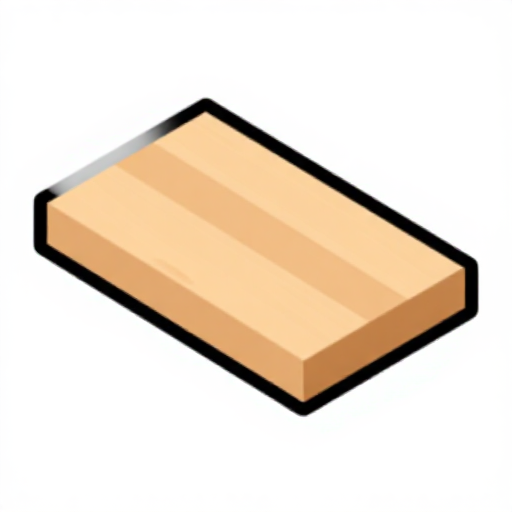 Ipulangwe Lokhuni Oluqinile1 ucezu
Amathuluzi adingekayo:
 Isikwele esiqinile
 Insimbi Yokudweba Imigqa
2
2
Watch the far corner, not the near one
Watch the far corner, not the near one
Stand so you can see the top line and the far edge line at the same time, and watch where the blade is leaving the wood rather than where it is entering.
The entry point is already cut and cannot change. The exit is where the error is being made right now, so that is the one to watch. This single change of attention fixes most out-of-square cutting and costs nothing.
A mirror or a square stood on the work beside the blade helps while you are learning. So does cutting a few practice kerfs in scrap and then checking each one with the square — the feedback is what builds the habit, and three minutes of it beats an hour of being careful.
Izinto zokwakha zalesi sinyathelo:
 Ipulangwe Lokhuni Olubuthaka Olomile1 ucezu
Amathuluzi adingekayo:
 Isaha SesandlaIsikwele esiqinile
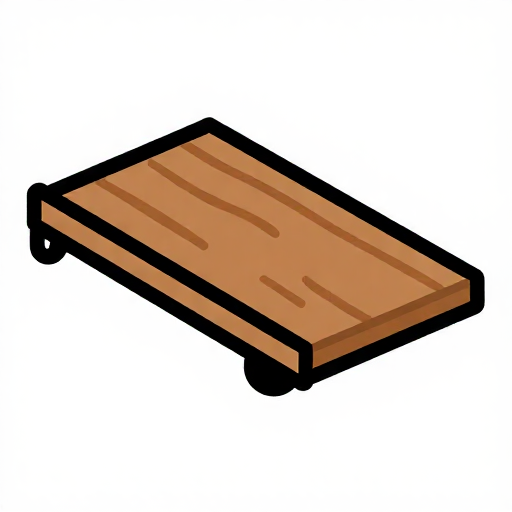 Ibhodi lokubambisa uma usaha
3
3
Bringing a drifting cut back
Bringing a drifting cut back
If the cut has wandered off the line, do not twist the saw. Twisting jams the blade in its own kerf and either binds solid or kinks the blade.
Instead, back the saw almost out, tilt it slightly toward the line, and take several light strokes. The teeth on that side will cut a fraction more and the kerf will creep back. It is gradual by nature — a millimetre over several centimetres of cut — and trying to hurry it is what breaks blades.
Judge whether it is worth it. If the cut is 2 mm out with 5 mm left to go, it will not recover; stop, and either cut a fresh kerf beside it or accept the piece is oversize and plane or file it to the line afterwards. Deciding early is the whole skill, exactly as with a broken tap.
Izinto zokwakha zalesi sinyathelo:
Ipulangwe Lokhuni Olubuthaka Olomile1 ucezuAmathuluzi adingekayo:
Isaha SesandlaIsikwele esiqinile Umphetho oqondile
4
4
Cut fat, then trim — the reliable way to hit a length
Cut fat, then trim — the reliable way to hit a length
For anything that must be an exact length, saw a millimetre proud of the line and bring it down to the line with a plane, a file or a shooting board.
This is the same argument as sawing before filing, run the other way. A saw is fast and roughly accurate; a plane or file is slow and precisely accurate. Using each for what it is good at is faster overall than trying to make the saw do both.
It also removes the pressure from the saw cut, and a relaxed cut is a straighter one. For repeated pieces of the same length, clamp a stop block rather than measuring each one: measuring twenty times produces twenty slightly different lengths, and a stop block produces twenty identical ones.
Izinto zokwakha zalesi sinyathelo:
Ipulangwe Lokhuni Oluqinile1 ucezuAmathuluzi adingekayo:
Isaha Sesandla Ibhokisi Lokusika Ama-engeli Nesaha
 Isibambo esiyi-C
 I-Vernier Caliper
Izinto
2- 1 ucezuIsibambeli
- Isibambeli
Amathuluzi Adingekayo
8- Isibambeli
- Isibambeli
- Isibambeli
- Isibambeli
- Isibambeli
- Ibhokisi Lokusika Ama-engeli Nesahaikhomishini engu-10%Isibambeli
- Isibambeli
- Isibambeli
Ama-blueprint ahlobene
Lama-blueprint abelana ngolwazi — amasu, izinto noma izimiso
CC0 Isizinda Somphakathi
Le blueprint ikhishwe ngaphansi kwe-CC0. Ukhululekile ukukopisha, ukuguqula, ukusabalalisa, nokusebenzisa ngaphandle kwemvume.
Sekela uMenzi ngokuthenga imikhiqizo nge-Blueprint yabo IKhomishane Yomenzi kumiswe ngabathengisi, noma dala inguqulo entsha yale Blueprint bese uyifaka njengoxhumaniso ku-Blueprint yakho ukuze wabelane ngemali engenayo.