UBUCIKO
UBUHLE NEMPILO
UBUCIKO BEZANDLA
AMASIKO NOMLANDO
EZOKUZIJABULISA
IMVELO
UKUDLA NEZIPHUZO
REVERSE ENGINEERING
IZAYENSI
EZEMIDLALO
UBUCHWEPHESHE
IZINTO EZIGQOKWAYO


Glass Wool
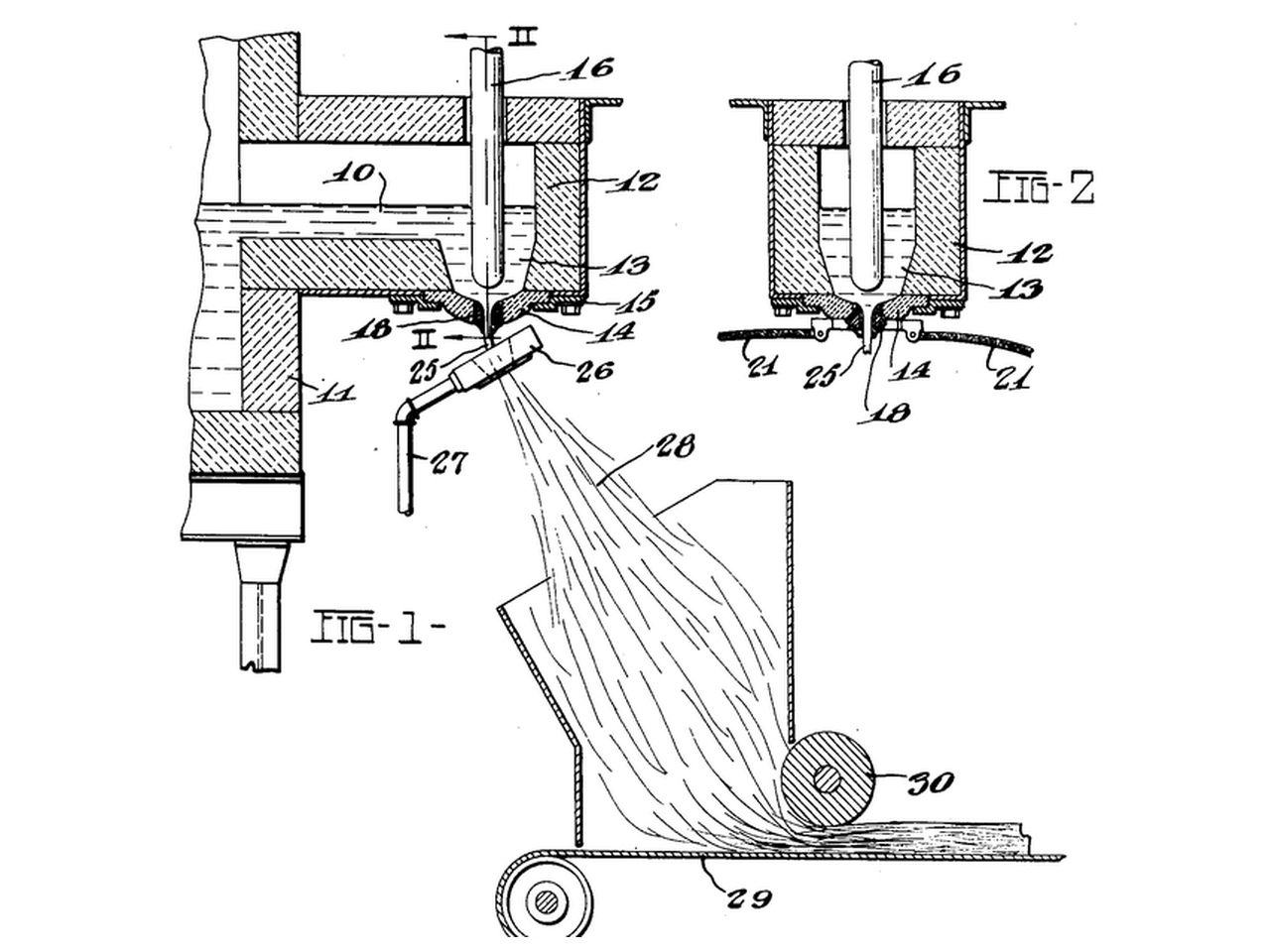
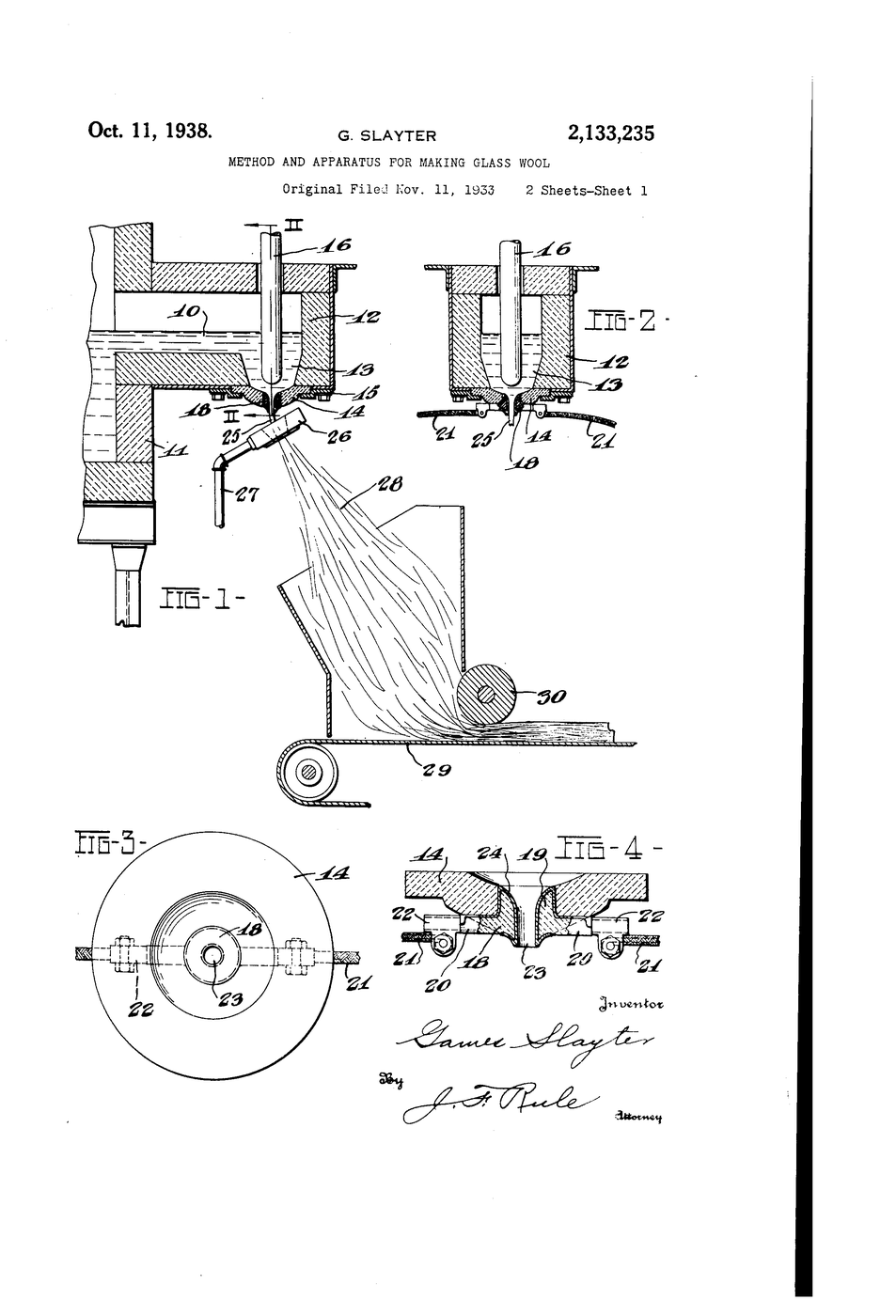
Glass wool was made before the 1930s by blowing steam at a falling thread of molten glass, but by the time the glass reached the blast it had cooled too far to draw really fine fibres. Games Slayter at Owens-Illinois brought the blast right up to the bushing the glass leaves the furnace through, while it was still at furnace heat.
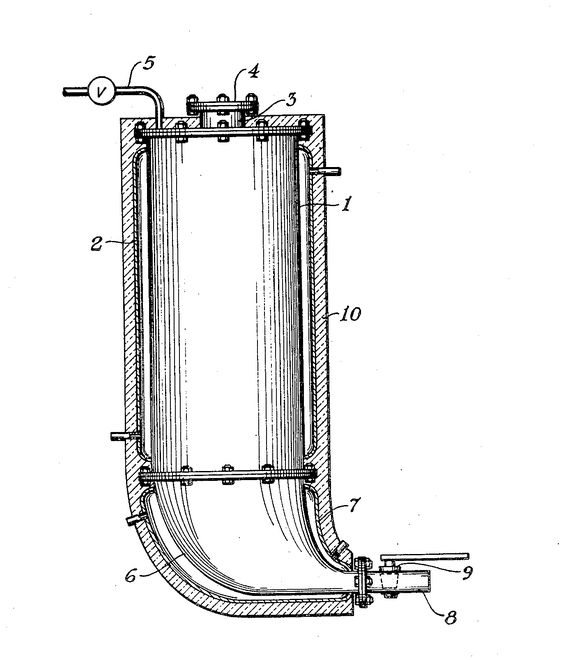
**US 2,133,235**, "Method and apparatus for making glass wool", Slayter, assigned to Owens-Illinois, filed 11. November 1933, granted 11. October 1938. Its FIGURE 1 (the picture above) shows the furnace, the bushing, the steam blast and the wool piling onto a conveyor. The same work led to Owens-Corning Fiberglas in 1938.
**You measure what it is for**: three jars of hot water - bare, in glass wool, in cotton wool - logged by an Arduino, and the cooling curves turned into heat-loss figures.
Oqalayo
2 hours
Imiyalelo
1
1
Wire the logger
Wire the logger
Probes' red to 5V, black to GND, data (yellow) together to D2, with a 4.7 kΩ resistor from D2 to 5V. Install the OneWire and DallasTemperature libraries. Warm each probe in your hand in turn to learn which index is which.
three_jar_cooling_logger.inocpp
Izinto zokwakha zalesi sinyathelo:
 Inzwa yokushisa i-DS18B203 izicucu
 Isethi Yamarezista1 ikhithi
 Isethi yezintambo ze-Dupont (eyesilisa-eyesifazane)1 isethi
Amathuluzi adingekayo:
 Arduino Uno R3
 Ibhodi Lokuhlola
 Ikhebula le-USB-B
2
2
Prepare three jars
Prepare three jars
Drill a 7 mm hole in each of three identical lids. Push a probe through each so its tip sits mid-jar. Seal the hole with tape.
Izinto zokwakha zalesi sinyathelo:
 Ijeke Lengilazi Elinesivalo3 izicucu
Amathuluzi adingekayo:
 Ibhola Elingenantambo
 Iqoqo Lamakhanda Ebhola
 Itheyiphu lokumboza
3
3
Wrap two of them
Wrap two of them
Gloves, long sleeves, mask, glasses. Put glass wool inside a plastic bag, then wrap jar 2 in it 30 mm thick all round and under, and tape. Wrap jar 3 the same way in cotton wool. Leave jar 1 bare.
Izinto zokwakha zalesi sinyathelo:
 Ukotini omuncayo1 iphakethe
Amathuluzi adingekayo:
 Amagilavu Omsebenzi Esikhumba
 Imaski Yothuli
 Izibuko Zokuphepha Ezicwathile
 IsikeloItheyiphu lokumboza
 Isivikelo sokushisa sikawula wengilazi
 Izikhwama zeplastiki
4
4
Fill and log
Fill and log
Boil water. Pour 500 ml into each jar, one after another, and close the lids. Start the serial monitor and log for 90 minutes. Note the room temperature.
Amathuluzi adingekayo:
 Iketela likagesi lengilazi
 Isilinda esinezilinganiso
5
5
Fit the curves
Fit the curves
Ilayisha incwadi ye-Jupyter…
6
6
History & Context
History & Context
**What the patent specifies:** a steam blast applied at the bushing itself, so the glass stream is drawn while still at furnace temperature, giving very fine wool. **Modern build (derived):** commercial glass-wool insulation, handled wrapped.
Continuous glass filament for textiles and reinforcement followed from the same laboratory. Its limits: loose fibres irritate skin, eyes and lungs, so it is always handled covered, and like any fibrous insulation it loses most of its value when wet or compressed.
Izinto
5- 3 izicucuIsibambeli
- Isibambeli
- Isibambeli
- 3 izicucuIsibambeli
- 1 iphaketheIsibambeli
Amathuluzi Adingekayo
14- 1 vendor sell this, none ship to you yetIsibambeli
- 1 vendor sell this, none ship to you yetIsibambeli
- 1 vendor sell this, none ship to you yetIsibambeli
- 1 vendor sell this, none ship to you yetIsibambeli
- Isibambeli
- Isibambeli
- Isibambeli
- Isibambeli
- Isibambeli
- Isibambeli
- Isibambeli
- Isibambeli
- Isibambeli
- Isibambeli
Ama-blueprint ahlobene
Lama-blueprint abelana ngolwazi — amasu, izinto noma izimiso
CC0 Isizinda Somphakathi
Le blueprint ikhishwe ngaphansi kwe-CC0. Ukhululekile ukukopisha, ukuguqula, ukusabalalisa, nokusebenzisa ngaphandle kwemvume.
Sekela uMenzi ngokuthenga imikhiqizo nge-Blueprint yabo IKhomishane Yomenzi kumiswe ngabathengisi, noma dala inguqulo entsha yale Blueprint bese uyifaka njengoxhumaniso ku-Blueprint yakho ukuze wabelane ngemali engenayo.