Ukusebenzisana
UBUCIKO
UBUHLE NEMPILO
UBUCIKO BEZANDLA
AMASIKO NOMLANDO
EZOKUZIJABULISA
IMVELO
UKUDLA NEZIPHUZO
REVERSE ENGINEERING
IZAYENSI
EZEMIDLALO
UBUCHWEPHESHE
IZINTO EZIGQOKWAYO
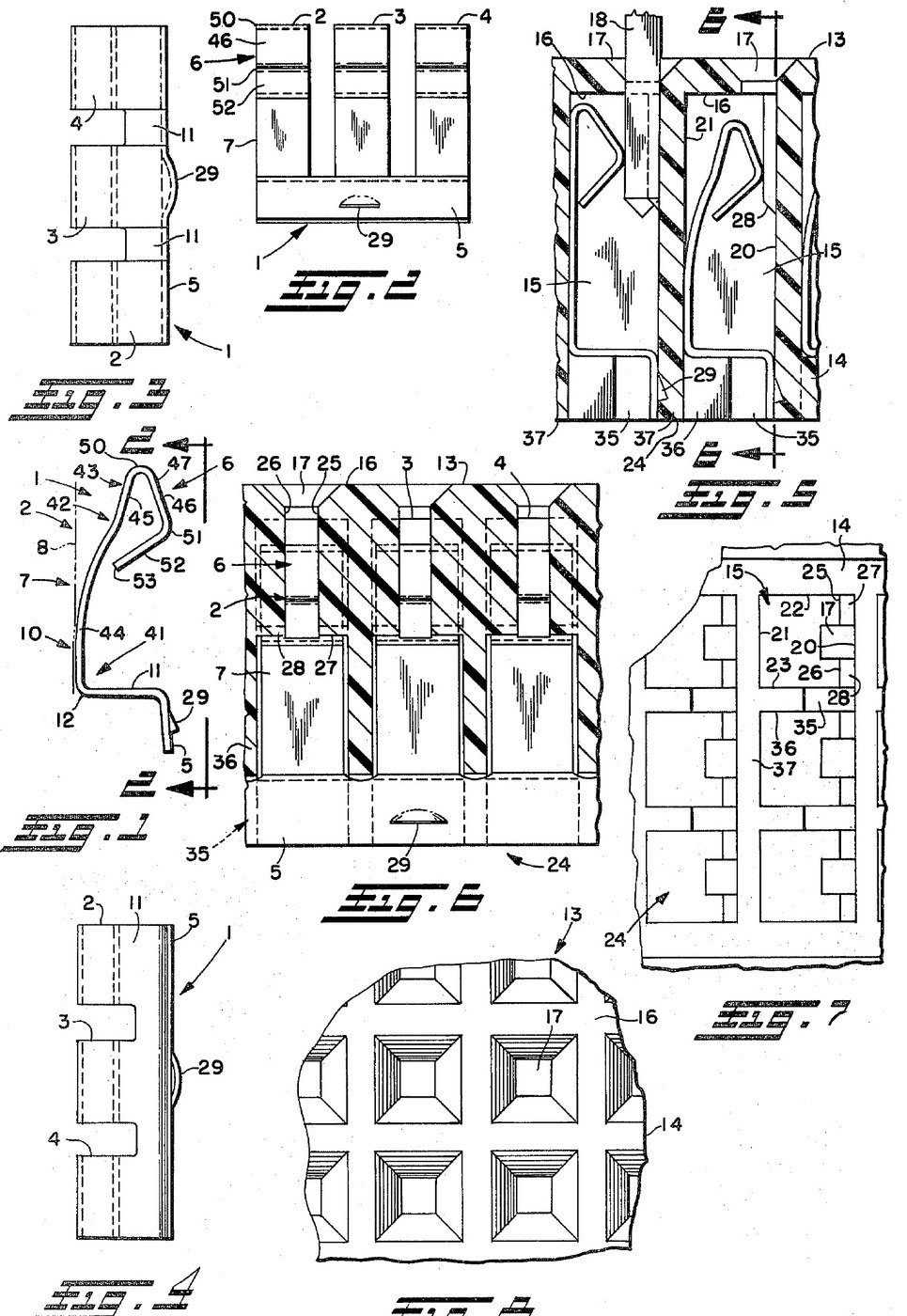


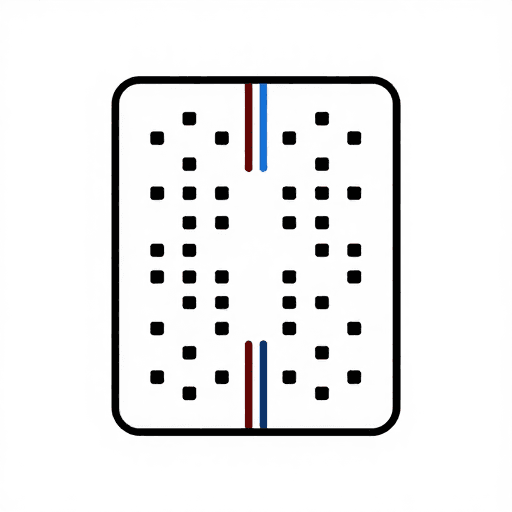
Solderless Breadboard: Cantilever Contacts in a Moulded Acetal Housing (Tengler, US 4,420,215)
A breadboard lets you build a circuit without solder: push component leads into holes and spring contacts underneath join them in rows. John N. Tengler of A P Products received US 4,420,215 (1983) for one: a one-piece moulded acetal housing with holes on 0.100 in centres, and sets of three springy cantilever contacts of copper alloy No. 688 pushed in from below.
Not given: the contact thickness and sizes, how the contacts are formed, and the moulding conditions.
Source: J. N. Tengler, US 4,420,215. Picture: the patent's drawing sheet.
Osezingeni eliphezulu
Not given in the source
Imiyalelo
1
1
Mould the housing
Mould the housing
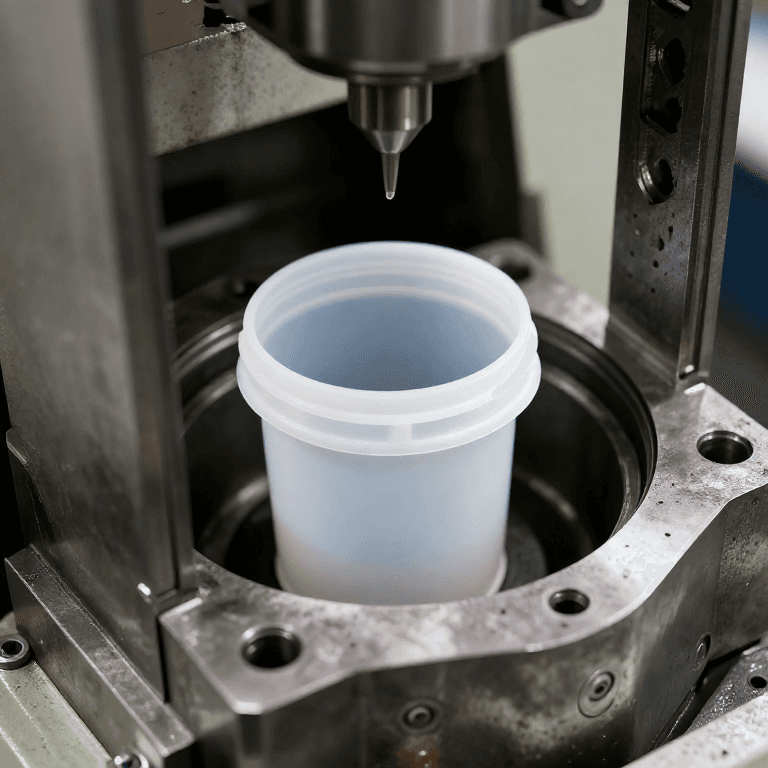
Injection-mould the housing as one piece in acetal copolymer (Tengler names CELCON). His example has 78 cells in 26 rows of three, open at the bottom, under a top wall whose holes sit on 0.100 in centres. Give each cell two preload bars on its front wall, one either side of the hole, with tapered lower ends. Mould notches into the walls between the cells of a row, and none into the front and back walls, so a contact set fits only the right way round.
Izinto zokwakha zalesi sinyathelo:
 Izinhlamvu ze-acetal copolymer1 one housing
Amathuluzi adingekayo:
 Umshini wokubumba ngokujova
 Uhlaka lwembumbo yokujova
 Izilinganiso ezingaziwa
2
2
Form the contact sets
Form the contact sets
Form three identical contacts from copper alloy No. 688, joined at the foot by a strip. Each is a single cantilever: a foot with a seat, an arm curving up into a spring, a hairpin bend, then a contact face that a pushed-in lead slides along, ending in a tip, with a stop extension that comes to rest against the arm. If you like, stamp a small barb in the joining strip.
Izinto zokwakha zalesi sinyathelo:
 Umucu we-alloy yethusi 6881 one set of three per row
Amathuluzi adingekayo:
 Indlela yokubumba engaziwaIzilinganiso ezingaziwa
3
3
Push the sets in from below
Push the sets in from below
Push each set up into its row from the open bottom, contact faces toward the holes, with the strip running through the notches. The strip is bent at a slight angle, so the front wall springs it and wedges the contact's foot against the back wall. The preload bars press on the contact face, and the barb, if there is one, bites into the plastic.
Amathuluzi adingekayo:
 Udlawu Lomlomo Oyisicaba
4
4
Check a row
Check a row
Push a resistor lead through a hole: it should slide along the contact face. The two end contacts of a row join two components; Tengler meant the middle one for injecting or testing a signal. Check with a meter that the three holes of a row connect and neighbouring rows do not.
Amathuluzi adingekayo:
 Ukumelana nogesi
 Isilinganisi sikagesi esiyinhlanganisela
Izinto
2- 1 one housingIsibambeli
- 1 one set of three per rowIsibambeli
Amathuluzi Adingekayo
7- Isibambeli
- Isibambeli
- Isibambeli
- Isibambeli
- Isibambeli
- Isibambeli
- Isibambeli
Izinto Zokwakha Ze-Blueprint Exhunyiwe

Le blueprint yenza
CC0 Isizinda Somphakathi
Le blueprint ikhishwe ngaphansi kwe-CC0. Ukhululekile ukukopisha, ukuguqula, ukusabalalisa, nokusebenzisa ngaphandle kwemvume.
Sekela uMenzi ngokuthenga imikhiqizo nge-Blueprint yabo IKhomishane Yomenzi kumiswe ngabathengisi, noma dala inguqulo entsha yale Blueprint bese uyifaka njengoxhumaniso ku-Blueprint yakho ukuze wabelane ngemali engenayo.