UBUCIKO
UBUHLE NEMPILO
UBUCIKO BEZANDLA
AMASIKO NOMLANDO
EZOKUZIJABULISA
IMVELO
UKUDLA NEZIPHUZO
REVERSE ENGINEERING
IZAYENSI
EZEMIDLALO
UBUCHWEPHESHE
IZINTO EZIGQOKWAYO
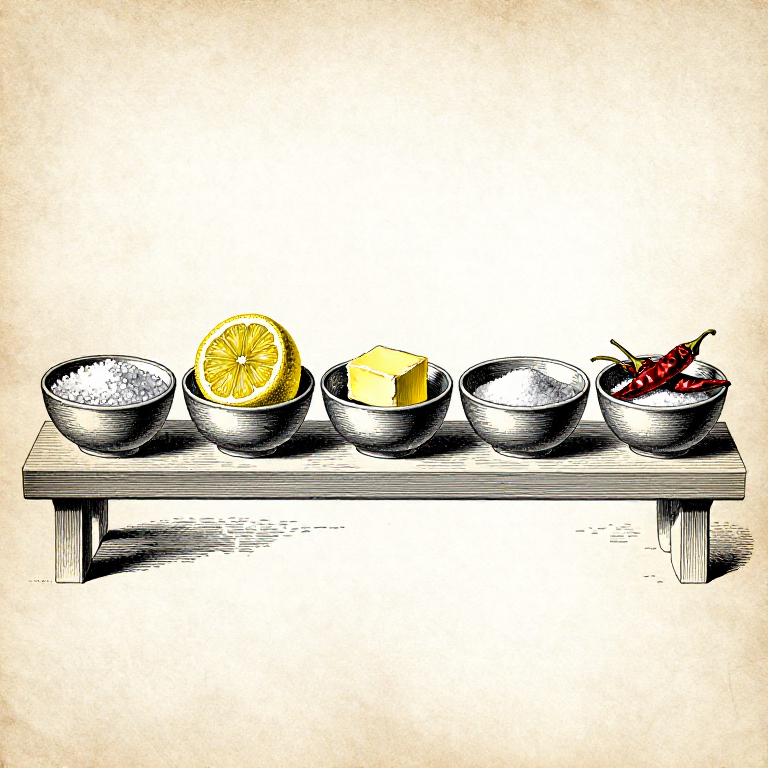


Taste as You Go: The Five Dials You Can Actually Turn
"Needs something" is the most common thing said over a pan, and it is almost always one of five things: SALT, ACID, FAT, SWEETNESS, or HEAT-as-in-chilli. Knowing the list turns a vague dissatisfaction into a decision.
Most of the time it is salt. The second most of the time it is acid — a squeeze of lemon or a splash of vinegar — and a dish that tastes flat and heavy despite being correctly salted is nearly always asking for it.
Tasting is a measurement, and the measurement rungs apply directly: taste at serving temperature, change one thing at a time, and adjust in small steps because you can always add and never take away.
Oqalayo
2 hours
Imiyalelo
1
1
Taste at the temperature it will be eaten
Taste at the temperature it will be eaten
Cold food tastes less salty and less sweet than the same food hot. A sauce corrected while lukewarm will be over-salted on a hot plate, and a chilled soup seasoned while warm will taste of nothing.
So bring the spoonful to serving temperature before judging it, or at least know which direction the error will run. For anything served cold, deliberately over-season slightly and check again once chilled.
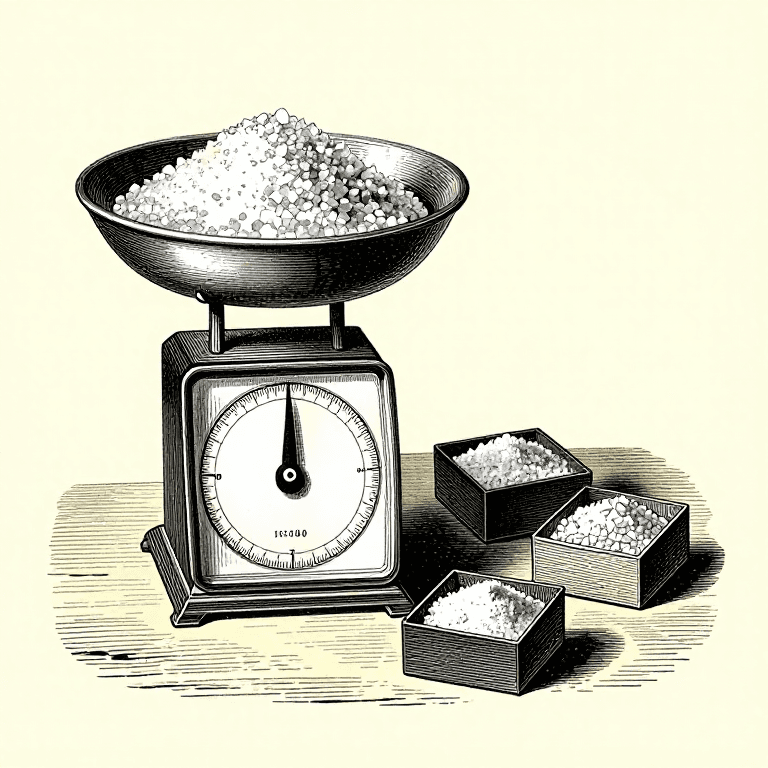
Use a clean spoon every time — taste into a second spoon rather than returning the one that has been in your mouth to the pot. That is not fussiness; it is the same reason the chemistry batch insists on clean glassware.
Izinto zokwakha zalesi sinyathelo:
 I-sodium chloride (usawoti)1 ucezu
Amathuluzi adingekayo:
 Ukhezo Lokugovuza Lokhuni
 Isethi yezitsha zokuxuba
 Ibhodwe elinezindonga eziphakeme
2
2
Work down the list in order
Work down the list in order
**Salt** first, because it makes everything else more detectable and because it is usually the answer. **Acid** second: lemon, vinegar, wine, yoghurt, a chopped tomato — it cuts richness and makes a heavy dish feel lighter without removing anything.
**Fat** third: butter, oil, cream. It carries aroma compounds that water cannot, rounds sharp edges, and gives the mouth something to hold onto. A thin-tasting sauce is often short of fat rather than of flavour.
**Sweetness** fourth, in small amounts, to balance acidity or bitterness rather than to make the dish sweet. **Chilli heat** last, because it is the hardest to take back and the easiest to add at the table.
Izinto zokwakha zalesi sinyathelo:
 Ujusi kalamula (omusha)1 ucezu
 Uwoyela womnqumo we-extra virgin1 ucezuI-sodium chloride (usawoti)1 ucezu
 Upelepele omnyama ophelele1 ucezu
Amathuluzi adingekayo:
Ukhezo Lokugovuza LokhuniIbhodwe elinezindonga eziphakeme Isitsha esikhulu sokuhlanganisa (ingilazi)
3
3
One change at a time, in small steps
One change at a time, in small steps
Add one thing, stir, wait a moment, taste again. Add salt and lemon together and you have no idea which helped, and if it has gone wrong you do not know which to correct.
That is the change-one-thing-at-a-time rung, and it applies to a pan exactly as it does to a bench. A cook who adjusts three things at once learns nothing from a dish that came out well.
Small steps, because there is no reverse gear. Over-salted soup can be diluted, which weakens everything else too; over-chillied is very difficult; over-sweet is nearly impossible. Half of what you think you need, then taste again.
Izinto zokwakha zalesi sinyathelo:
I-sodium chloride (usawoti)1 ucezuUjusi kalamula (omusha)1 ucezuAmathuluzi adingekayo:
Ukhezo Lokugovuza Lokhuni Isikali Sedijithali Sasekhishini
4
4
Write down what it took
Write down what it took
When a dish comes out well, write down what you actually did — the weights, the pull temperature, the final adjustment, how long it rested. Otherwise the next attempt is a fresh experiment rather than a second run of a good one.
Write down the failures too, and why. "Too salty — used the fine salt in the kosher measure" is a line that prevents the same mistake for ever; "was too salty" prevents nothing.
That is the whole batch in one habit. Salt by weight, temperatures not times, one change at a time, taste at serving temperature — none of it is worth much unless what you learn survives until the next time you cook.
Amathuluzi adingekayo:
Isikali Sedijithali Sasekhishini Ithemomitha Efunda Ngokushesha
Izinto
4- 1 ucezuIsibambeli
- 1 ucezuIsibambeli
- Isibambeli
- 1 ucezuIsibambeli
Amathuluzi Adingekayo
6- Isibambeli
- Isibambeli
- Isibambeli
- Isibambeli
- Isibambeli
Ama-blueprint ahlobene
Lama-blueprint abelana ngolwazi — amasu, izinto noma izimiso
CC0 Isizinda Somphakathi
Le blueprint ikhishwe ngaphansi kwe-CC0. Ukhululekile ukukopisha, ukuguqula, ukusabalalisa, nokusebenzisa ngaphandle kwemvume.
Sekela uMenzi ngokuthenga imikhiqizo nge-Blueprint yabo IKhomishane Yomenzi kumiswe ngabathengisi, noma dala inguqulo entsha yale Blueprint bese uyifaka njengoxhumaniso ku-Blueprint yakho ukuze wabelane ngemali engenayo.