UBUCIKO
UBUHLE NEMPILO
UBUCIKO BEZANDLA
AMASIKO NOMLANDO
EZOKUZIJABULISA
IMVELO
UKUDLA NEZIPHUZO
REVERSE ENGINEERING
IZAYENSI
EZEMIDLALO
UBUCHWEPHESHE
IZINTO EZIGQOKWAYO
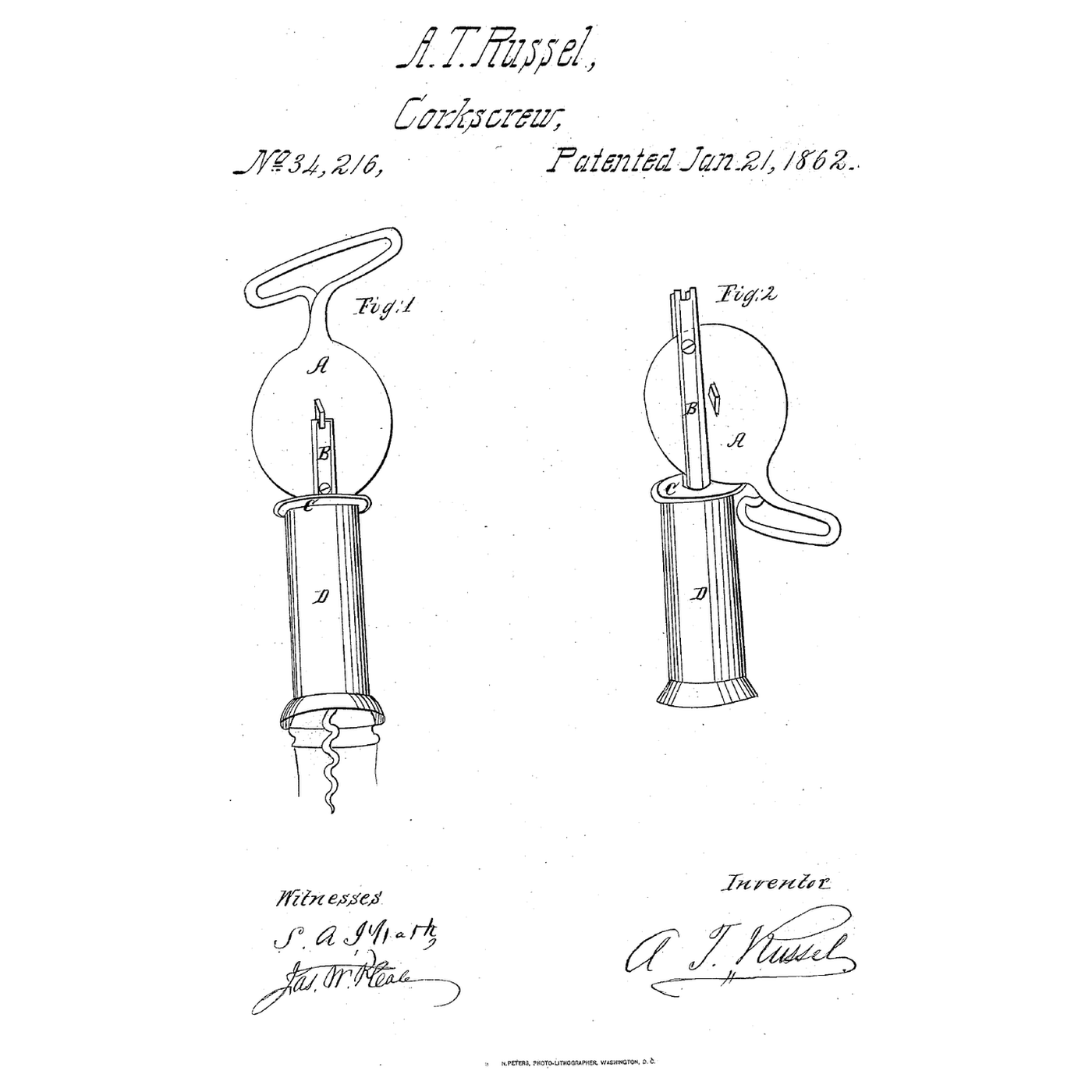


The Cam-Lever Corkscrew: Half a Turn of an Eccentric Lifts the Cork
Drawing a tight cork with a plain corkscrew takes a hard, steady pull with the bottle held between the knees.
Abraham T. Russel of New York received US 34,216, dated 21 January 1862, for a "Machine for Raising or Drawing Corks from Bottles": a cylinder whose head carries a piston, with a corkscrew fixed to the piston's lower end and a cam or eccentric pinned through the piston's slit top. The cylinder stands on the bottle, the screw is turned into the cork by the handle, and "By a half or part revolution of cam or eccentric the piston is raised with the corkscrew."
This rung works out the average lift of the cam, with a work check, then makes the cylinder, piston and eccentric and draws corks with it.
Osezingeni eliphezulu
About 5 hours
Imiyalelo
1
1
The eccentric's lift
The eccentric's lift
Ilayisha incwadi ye-Jupyter…
2
2
A corkscrew before it
A corkscrew before it
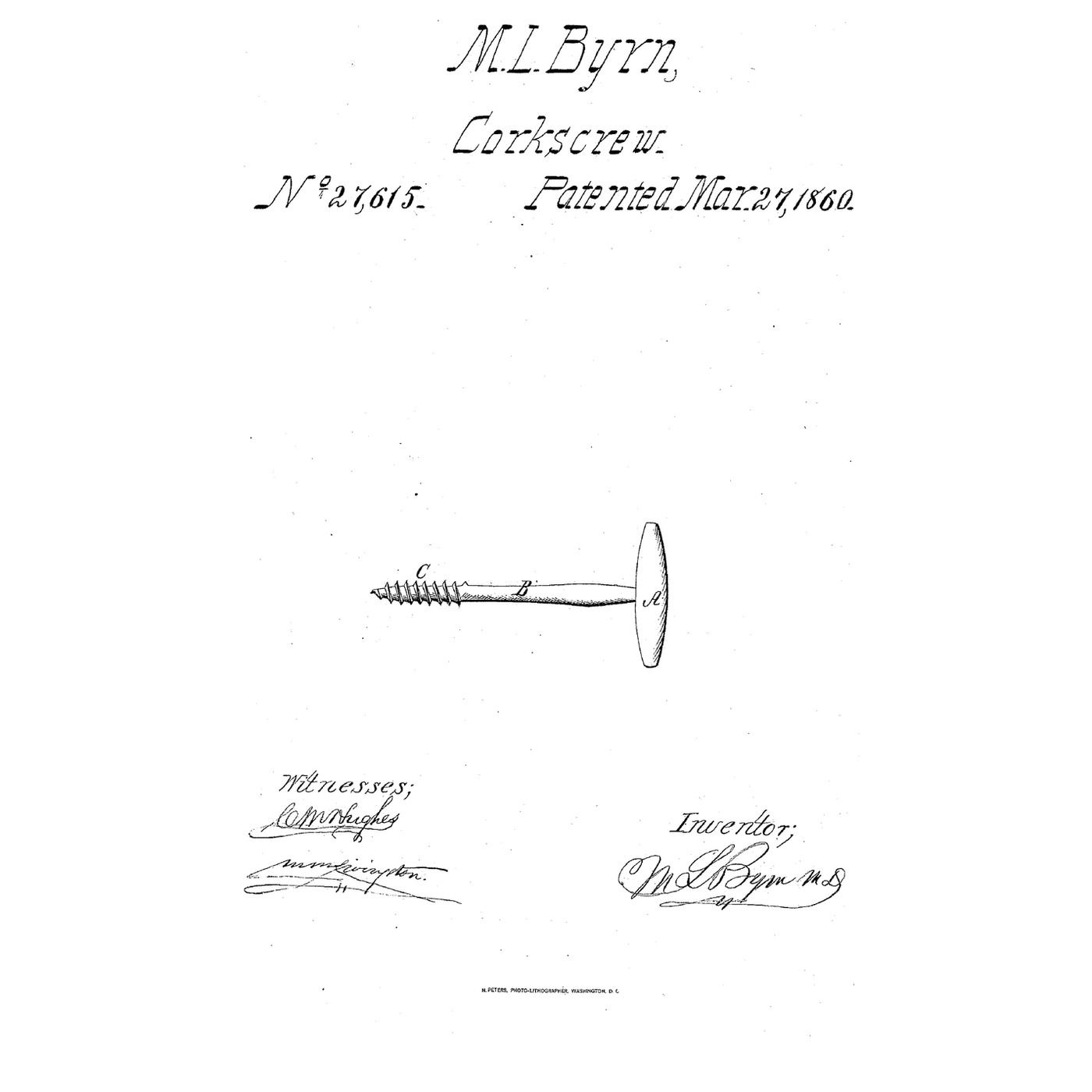
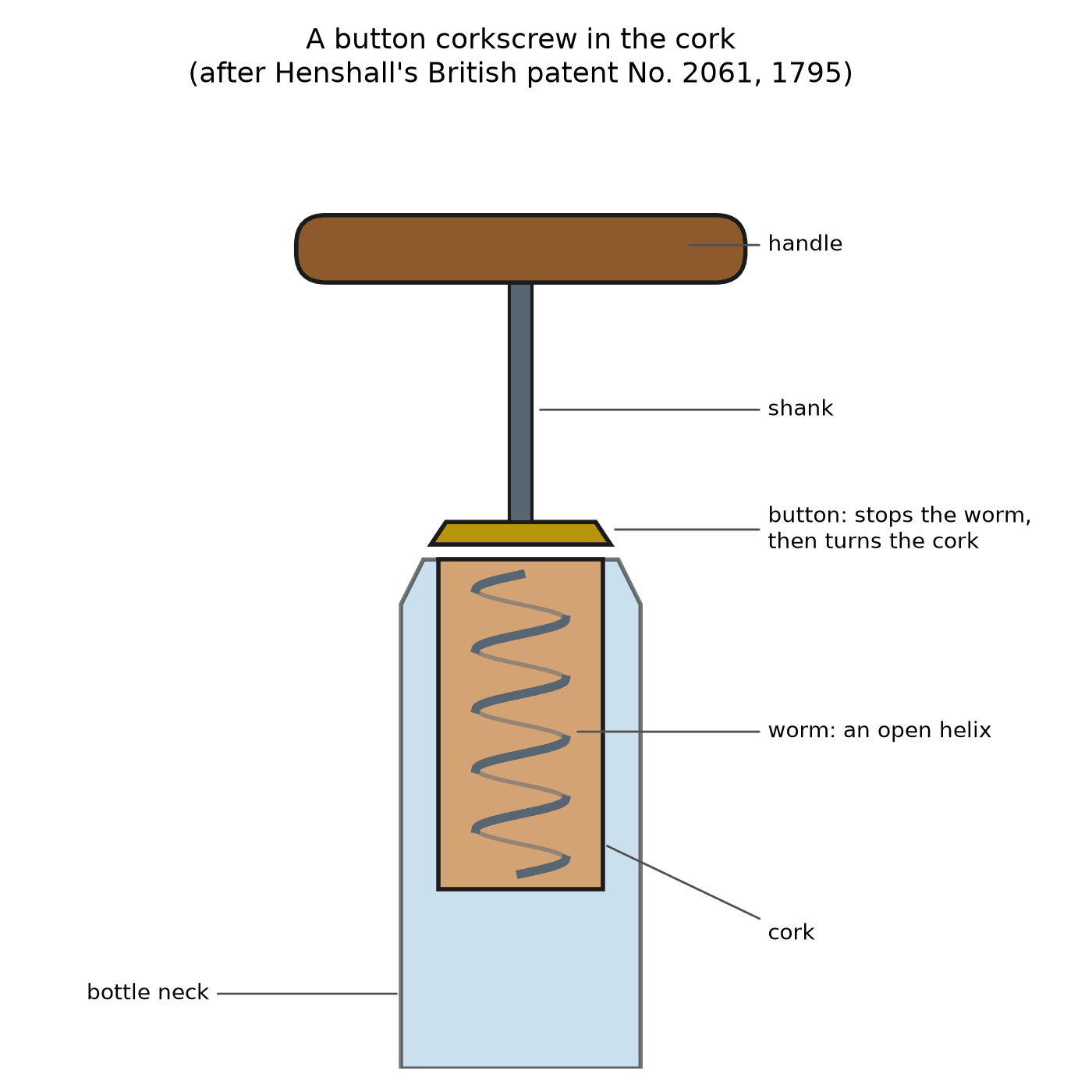
The embedded blueprint draws a cork with a strong screw and a T handle, by the arm's pull. Russel keeps a screw but lifts it with a cam, the cylinder bearing on the bottle.
3
3
Read US 34,216
Read US 34,216
"The machine is constructed of a cylinder with a head or cap through which passes a piston, to the lower end of which is secured a corkscrew. The upper end of the piston passes above the head or cap of the cylinder and is left free to turn and play up and down. To the upper part of piston is attached a cam or eccentric, which works through the upper part of said piston (being slit) resting on the cylinder head or cap, which is the bearing."
"It is operated by placing the lower end of the cylinder on the mouth of the bottle. The screw is then turned into the cork by the handle attached to the cam or eccentric, observing that the catch drops into the slots on the end of piston. The cam or eccentric is then turned with handle down, as in Fig. 2, which lifts or draws the cork out of the bottle."
4
4
Make the cam corkscrew and draw corks
Make the cam corkscrew and draw corks
**Cylinder.** Cut 12 cm of 30 mm aluminium tube and file its lower end to sit square on a bottle's mouth. Cut a hardwood disc to fit its top as the head, drill it for the piston and glue it in.
**Piston.** Cut 15 cm of 8 mm mild steel rod. Saw a 5 mm slit 3 cm deep into its top end and drill across the slit for the cam's pin.
**Screw.** Wind 2 mm steel wire into an open helix round a 6 mm rod, file its end to a point, and silver-solder its straight end into a hole drilled in the piston's lower end.
**Cam.** Cut a 5 mm disc of mild steel flat bar about 40 mm across, drill it 15 mm off centre for the pin, and rivet a flat-bar handle to its edge. Set it in the slit on a bolt, so its rim rests on the cylinder's head.
**Test.** Cork several bottles of water with the corking kit. Stand the cylinder on a bottle, turn the screw into the cork by the handle, then swing the handle down through half a turn, reading your push with the spring scale. Draw another cork with a plain corkscrew and the spring scale and compare.
Izinto zokwakha zalesi sinyathelo:
 Ipayipi le-aluminium0.12 imitha
 Ibhulokhi Lokhuni Oluqinile1 ucezu
 Iglu Lokhuni1 ucezu
 Ubhamu Oluyindilinga Lwensimbi Ethambile0.15 imitha
 Ucingo lwensimbi0.4 imitha
 Isoda Lesiliva1 ucezu
 Ifulaksi1 ucezu
 Ibha Eyisicaba Yensimbi Ethambile0.2 imitha
 Iqoqo lamabhawoti anezinhlangothi eziyisithupha1 ucezu
 Inathi Yezinhlangothi Eziyisithupha2 izicucu
 Ibhodlela lengilazi (elicwebile)4 izicucu
 Ama-cork4 izicucu
 Amanzi3 amalitha
Amathuluzi adingekayo:
 Isaha Sensimbi
 Izinsimbi zokuhlikihla (ezesandla)
 Isibambo Sebhentshi
 Isibani Se-propane
 Ibhola Elingenantambo
 Iqoqo Lamakhanda Ebhola
 Isando
 Udlawu Olunezihloko Eziyindilinga
 Ikhithi lokuvala amabhodlela ewayini
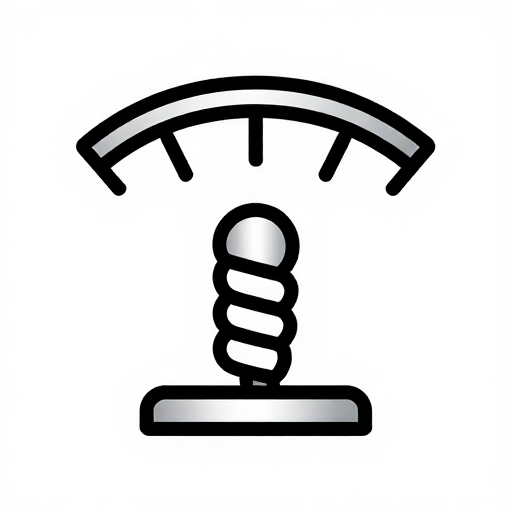 Isilinganiso Samandla (Isikali Sensimbi Esontekile)
 Izibuko Zokuphepha Ezicwathile
 Amagilavu Omsebenzi Esikhumba
5
5
A cam corkscrew that jams, slips or lifts too little
A cam corkscrew that jams, slips or lifts too little
Cam-lever corkscrew troubleshooting.
Flow
Loading...
6
6
History and honest limits
History and honest limits
**Abraham T. Russel** of New York, New York, received US 34,216, dated 21 January 1862. His cam A worked in the slit top of the piston B, resting on the head C of the cylinder D, and a catch dropping into slots on the piston's end let the handle turn the screw in before the lift. His claim is the cam or eccentric and piston applied as leverage to corkscrews.
**Honest limits.** Aluminium tube, a steel rod and a flat-bar eccentric stand in for his made-up cylinder, piston and cam, and the catch is left out, so the pin turns the screw in. The notebook gives the average lift without friction; its forces and lengths are examples. Your drawn corks are the result.
Izinto
13- 0.12 imithaIsibambeli
- 1 ucezuIsibambeli
- 1 ucezuIsibambeli
- 0.15 imithaIsibambeli
- 0.4 imithaIsibambeli
- 1 ucezuIsibambeli
- 1 ucezuIsibambeli
- 0.2 imithaIsibambeli
- Isibambeli
- 2 izicucuIsibambeli
- 4 izicucuIsibambeli
- 4 izicucuIsibambeli
- 3 amalithaIsibambeli
Amathuluzi Adingekayo
12- Isibambeli
- Isibambeli
- Isibambeli
- Isibambeli
- 1 vendor sell this, none ship to you yetIsibambeli
- Isibambeli
- Isibambeli
- Isibambeli
- Isibambeli
- Isibambeli
- Isibambeli
Le blueprint yenza
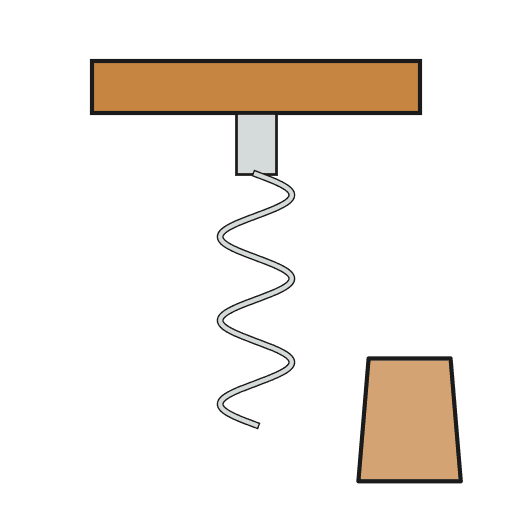
Ama-blueprint ahlobene
Lama-blueprint abelana ngolwazi — amasu, izinto noma izimiso


CC0 Isizinda Somphakathi
Le blueprint ikhishwe ngaphansi kwe-CC0. Ukhululekile ukukopisha, ukuguqula, ukusabalalisa, nokusebenzisa ngaphandle kwemvume.
Sekela uMenzi ngokuthenga imikhiqizo nge-Blueprint yabo IKhomishane Yomenzi kumiswe ngabathengisi, noma dala inguqulo entsha yale Blueprint bese uyifaka njengoxhumaniso ku-Blueprint yakho ukuze wabelane ngemali engenayo.