UBUCIKO
UBUHLE NEMPILO
UBUCIKO BEZANDLA
AMASIKO NOMLANDO
EZOKUZIJABULISA
IMVELO
UKUDLA NEZIPHUZO
REVERSE ENGINEERING
IZAYENSI
EZEMIDLALO
UBUCHWEPHESHE
IZINTO EZIGQOKWAYO
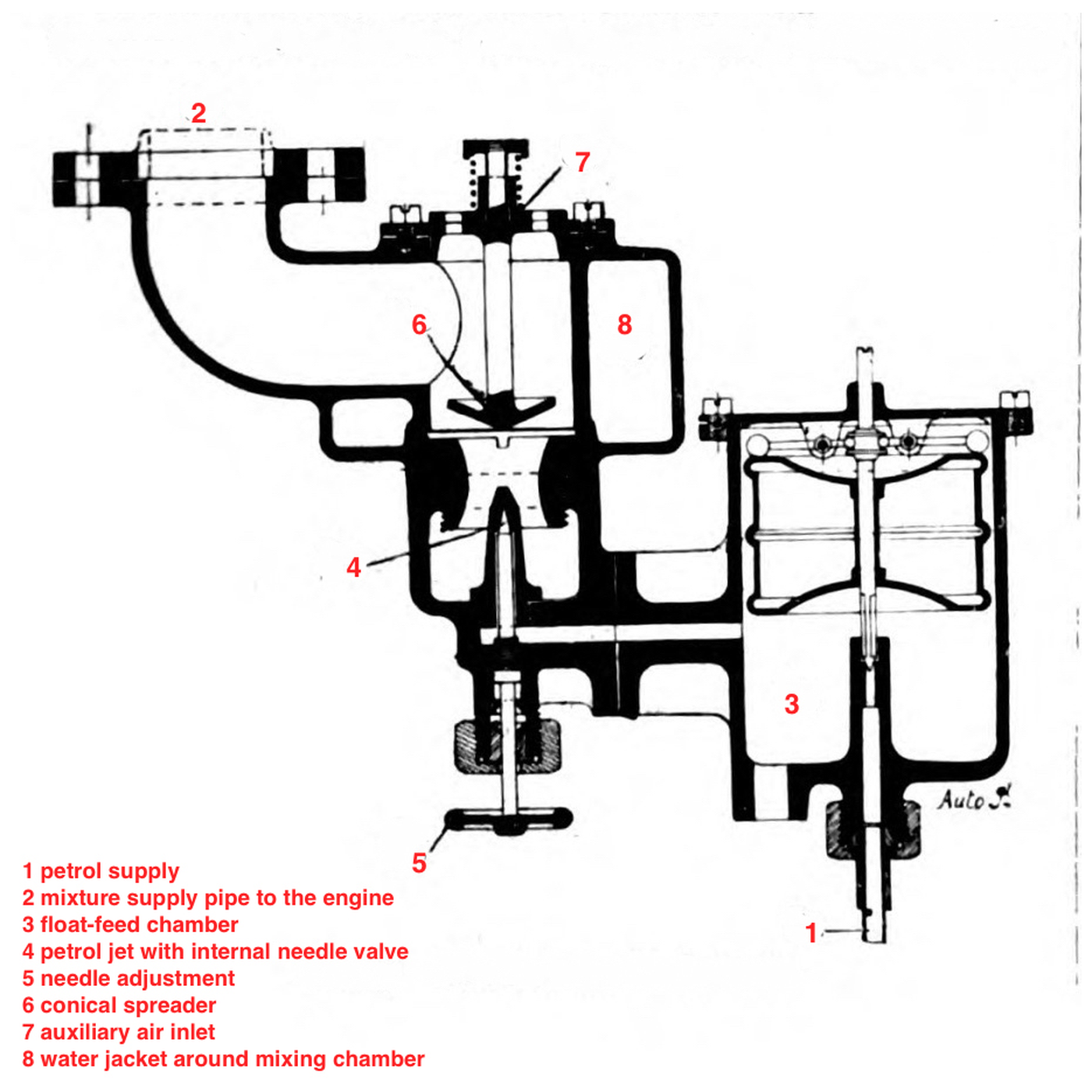


The Carburettor: A Venturi, a Jet and a Float
A petrol engine needs its fuel mixed with air in a nearly fixed ratio, at every speed. Wilhelm Maybach's spray-nozzle carburettor of 1893, for Daimler, did it with three parts and no moving control at all: a **venturi** that speeds the air and lowers its pressure, a **jet** opening into the throat that the low pressure draws fuel through, and a **float bowl** that holds the fuel at a constant level just below the jet.
Because the air flow and the fuel flow both go with the air's speed, the mixture stays right as the engine speeds up and slows down.
This rung works out why, and builds a water-and-air venturi atomiser to see the jet draw and spray — no petrol involved.
Ophakathi
About 3 hours
Imiyalelo
1
1
Why the mixture stays right
Why the mixture stays right
Ilayisha incwadi ye-Jupyter…
2
2
Build a venturi atomiser — with water
Build a venturi atomiser — with water
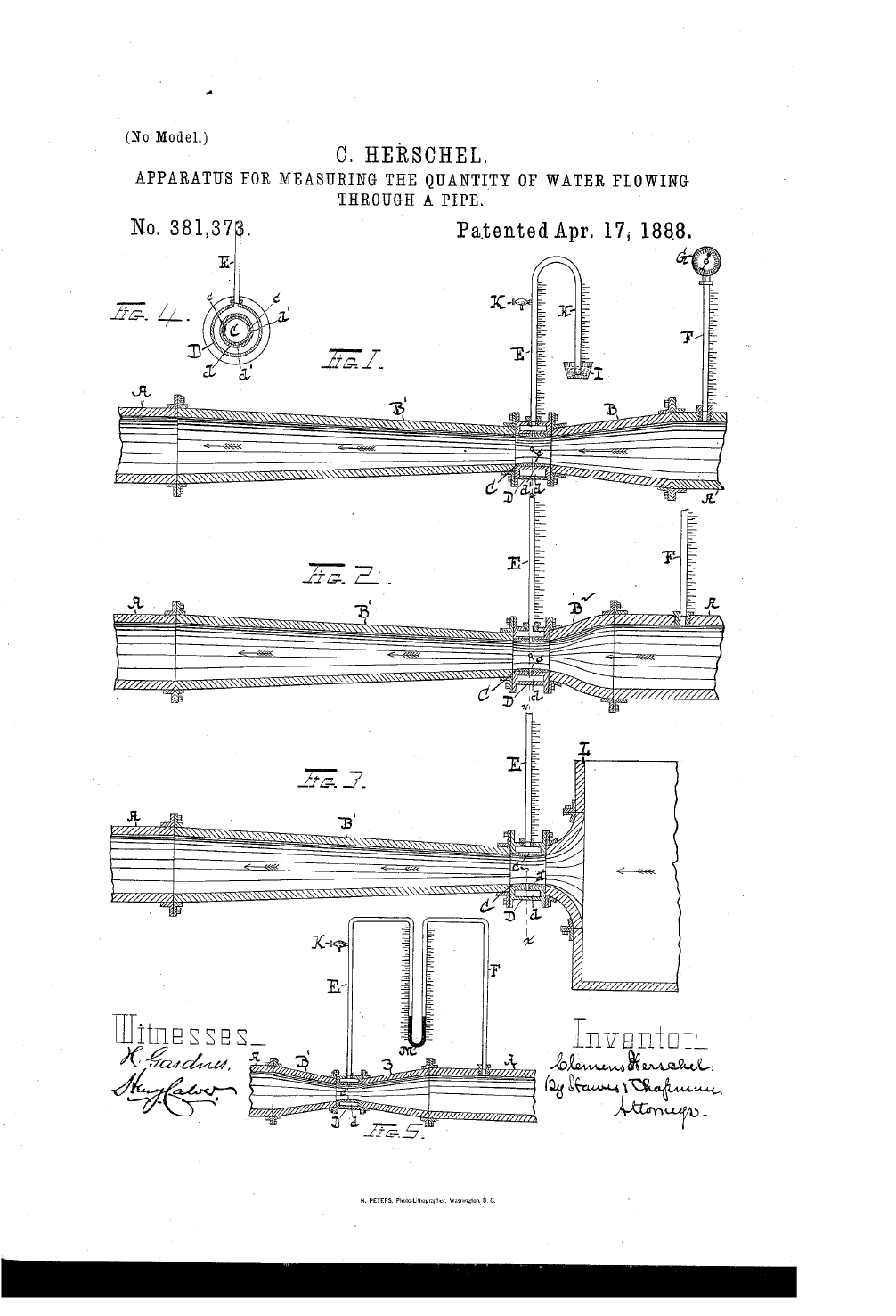
Print a venturi tube: 12 mm bore narrowing smoothly to a 6 mm throat and opening gently back out, with a 2 mm side hole at the throat into which a fine tube is sealed. Lead that tube down into a cup of coloured water 30 mm below the throat — the cup is your float bowl, and the height is the level the float holds.
Blow air through with the air compressor through the regulator, starting very low. At some air speed the water climbs the tube and is torn into a spray at the throat. Raise the cup and it starts at lower air speed; lower it and it needs more. That is why a carburettor needs a float: the fuel level must not change.
**Water only.** Never demonstrate this with petrol: an atomised fuel spray is an explosive mixture.
Izinto zokwakha zalesi sinyathelo:
 Ifilamenti ye-PETG30 g
 Ishubhu le-vinyl eliqhakazile1 imitha
 Umbala wokudla (umbala wokubona ukugeleza)1 iconsi
 Amanzi1 ilitha
Amathuluzi adingekayo:
 Iphrinta ye-3D yentambo (i-FDM)
 I-compressor yomoya
 Isilawuli sokwehlisa umfutho
 Irula
Irula Izibuko Zokuphepha Ezicwathile
3
3
History and context
History and context
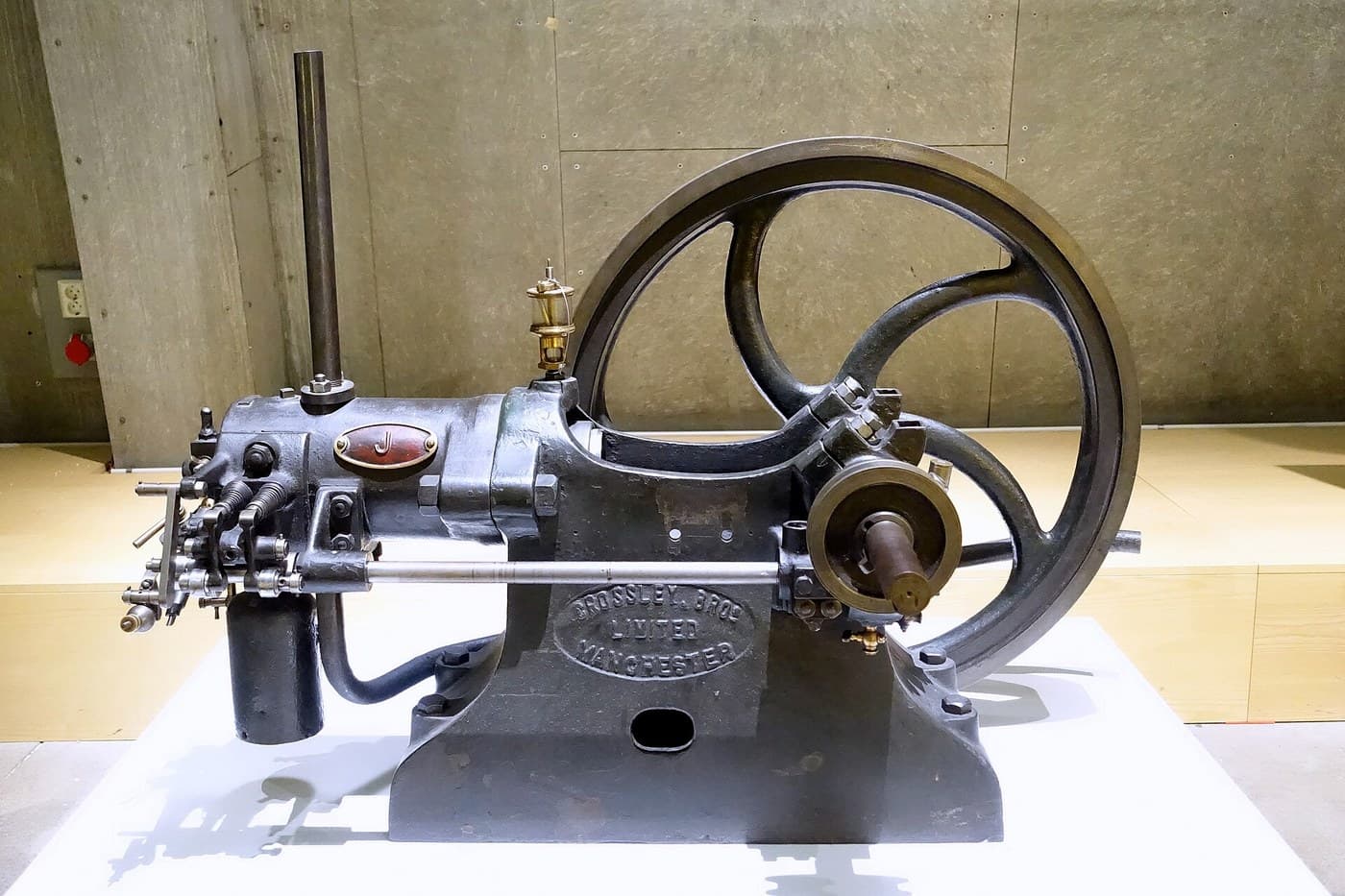
**Wilhelm Maybach, 1893** — the spray-nozzle carburettor with a float chamber, developed for Daimler engines, the pattern for carburettors for most of the next century. No patent number is asserted here. Earlier 'surface' and 'wick' carburettors had simply let air pass over or through petrol, and their mixture wandered with temperature and fuel level.
Fuel injection replaced the carburettor in cars from the 1980s, for precise mixture control and emissions; carburettors survive on small engines.
**Honest limits.** The simple venturi law fails at very low airflow (idle) and during sudden throttle opening, so real carburettors carry extra circuits. The mixture shifts with altitude, because air density falls. And petrol vapour is dangerous: carburettors are worked on outdoors, away from flame.
Izinto
4- Isibambeli
- 1 imithaIsibambeli
- Isibambeli
- 1 ilithaIsibambeli
Amathuluzi Adingekayo
5- Isibambeli
- 1 vendor sell this, none ship to you yetIsibambeli
- Isibambeli
- Isibambeli
- Isibambeli
Ama-blueprint ahlobene
Lama-blueprint abelana ngolwazi — amasu, izinto noma izimiso


CC0 Isizinda Somphakathi
Le blueprint ikhishwe ngaphansi kwe-CC0. Ukhululekile ukukopisha, ukuguqula, ukusabalalisa, nokusebenzisa ngaphandle kwemvume.
Sekela uMenzi ngokuthenga imikhiqizo nge-Blueprint yabo IKhomishane Yomenzi kumiswe ngabathengisi, noma dala inguqulo entsha yale Blueprint bese uyifaka njengoxhumaniso ku-Blueprint yakho ukuze wabelane ngemali engenayo.