UBUCIKO
UBUHLE NEMPILO
UBUCIKO BEZANDLA
AMASIKO NOMLANDO
EZOKUZIJABULISA
IMVELO
UKUDLA NEZIPHUZO
REVERSE ENGINEERING
IZAYENSI
EZEMIDLALO
UBUCHWEPHESHE
IZINTO EZIGQOKWAYO



The Counter Lever Cork Extractor: A Spring Sets the Screw, a Tap on the Lever Draws the Cork
Behind a busy counter, every cork drawn by hand takes both hands and a strong pull, and then has to be picked off the corkscrew.
Joseph P. Miers and John Groendyke of Lebanon, New Jersey, received US 41,385, dated 26 January 1864, for a machine that stands on the counter: a frame with a cross-bar that holds the bottle down, a carriage sliding in the frame's grooved uprights, a shaft turning in the carriage with a corkscrew on its end, a spring that presses them down, and a hand-lever whose forked end lifts the carriage. A few turns set the screw, "a slight pressure or tap of the hand on the lever F causes the cork to fly out", and blades on the shank split each cork when the next one pushes it up, so it drops off by itself.
This rung works out the lift of the lever against the spring, with a work check, then builds the machine in hardwood and steel and draws a run of corks.
Osezingeni eliphezulu
About 8 hours
Imiyalelo
1
1
Lever against spring
Lever against spring
Ilayisha incwadi ye-Jupyter…
2
2
A frame corkscrew before it
A frame corkscrew before it
The embedded blueprint stands a frame on the bottle and lifts the cork with the screw itself. Miers and Groendyke fix the frame to the counter and lift with a lever.
3
3
Read US 41,385
Read US 41,385
"D is the corkscrew, which is rigidly attached to or made solid with the shaft C, and the stem or shank of this corkscrew terminates in two or more cutting-blades, E, intended to split the corks after they have been removed from the bottle, and to cause them to drop off from the corkscrew spontaneously and without the aid of the operator. F is a hand-lever, which is pivoted to one of the uprights a, and the forked end of which straddles the shaft C and bears on the under side of the carriage B."
"The operation is as follows: The bottle from which the cork is to be removed is adjusted under the cross-bar b, and the shaft C and the carriage are raised to the position shown in Fig. 1. The point of the corkscrew being depressed by the action of the spring d will readily enter the cork as soon as a rotary motion is imparted to the shaft C. A few revolutions of this shaft are sufficient to give to the corkscrew a firm hold in the cork, and a slight pressure or tap of the hand on the lever F causes the cork to fly out, the bottle being retained by the cross-bar b. The next cork to be removed forces the first up against the cutting-blades E, so that the same is split and caused to drop off spontaneously and without the aid of the operator."
4
4
Build the machine and draw a run of corks
Build the machine and draw a run of corks
**Frame.** Screw two 45 cm hardwood uprights to a hardwood base 8 cm apart and join their tops with a cross piece. Glue hardwood strips inside the uprights' upper half as grooves for the carriage. Fix a cross-bar between them at the height of a bottle's lip, with a hole the cork passes through but the neck does not.
**Carriage and shaft.** Cut a hardwood block that slides in the grooves and drill it for a 10 mm steel rod. Pass the rod through the top piece and the carriage, and fix a nut and washer on each side of the carriage so the rod turns in it but cannot slide through it. Bend or fix a flat-bar crank at the rod's top. Fit a compression spring round the rod between the top piece and the carriage.
**Corkscrew and blades.** Wind 2 mm steel wire round the rod's lower end as a helix and silver-solder it on. Silver-solder two small flat-bar blades across the shank just above it and file their upper edges sharp.
**Lever.** Cut a 40 cm hardwood lever, fork one end round the rod under the carriage, and pivot it on a bolt through one upright.
**Test.** Cork several bottles of water with the corking kit. Stand one under the cross-bar, lift the carriage with the lever and let the spring set the screw on the cork, turn the crank a few times, then tap the lever. Draw the next cork and see the first split on the blades and drop off.
Izinto zokwakha zalesi sinyathelo:
 Ipulangwe Lokhuni Oluqinile2 izicucu
 Ibhulokhi Lokhuni Oluqinile1 ucezu
 Izikulufu zokhuni12 izicucu
 Iglu Lokhuni1 ucezu
 Ubhamu Oluyindilinga Lwensimbi Ethambile0.6 imitha
 Inathi Yezinhlangothi Eziyisithupha2 izicucu
 Iwasha Eliyisicaba2 izicucu
 Iqoqo lezintambo zokucindezela1 ucezu
 Ucingo lwensimbi0.4 imitha
 Isoda Lesiliva1 ucezu
 Ifulaksi1 ucezu
 Ibha Eyisicaba Yensimbi Ethambile0.2 imitha
 Iqoqo lamabhawoti anezinhlangothi eziyisithupha1 ucezu
 Ibhodlela lengilazi (elicwebile)4 izicucu
 Ama-cork4 izicucu
 Amanzi3 amalitha
Amathuluzi adingekayo:
 Isaha Sesandla
 Isethi yezisebenzi zokhuni
 Ibhola Elingenantambo
 Iqoqo Lamakhanda Ebhola
 Isethi yezikulufudrayiva
 Ama-clamp
 Isaha Sensimbi
 Izinsimbi zokuhlikihla (ezesandla)
 Isibambo Sebhentshi
 Isibani Se-propane
 Isipanela esilungisekayo
 Ikhithi lokuvala amabhodlela ewayini
 Izibuko Zokuphepha Ezicwathile
 Amagilavu Omsebenzi Esikhumba
5
5
A machine that jams, slips or will not throw the cork
A machine that jams, slips or will not throw the cork
Counter lever cork extractor troubleshooting.
Flow
Loading...
6
6
History and honest limits
History and honest limits
**Joseph P. Miers and John Groendyke** of Lebanon, Hunterdon County, New Jersey, received US 41,385, dated 26 January 1864. Their frame A of wood or other material was fastened to the counter, and they allowed a weight in place of the spring, or its place changed. Their claims cover the hand-lever with the corkscrew on the sliding rotary spring-shaft, the sliding carriage with the shaft, corkscrew and lever, and the cutting blades with the corkscrew.
**Honest limits.** Hardwood, a steel rod and a wound wire helix stand in for their machine's parts, and the sizes are not theirs. The notebook ignores friction and the cork's own grip; its forces, lengths and spring are examples. Your run of corks is the result.
Izinto
16- 2 izicucuIsibambeli
- 1 ucezuIsibambeli
- 12 izicucuIsibambeli
- 1 ucezuIsibambeli
- 0.6 imithaIsibambeli
- 2 izicucuIsibambeli
- 2 izicucuIsibambeli
- Isibambeli
- 0.4 imithaIsibambeli
- 1 ucezuIsibambeli
- 1 ucezuIsibambeli
- 0.2 imithaIsibambeli
- Isibambeli
- 4 izicucuIsibambeli
- 4 izicucuIsibambeli
- 3 amalithaIsibambeli
Amathuluzi Adingekayo
14- Isibambeli
- Isibambeli
- 1 vendor sell this, none ship to you yetIsibambeli
- Isibambeli
- Isibambeli
- Isibambeli
- Isibambeli
- Isibambeli
- Isibambeli
- Isibambeli
- Isibambeli
- Isibambeli
- Isibambeli
- Isibambeli
Le blueprint yenza
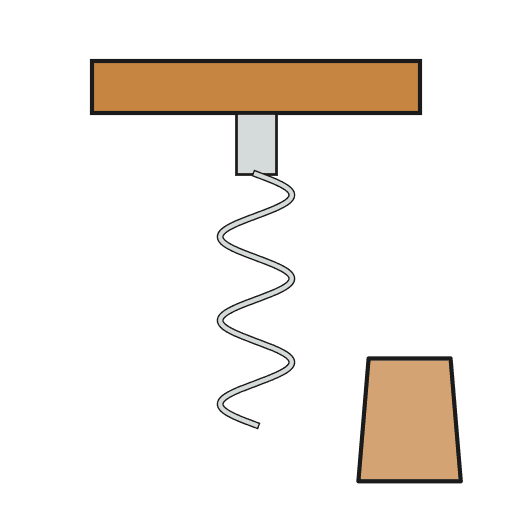
Ama-blueprint ahlobene
Lama-blueprint abelana ngolwazi — amasu, izinto noma izimiso



CC0 Isizinda Somphakathi
Le blueprint ikhishwe ngaphansi kwe-CC0. Ukhululekile ukukopisha, ukuguqula, ukusabalalisa, nokusebenzisa ngaphandle kwemvume.
Sekela uMenzi ngokuthenga imikhiqizo nge-Blueprint yabo IKhomishane Yomenzi kumiswe ngabathengisi, noma dala inguqulo entsha yale Blueprint bese uyifaka njengoxhumaniso ku-Blueprint yakho ukuze wabelane ngemali engenayo.