UBUCIKO
UBUHLE NEMPILO
UBUCIKO BEZANDLA
AMASIKO NOMLANDO
EZOKUZIJABULISA
IMVELO
UKUDLA NEZIPHUZO
REVERSE ENGINEERING
IZAYENSI
EZEMIDLALO
UBUCHWEPHESHE
IZINTO EZIGQOKWAYO
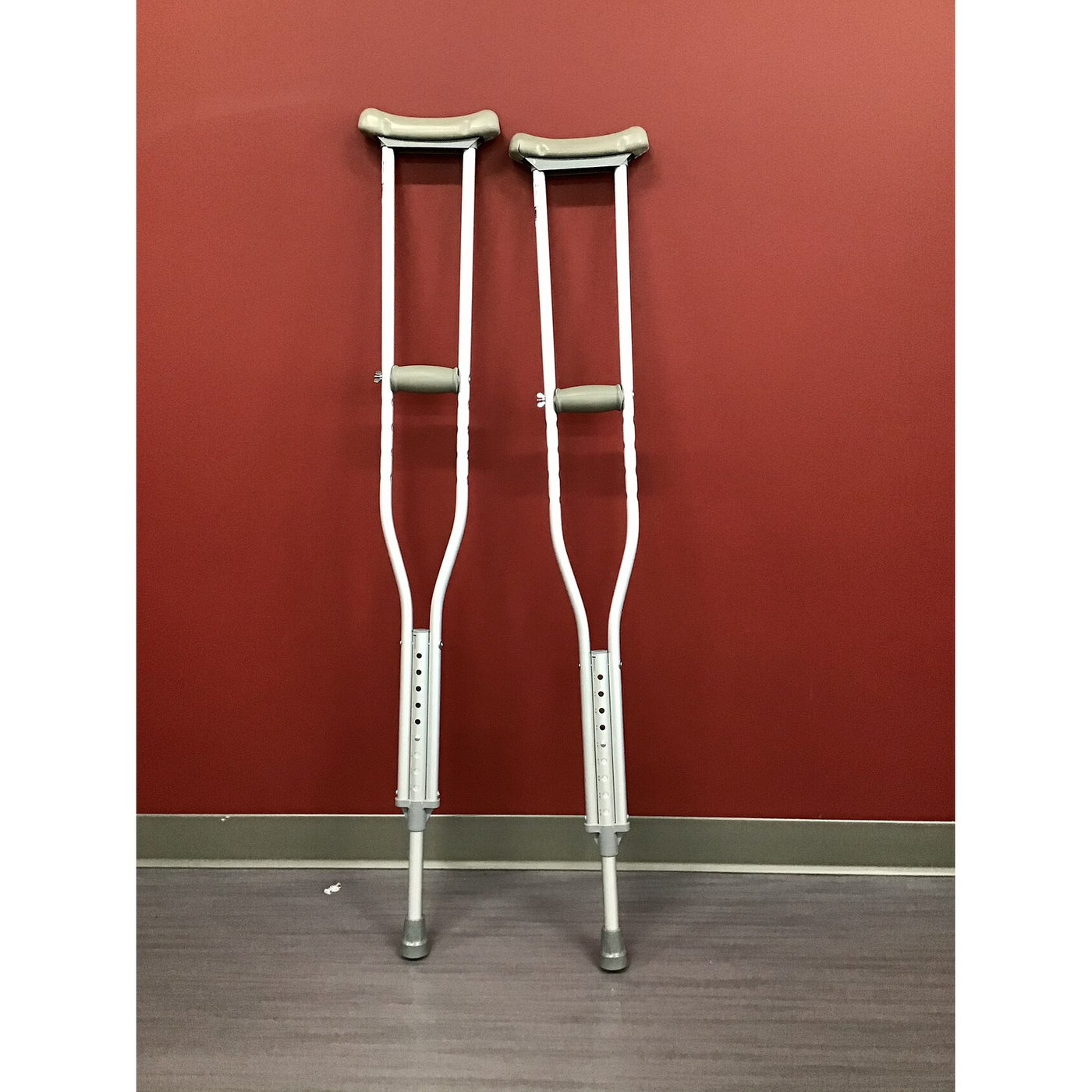


The Crutch: Carrying the Body on the Hands
When a leg cannot bear weight, the arms must take it. Crutches are among the oldest aids there are, and their design is a question of mechanics: the load must go through the hands, not the armpit, and the tip must not slide.
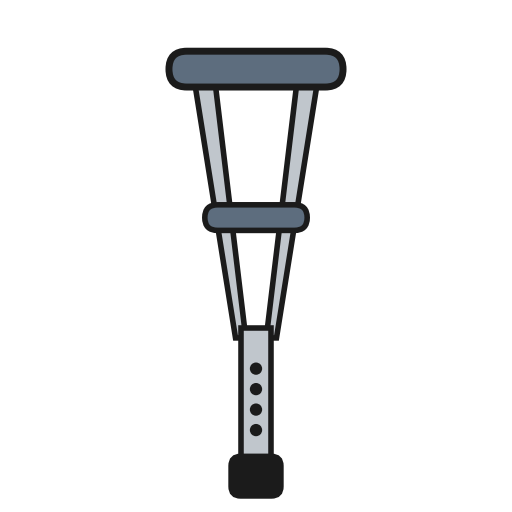
The underarm crutch braces against the side of the chest while the hands carry the body weight; leaning on the armpit pad instead compresses the nerves there. The tip's rubber grips only as long as the crutch is not planted too far out — the angle and the floor decide whether it holds.
This rung works out the loads through the hands and the friction the tip needs, gives the standard fitting guide, and measures both on the bench.
Oqalayo
About 2 hours
Imiyalelo
1
1
Hand loads, tip friction and fitting
Hand loads, tip friction and fitting
Ilayisha incwadi ye-Jupyter…
2
2
The arm that carries the load
The arm that carries the load
On crutches the arms carry the body. The embedded blueprint shows the arm's bones and muscles as a lever system.
3
3
Measure the tip's grip
Measure the tip's grip
Stand a crutch on a floor surface. Holding the handgrip, press down firmly and slowly lean the top away until the tip slips. Measure the angle from vertical with a protractor at the moment it slips; $\mu = \tan\theta$.
Repeat on dry concrete, on tile, on tile wetted with a spray bottle, and with the rubber tip and without it (the bare tube). Tabulate $\mu$. The wet tile and the bare tube are the ones that put people on the floor.
Izinto zokwakha zalesi sinyathelo:
 Amanzi1 ilitha
Amathuluzi adingekayo:
 Iphrothrakta
 Irula
 Ibhodlela lokufafaza amanzi
 Induku yokwesekela
4
4
Fit and load-check a crutch
Fit and load-check a crutch
Adjust the crutch using its spring-button holes: overall length so the pad is about 5 cm below the armpit when standing tall, then the handgrip to wrist-crease height with the arm hanging.
Stand with one foot on a weighing scale and the crutch tip on the floor beside it; take weight off the scale onto the crutch through the hand only, pad clear of the armpit. The drop in the scale reading is the load in the hand. Then let the pad bear on the armpit and feel where the load goes. Do this briefly and on a stable floor — you are testing the crutch, not practising a gait.
Amathuluzi adingekayo:
 Isikali
 Ithephu Lokulinganisa
5
5
A crutch that is not working for its user
A crutch that is not working for its user
Crutch problems and their usual causes. A physiotherapist should fit crutches for anyone who needs them.
Flow
Loading...
6
6
Context and honest limits
Context and honest limits
Crutches appear in the art of ancient Egypt and have been used ever since. The adjustable aluminium underarm crutch and the forearm (elbow) crutch, which carries the load on a cuff and handgrip with no armpit pad, are the common forms today.
**Honest limits.** The friction values in the notebook are examples, not measurements; measure your own. The 77 % length rule is a rough starting point. Crutch fitting and gait training are the job of a physiotherapist.
Amathuluzi Adingekayo
6- Isibambeli
- Isibambeli
- Isibambeli
- Isibambeli
- Isibambeli
- 1 vendor sell this, none ship to you yetIsibambeli
Ama-blueprint ahlobene
Lama-blueprint abelana ngolwazi — amasu, izinto noma izimiso



CC0 Isizinda Somphakathi
Le blueprint ikhishwe ngaphansi kwe-CC0. Ukhululekile ukukopisha, ukuguqula, ukusabalalisa, nokusebenzisa ngaphandle kwemvume.
Sekela uMenzi ngokuthenga imikhiqizo nge-Blueprint yabo IKhomishane Yomenzi kumiswe ngabathengisi, noma dala inguqulo entsha yale Blueprint bese uyifaka njengoxhumaniso ku-Blueprint yakho ukuze wabelane ngemali engenayo.