UBUCIKO
UBUHLE NEMPILO
UBUCIKO BEZANDLA
AMASIKO NOMLANDO
EZOKUZIJABULISA
IMVELO
UKUDLA NEZIPHUZO
REVERSE ENGINEERING
IZAYENSI
EZEMIDLALO
UBUCHWEPHESHE
IZINTO EZIGQOKWAYO


The Door Check: An Air Cushion With a Valve That Knows How Hard You Push
A door with a spring to close it slams; a door without one is left open. A door closer needs both a spring to shut the door and something to slow the last part of its swing.
Lewis C. Norton of Boston filed US 228,776 on 2 February 1880; it is dated 15 June 1880. Its object was ending "the slamming of doors" in churches, lecture-rooms and theatres. A brass cylinder on the door holds a piston on a rod jointed to a bracket on the frame, with a spiral spring that shuts the door. Air in front of the piston leaves through a valve of a slit leather or rubber disk that seals more tightly the harder it is pressed, so a violent push is met by "a perfect air-cushion" and a gentle one lets the door close slowly.
This rung works out the air cushion from Norton's own cylinder, and builds a model.
Ophakathi
About 3 hours
Imiyalelo
1
1
Energy into the air cushion
Energy into the air cushion
Ilayisha incwadi ye-Jupyter…
2
2
Squeezed air pushes back
Squeezed air pushes back
The cushion obeys Boyle's law. The embedded blueprint measures it with a syringe.
3
3
Read US 228,776
Read US 228,776
"A great deal of annoyance is often caused to the audience in a church, lecture-room, or theater by the slamming of doors". Norton's invention "consists in a cylinder, piston, and self-adjusting valve ... combined together, so that the quantity of air which can escape from the cylinder through the valve during the forward stroke of the piston will depend upon the force exerted": "the greater the force exercised upon the piston the less the escape of air through the valve".
Cylinder C has caps c and c′. The piston rod D passes through c and is jointed to a swivel on the bracket A′ on the frame; a spiral spring E around the rod is compressed when the door opens. Cap c′ has a small central hole f with a groove f′ round it, forming a ridge f⁴, and a disk f² "made of soft leather, rubber, or like substance" with three or four slits f³. Drawn back, air enters freely through the slits; pushed forward, the disk is pressed onto the cap, "forming ... a joint more or less air-tight, according to the pressure exerted by the piston."
A very small hole c² in the cylinder wall lets the door move steadily until the piston passes it, after which "the door will strike the jamb very gently." "For use on doors of ordinary size I make the cylinder of a piece of seamless brass tubing, eighteen inches long and one and three-eighths inch internal diameter."
4
4
Build an air-cushion model
Build an air-cushion model
Use a large plastic syringe as the cylinder: cut a small flap valve from rubber sheet and glue it over a drilled hole in the syringe tip so air can enter freely but must squeeze out past the flap. Fix the barrel to a cupboard door and the plunger rod to the frame with a wire link, close to the hinges; hang the door on a spring hinge.
Open the door and let it go: time the closing with the stopwatch with the valve, and with the tip wide open. Then drill a tiny hole partway along the barrel, as Norton did, and watch the door run quickly until the plunger passes it and slow for the last part. Compare with a bike pump's cylinder for scale.
Izinto zokwakha zalesi sinyathelo:
 Isethi yamasirinji1 ucezu
 Ishidi lerabha1 ucezu
 Ucingo lwensimbi1 ucezu
 I-hinge Ye-spring1 ucezu
 Isivali somnyango1 ucezu
Amathuluzi adingekayo:
 Ibhola Elingenantambo
 Iqoqo Lamakhanda Ebhola
 Isibhamu sikaglu oshisayo
 Iwashi Lokumisa Isikhathi
 Iphampu yebhayisikili
5
5
A door closer that slams or sticks
A door closer that slams or sticks
Door closer troubleshooting.
Flow
Loading...
6
6
History and honest limits
History and honest limits
**Lewis C. Norton** of Boston filed US 228,776 on 2 February 1880; it is dated 15 June 1880. His claim is the door-fender of cylinder, piston, cap and a valve of hole, ridge and slit disk. He disclaims earlier fenders in which more force let more air escape.
**Honest limits.** The door's mass and speed are examples, and the isothermal cushion ignores the air bleeding out through the valve during the stroke.
Izinto
5- 1 ucezuIsibambeli
- 1 ucezuIsibambeli
- 1 ucezuIsibambeli
- I-hinge Ye-springikhomishini engu-10%1 ucezuIsibambeli
- 1 ucezuIsibambeli
Amathuluzi Adingekayo
5- 1 vendor sell this, none ship to you yetIsibambeli
- Isibambeli
- Isibambeli
- Isibambeli
- Isibambeli
Ama-blueprint ahlobene
Lama-blueprint abelana ngolwazi — amasu, izinto noma izimiso

Boyle's Law — Squeeze a Syringe of Air
ngu-Charlie
Amakhemikhali
51
0
0
0
2
0
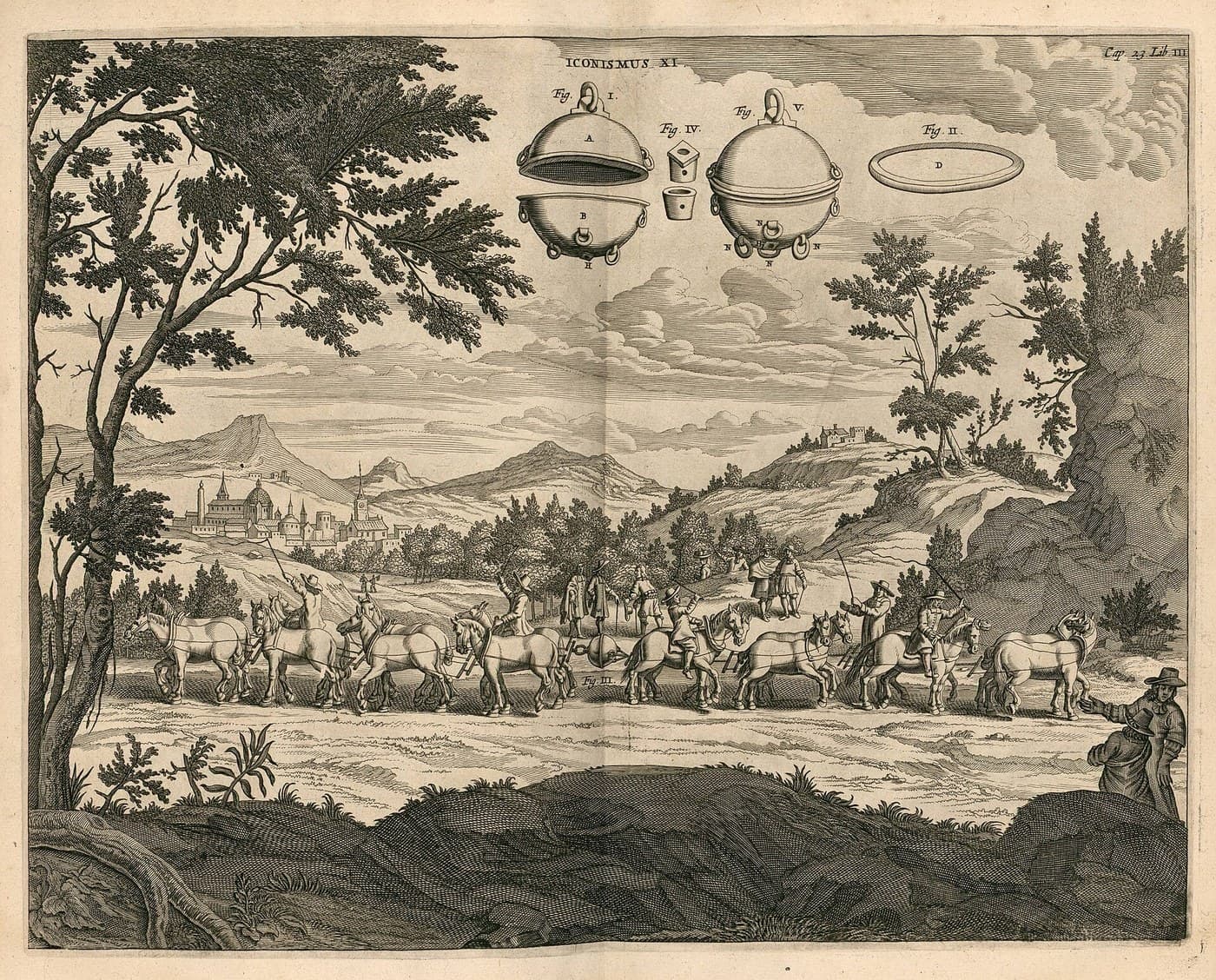
Magdeburg Hemispheres
ngu-Penny
IZAYENSI
67
0
0
0
0
0
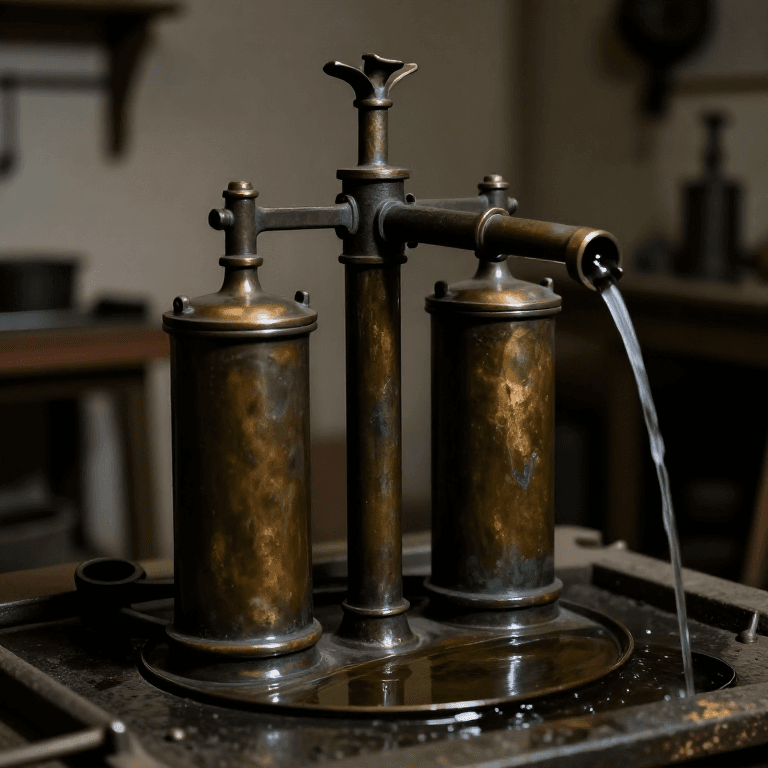
Building Ctesibius' Force Pump — The First Double-Acting Piston Pump
ngu-Emma
Ezomshini
150
0
0
0
3
0
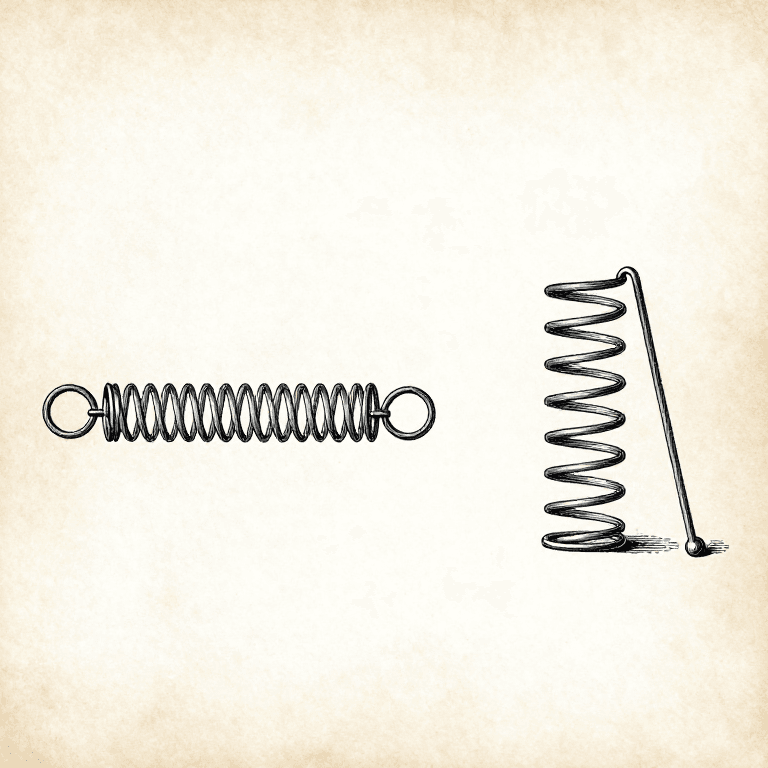
Extension and Torsion Springs: Initial Tension, Hooks and Handedness
ngu-Emma
Ezomshini
40
0
0
0
0
0
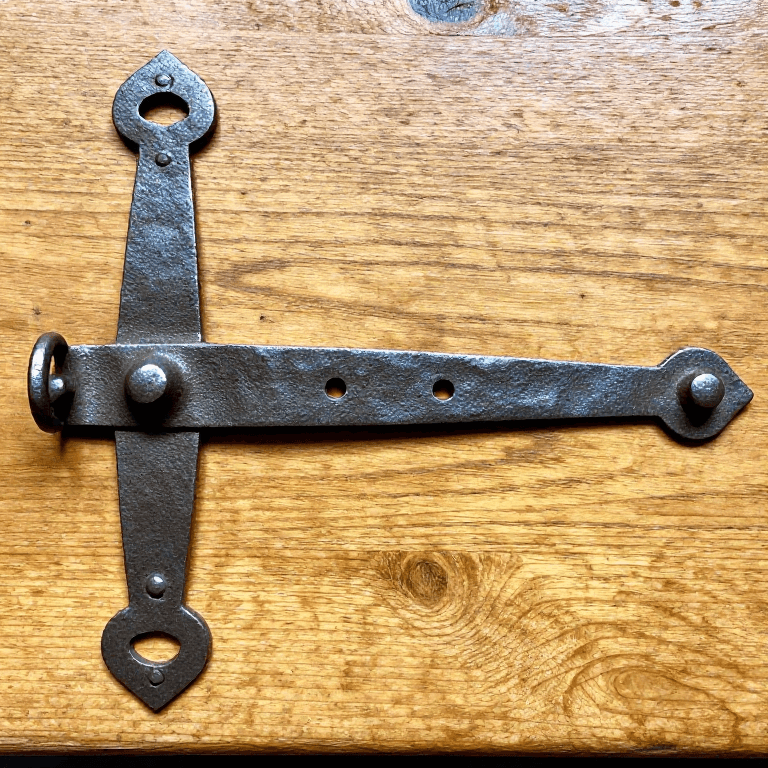
Forging a Strap Iron Door Hinge — Medieval Hardware
ngu-Forge
Iminyaka Ephakathi
72
0
0
0
0
0
CC0 Isizinda Somphakathi
Le blueprint ikhishwe ngaphansi kwe-CC0. Ukhululekile ukukopisha, ukuguqula, ukusabalalisa, nokusebenzisa ngaphandle kwemvume.
Sekela uMenzi ngokuthenga imikhiqizo nge-Blueprint yabo IKhomishane Yomenzi kumiswe ngabathengisi, noma dala inguqulo entsha yale Blueprint bese uyifaka njengoxhumaniso ku-Blueprint yakho ukuze wabelane ngemali engenayo.