UBUCIKO
UBUHLE NEMPILO
UBUCIKO BEZANDLA
AMASIKO NOMLANDO
EZOKUZIJABULISA
IMVELO
UKUDLA NEZIPHUZO
REVERSE ENGINEERING
IZAYENSI
EZEMIDLALO
UBUCHWEPHESHE
IZINTO EZIGQOKWAYO

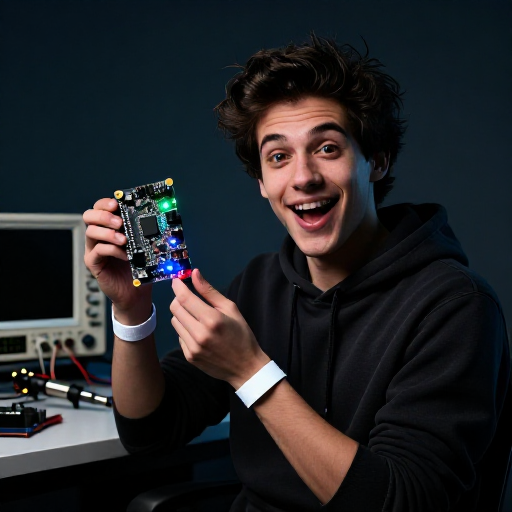

The Fire-Alarm Telegraph: A Box That Sends Its Own Address
In a growing city a fire was reported by someone running to the nearest station house, and the alarm was spread by shouting and church bells. By the time the engines knew where to go, the fire had spread.
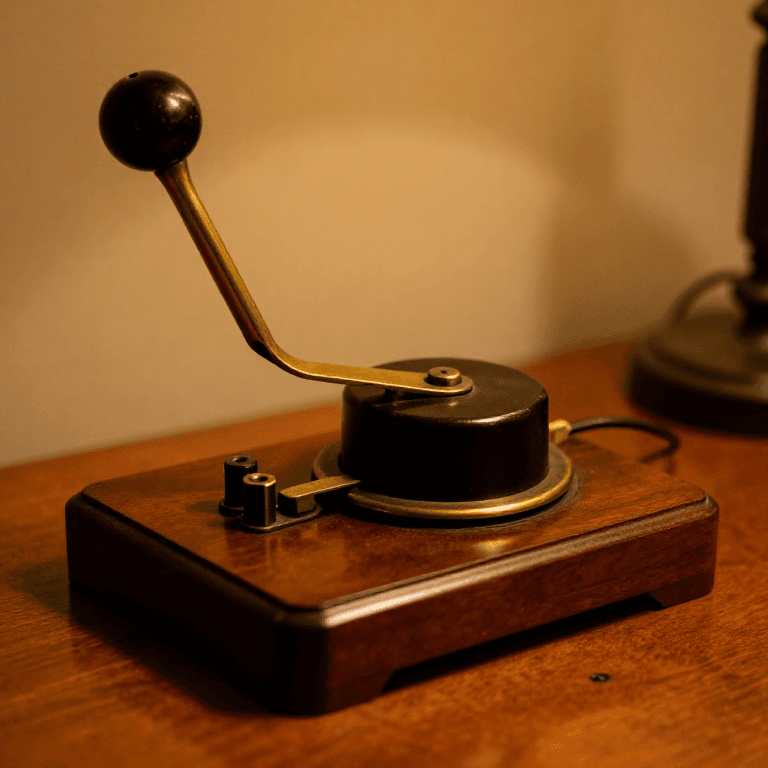
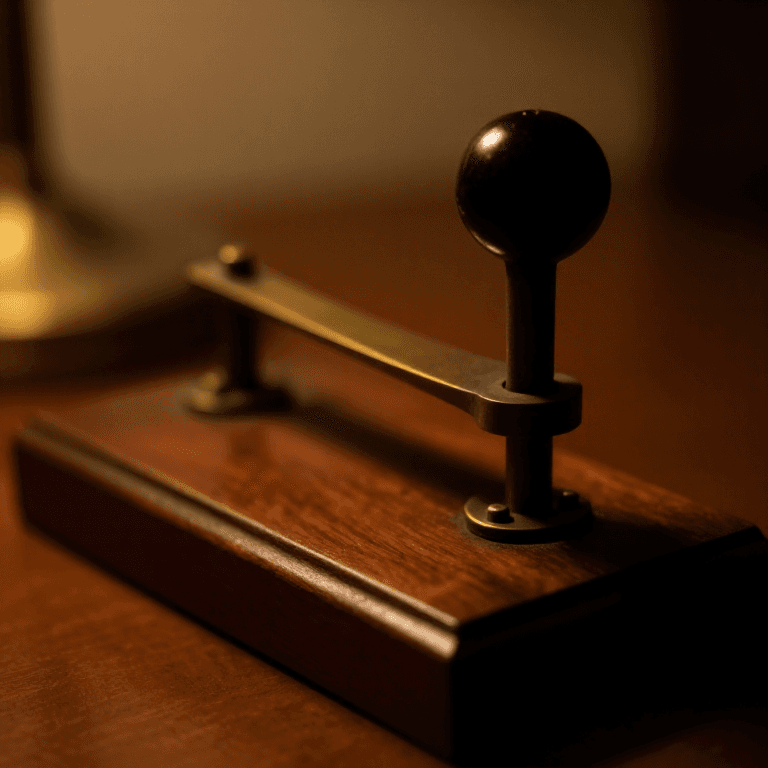
William F. Channing of Boston and Moses G. Farmer of Salem, Massachusetts, received US 17,355, dated 19 May 1857, for "The American Fire-Alarm Telegraph". Signal boxes are placed within a short distance of every house. Turning a box's crank rotates a wheel whose two groups of teeth break the circuit to the central station in a pattern — the district number, then the box number — which the station reads as dots and dashes; the station then strikes the alarm bells in the towers by telegraph.
This rung works out how many boxes such a code can name and why it is sent three times, and builds a signal box with an Arduino.
Ophakathi
About 3 hours
Imiyalelo
1
1
Codes, timing and repetition
Codes, timing and repetition
Ilayisha incwadi ye-Jupyter…
2
2
The line the alarm runs on
The line the alarm runs on
The fire alarm used the electric telegraph's circuit and magnet. The embedded blueprint builds Morse's telegraph.
3
3
Read US 17,355
Read US 17,355
"The object of the American fire-alarm telegraph is to give an instantaneous and definite alarm, either general or local, in a city or town, in case of fire." The system has signal-stations, a central station, alarm-stations, a signal-circuit and an alarm-circuit. Signal-stations are to be multiplied "in order to place one within a suitable distance of every house."
In a signal-station a small bell h is struck by a hammer on the armature-lever of an electro-magnet, and c c′ is "a break-circuit key", worked by a knob or by a circuit-wheel b turned by a crank a. "On the periphery of the circuit-wheel are two groups of teeth": one of short teeth giving "dots", the other of teeth giving a combination of dots and dashes. "The first of these groups may, by the number of its teeth, represent the number of the fire-district in which the signal-station is located. The second group may ... represent the number of the signal-station itself in that district." The crank is weighted so the wheel rests with the circuit closed.
Several signal-circuits may radiate "like the petals of a flower from the central station", and threefold or manifold wires lessen "the probability of interruption from accident or design."
4
4
The signal-box sketch
The signal-box sketch
Press the button and the box sends its district and station numbers as groups of beeps, three rounds, like one turn of the crank. Compiled and run against a simulator: one press gives exactly 24 pulses (3 + 5, three times).
signal_box.inoarduino
Izinto zokwakha zalesi sinyathelo:
 Arduino Uno R31 ucezu
 Inkinobho yokucindezela1 ucezu
 Ibhuza le-piezo1 ucezu
 Izintambo Zokuxhuma1 ucezu
 Ibhodi Lokuhlola1 ucezu
Amathuluzi adingekayo:
 Ikhompyutha Ene-Arduino IDE
5
5
Crank, send, count
Crank, send, count
Indawo Yokusebenza Ye-Blockly
Loading Blockly workspace...
6
6
A signal box that is not heard
A signal box that is not heard
Signal-box troubleshooting.
Flow
Loading...
7
7
History and honest limits
History and honest limits
**William F. Channing** of Boston and **Moses G. Farmer** of Salem, assignors to Channing, received US 17,355, dated 19 May 1857, for the American Fire-Alarm Telegraph.
**Honest limits.** The pulse timings and drop rates in the notebook are examples; the sketch is a model of the code, not a certified alarm.
Izinto
5- Isibambeli
- Isibambeli
- 1 ucezuIsibambeli
- Isibambeli
- Isibambeli
Amathuluzi Adingekayo
1- Isibambeli
Ama-blueprint ahlobene
Lama-blueprint abelana ngolwazi — amasu, izinto noma izimiso



CC0 Isizinda Somphakathi
Le blueprint ikhishwe ngaphansi kwe-CC0. Ukhululekile ukukopisha, ukuguqula, ukusabalalisa, nokusebenzisa ngaphandle kwemvume.
Sekela uMenzi ngokuthenga imikhiqizo nge-Blueprint yabo IKhomishane Yomenzi kumiswe ngabathengisi, noma dala inguqulo entsha yale Blueprint bese uyifaka njengoxhumaniso ku-Blueprint yakho ukuze wabelane ngemali engenayo.