UBUCIKO
UBUHLE NEMPILO
UBUCIKO BEZANDLA
AMASIKO NOMLANDO
EZOKUZIJABULISA
IMVELO
UKUDLA NEZIPHUZO
REVERSE ENGINEERING
IZAYENSI
EZEMIDLALO
UBUCHWEPHESHE
IZINTO EZIGQOKWAYO
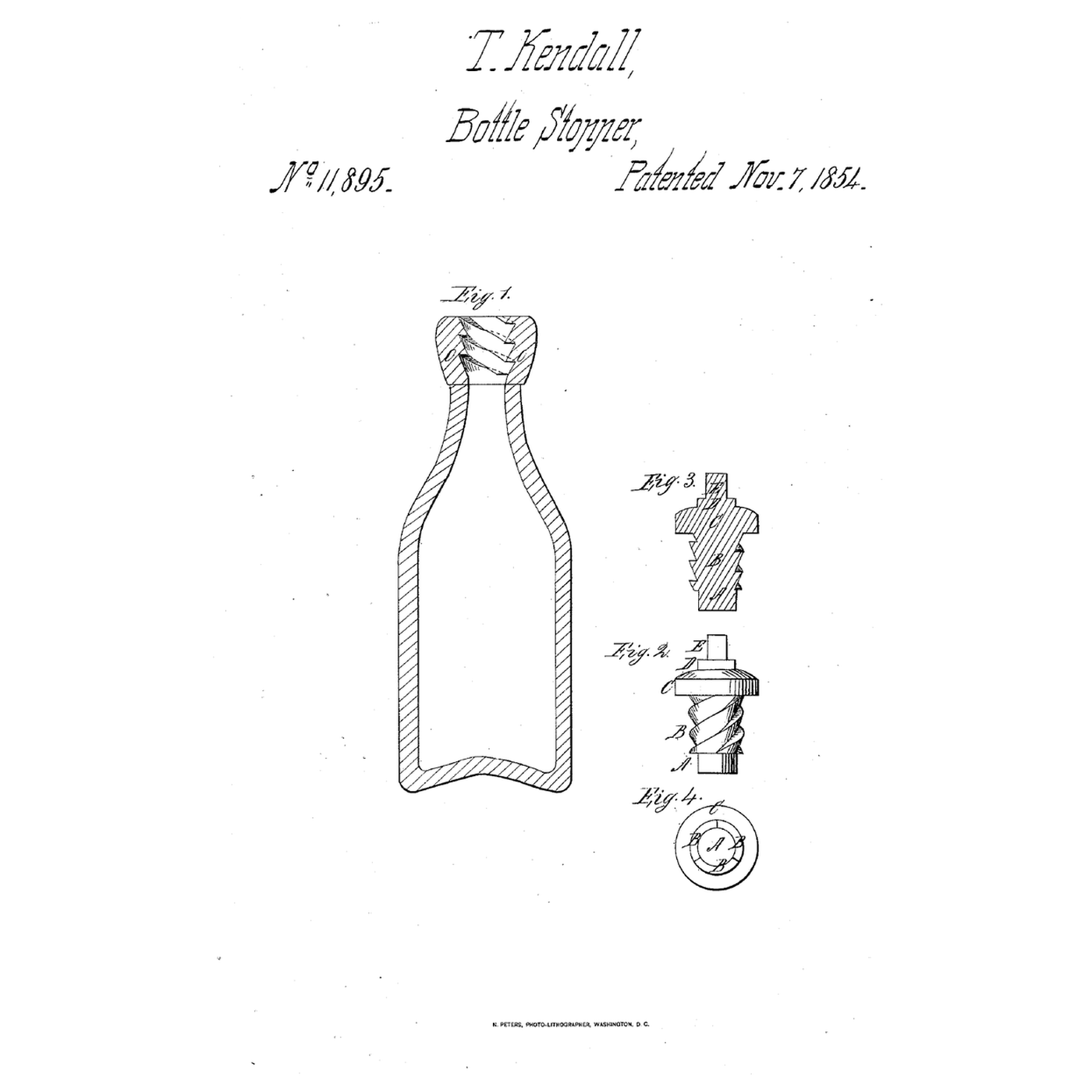


The Groove-Necked Bottle: Three Threads in the Neck That Hold the Cork
Corks in bottles of liquor liable to gasify or ferment had to be tied or wired down, which cost time and material, and then drawn with a corkscrew.
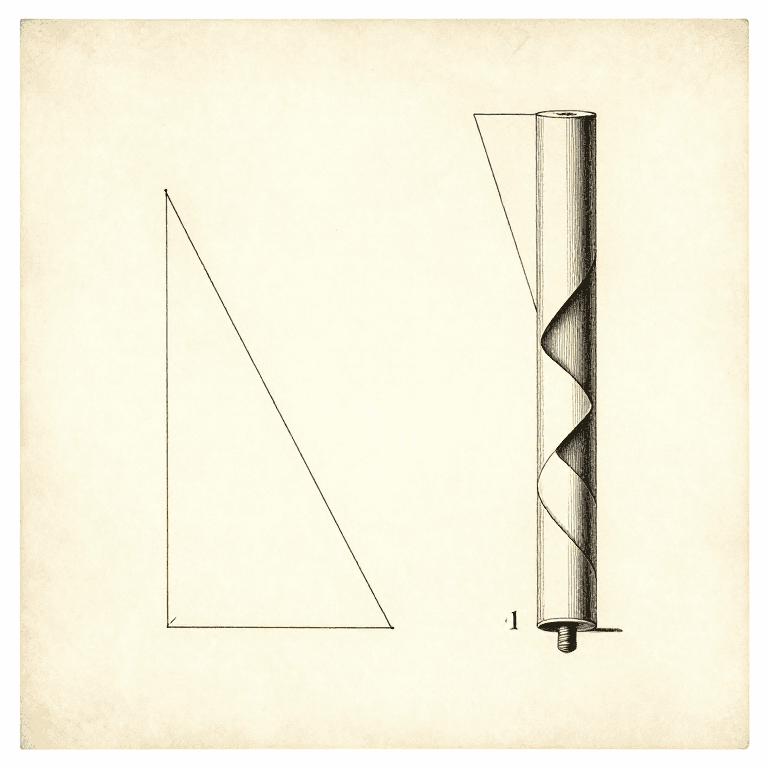
Thomas Kendall of San Francisco received US 11,895, dated 7 November 1854, for "Kendall's Groove-Necked Bottles", whose neck "is so formed or constructed that it will retain its cork or stopper without other fastening by wire, twine, or other material": three parallel grooves, bevelled and a little dovetailed, winding once round the inside of the neck. The squeezed cork slides down easily, expands into the grooves and cannot be forced out, "until external aid is furnished by unscrewing it."
This rung works out why the gas cannot turn the cork out, then prints a neck with three grooves on a bottle cap and tries a cork in it under pressure.
Ophakathi
About 4 hours
Imiyalelo
1
1
Self-locking grooves
Self-locking grooves
Ilayisha incwadi ye-Jupyter…
2
2
A neck before it
A neck before it
The embedded blueprint holds the cork crosswise in an eye. Kendall keeps the cork in the neck and holds it with grooves the cork expands into.
3
3
Read US 11,895
Read US 11,895
"Lastly, between sections A and C is placed section B, constituted of three parallel grooves or worms extending from section C to section A in the form of the screw. These grooves are one-eighth of an inch in depth and wind once around this section of the tool, and each groove or wire is beveled from the lower part of itself to the outer part of the next above parallel groove. All the grooves are cut or shaped a little dove-tailing, so that when the neck of the bottle or other vase is molded or formed to the tool or pattern there will be in the neck of the complete bottle an edge which will hold the cork to its place."
"The cork, having been compressed, easily descends the neck of the bottle, meeting from this formation of the neck of the bottle with no obstruction in its downward progress; but once there, it expands from its own elasticity, so as readily to fill these grooves, and the wire of the grooves, formed as above, there confines it securely; nor can it escape, however great the upward pressure applied below, until external aid is furnished by unscrewing it."
4
4
Print the neck and try it under pressure
Print the neck and try it under pressure
**Neck.** Model a block 35 × 35 × 45 mm with a bore through it shaped like Kendall's core: 14 mm across at the bottom (his 9/16 inch), widening at a shoulder to 21 mm (13/16 inch), and above the shoulder three parallel grooves 3 mm deep (1/8 inch) that wind once round in 25 mm, each bevelled so that it narrows upward and has a square edge facing up. Print it in PETG, with the bore upright.
**Cap.** Drill a 12 mm hole in a carbonated-drink bottle cap and epoxy it under the block, holes lined up.
**Bottle.** Fit a snap-in tyre valve through the base of the bottle so it can be pumped.
**Test.** Squeeze a cork a little wider than the grooved bore with pliers, push it down the neck past the grooves, and let it swell for an hour. Wearing safety glasses and pointing the neck away, pump the bottle in steps of 0.5 bar up to 2 bar, reading the pump's gauge, and watch the cork. Let the air out, then take the cork out by twisting it with a corkscrew and note which way it has to turn.
Izinto zokwakha zalesi sinyathelo:
 Ibhodlela le-PET (isiphuzo esinegesi)1 ucezu
 Ifilamenti ye-PETG1 ucezu
 I-epoxy Yezingxenye Ezimbili1 ucezu
 Ama-cork2 izicucu
Amathuluzi adingekayo:
 Iphrinta ye-3D yentambo (i-FDM)
 Ibhola Elingenantambo
 Iqoqo Lamakhanda Ebhola
 Iphampu yasephansi yebhayisikili
 I-Caliper Yedijithali Yamayintshi Ayi-6
 Udlawu Oluhlanganisiwe
 Izibuko Zokuphepha Ezicwathile
 Ivalvu yethayi
5
5
A neck that leaks, cracks or lets the cork out
A neck that leaks, cracks or lets the cork out
Groove-necked bottle troubleshooting.
Flow
Loading...
6
6
History and honest limits
History and honest limits
**Thomas Kendall** of San Francisco, California, received US 11,895, dated 7 November 1854. His core, tap or tool could be of clay, stone or mineral; section A at its base was 9/16 inch across, the shoulder 13/16 inch, and a flange C above the grooves carried a tenon for a handle. His claim is the bottle, jug or jar with a tri-threaded screw in the neck of the bevelled form given by the core.
**Honest limits.** A printed PETG neck on a plastic bottle's cap stands in for a neck moulded to his core, and pumped air for the gas of the drink. The notebook treats the grooves as a plain screw; its diameters and friction coefficients are examples. Your cork under pressure is the result.
Izinto
4- Isibambeli
- 1 ucezuIsibambeli
- 1 ucezuIsibambeli
- 2 izicucuIsibambeli
Amathuluzi Adingekayo
8- Isibambeli
- 1 vendor sell this, none ship to you yetIsibambeli
- Isibambeli
- Isibambeli
- Isibambeli
- Isibambeli
- Isibambeli
- Isibambeli
Ama-blueprint ahlobene
Lama-blueprint abelana ngolwazi — amasu, izinto noma izimiso
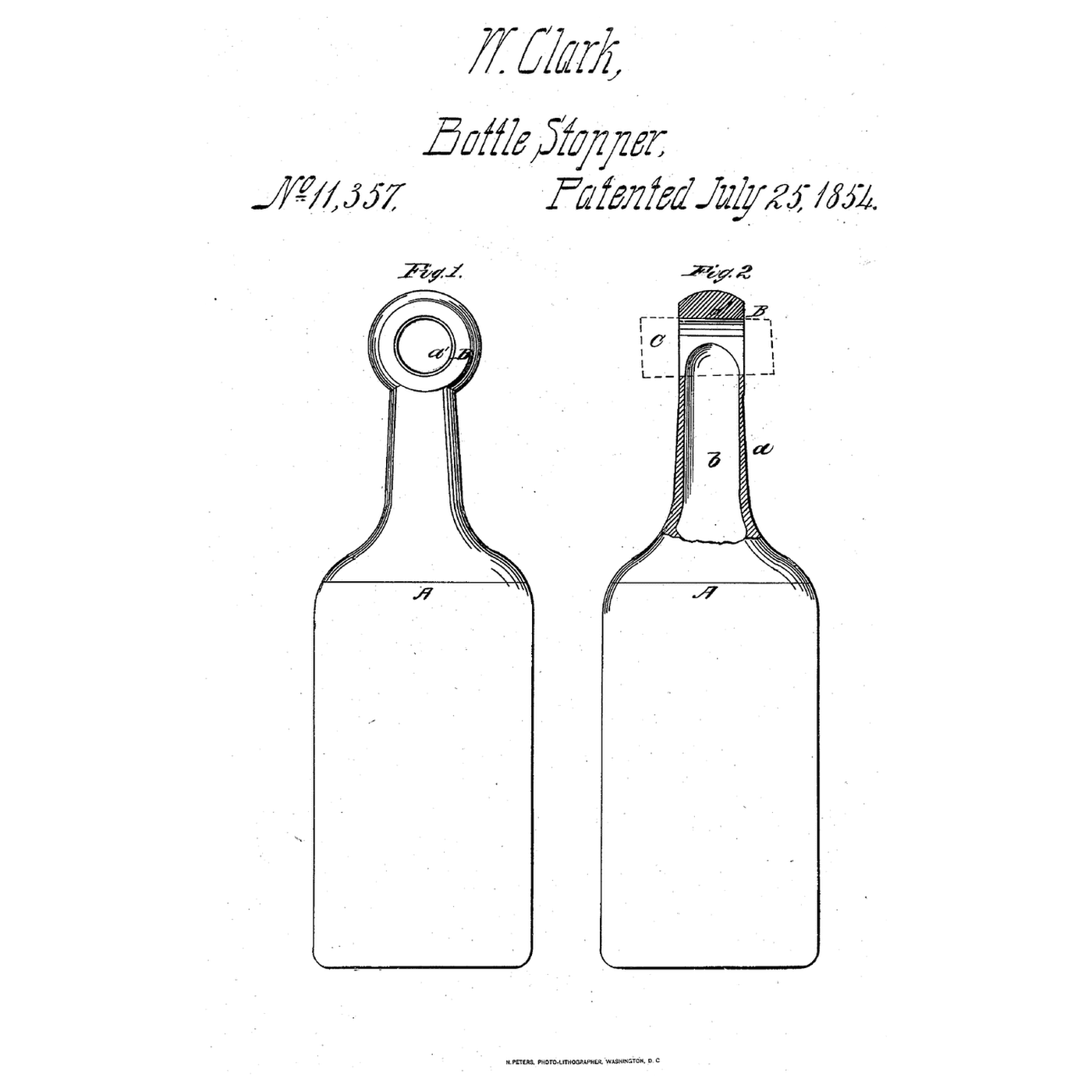



CC0 Isizinda Somphakathi
Le blueprint ikhishwe ngaphansi kwe-CC0. Ukhululekile ukukopisha, ukuguqula, ukusabalalisa, nokusebenzisa ngaphandle kwemvume.
Sekela uMenzi ngokuthenga imikhiqizo nge-Blueprint yabo IKhomishane Yomenzi kumiswe ngabathengisi, noma dala inguqulo entsha yale Blueprint bese uyifaka njengoxhumaniso ku-Blueprint yakho ukuze wabelane ngemali engenayo.