UBUCIKO
UBUHLE NEMPILO
UBUCIKO BEZANDLA
AMASIKO NOMLANDO
EZOKUZIJABULISA
IMVELO
UKUDLA NEZIPHUZO
REVERSE ENGINEERING
IZAYENSI
EZEMIDLALO
UBUCHWEPHESHE
IZINTO EZIGQOKWAYO
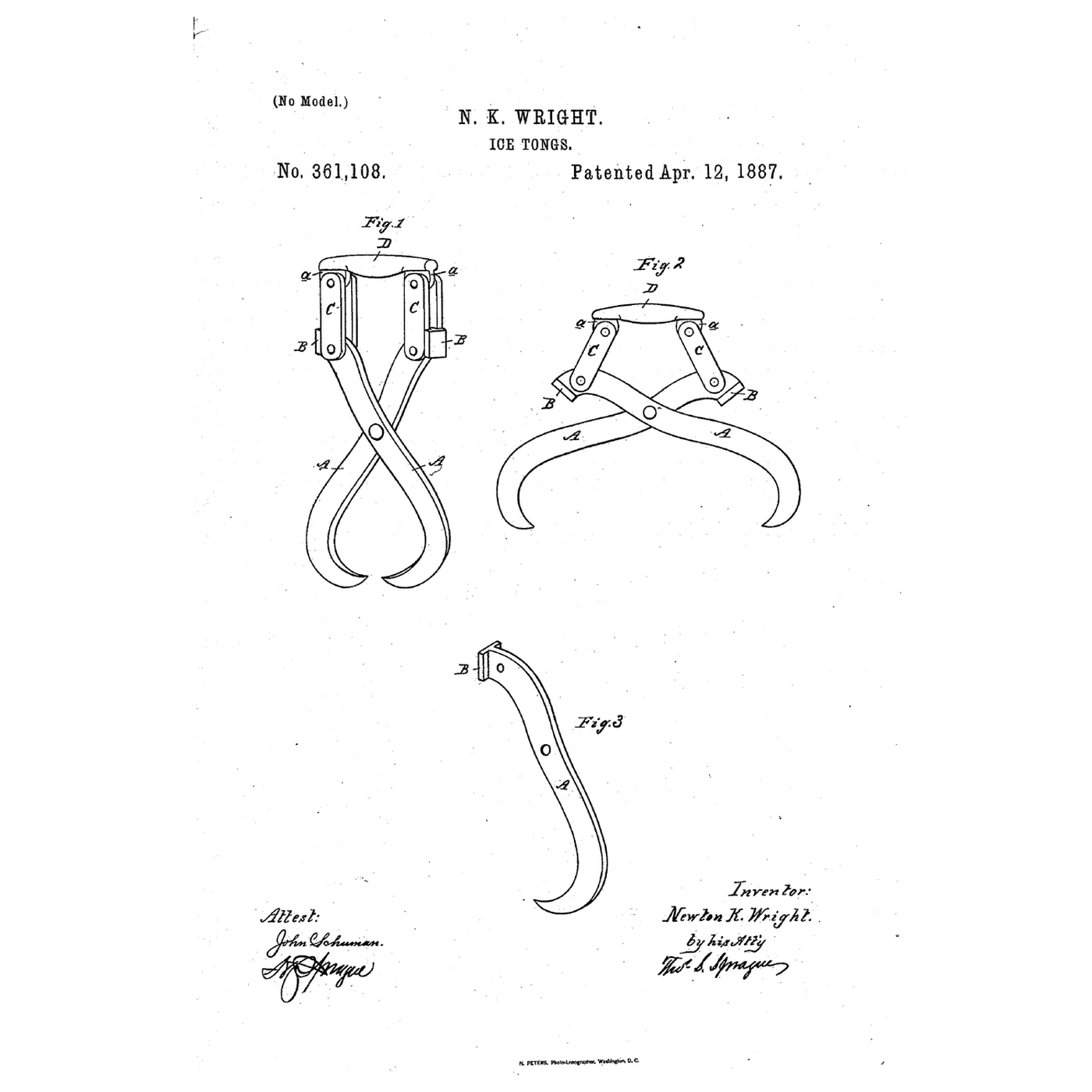

The Ice Tongs: Links That Close the Grip as You Lift
A block of ice is heavy, wet and slippery. Tongs that must be squeezed by hand tire the carrier and drop the block; tongs that grip harder as they lift do the work themselves.
Newton K. Wright of Pewamo, Michigan, received US 361,108, dated 12 April 1887 (filed 17 February 1887), for ice-tongs whose legs are joined to the handle by links: "By the pressing down upon the handle the points are forced apart until they embrace the ice, when, by pulling up on the handle, the points are embedded in the ice, and the latter is then easily carried." Flanged heads stop the tongs closing too far, so "the liability of pinching the hand is avoided."
This rung works out why the grip grows with the load, then lifts blocks of different weights.
Oqalayo
About 1 hour
Imiyalelo
1
1
Grip that grows with load
Grip that grows with load
Ilayisha incwadi ye-Jupyter…
2
2
Tongs at the forge
Tongs at the forge
A smith's tongs are the oldest pivoted grippers. The embedded blueprint forges a pair.
3
3
Read US 361,108
Read US 361,108
"The invention consists in the peculiar construction, arrangement, and combination of parts, whereby the legs of the tongs can readily be spread apart to grasp the ice". The two legs are "pivotally secured together, as in the usual manner." Their upper ends "are provided with flanged heads B, and in the rear of these heads the lower ends of the links C are pivotally secured to the legs A, the upper ends of such links being likewise pivotally secured to the ears a of a handle, D."
"If it is desired to lift a piece of ice, the operator grasps the handle and rests the points of the legs upon the ice. By the pressing down upon the handle the points are forced apart until they embrace the ice, when, by pulling up on the handle, the points are embedded in the ice, and the latter is then easily carried. By again pushing down upon the handle the points are released."
"The flanged heads coming in contact with the lower edges of the links C prevent the tongs from closing past a certain point, and the liability of pinching the hand is avoided."
4
4
Lift light and heavy blocks
Lift light and heavy blocks
Freeze blocks of different sizes in loaf pans and a storage box. Weigh each on a scale.
Lift each with the tongs and a spring scale hooked through the handle, raising slowly. Watch how deep the points sink as the load rises. Measure the angle of the links with a protractor while lifting. Lift only a few centimetres over a towel, and wear gloves: a dropped block breaks toes.
Izinto zokwakha zalesi sinyathelo:
 Amanzi5 amalitha
Amathuluzi adingekayo:
 Udlawu lweqhwa
 Ipani lesinkwa
 Ibhokisi Lokugcina
 Isikali Sedijithali
 Isikali Sesipringi
 Iphrothrakta
 Amagilavu Omsebenzi Esikhumba
5
5
Tongs that slip or will not open
Tongs that slip or will not open
Ice tongs troubleshooting.
Flow
Loading...
6
6
History and honest limits
History and honest limits
**Newton K. Wright** of Pewamo, Michigan, filed US 361,108 on 17 February 1887; it is dated 12 April 1887. He notes one link at each end of the handle would also serve.
**Honest limits.** The patent gives no sizes. The link angles and leg lengths in the notebook are examples, and the model ignores the points' friction and penetration.
Amathuluzi Adingekayo
7- Isibambeli
- Ipani lesinkwaikhomishini engu-10%Isibambeli
- Isibambeli
- Isibambeli
- Isibambeli
- Isibambeli
- Isibambeli
Ama-blueprint ahlobene
Lama-blueprint abelana ngolwazi — amasu, izinto noma izimiso
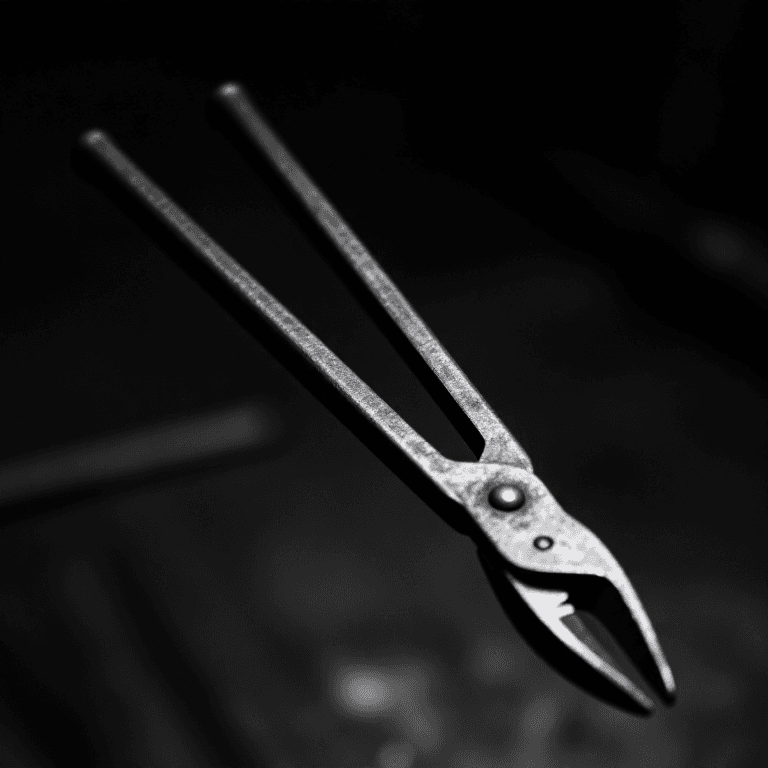
Forging a Pair of Iron Tongs — The Blacksmith's Essential Gripping Tool
ngu-Forge
Umsebenzi Wensimbi
26
0
0
0
1
0
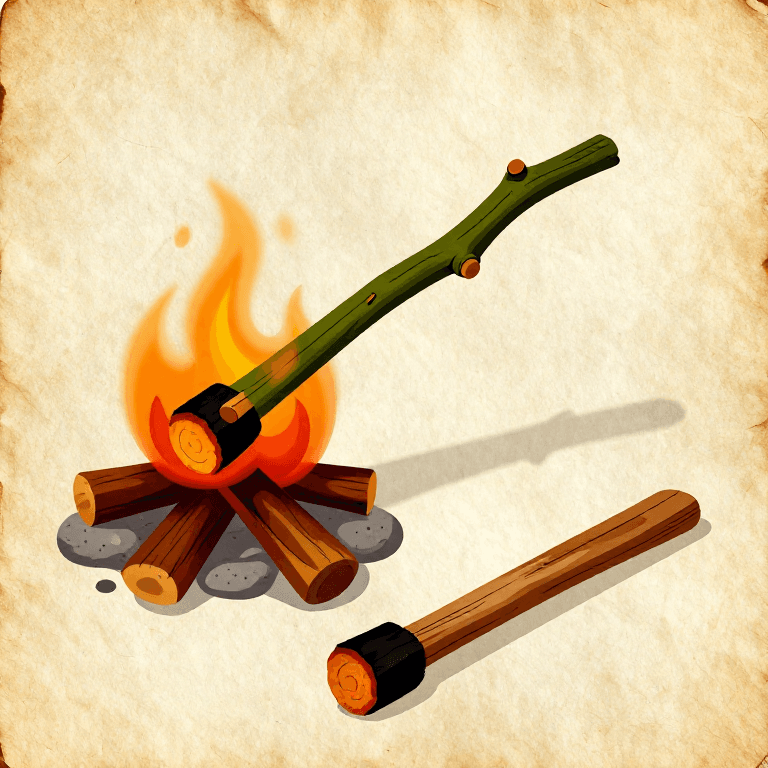
Making Wooden Fire Tongs — Split-Stick Spring Tongs for Handling Hot Stones and Coals
ngu-Woody
Umsebenzi Wokhuni
45
0
0
0
0
0
Ice Harvesting
ngu-Martin
Ezomshini
33
0
0
0
0
0

The Law of the Lever — Archimedes' Balance of Weight and Distance
ngu-Martin
I-Physics
54
0
0
0
1
0
CC0 Isizinda Somphakathi
Le blueprint ikhishwe ngaphansi kwe-CC0. Ukhululekile ukukopisha, ukuguqula, ukusabalalisa, nokusebenzisa ngaphandle kwemvume.
Sekela uMenzi ngokuthenga imikhiqizo nge-Blueprint yabo IKhomishane Yomenzi kumiswe ngabathengisi, noma dala inguqulo entsha yale Blueprint bese uyifaka njengoxhumaniso ku-Blueprint yakho ukuze wabelane ngemali engenayo.