UBUCIKO
UBUHLE NEMPILO
UBUCIKO BEZANDLA
AMASIKO NOMLANDO
EZOKUZIJABULISA
IMVELO
UKUDLA NEZIPHUZO
REVERSE ENGINEERING
IZAYENSI
EZEMIDLALO
UBUCHWEPHESHE
IZINTO EZIGQOKWAYO
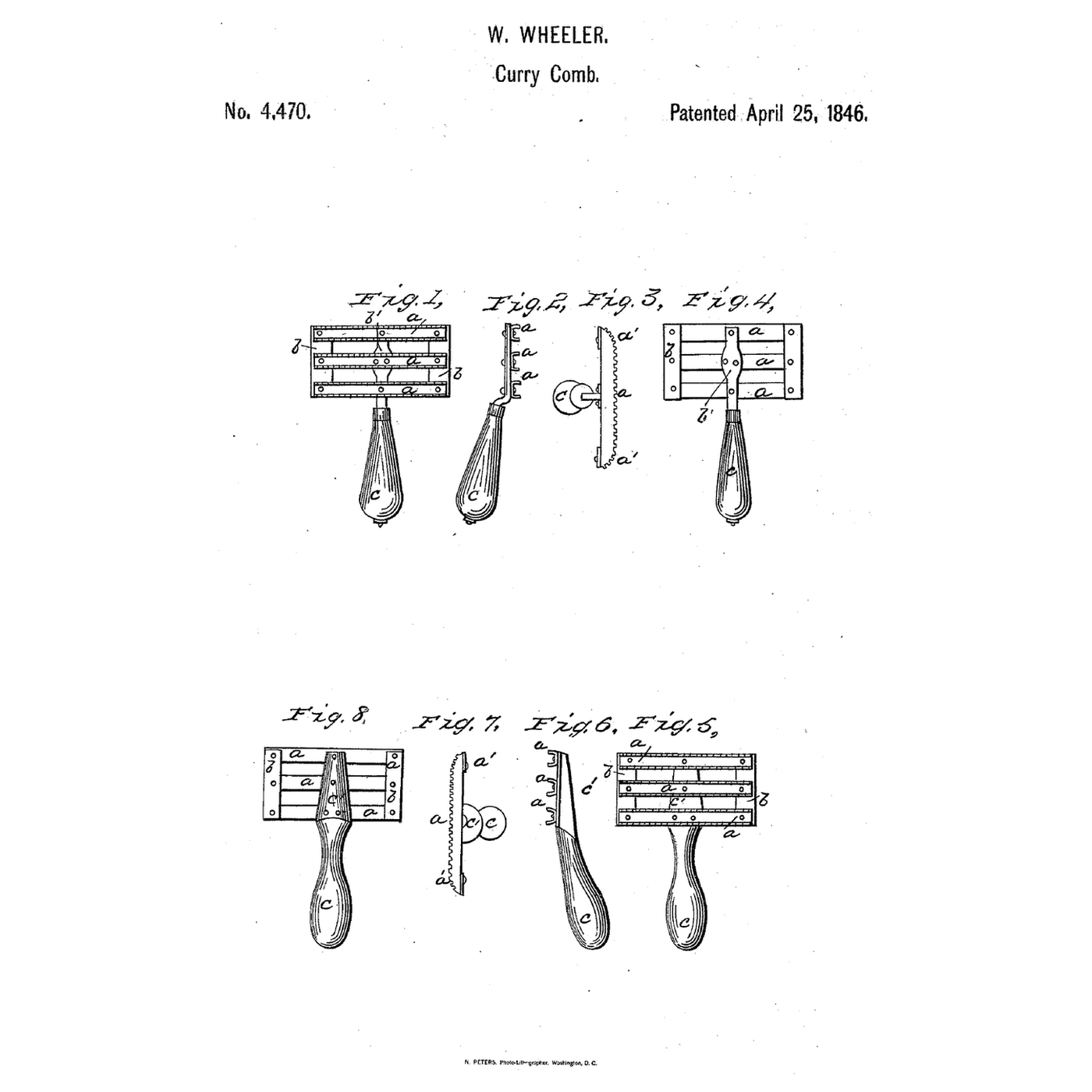


The Open-Back Curry Comb: Three Bent Troughs and No Back to Clog
A curry comb with a solid back fills with dust and hair between its rows, and has to be rapped against a post to clear it, so it carries a projecting knocker for the purpose.
William Wheeler of Troy, New York, received US 4,470, dated 25 April 1846, for currycombs made "of three longitudinal bars of sheet metal, united by rivets to two transverse bars, one at each end, and one at the middle of the instrument, there being open spaces formed by the junction of these bars, or plates, through which a large portion of the dust which would otherwise lodge in the comb, escapes in the act of using it." Each bar is bent twice at right angles into a trough, with teeth along both edges, which makes it "perfectly unyielding"; the middle transverse bar runs out as the tang for the handle.
This rung works out why the trough is so much stiffer than the flat strip, then cuts, bends and rivets a comb from sheet steel and flat bar and grooms with it.
Ophakathi
About 4 hours
Imiyalelo
1
1
Trough against flat strip
Trough against flat strip
Ilayisha incwadi ye-Jupyter…
2
2
A curry comb before it
A curry comb before it
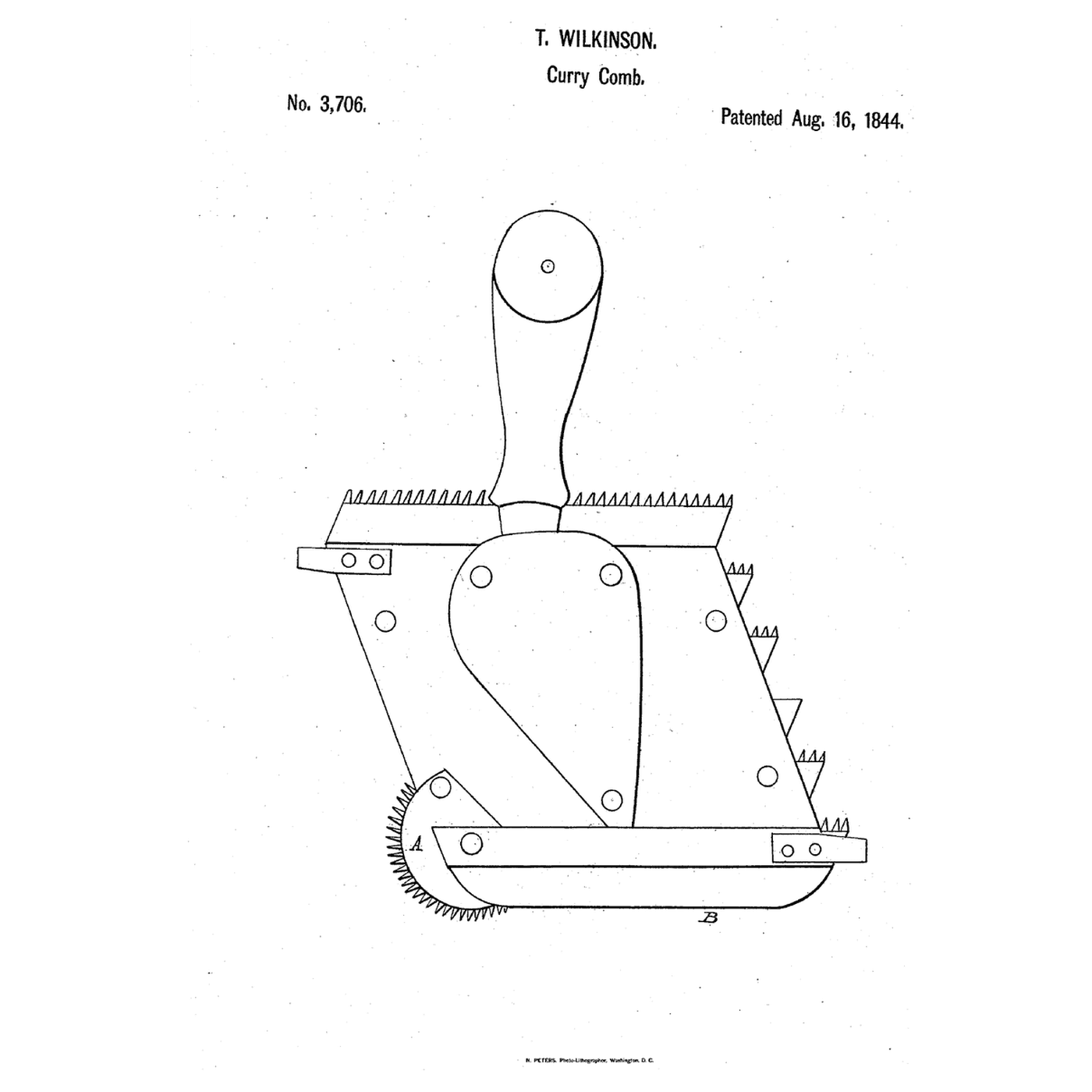
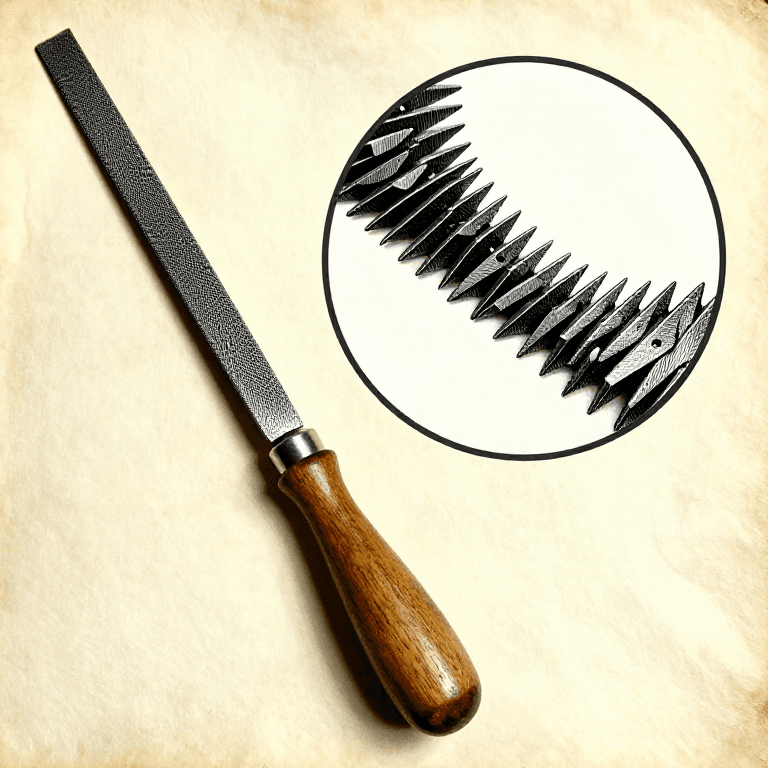
The embedded blueprint makes a curry comb with a curved row for the joints. Wheeler's rows are bent troughs on an open frame, so the dust falls through.
3
3
Read US 4,470
Read US 4,470
"The teeth of this comb, are formed upon the three longitudinal bars, a, a, a; which are cut out of sheet-metal in such manner as to leave teeth on each edge of the piece when cut. These pieces are then bent by suitable dies, into a trough like form, as shown at a, a Fig. 2; a side view of these trough like bars will then be such, as is seen at a, Fig. 3. The three longitudinal bars, are crossed by the three transverse bars b, b, b; the middle bar b, is made to extend out, so as to constitute a tine, or shank, to receive the handle c."
"The two end pieces b, b, are made sufficiently stout, to bear the blows, or rapping, necessary to the cleansing of the comb from dust, and the projecting piece which is ordinarily riveted on to curry combs, for that purpose rendered altogether unnecessary."
4
4
Make the comb and groom with it
Make the comb and groom with it
**Bars.** Cut three strips of 0.8 mm mild steel sheet 12 cm long and 24 mm wide. File teeth along both long edges, about 3 mm apart and 3 mm deep, and round their points slightly. In the vise, bend each strip twice at right angles 6 mm in from each edge, so it becomes a trough with its teeth standing out.
**Cross bars.** Cut three 10 cm lengths of 20 × 3 mm flat bar. Lay the three troughs across them, open side down, with gaps between, and drill and rivet each trough to each cross bar.
**Handle.** Extend the middle cross bar with a riveted 8 cm length of the same flat bar as the tang, and set it in a drilled hardwood handle with epoxy.
**Test.** Before and after, check each trough's stiffness by pressing its middle with the spring scale while its ends rest on two blocks, and compare with a flat strip. Groom a horse, a dog or a rough rug, then tap the comb's end bar on a post and see how much falls through the open spaces.
Izinto zokwakha zalesi sinyathelo:
 Ishidi lensimbi1 ucezu
 Ibha Eyisicaba Yensimbi Ethambile0.4 imitha
 Izipikili zensimbi12 izicucu
 Ingodo Yokhuni Oluqinile Yezibambo1 ucezu
 I-epoxy Yezingxenye Ezimbili1 ucezu
Amathuluzi adingekayo:
 Isikeli sensimbi
 Izinsimbi zokuhlikihla (ezesandla)
 Isethi Yamafayela Amancane
 Isibambo Sebhentshi
 Isando
 Isaha Sensimbi
 Ibhola Elingenantambo
 Iqoqo Lamakhanda Ebhola
 Isethi yama-rivet
 Isilinganiso Samandla (Isikali Sensimbi Esontekile)
 Amagilavu Omsebenzi Esikhumba
 Izibuko Zokuphepha Ezicwathile
5
5
A comb that bends, scratches or clogs
A comb that bends, scratches or clogs
Open-back curry comb troubleshooting.
Flow
Loading...
6
6
History and honest limits
History and honest limits
**William Wheeler** of Troy, Rensselaer County, New York, received US 4,470, dated 25 April 1846. He sometimes rounded the teeth's ends, and in a lighter form used only the two end cross bars, lengthening the wooden handle to act as the middle one. He claimed neither the trough-like comb nor the hollow back alone, but the trough bars combined to make a curry comb with an open back.
**Honest limits.** Hand-bent sheet steel and rivets stand in for his die-bent bars and riveted cross bars. The notebook compares cross-sections only, not a whole bar with teeth; its thickness, width and legs are examples. Your stiffness test and grooming are the result.
Izinto
5- 1 ucezuIsibambeli
- 0.4 imithaIsibambeli
- 12 izicucuIsibambeli
- Isibambeli
- 1 ucezuIsibambeli
Amathuluzi Adingekayo
12- Isibambeli
- Isibambeli
- Isibambeli
- Isibambeli
- Isibambeli
- Isibambeli
- 1 vendor sell this, none ship to you yetIsibambeli
- Isibambeli
- Isibambeli
- Isibambeli
- Isibambeli
Le blueprint yenza
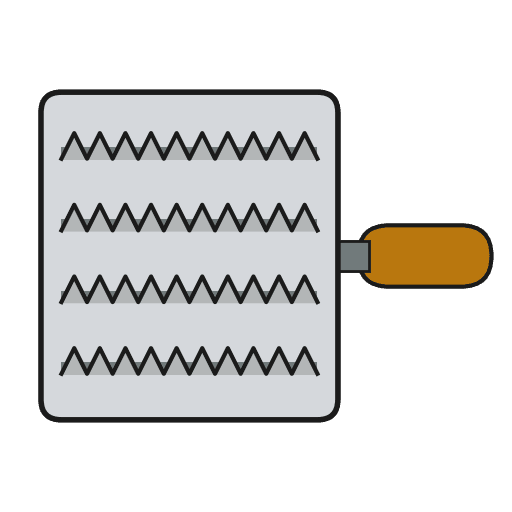
Ama-blueprint ahlobene
Lama-blueprint abelana ngolwazi — amasu, izinto noma izimiso
CC0 Isizinda Somphakathi
Le blueprint ikhishwe ngaphansi kwe-CC0. Ukhululekile ukukopisha, ukuguqula, ukusabalalisa, nokusebenzisa ngaphandle kwemvume.
Sekela uMenzi ngokuthenga imikhiqizo nge-Blueprint yabo IKhomishane Yomenzi kumiswe ngabathengisi, noma dala inguqulo entsha yale Blueprint bese uyifaka njengoxhumaniso ku-Blueprint yakho ukuze wabelane ngemali engenayo.