UBUCIKO
UBUHLE NEMPILO
UBUCIKO BEZANDLA
AMASIKO NOMLANDO
EZOKUZIJABULISA
IMVELO
UKUDLA NEZIPHUZO
REVERSE ENGINEERING
IZAYENSI
EZEMIDLALO
UBUCHWEPHESHE
IZINTO EZIGQOKWAYO
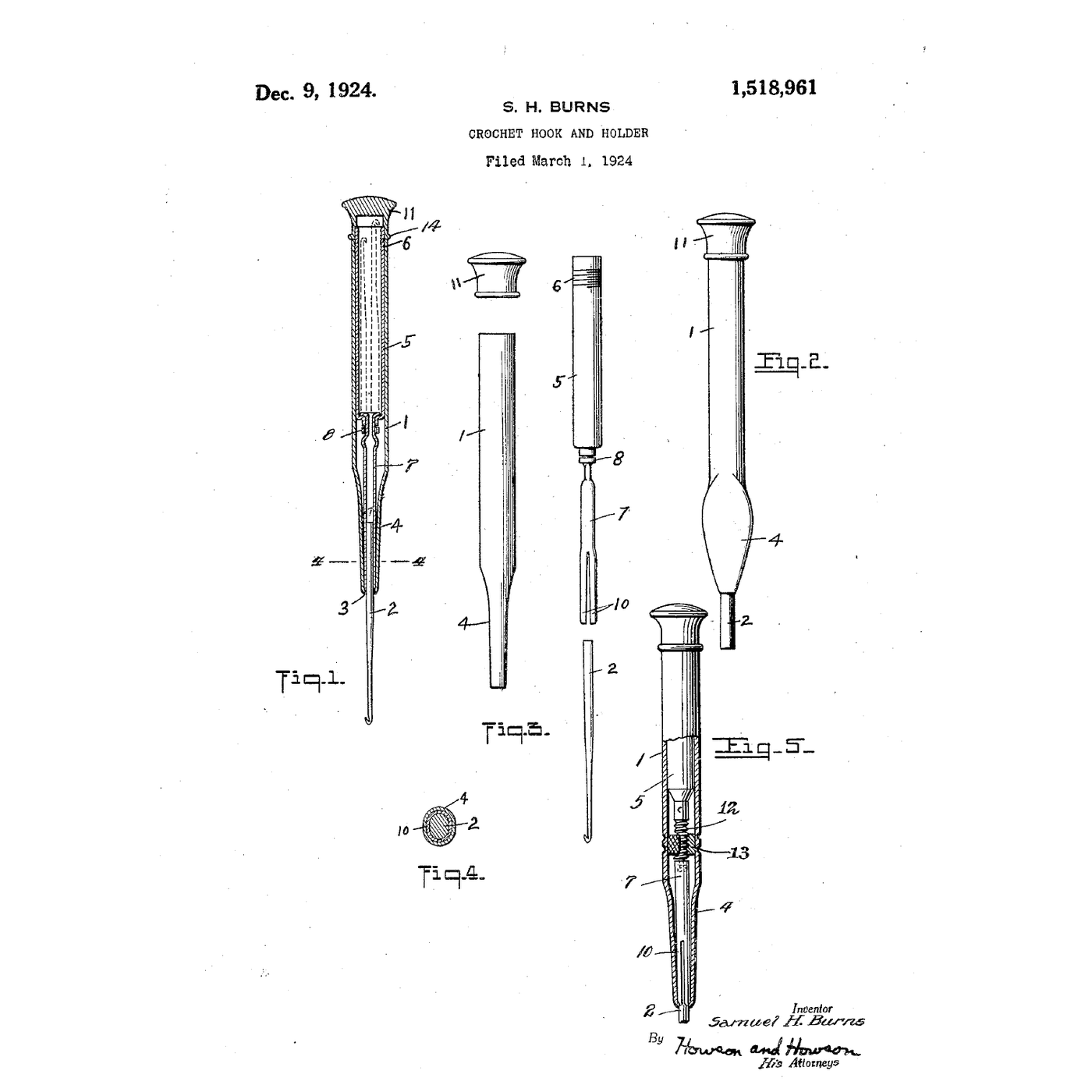

The Reversible Crochet Hook Holder: Collet Jaws Grip the Hook Either Way Round
A fine steel hook is hard to hold, and its point catches when carried.
Samuel H. Burns of Brooklyn, New York, received US 1,518,961, patented 9 December 1924, for a crochet hook and holder "in which the needle can be reversed and left with the point inside the holder for protection when not in use": split jaws on a small tube are drawn into the handle's flattened, tapered end by a threaded inner shell and grip the hook's non-round shank; the hollow inner shell stores hooks of other sizes.
This rung works out how hard a taper squeezes the jaws, then builds a collet holder from brass, aluminium and an M4 screw and measures the pull it holds.
Osezingeni eliphezulu
About 4 hours
Imiyalelo
1
1
Grip from the taper
Grip from the taper
Ilayisha incwadi ye-Jupyter…
2
2
A hook protected in its handle before it
A hook protected in its handle before it
The embedded blueprint folds the hook into its handle. Burns takes the hook out, turns it round and clamps it point-in.
3
3
Read US 1,518,961
Read US 1,518,961
"The shank of the hook is then introduced into opening 3 of the tapered end and the jaws 10 until the desired length of the shank is left outside the holder when the inner shell 5 can be screwed into the outer shell and the clamping jaws 10 forced into the opening 3 of the tapered end thus gripping the shank of the hook."
"By making the inner shell 5 hollow, and of the proper length, I can use it as a reservoir for an assortment of needles for various sizes and kinds of crochet work."
4
4
Make the nose
Make the nose
Cut 30 mm of 12 mm aluminium rod. Drill 3.5 mm through on the axis, then 8.5 mm from the back 18 mm deep. Finish the bottom of the bore with the 8.5 mm bit's point, then file the front 15 mm to a flattened taper.
Izinto zokwakha zalesi sinyathelo:
 Induku ye-aluminium1 ucezu
Amathuluzi adingekayo:
 Isaha Sensimbi
 Isibambo Sebhentshi
 Ibhola Elingenantambo
 Iqoqo Lamakhanda Ebhola
 Izinsimbi zokuhlikihla (ezesandla)
 I-Caliper Yedijithali Yamayintshi Ayi-6
 Izibuko Zokuphepha Ezicwathile
5
5
Make the jaws
Make the jaws
Cut 30 mm of 8 mm brass rod. Drill 3.3 mm through on the axis and tap the back 10 mm M4. File the front to a cone matching the bore's bottom, and saw two cuts across it 12 mm deep, making four jaws.
Izinto zokwakha zalesi sinyathelo:
 Ubhamu Lwethusi1 ucezu
Amathuluzi adingekayo:
Isaha SensimbiIsibambo SebhentshiIbhola ElingenantamboIqoqo Lamakhanda Ebhola Isethi yokusika izikulufu
 Isethi Yamafayela Amancane
6
6
Assemble the handle
Assemble the handle
Epoxy the nose into one end of 120 mm of 1/2" brass tube. Epoxy an M4 nut in a 20 mm hardwood plug, centred, and set it 50 mm behind the nose. Screw 90 mm of M4 threaded rod through the nut into the jaws.
Izinto zokwakha zalesi sinyathelo:
 Ishubhu lethusi le-1/2 intshi ububanzi bangaphandle1 ucezu
 I-epoxy Yezingxenye Ezimbili1 ucezu
 Inathi Yezinhlangothi Eziyisithupha1 ucezu
 Izikhonkwane zokhuni oluqinile1 ucezu
 Insika enemicu yesikulufu1 ucezu
Amathuluzi adingekayo:
Isaha SensimbiIbhola ElingenantamboIqoqo Lamakhanda Ebhola7
7
Clamp a hook both ways
Clamp a hook both ways
Choose a hook from the set with a shank under 3.3 mm and file two flats on it. Push it through the nose into the jaws and turn the rod's back end to draw the jaws in until it grips. Then reverse it, point inside, and clamp it again.
Amathuluzi adingekayo:
Isethi Yamafayela Amancane Isethi yezinaliti ze-crochet
8
8
Measure the grip
Measure the grip
Tie yarn to the hook's throat and pull along it with the force meter until it slips. Repeat at finger-tight and at firm; then twist the hook by hand and see if it turns.
Izinto zokwakha zalesi sinyathelo:
 Intambo1 ucezu
Amathuluzi adingekayo:
 Isilinganiso Samandla (Isikali Sensimbi Esontekile)
9
9
A holder that slips, binds or will not open
A holder that slips, binds or will not open
Reversible crochet hook holder troubleshooting.
Flow
Loading...
10
10
History and honest limits
History and honest limits
**Samuel H. Burns** of Brooklyn, New York, filed US 1,518,961 on 1 March 1924, a continuation in part of his application of 5 June 1922; it was patented 9 December 1924. The flattened tapered end gives the thumb and forefinger a grip, and with a non-round shank the hook cannot turn in it. His small tube turns freely on the inner shell, so the jaws are drawn in without revolving; a cap on the inner shell turns it.
**Honest limits.** Our jaws turn with the screw, where his did not, and a threaded rod replaces his threaded inner shell. The drill point leaves a steep 118° cone, which grips less than a shallow taper would. Sizes are ours. Your pull forces are the result.
Izinto
8- 1 ucezuIsibambeli
- 1 ucezuIsibambeli
- Isibambeli
- 1 ucezuIsibambeli
- Isibambeli
- Isibambeli
- 1 ucezuIsibambeli
- 1 ucezuIsibambeli
Amathuluzi Adingekayo
11- Isibambeli
- Isibambeli
- 1 vendor sell this, none ship to you yetIsibambeli
- Isibambeli
- Isibambeli
- Isibambeli
- Isibambeli
- Isibambeli
- Isibambeli
- Isibambeli
Ama-blueprint ahlobene
Lama-blueprint abelana ngolwazi — amasu, izinto noma izimiso
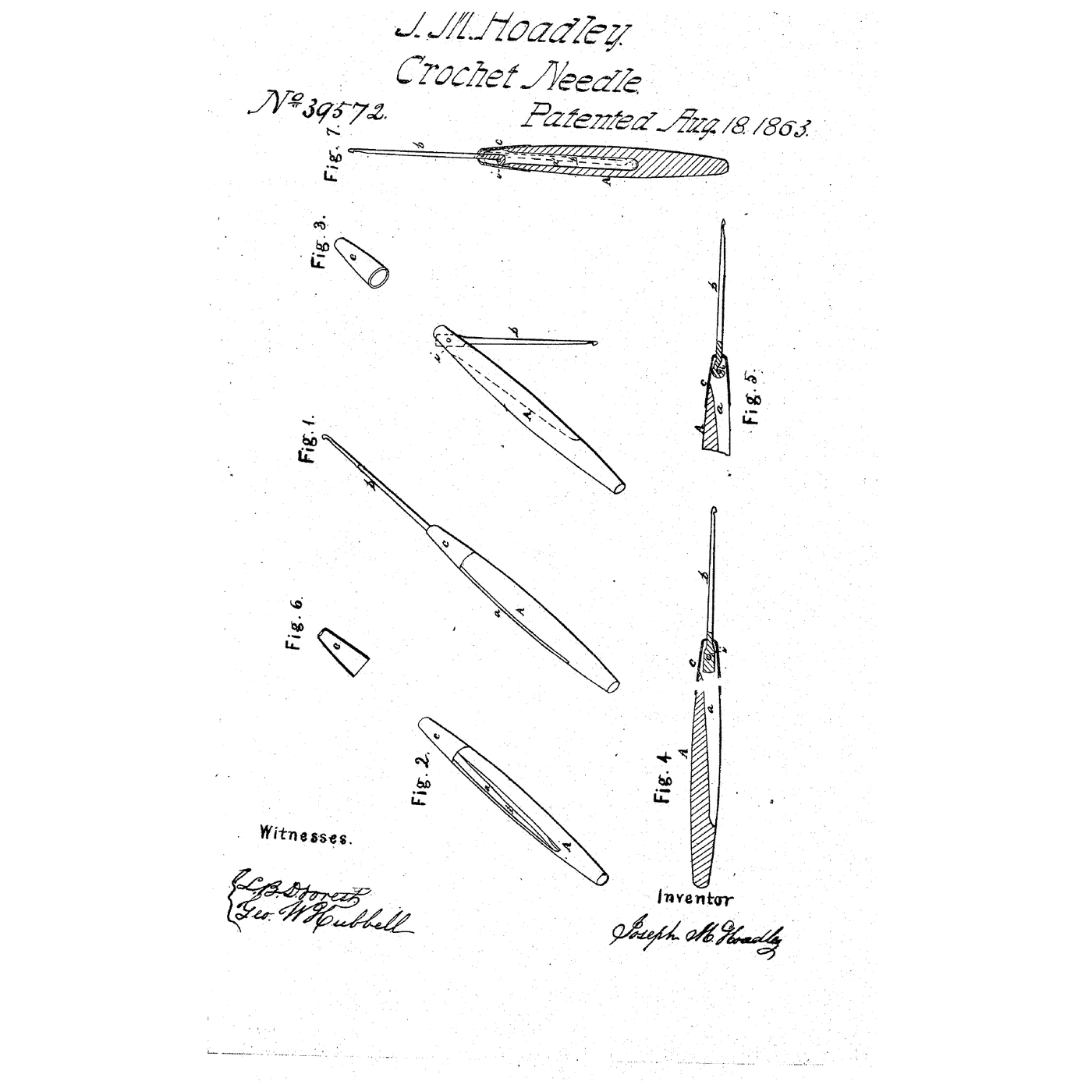
The Folding Crochet Needle: A Hook That Shuts Into Its Handle
ngu-Tex
Umsebenzi Wokhuni
28
0
0
0
0
0
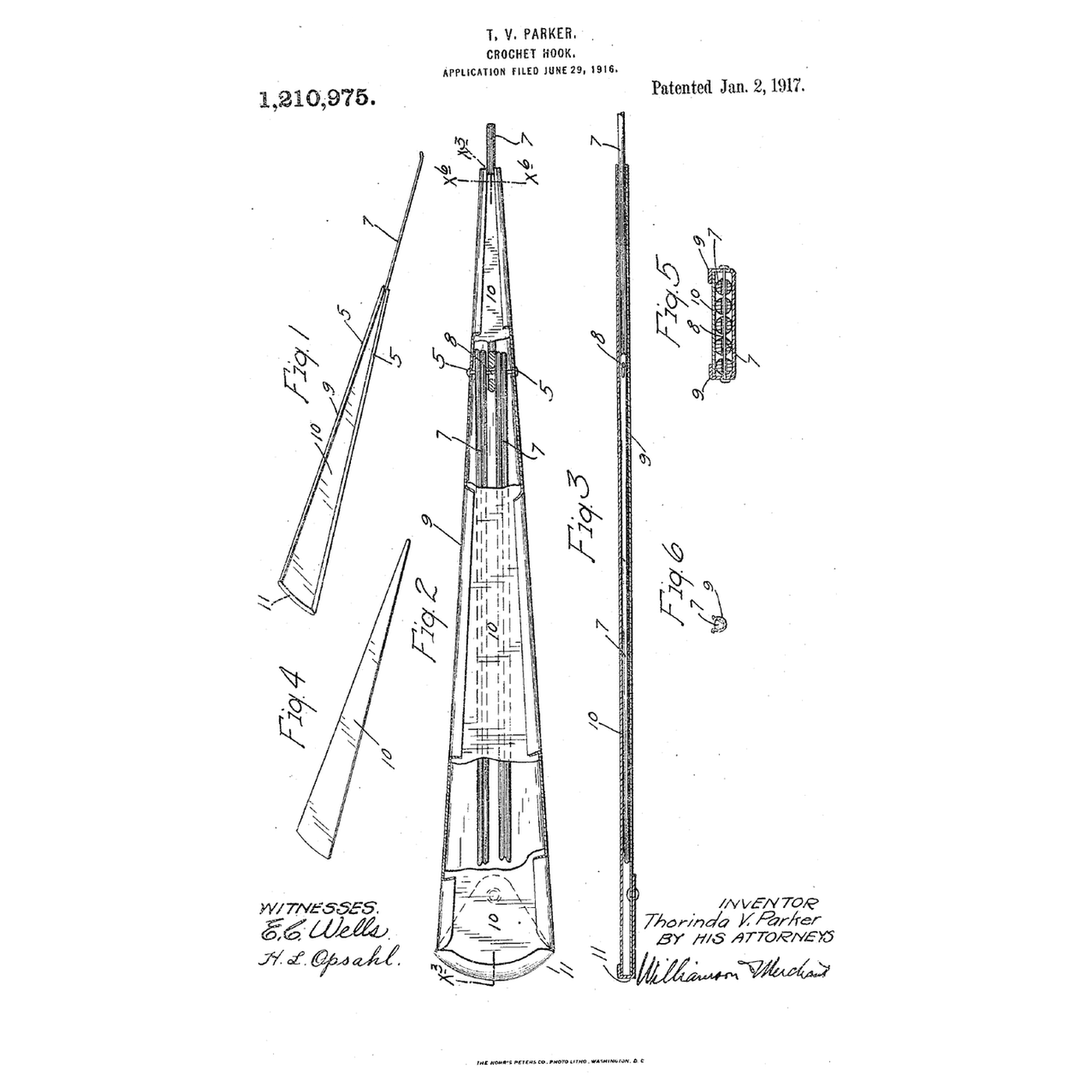
The Hook-Case Crochet Set: Hooks of Every Size Swing From One Rivet in Their Own Case
ngu-Martin
Amathuluzi Ensimbi
30
0
0
0
0
0
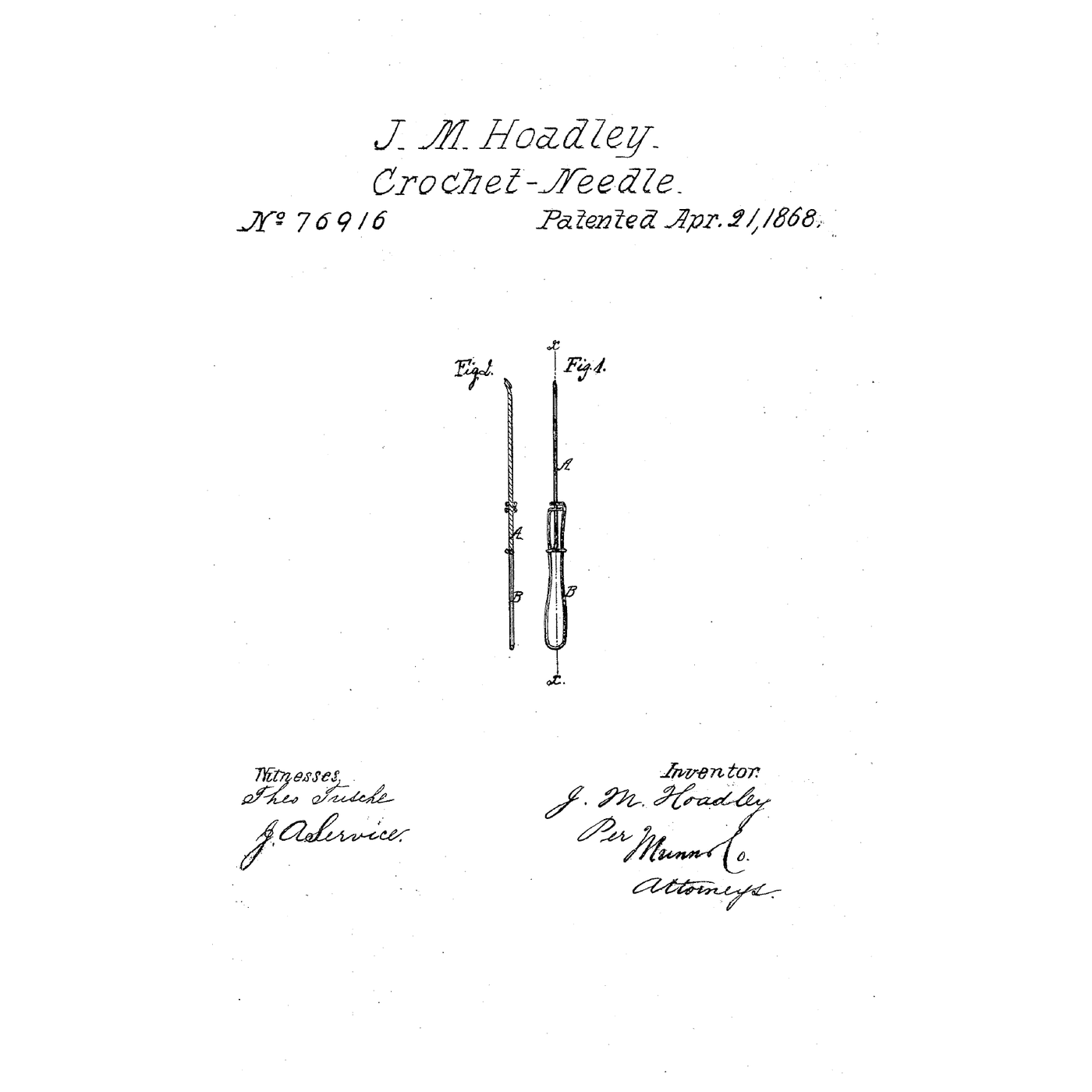
The Spring-Wire Crochet Holder: A Needle Held by Tempered Wire
ngu-Emma
Amathuluzi Ezindwangu
26
0
0
0
0
0
CC0 Isizinda Somphakathi
Le blueprint ikhishwe ngaphansi kwe-CC0. Ukhululekile ukukopisha, ukuguqula, ukusabalalisa, nokusebenzisa ngaphandle kwemvume.
Sekela uMenzi ngokuthenga imikhiqizo nge-Blueprint yabo IKhomishane Yomenzi kumiswe ngabathengisi, noma dala inguqulo entsha yale Blueprint bese uyifaka njengoxhumaniso ku-Blueprint yakho ukuze wabelane ngemali engenayo.