UBUCIKO
UBUHLE NEMPILO
UBUCIKO BEZANDLA
AMASIKO NOMLANDO
EZOKUZIJABULISA
IMVELO
UKUDLA NEZIPHUZO
REVERSE ENGINEERING
IZAYENSI
EZEMIDLALO
UBUCHWEPHESHE
IZINTO EZIGQOKWAYO


The Serrated Bread Knife: Teeth That Cut Both Ways
A plain knife squashes a fresh loaf before it gets through the crust, and tears the soft crumb inside.
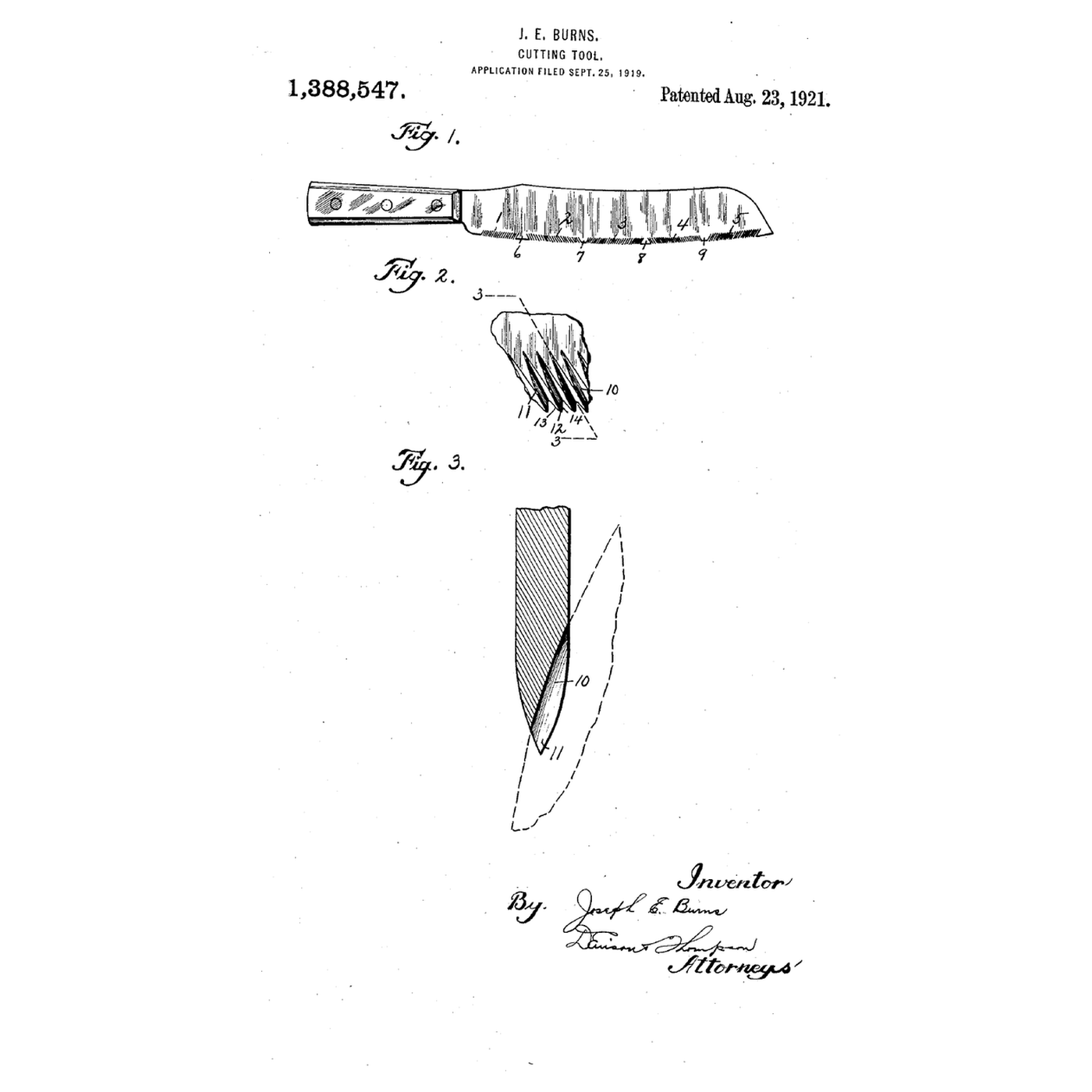
Joseph E. Burns of Syracuse, New York, received US 1,388,547, dated 23 August 1921, for a knife whose edge is ground into several series of fine teeth, the grooves of each series inclined the opposite way to the next, with plain keystone-shaped parts between them, so that "it cuts rapidly and easily when drawn in either direction".
This rung works out how much harder teeth press than a plain edge, then files Burns's pattern of teeth into a plain kitchen knife and slices bread with it.
Ophakathi
About 2 hours
Imiyalelo
1
1
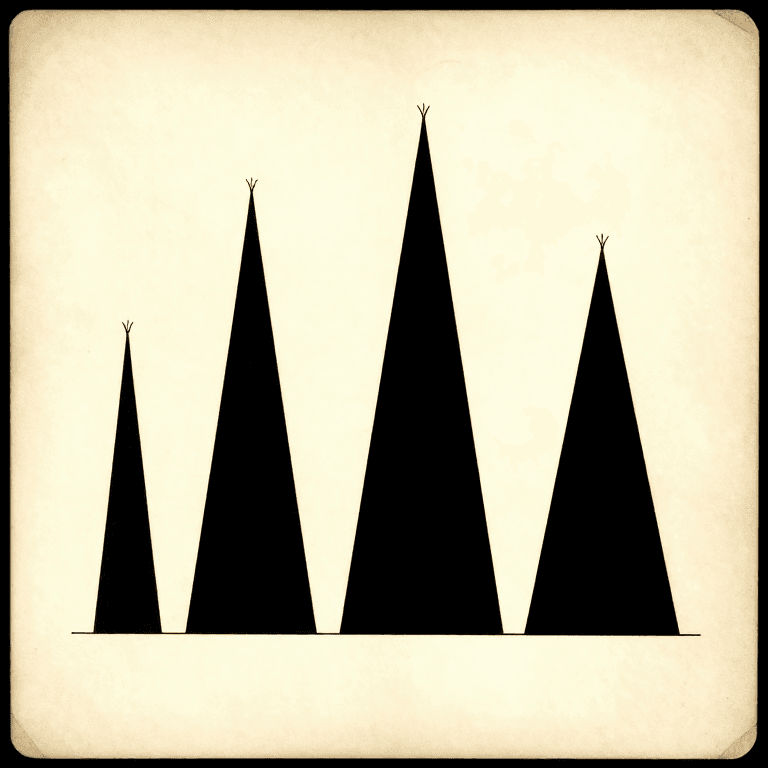
Pressure at the teeth
Pressure at the teeth
Ilayisha incwadi ye-Jupyter…
2
2
An edge for the job
An edge for the job
The embedded blueprint chooses the edge angle to suit the job. Burns shapes the edge itself into teeth to suit bread.
3
3
Read US 1,388,547
Read US 1,388,547
"The object of the invention is to produce an improved and highly efficient cutting blade" and "the invention of this application relates specifically to the formation and relative disposition of the grooves ground at the edge of the tool to form these serrations so that the knife cuts easily and rapidly when moved in either longitudinal direction."
"In practice I have found that by forming the knife as shown in Fig. 1, it cuts rapidly and easily when drawn in either direction and its efficiency for the purpose described is materially increased."
4
4
File teeth into a plain knife and slice bread
File teeth into a plain knife and slice bread
Clamp a plain kitchen knife edge-up in the vise with its blade protected by folded card. Mark five groups along the edge, each 2 cm long, with a 1 cm plain gap between groups.
In the first group, file grooves 2 mm apart into the edge with a round needle file held tilted about 20° towards the handle. In the next group tilt the file the other way, towards the tip, and so on alternately. File only on one side, then take the burr off the flat side with a light stroke of the whetstone.
Slice a crusty loaf with a plain knife, then with the toothed one, counting the strokes for each slice and weighing the crumbs each leaves on the board.
Izinto zokwakha zalesi sinyathelo:
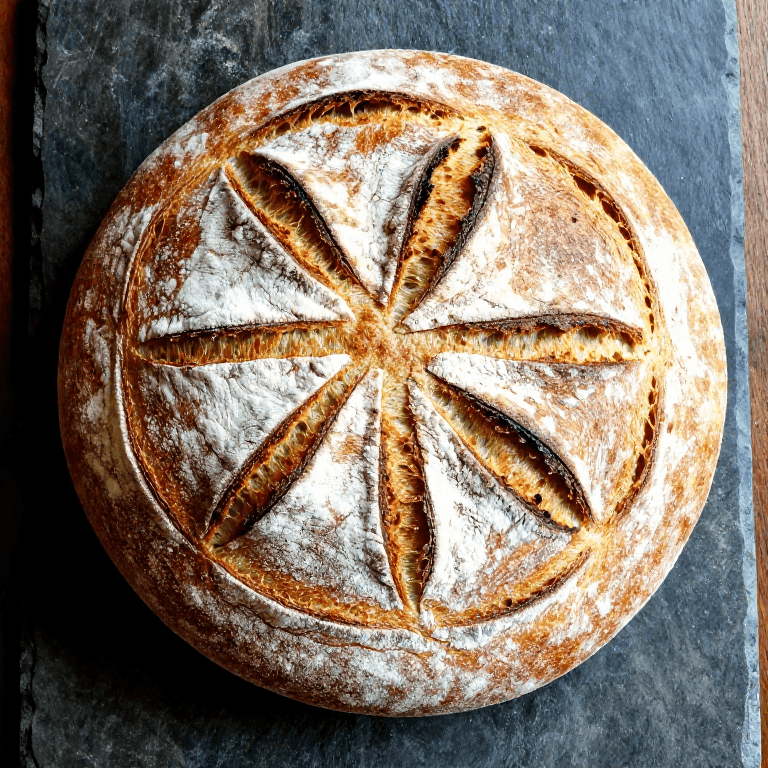
 Isinkwa esiphelele1 ucezu
Amathuluzi adingekayo:
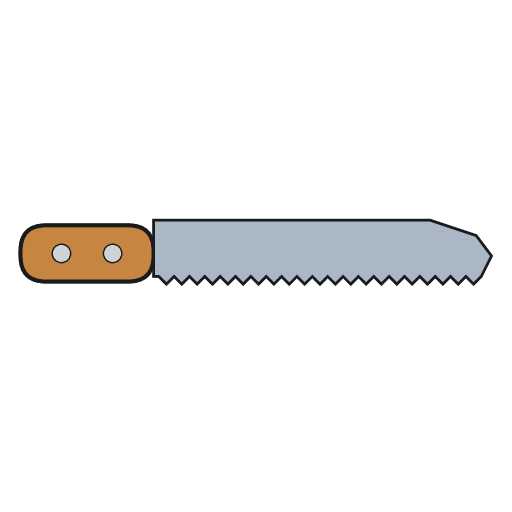
 Ummese wesinkwa
 Isethi Yamafayela Amancane
 Itshe lokulola
 Isibambo Sebhentshi
 Ipeni Elingesulekiyo
 Irula
Irula Iphrothrakta
 Isikali Sedijithali Sasekhishini
 Ummese wasekhishini
5
5
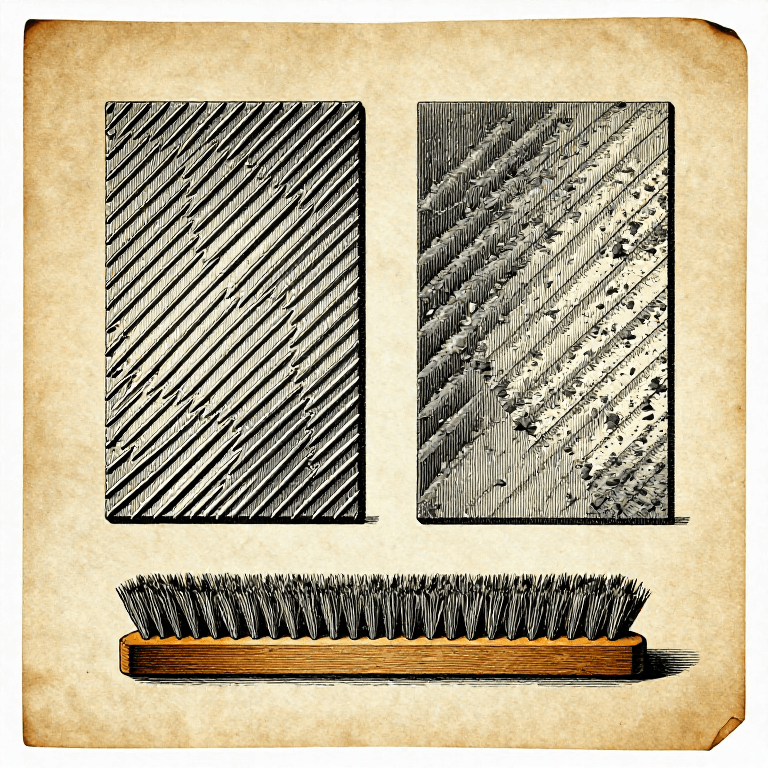
A toothed knife that tears, skids or dulls
A toothed knife that tears, skids or dulls
Serrated knife troubleshooting.
Flow
Loading...
6
6
History and honest limits
History and honest limits
**Joseph E. Burns** of Syracuse, New York, filed US 1,388,547 on 25 September 1919; it was patented 23 August 1921. He suggested grinding each series at once with a rotary wheel carrying one ridge per groove, though he wrote that this was "not essential" to the invention.
**Honest limits.** The notebook counts only where the edge touches; how deep the teeth are and how sharp their tips are matters too. Spacing and tip width are examples. Your stroke counts and crumb weights are the measurement.
Izinto
1- 1 ucezuIsibambeli
Amathuluzi Adingekayo
9- Isibambeli
- Isibambeli
- Isibambeli
- Isibambeli
- Isibambeli
- Isibambeli
- Isibambeli
- Isibambeli
- Isibambeli
Le blueprint yenza
Ama-blueprint ahlobene
Lama-blueprint abelana ngolwazi — amasu, izinto noma izimiso

CC0 Isizinda Somphakathi
Le blueprint ikhishwe ngaphansi kwe-CC0. Ukhululekile ukukopisha, ukuguqula, ukusabalalisa, nokusebenzisa ngaphandle kwemvume.
Sekela uMenzi ngokuthenga imikhiqizo nge-Blueprint yabo IKhomishane Yomenzi kumiswe ngabathengisi, noma dala inguqulo entsha yale Blueprint bese uyifaka njengoxhumaniso ku-Blueprint yakho ukuze wabelane ngemali engenayo.