UBUCIKO
UBUHLE NEMPILO
UBUCIKO BEZANDLA
AMASIKO NOMLANDO
EZOKUZIJABULISA
IMVELO
UKUDLA NEZIPHUZO
REVERSE ENGINEERING
IZAYENSI
EZEMIDLALO
UBUCHWEPHESHE
IZINTO EZIGQOKWAYO


The Watt-Hour Meter: Counting Energy by Counting Turns
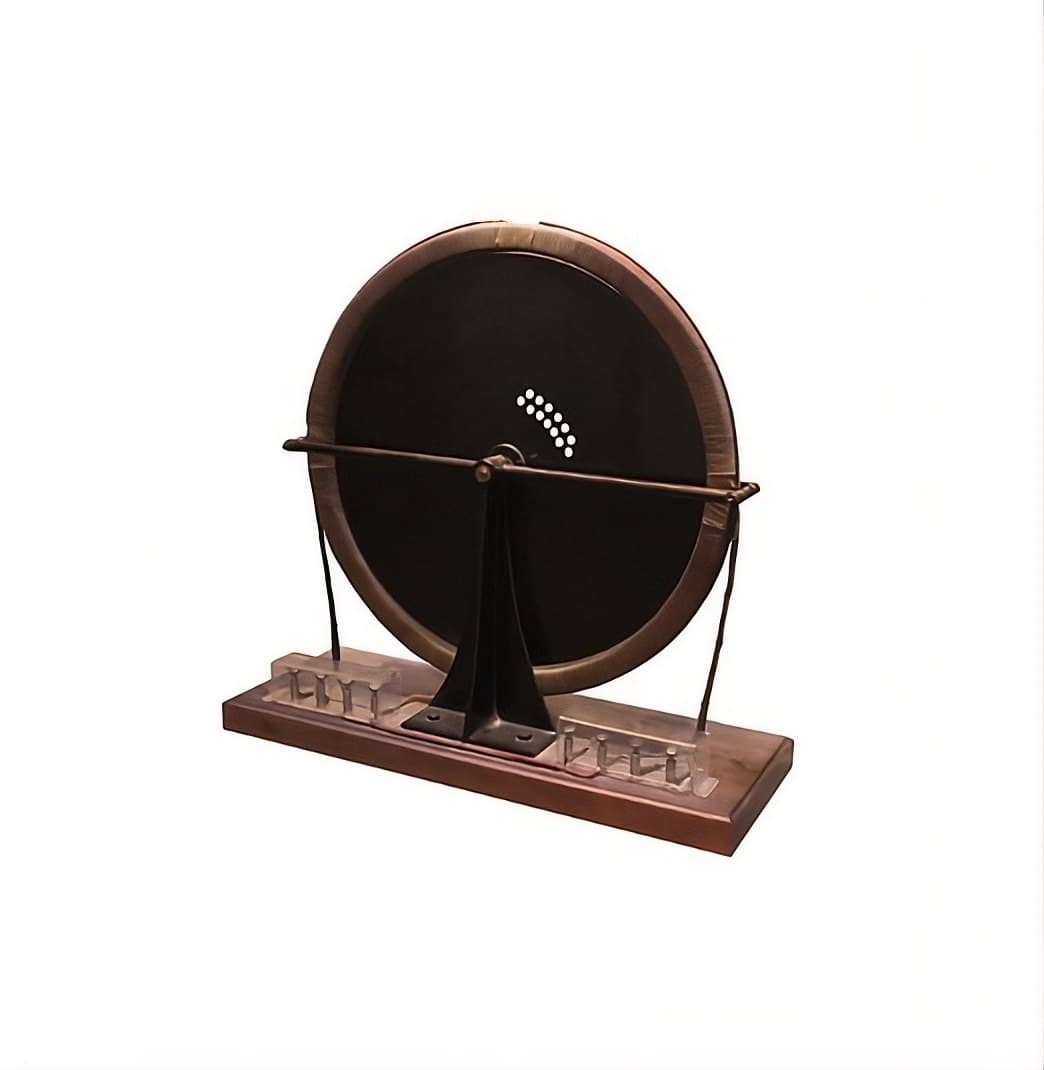
Selling electricity needs a meter the customer and the company both trust. Edison's first meters weighed zinc plated out of a solution; for alternating current, Oliver Shallenberger of the Westinghouse company produced in 1888 a meter in which the alternating field drives a metal armature round continuously, at a rate proportional to the energy being consumed — his patent's own words. The induction meter with a spinning aluminium disc and a magnet brake, read through a train of dials, followed and ran in homes for a century.
This rung works out why the magnet brake makes the disc read true, and uses your own meter's disc or LED to measure the power of a kettle.
Oqalayo
About 2 hours
Imiyalelo
1
1
Read Shallenberger's patent
Read Shallenberger's patent
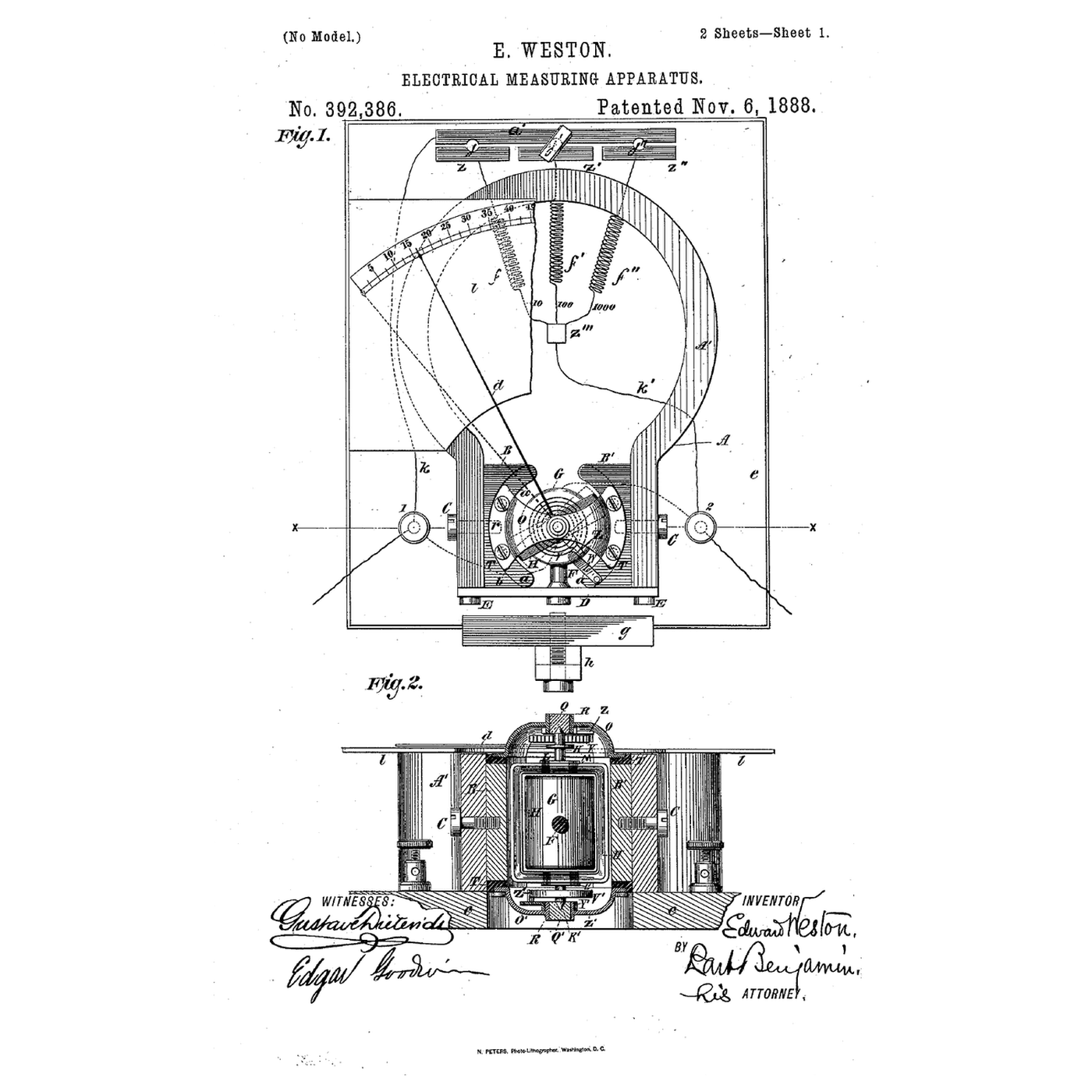
US 388,003, 'Meter for Alternating Electric Currents', Oliver B. Shallenberger of Rochester, Pennsylvania, dated 14 August 1888. The aim is *"converting such electrical energy into continuous mechanical motion, the rate of which is directly proportional to the energy being consumed"*. The essentials, in his order: *"first, an armature of metal capable of rotation"* — a ring or disc — and a coil placed *"with its magnetic axis at an inclination"*, so the alternating current makes the armature revolve.
2
2
Power from turns, and why the brake matters
Power from turns, and why the brake matters
Ilayisha incwadi ye-Jupyter…
3
3
The brake magnet is an eddy-current brake
The brake magnet is an eddy-current brake
The permanent magnet straddling a meter disc is an eddy-current brake: its drag grows in proportion to the disc's speed. The embedded blueprint explains and builds one.
4
4
Measure a kettle with your own meter
Measure a kettle with your own meter
Find your electricity meter and read its plate: an older meter gives Kh (watt-hours per revolution) or revolutions per kWh; an electronic one prints impulses per kWh beside a flashing LED.
Switch off everything you can. Switch on a kettle and count disc turns or LED flashes for one or two minutes with the stopwatch. Put the counts into the notebook and compare with the kettle's rating. Then boil the same kettle with nothing else on to measure its energy per litre boiled.
Do not open or touch the meter or its connections: it is the supplier's property and carries full mains voltage.
Amathuluzi adingekayo:
 Iwashi Lokumisa Isikhathi
 Iketela likagesi lengilazi
 Ujeke wokukala
5
5
History and context
History and context
**US 388,003, 'Meter for Alternating Electric Currents', Oliver B. Shallenberger, dated 14 August 1888.** Shallenberger's first meter measured ampere-hours; Elihu Thomson and others produced true watt-hour meters, and the induction disc meter with voltage and current coils became the standard. Electronic meters replaced the disc from the 1990s, and the LED flash took the place of the turning disc.
**Honest limits.** A disc meter creeps if badly adjusted, reads low at very light loads, and can be affected by strong external magnets. The kettle measurement includes whatever else is still running.
Amathuluzi Adingekayo
3- Isibambeli
- Isibambeli
- Isibambeli
Ama-blueprint ahlobene
Lama-blueprint abelana ngolwazi — amasu, izinto noma izimiso



CC0 Isizinda Somphakathi
Le blueprint ikhishwe ngaphansi kwe-CC0. Ukhululekile ukukopisha, ukuguqula, ukusabalalisa, nokusebenzisa ngaphandle kwemvume.
Sekela uMenzi ngokuthenga imikhiqizo nge-Blueprint yabo IKhomishane Yomenzi kumiswe ngabathengisi, noma dala inguqulo entsha yale Blueprint bese uyifaka njengoxhumaniso ku-Blueprint yakho ukuze wabelane ngemali engenayo.