

Synchromesh
In a crash gearbox, changing gear means sliding one spinning gear into mesh with another spinning at a different speed. Teeth meet teeth at a speed difference and the result is the noise the gearbox is named for. Drivers learned double-declutching — clutch out, neutral, blip the throttle to bring the shaft to roughly the right speed, clutch out again, then engage — a skill that took practice and that most people never got right.
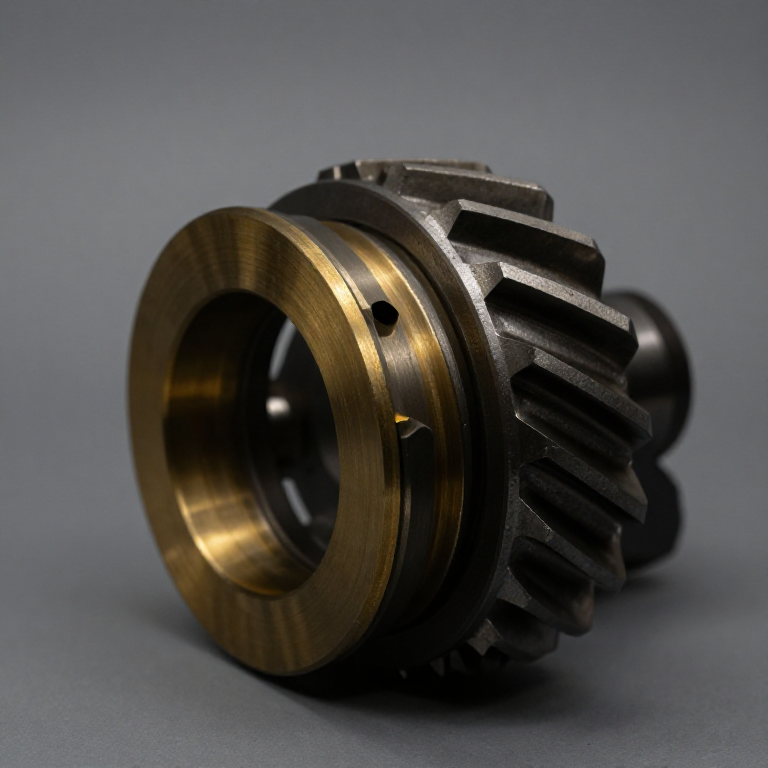
Synchromesh does the speed-matching for you, and it does it with a cone clutch that acts before the teeth can meet. Push the selector and a brass ring is pressed onto a matching cone on the gear. Friction drags the two toward the same speed. Only once they match can the sleeve slide across and let the teeth engage — and until they match, a blocking ring physically stands in the way.
That blocking action is the invention. Friction alone would merely make mismatch less violent; the blocker makes early engagement impossible. The gearbox refuses to let you crash it.
Earl A. Thompson, an engineer from Oregon, worked it out in 1918 and received US 1,435,430 in 1922 for a tapered-cone synchroniser. He sold his synchromesh patents to General Motors in 1924 and 1930, and the first cars to carry it were the 1928 Cadillac and LaSalle.
⚠ That 1928 date is the one usually quoted as the invention. It is the production date — the patent is six years older.
Imiyalelo
Feel the problem without the fix
Feel the problem without the fix
Take two spur gears on separate shafts. Spin one, hold the other still, and try to slide them into mesh.
They clash and refuse to enter cleanly.
Now spin both to roughly the same speed by hand and try again. They mesh easily.
That is the whole problem stated: teeth will only engage cleanly at matched speed, and a driver had to produce that match by ear and timing.
Amathuluzi adingekayo:
 Isibambo Sebhentshi
Add a friction cone
Add a friction cone
Fit a brass cone ring to one gear and a matching tapered seat to the other.
Spin them at different speeds and press the cones together lightly before attempting to mesh.
Time how long they take to reach the same speed. Expect a fraction of a second.
Brass is used because it beds in against steel and carries the oil film that stops it grabbing — the material is a deliberate choice, not an economy.
Izinto zokwakha zalesi sinyathelo:
 Iringi le-synchro cone lethusi1 ucezu
Add the blocker — the part that is the patent
Add the blocker — the part that is the patent
Fit the blocking ring so its dog teeth are offset by half a tooth while there is any speed difference.
Now try to force engagement while the shafts differ in speed. You cannot. The blocker sits across the path.
Once the cones equalise the speeds, the blocker rotates into alignment and the sleeve slides through.
Friction alone would only soften the clash. The blocker makes a bad shift mechanically impossible, and that is the difference between a synchroniser and merely a friction damper.
Time a shift
Time a shift
Measure how long a full engagement takes from first movement to teeth home.
Expect 0.2–0.5 seconds, most of it spent in the cone phase, not the tooth phase.
That time is set by cone area, cone angle and how hard you push. It is why a heavy truck gearbox still shifts slowly and why a fast shift in a worn box crunches — you are outrunning the cone.
Wear it out on purpose
Wear it out on purpose
Deliberately force fast shifts repeatedly and watch the brass cone surface.
Expect it to polish, then glaze. A glazed cone takes longer to synchronise, so the shift crunches — and the natural response, shifting harder and faster, makes it worse.
This is the whole life story of a synchro. "Second gear crunches when cold" is a worn cone plus thick oil, not a broken gear.
History & Context
History & Context
The dates, separated. Earl A. Thompson conceived it in 1918, received US 1,435,430 in 1922, sold his synchromesh patents to General Motors in 1924 and 1930, and the first production cars were the 1928 Cadillac and LaSalle. Sources routinely give 1928 as the invention date. It is the production date, six years after the patent and ten after the idea.
Thompson was an outsider. An engineer from Oregon, not a Detroit transmission man, who developed it independently and then sold it in. He went on to lead the team that produced the Hydra-Matic — so the same person is behind both the manual gearbox that stopped crunching and the automatic that removed the shift entirely.
What it actually changed. Not performance — a skilled driver double-declutching a crash box shifts perfectly well. It changed who could drive. Gear-changing stopped being a learned skill requiring timing and hearing, which mattered enormously for mass-market motoring.
What is still not synchronised, and why. Reverse, on most gearboxes. It engages only at rest, so there is nothing to synchronise, and the saving in cost and space is worth it. The crunch when you select reverse while still creeping forward is that omission, working as designed.
Where it went next. Multi-cone synchronisers for the gears that need the most work, and then a genuine sidestep: the dual-clutch gearbox pre-selects the next gear on a second clutch, so there is no shift to synchronise at all. Thompson's problem was eventually solved by arranging never to have it.
Izinto
1- Isibambeli
Amathuluzi Adingekayo
1- Isibambeli
Izinto Zokwakha Ze-Blueprint Exhunyiwe
Ama-blueprint ahlobene
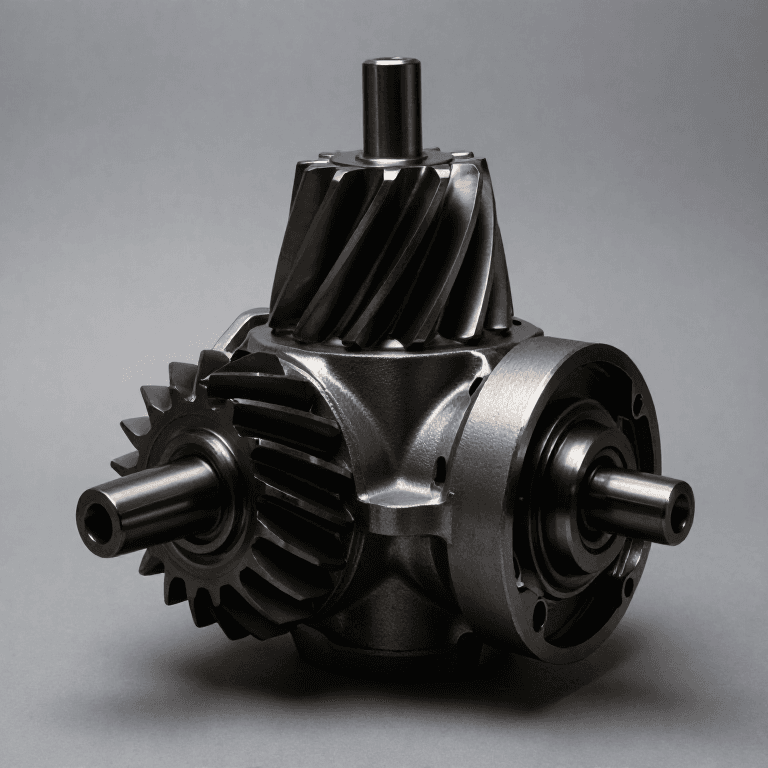
Lama-blueprint abelana ngolwazi — amasu, izinto noma izimiso

CC0 Isizinda Somphakathi
Le blueprint ikhishwe ngaphansi kwe-CC0. Ukhululekile ukukopisha, ukuguqula, ukusabalalisa, nokusebenzisa ngaphandle kwemvume.
Sekela uMenzi ngokuthenga imikhiqizo nge-Blueprint yabo IKhomishane Yomenzi kumiswe ngabathengisi, noma dala inguqulo entsha yale Blueprint bese uyifaka njengoxhumaniso ku-Blueprint yakho ukuze wabelane ngemali engenayo.