UBUCIKO
UBUHLE NEMPILO
UBUCIKO BEZANDLA
AMASIKO NOMLANDO
EZOKUZIJABULISA
IMVELO
UKUDLA NEZIPHUZO
REVERSE ENGINEERING
IZAYENSI
EZEMIDLALO
UBUCHWEPHESHE
IZINTO EZIGQOKWAYO
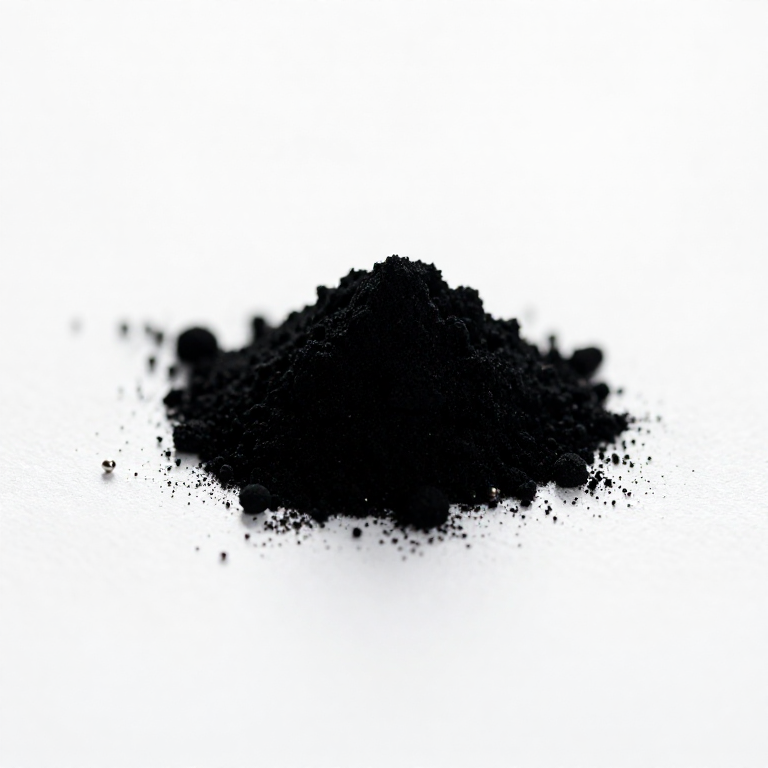


Toner and the Two-Component Developer
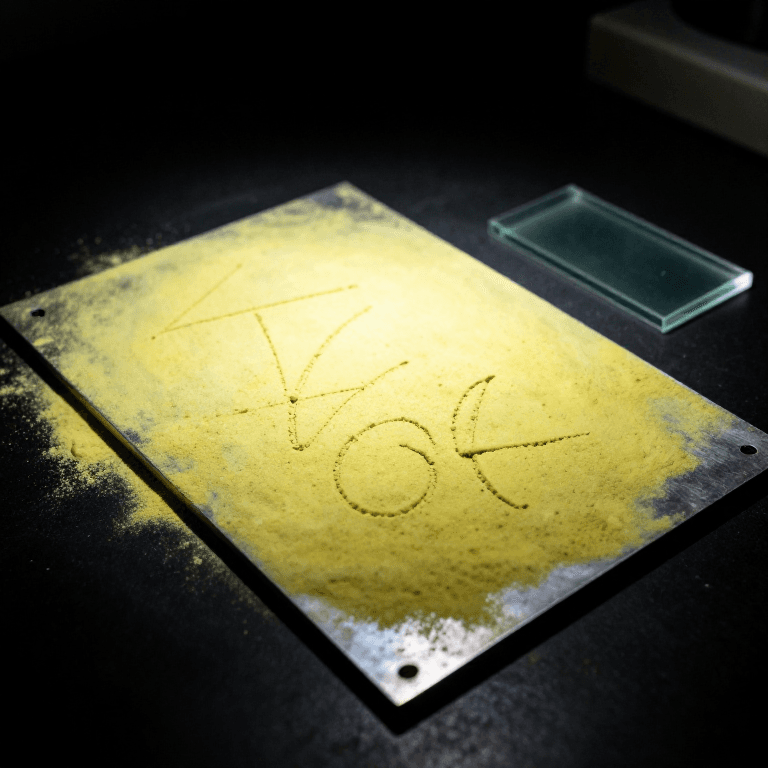
Carlson's first developer was lycopodium powder - fern spores - dusted onto a charged plate. It proved the principle and nothing else. A machine that has to make ten thousand identical pages needs a powder whose charge you can specify, hold, and get back again.
The answer, worked out at Battelle in the 1940s and refined ever since, is that the powder is never charged deliberately at all. Toner is mixed with much larger carrier beads and tumbled; the two materials sit at different places in the triboelectric series, so rubbing transfers charge from one to the other exactly as a balloon takes charge from a jumper. The beads then carry the toner to the drum on a magnetic brush, and the latent image's own field pulls the toner off.
What makes this hard is that the numbers are close together. Work out the electrostatic force on a charged eight-micrometre particle in the development field and it comes to a few nanonewtons - the same order as the van der Waals and image forces gluing that particle to the bead. There is no comfortable margin. Under-charge the toner and it will not leave the carrier; over-charge it and it holds onto the drum through transfer and prints hollow letters. A developer is an engineered mixture held inside a narrow band, not simply a black powder.
The particle size tells the rest of the story. Twelve micrometres was fine when a dot was eighty-five micrometres across. At 1200 dots per inch the dot is twenty-one micrometres and the particle IS the edge - which is what drove toner from ground-up resin to chemically grown particles of five or six micrometres, and eventually to suspending it in oil and giving up on powder altogether.
Ophakathi
3 hours
Imiyalelo
1
1
Charge a powder by rubbing it
Charge a powder by rubbing it
Put a spoonful of iron powder and a pinch of toner in a dry jar and shake it for a minute. The toner disappears - it is now coating the iron.
Hold a neodymium magnet under the jar and lift out a brush of iron. Sweep it across a sheet of paper you have charged by rubbing with a cloth: the toner jumps off onto the charge and the iron stays on the magnet. That is a magnetic brush developer.
Izinto zokwakha zalesi sinyathelo:
 Impushana yensimbi efafazwe 99 %, kg 0,4550 g
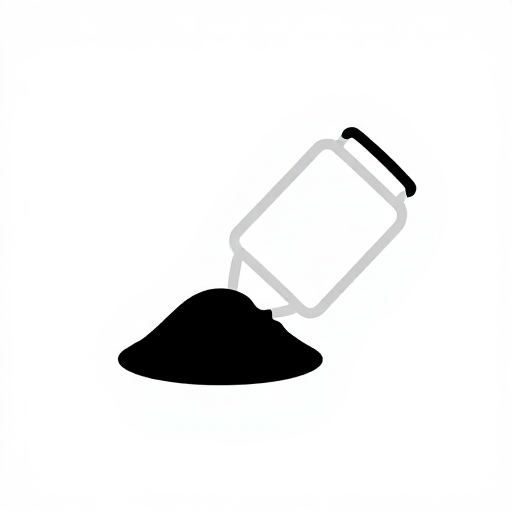 Impuphu ye-toner yephrinta ye-laser (emnyama)5 g
 Iphepha5 amashidi
Amathuluzi adingekayo:
 Isethi yezikhondlakhondla ze-neodymium
 I-electroscope yeqabunga legolide
 Izibuko Zokuphepha Ezivalekile
 Imaski Yothuli
2
2
Weigh the charge, then fuse it
Weigh the charge, then fuse it
Weigh the developer, blow the toner off the beads into the electroscope's cup and read the deflection against the weight lost. That ratio - microcoulombs per gram - is the number the notebook says everything depends on.
Then press the developed sheet with a hot iron at 180 C. The binder melts into the fibres and the image stops being a powder. Rub it: nothing comes off.
Izinto zokwakha zalesi sinyathelo:
Iphepha10 amashidiAmathuluzi adingekayo:
 Isikali Sedijithali EsinembileI-electroscope yeqabunga legolide
 Ipuleti Elishisayo
 Isibonakhulu
3
3
Particles per dot, force balance, and four developers
Particles per dot, force balance, and four developers
Ilayisha incwadi ye-Jupyter…
Amathuluzi adingekayo:
 Ikhompyutha Yasetafuleni
4
4
Compendium: what is actually in the particle
Compendium: what is actually in the particle
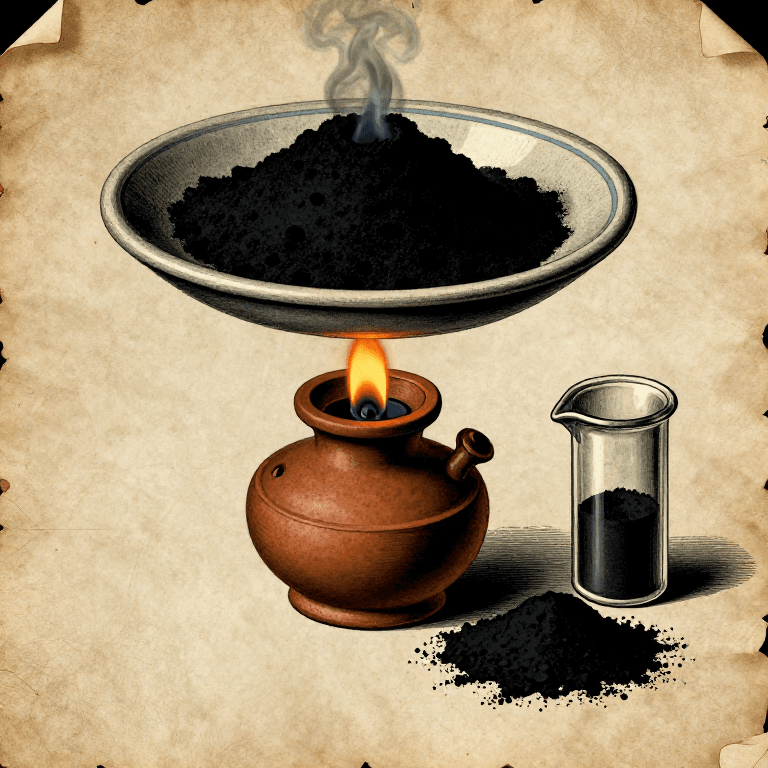
By mass a toner particle is mostly binder - a styrene-acrylate or polyester chosen for a glass transition near 60 C, so it survives a warm warehouse, and a melt viscosity that flows at 120-180 C so a fuser roller can drive it into paper in milliseconds. Five to ten per cent is pigment. A charge control agent, a metal complex dye, sets where the particle sits in the triboelectric series - it exists purely to make the rubbing repeatable. A wax releases it from the hot roller. Finally a few tenths of a per cent of fumed silica is tumbled onto the OUTSIDE so the particles roll rather than cake; without it the powder will not flow at all.
Pulverised toner is melt-mixed, cooled and ground, giving sharp fragments and a wide size spread - the fines charge too high, the coarse too low, and both are classified out and wasted. Chemically prepared toner grows particles from emulsion instead: round, narrow in size, small enough for 1200 dpi, and with the wax and pigment placed INSIDE a shell rather than smeared through. That is how a modern toner fuses cooler and costs the printer less energy per page.
Izinto
3- Isibambeli
- Isibambeli
- 15 amashidiIsibambeli
Amathuluzi Adingekayo
8- Isibambeli
- Isibambeli
- Isibambeli
- Isibambeli
- Isibambeli
- Isibambeli
- Isibambeli
- Isibambeli
Ama-blueprint ahlobene
Lama-blueprint abelana ngolwazi — amasu, izinto noma izimiso


CC0 Isizinda Somphakathi
Le blueprint ikhishwe ngaphansi kwe-CC0. Ukhululekile ukukopisha, ukuguqula, ukusabalalisa, nokusebenzisa ngaphandle kwemvume.
Sekela uMenzi ngokuthenga imikhiqizo nge-Blueprint yabo IKhomishane Yomenzi kumiswe ngabathengisi, noma dala inguqulo entsha yale Blueprint bese uyifaka njengoxhumaniso ku-Blueprint yakho ukuze wabelane ngemali engenayo.