UBUCIKO
UBUHLE NEMPILO
UBUCIKO BEZANDLA
AMASIKO NOMLANDO
EZOKUZIJABULISA
IMVELO
UKUDLA NEZIPHUZO
REVERSE ENGINEERING
IZAYENSI
EZEMIDLALO
UBUCHWEPHESHE
IZINTO EZIGQOKWAYO
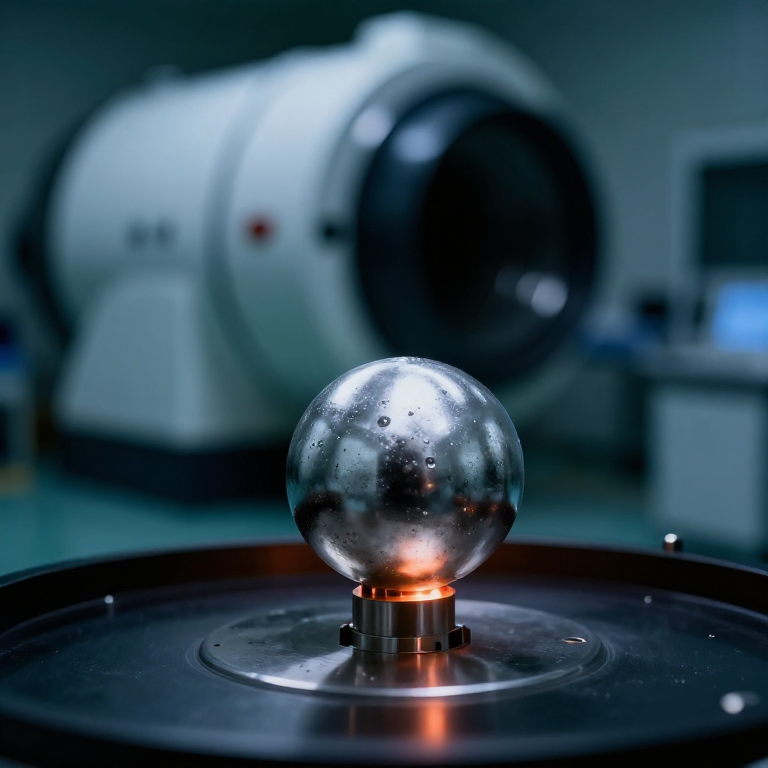
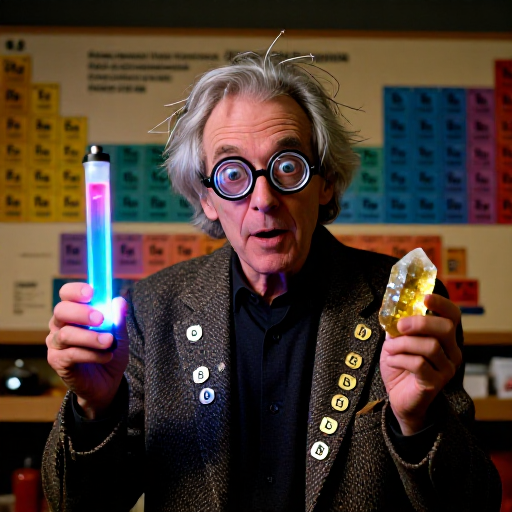
Understanding Technetium from Nuclear Fission — The First Artificially Made Element
Ophakathi
Imiyalelo
1
1
Understand Technetium's Discovery
Understand Technetium's Discovery
Carlo Perrier and Emilio Segrè created technetium in 1937 by bombarding molybdenum with deuterons in the Berkeley cyclotron — making it the first element produced artificially. Dmitri Mendeleev had predicted its existence in 1871 as 'eka-manganese' (element 43), and decades of false discovery claims followed. The name technetium comes from the Greek 'technetos' (artificial). It was the lightest element with no stable isotopes, filling the last gap in the periodic table below element 93.
2
2
Examine Why No Stable Isotopes Exist
Examine Why No Stable Isotopes Exist
Technetium is remarkable for being the lightest element with no stable isotopes — every isotope is radioactive. Nuclear physics explains this through the Mattauch isobar rule: stable isobars of neighboring elements (molybdenum-98 and ruthenium-98) prevent technetium isotopes at those mass numbers from being stable. The longest-lived isotope, Tc-98, has a half-life of 4.2 million years — long on human timescales but short relative to the age of the Solar System.
3
3
Discover Technetium in Stars
Discover Technetium in Stars
Paul Merrill detected technetium spectral lines in red giant stars in 1952 — a transformative discovery. Since Tc-98's half-life is only 4.2 million years and these stars are billions of years old, the technetium must be freshly synthesized inside the star by slow neutron capture (the s-process). This was the first direct observational proof that nuclear fusion creates heavy elements in stellar interiors, confirming the theory of stellar nucleosynthesis.
4
4
Understand Production from Molybdenum-99
Understand Production from Molybdenum-99
Virtually all technetium used in medicine comes from the decay of molybdenum-99, which is produced by neutron irradiation of uranium-235 targets in nuclear research reactors. Mo-99 (half-life 66 hours) decays to Tc-99m (half-life 6 hours) by beta emission. A technetium generator ('moly cow') contains Mo-99 adsorbed on an alumina column — hospitals elute fresh Tc-99m daily by passing saline through the column. Global demand requires continuous reactor production.
5
5
Explore Medical Imaging with Tc-99m
Explore Medical Imaging with Tc-99m
Technetium-99m is the most widely used medical radioisotope in the world, involved in over 40 million diagnostic procedures annually. Its 6-hour half-life is long enough for imaging but short enough to minimize patient radiation. Tc-99m emits a single 140 keV gamma ray — ideal energy for gamma camera detection. It images the heart (myocardial perfusion), bones (metastatic cancer), kidneys, thyroid, lungs, and brain. No other isotope matches its combination of properties.
6
6
Survey Radiopharmaceutical Chemistry
Survey Radiopharmaceutical Chemistry
Tc-99m's versatility comes from technetium's rich coordination chemistry. In the +7 oxidation state, pertechnetate (TcO₄⁻) targets the thyroid and stomach. Reduced technetium binds to phosphonate ligands for bone scans, DTPA for kidney imaging, and sestamibi for cardiac perfusion studies. Technetium can adopt oxidation states from -1 to +7 and form complexes with virtually any biological targeting molecule, making it the most adaptable element in nuclear medicine.
7
7
Examine Supply Chain Vulnerabilities
Examine Supply Chain Vulnerabilities
The global Mo-99/Tc-99m supply depends on just six aging nuclear research reactors — the NRU in Canada (shut down 2018), HFR in Netherlands, BR2 in Belgium, SAFARI-1 in South Africa, OPAL in Australia, and Maria in Poland. Reactor shutdowns in 2009-2010 caused a worldwide medical isotope crisis. New production methods including cyclotron production and neutron activation of Mo-98 are being developed to reduce dependence on highly enriched uranium targets.
8
8
Investigate Anti-Corrosion Properties
Investigate Anti-Corrosion Properties
Technetium pertechnetate (TcO₄⁻) is an extraordinarily effective corrosion inhibitor for steel — concentrations as low as 5 ppm completely prevent rusting in aerated water. The pertechnetate ion creates a passive oxide layer on the iron surface. However, technetium's radioactivity makes this application impractical for general use. The corrosion-inhibiting properties were studied extensively for potential use in nuclear reactor cooling systems where technetium is already present as a fission product.
9
9
Understand Nuclear Waste Challenges
Understand Nuclear Waste Challenges
Technetium-99 (half-life 211,000 years) is a major long-lived fission product in spent nuclear fuel. Each ton of spent fuel contains approximately 1 kg of Tc-99. As pertechnetate, it is highly mobile in groundwater and difficult to immobilize in geological repositories. Transmutation — converting Tc-99 to stable Ru-100 by neutron capture — is being researched as a way to eliminate this waste. Vitrification in borosilicate glass is the current disposal method.
Amathuluzi adingekayo:
 Isikali Esinembile
10
10
Document Findings and Medical Legacy
Document Findings and Medical Legacy
Record technetium's key data: atomic number 43, density 11.5 g/cm³, melting point 2,157°C, silvery-gray metal. Technetium is the element that proved Mendeleev right, confirmed stellar nucleosynthesis, and became indispensable to modern medicine. Despite having no stable form on Earth, Tc-99m saves more lives through diagnostic imaging than any other radioisotope. From a gap in the periodic table to 40 million medical scans per year — technetium's story is one of science turning the artificial into the essential.
11
11
Half-life: what is left, and when
Half-life: what is left, and when
Ilayisha incwadi ye-Jupyter…
Amathuluzi Adingekayo
1- Isibambeli
Izinto Zokwakha Ze-Blueprint Exhunyiwe
Yingozi
10% Ukwabiwa
Extracting Molybdenum from Molybdenite — The Slippery Lead That Strengthens Steel
ngu-Peter
Umsebenzi Wensimbi
63
0
0
0
2
0

10% Ukwabiwa
Understanding Ruthenium from Platinum Group Ore — The Hardest Platinum Metal
ngu-Peter
Ukumbiwa
20
0
0
0
6
0
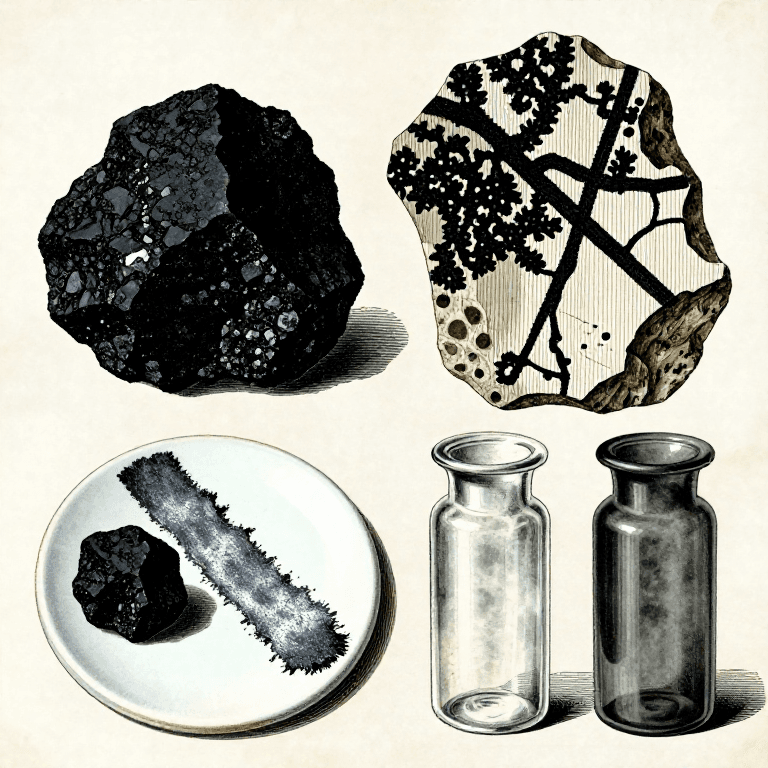
10% Ukwabiwa
Extracting Manganese from Pyrolusite — The Cave Painter's Black That Cleans Glass
ngu-Peter
Umsebenzi Wensimbi
64
0
0
0
4
0

10% Ukwabiwa
Understanding Rhenium from Molybdenite — The Jet Engine Superalloy Element
ngu-Peter
Ukumbiwa
16
0
0
0
2
0

Yingozi
10% Ukwabiwa
Extracting Iodine from Seaweed Ash — The Violet Vapor That Prevents Goiter
ngu-Peter
Ulwandle
57
0
0
0
4
0
Ama-blueprint ahlobene
Lama-blueprint abelana ngolwazi — amasu, izinto noma izimiso
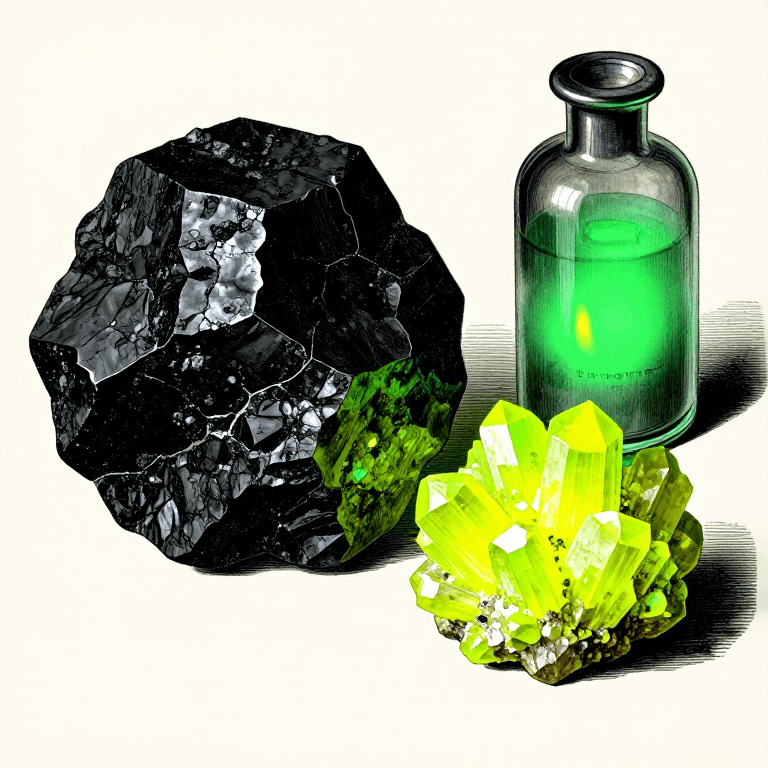
Yingozi
Understanding Uranium from Uraninite — The Element That Changed Everything
ngu-Peter
Ukumbiwa
98
0
0
0
8
0
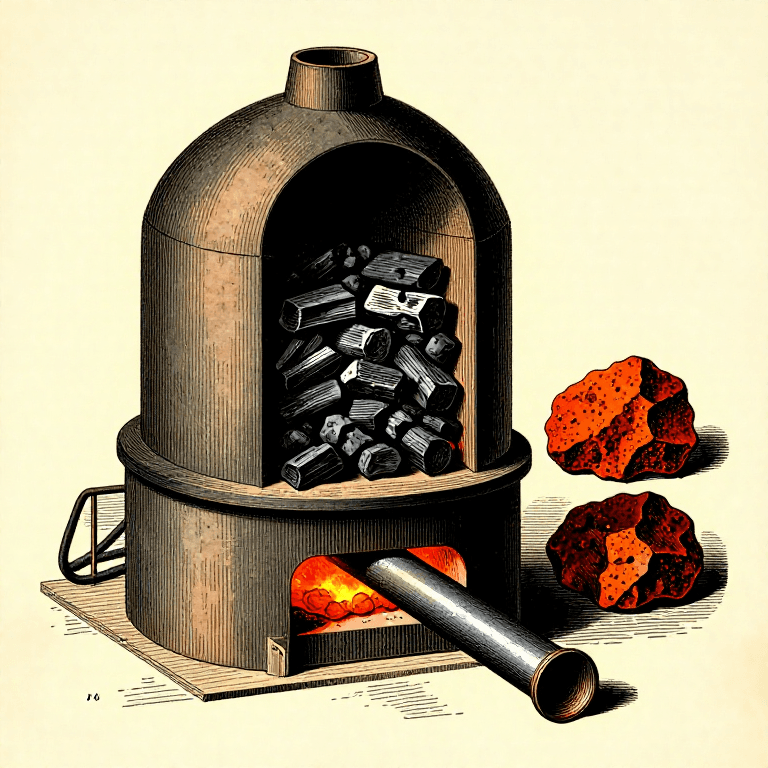
Extracting Iron from Hematite — Bloomery Smelting from Ore to Bloom
ngu-Peter
Umsebenzi Wensimbi
162
0
0
0
12
0

Yingozi
Extracting Cobalt from Cobaltite — The Goblin Metal That Colors Glass Blue
ngu-Peter
Umsebenzi Wensimbi
77
0
0
0
4
0
CC0 Isizinda Somphakathi
Le blueprint ikhishwe ngaphansi kwe-CC0. Ukhululekile ukukopisha, ukuguqula, ukusabalalisa, nokusebenzisa ngaphandle kwemvume.
Sekela uMenzi ngokuthenga imikhiqizo nge-Blueprint yabo IKhomishane Yomenzi kumiswe ngabathengisi, noma dala inguqulo entsha yale Blueprint bese uyifaka njengoxhumaniso ku-Blueprint yakho ukuze wabelane ngemali engenayo.