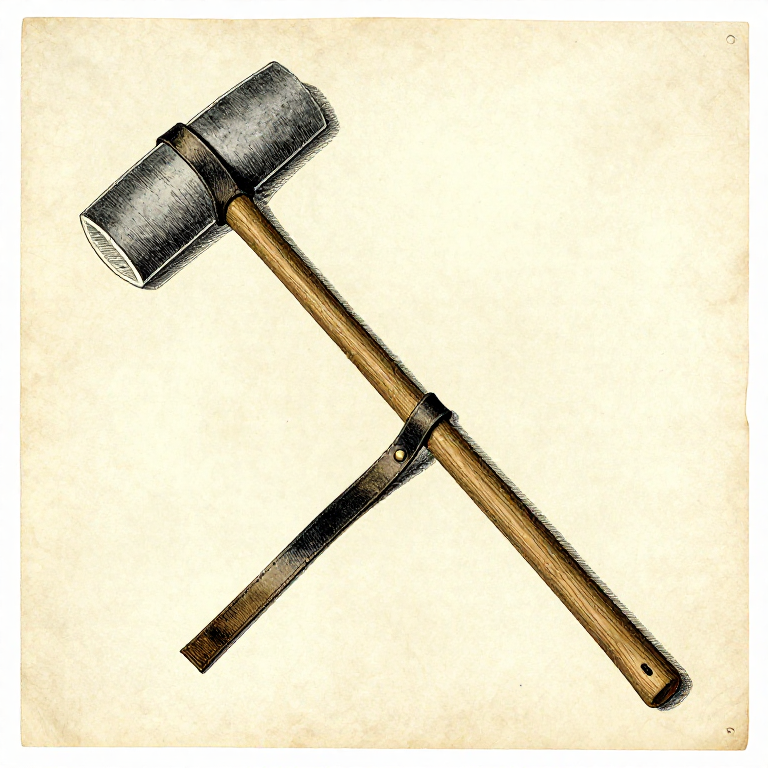


Building a Viking Threshing Flail — Separating Grain from Husk
Imiyalelo
Select and Prepare the Handle
Select and Prepare the Handle
Choose a straight, knot-free hardwood branch — ash, oak, or birch — approximately 120cm long and 3-4cm in diameter. Strip the bark using a knife or drawknife. Allow the wood to dry if using green wood (a few days near a fire speeds this). The handle should be comfortable to grip and swing overhead repeatedly.
Shape the Beater (Swipple)
Shape the Beater (Swipple)
Select a shorter, heavier hardwood piece for the beater — approximately 60cm long and 4-5cm in diameter. This is the swipple that strikes the grain. A denser wood (oak, hornbeam) is ideal for the beater as it adds striking weight. Trim to final length and smooth any rough spots with a knife.
Drill the Strap Holes
Drill the Strap Holes
Using an awl, auger, or heated iron point, drill a hole (approximately 1cm diameter) through one end of the handle and one end of the beater. The holes should be centered and perpendicular to the length of the wood. Smooth the hole edges to prevent the leather strap from wearing against sharp wood fibers.
Connect with Leather Strap
Connect with Leather Strap
Thread a strong leather strap or rawhide thong (approximately 15cm long, 2cm wide) through both drilled holes. The strap connects the handle to the beater but must allow the beater to swing freely in a full arc. Knot or peg the strap securely on each side — use a wooden peg or toggle pushed through a slit in the leather.
Rawhide is ideal because it shrinks as it dries, tightening the connection. If using tanned leather, ensure it is thick and strong enough to withstand repeated impact forces.
Izinto zokwakha zalesi sinyathelo:
 Ingodo Yokhuni Oluqinile Yezibambo1 ucezuIngodo Yokhuni Oluqinile Yezibambo1 ucezu
 Ithanga Lesikhumba1 piece (15cm) cm
Test and Use
Test and Use
Spread sheaves of harvested grain on a hard, flat threshing floor (packed earth, flat stone, or a wooden platform). Grip the handle firmly and swing the flail overhead in an arc, letting the beater strike the grain with its own weight and momentum.
The impact knocks the grain kernels free from the husks and stalks. After threshing, winnow the grain by tossing it in the air — the lighter chaff blows away while heavier kernels fall back down. The clean grain is now ready for grinding on a quern stone.
Izinto
2- Isibambeli
- 1 piece (15cm) cmIsibambeli
Le blueprint yenza
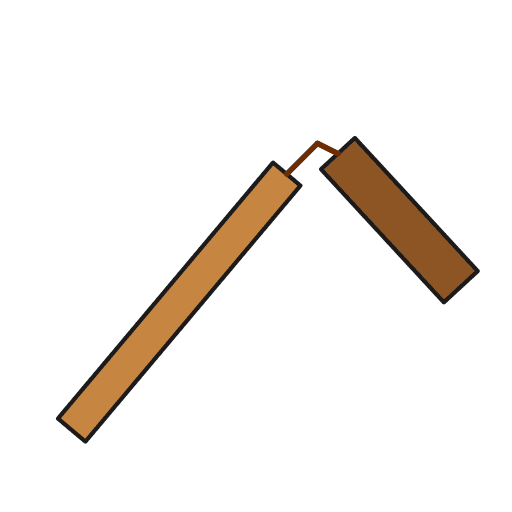
CC0 Isizinda Somphakathi
Le blueprint ikhishwe ngaphansi kwe-CC0. Ukhululekile ukukopisha, ukuguqula, ukusabalalisa, nokusebenzisa ngaphandle kwemvume.
Sekela uMenzi ngokuthenga imikhiqizo nge-Blueprint yabo IKhomishane Yomenzi kumiswe ngabathengisi, noma dala inguqulo entsha yale Blueprint bese uyifaka njengoxhumaniso ku-Blueprint yakho ukuze wabelane ngemali engenayo.