UBUCIKO
UBUHLE NEMPILO
UBUCIKO BEZANDLA
AMASIKO NOMLANDO
EZOKUZIJABULISA
IMVELO
UKUDLA NEZIPHUZO
REVERSE ENGINEERING
IZAYENSI
EZEMIDLALO
UBUCHWEPHESHE
IZINTO EZIGQOKWAYO



The Worm Drive: Torque Instead of Speed
The sidewinder saw of the previous rung puts the motor beside the blade and drives it through a single spur reduction. It is light, fast and cheap, and in heavy wet timber it bogs down.
The other answer turns the drive through ninety degrees with a worm gearset. The motor lies IN LINE behind the blade, so the saw is narrow instead of wide, and the worm gears the blade down hard — slower, but with far more torque and far more mass behind the cut.
Two tools, both alive today, solving the same problem in opposite directions. This rung is about the gearset that makes the difference, and about what it costs.
Ophakathi
About 2 hours
Imiyalelo
1
1
Hold both saws and find where the motor is
Hold both saws and find where the motor is
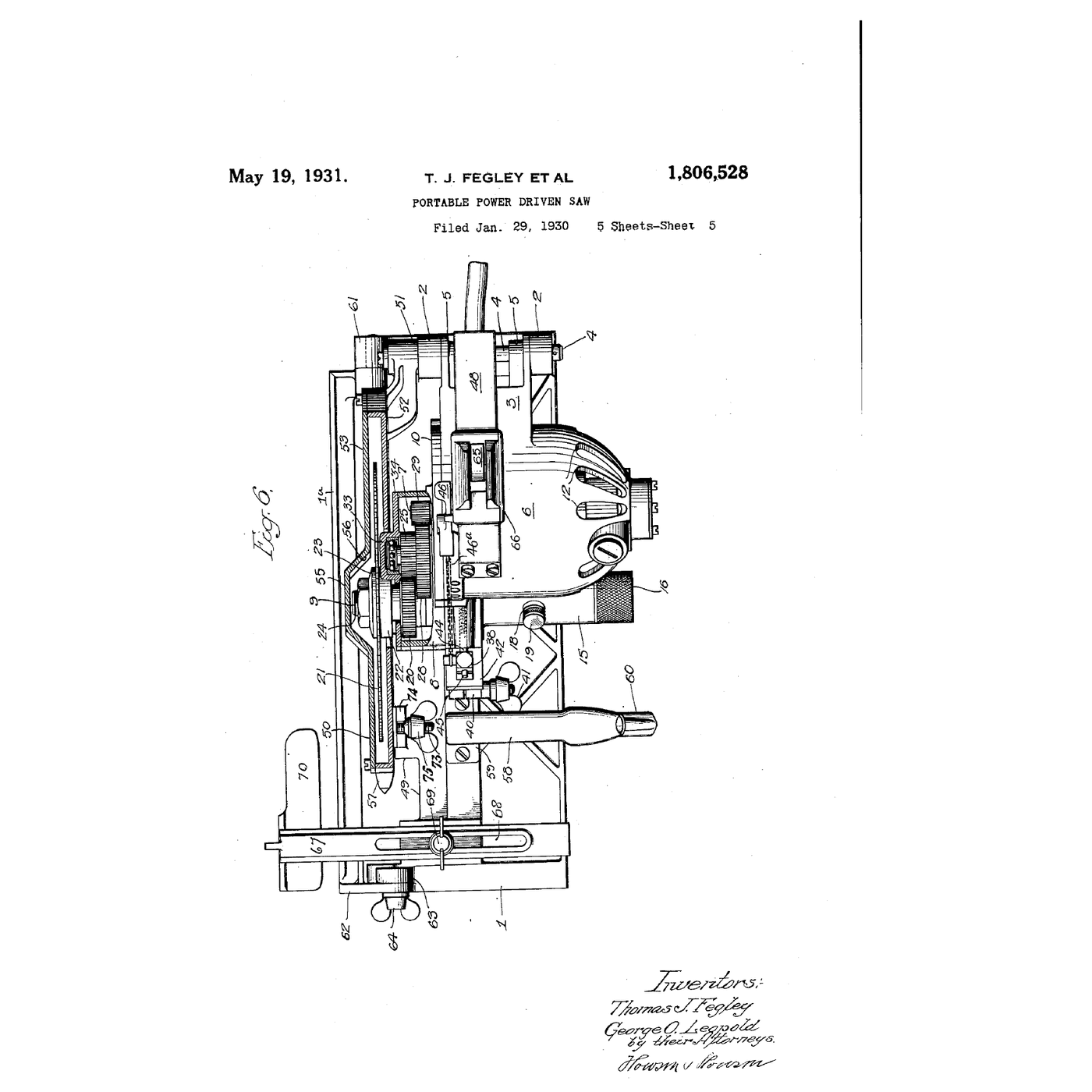
If you can get a sidewinder and a worm-drive saw side by side, do this first. If not, the drawing on this blueprint shows the arrangement clearly enough to reason from.
On a sidewinder the motor axis is at right angles to the blade and the motor sits beside it — the tool is wide and the blade is usually on the right of the body. On a worm drive the motor lies along the cut, behind the blade, and the tool is long and narrow.
Measure the width of each across the widest point with the tape and write both down. That single number decides which tool can work between two joists and which cannot.
Now balance each one across a finger, as you did with the drill in rung 1. The worm drive carries its mass behind the blade and low down, so it wants to sit INTO the cut; the sidewinder carries it out to one side and wants to tip. Neither is better in the abstract — one suits a bench and a sheet, the other suits a roof and a beam.
Amathuluzi adingekayo:
 Isaha eyindilinga
 Ithephu Lokulinganisa
 Irula
Irula2
2
What a worm gearset actually does
What a worm gearset actually does
A worm is a screw. A worm wheel is a gear cut to mesh with it. Because the screw advances the wheel by one tooth per turn of the worm, the reduction ratio for a single-start worm is simply the number of teeth on the wheel — 12 teeth gives 12:1 in ONE pair.
Three consequences follow and all three show up in the tool.
**The drive turns a corner.** Worm and wheel axes cross at ninety degrees, which is what lets the motor lie in line behind the blade.
**Torque goes up as speed goes down.** A worm-drive saw turns its blade at roughly half the speed of a sidewinder and puts several times the torque behind it. In wet framing timber the slow saw keeps cutting where the fast one stalls.
**The teeth slide rather than roll.** That is the price. A spur gear pair rolls, a worm pair scrapes, so it wastes power as heat and needs oil — which is why a worm-drive saw has an oil filler and a level plug and a sidewinder does not. Step 4 shows the same sliding gives the pair its self-locking behaviour at low lead angles.
Check the oil before you use one. It is the maintenance item that kills these saws, and the plug is usually the only fastener on the tool that has not been touched.
Amathuluzi adingekayo:
Isaha eyindilinga Isethi yamaspanela
 Isethi yezikhiye ze-hex
 Uwoyela wezindlela zomshini (i-quart eyodwa)
3
3
Cut the same timber with both, and time it
Cut the same timber with both, and time it
Take a length of wet or dense stock — treated carcassing, a green fence post, laminated beam offcut. Clamp it so the kerf opens rather than closes, as the circular saw rung sets out.
Make the same crosscut with each saw, timed with the stopwatch, with the same tooth count of blade and the same depth. Record: time to cut, whether the motor note dropped, whether the saw needed to be forced, and how the cut face looks.
Expect the sidewinder to be faster in dry softwood and to labour in the wet stock, and the worm drive to be steadier everywhere and never much quicker. Write the two times down — the point is not which wins but that the winner changes with the material.
Then lift each saw one-handed at arm's length, and note how long you would want to do that for. The worm drive is heavier, and on a roof all day that is the real specification, not the cutting rate.
Izinto zokwakha zalesi sinyathelo:
 Ipulangwe lomphayini1 ucezu
Amathuluzi adingekayo:
Isaha eyindilinga Ucezu lwesaha eyindilinga
 Isibambo esiyi-C
 Iwashi Lokumisa Isikhathi
 Izibuko zokuphepha
 Isivikelo sokuzwa (izivalo zezindlebe, SNR 30 dB)
4
4
Reduction in one pair, and why it self-locks
Reduction in one pair, and why it self-locks
Ilayisha incwadi ye-Jupyter…
Amathuluzi adingekayo:
 Isilinganiso Sokuzungeza Sedijithali
5
5
History and context
History and context
**Attribution, stated honestly.** The worm-drive portable saw is credited to **Edmond Michel**, a New Orleans engineer, around **1923–24**, and to the Michel Electric Handsaw Company he founded with Joseph Sullivan — the firm that became SKIL. The drawing on this blueprint is Michel's own. A specific patent number for the original worm-drive saw could not be pinned from the sources reachable here, so none is asserted. The mechanism is thoroughly documented and the mechanism is the payload.
The story usually told is that Michel saw workers cutting sugar cane by hand and built a powered saw for it, then realised the same machine would cut timber. Like most origin stories it is repeated more often than it is sourced; treat it as tradition rather than record.
What is not in doubt is the split it created. The worm-drive saw became standard on the American west coast and the sidewinder elsewhere, and the two arrangements have coexisted for a century because they genuinely suit different work. The sibling rung in this batch — the Fegley and Leopold sidewinder of 1930 — is not a competitor this one beat. Both survive.
**Honest limits.** It is heavy, and that weight is on your arm all day. The gearset wastes power as heat and must be kept oiled or it is destroyed. It is slower in the material most people cut most of the time. And it costs more, which for a tool that does the same job is the limit that decides most purchases.
Izinto
1- 1 ucezuIsibambeli
Amathuluzi Adingekayo
12- Isibambeli
- 1 vendor sell this, none ship to you yetIsibambeli
- Isibambeli
- Isibambeli
- Isibambeli
- Uwoyela wezindlela zomshini (i-quart eyodwa)ikhomishini engu-10%Isibambeli
- Ucezu lwesaha eyindilingaikhomishini engu-10%Isibambeli
- Isibambeli
- Isibambeli
- Isibambeli
- Isibambeli
Ama-blueprint ahlobene
Lama-blueprint abelana ngolwazi — amasu, izinto noma izimiso

CC0 Isizinda Somphakathi
Le blueprint ikhishwe ngaphansi kwe-CC0. Ukhululekile ukukopisha, ukuguqula, ukusabalalisa, nokusebenzisa ngaphandle kwemvume.
Sekela uMenzi ngokuthenga imikhiqizo nge-Blueprint yabo IKhomishane Yomenzi kumiswe ngabathengisi, noma dala inguqulo entsha yale Blueprint bese uyifaka njengoxhumaniso ku-Blueprint yakho ukuze wabelane ngemali engenayo.