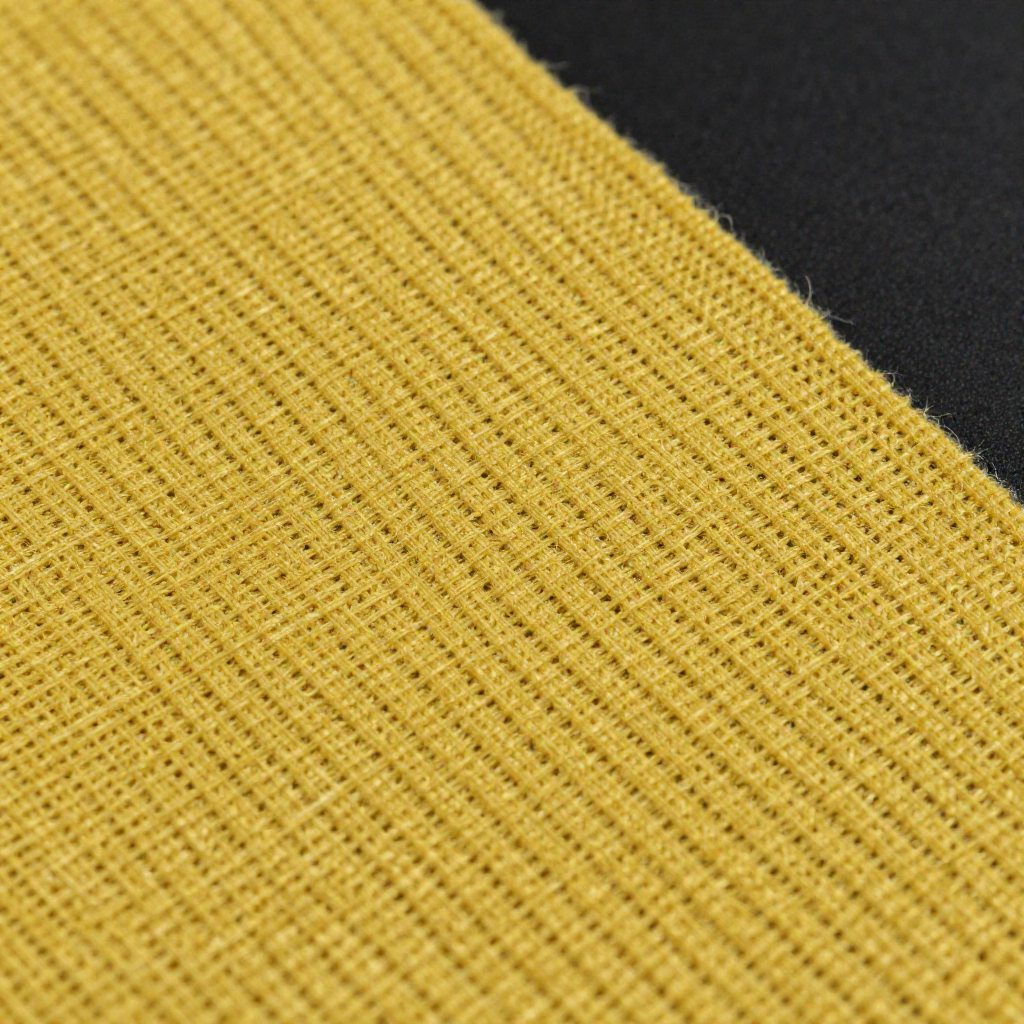


Kevlar — The Aramid Fiber Stronger Than Steel
In 1965, Stephanie Kwolek, a research chemist at DuPont's Pioneering Research Laboratory in Wilmington, Delaware, synthesized an unusual polymer solution that would become Kevlar — a para-aramid fiber with tensile strength five times greater than steel on an equal-weight basis. Kwolek was working on finding lightweight, stiff fibers for use in car tires when she produced a polymer solution that was cloudy and thin instead of the expected clear and viscous. Her supervisor initially wanted to discard it. Kwolek insisted on spinning it anyway — the resulting fiber had extraordinary mechanical properties never before seen in an organic material.
Kevlar is poly(para-phenylene terephthalamide) — a polyamide (like nylon) but with aromatic rings in the backbone instead of flexible carbon chains. These rigid, rod-like molecules pack together through hydrogen bonds into a highly ordered crystalline structure, with the chains aligned almost perfectly parallel to the fiber axis. This combination of molecular rigidity and crystal order gives Kevlar its extreme tensile strength (3.6 GPa), high modulus (tensile stiffness), and remarkable resistance to cutting, abrasion, and thermal decomposition.
DuPont commercialized Kevlar in 1971. Its first major application was as a tire cord replacement for steel belts in radial tires. By 1975, it was being used in bulletproof vests — an application Kwolek had not anticipated but which has since saved thousands of lives. Today, Kevlar is used in body armor, helmets, cut-resistant gloves, racing sails, aerospace composites, fiber-optic cable reinforcement, and drumheads. Kwolek's discovery — born from insisting on testing an anomalous result rather than throwing it away — demonstrated that para-aramid chemistry could produce materials previously achievable only with metals and ceramics.
Instructions
Understand para-aramid chemistry
Understand para-aramid chemistry
Kevlar is a para-aramid — an aromatic polyamide where the amide bonds connect at the para (1,4) positions of benzene rings. 'Aromatic' means the backbone contains benzene rings; 'para' means the chain enters and exits each ring at opposite ends, creating a straight, rod-like molecule. Compare this to nylon 6,6, where flexible methylene chains (-CH₂-) allow the molecule to coil and fold. Kevlar's rigid, rod-like structure is the fundamental reason for its extraordinary strength — the molecules cannot unfold or stretch before breaking.
Prepare the two aromatic monomers
Prepare the two aromatic monomers
Kevlar is made from two monomers: para-phenylenediamine (PPD, H₂N-C₆H₄-NH₂) — a benzene ring with an amine group at each para position — and terephthaloyl chloride (TCl, ClOC-C₆H₄-COCl) — a benzene ring with an acid chloride group at each para position. Both monomers must be of exceptional purity: even 0.1% impurity terminates polymer chains prematurely, reducing fiber strength. Para-phenylenediamine is a suspected carcinogen and must be handled with full chemical safety equipment.
Materials for this step:
 Para-phenylenediamine (PPD)50 g
Tools needed:
 Glass Distillation Flask
Dissolve PPD in a cold solvent system
Dissolve PPD in a cold solvent system
Dissolve para-phenylenediamine in a mixture of N-methyl-2-pyrrolidone (NMP) and calcium chloride at -10 to 0°C. The calcium chloride acts as a solubility aid — it coordinates with the amide bonds formed during polymerization, keeping the growing polymer chains in solution long enough to reach useful molecular weight. Without calcium chloride, the rigid polymer chains crash out of solution at low molecular weight. The low temperature slows the reaction enough to control it — at room temperature, the polymerization is explosively fast.
Add terephthaloyl chloride to polymerize
Add terephthaloyl chloride to polymerize
Add terephthaloyl chloride rapidly to the cold PPD solution with vigorous stirring. The amine groups of PPD react instantly with the acid chloride groups of TCl, forming amide bonds and releasing hydrogen chloride gas. The polymerization is complete within seconds — far faster than nylon or polyester condensation, which take hours. The reaction mixture thickens rapidly into a gel as the rigid polymer chains form. Calcium chloride neutralizes the HCl byproduct. The product is poly(para-phenylene terephthalamide) — Kevlar polymer.
Isolate and wash the polymer
Isolate and wash the polymer
The gel-like reaction product is broken into crumbs, washed extensively with water to remove solvent, calcium chloride, and residual HCl, then dried. The dried Kevlar polymer is a pale yellow powder or crumb. Unlike nylon or polyester, Kevlar cannot be melt-spun — its decomposition temperature (around 450°C) is below its theoretical melting point. The rigid chains interact so strongly through hydrogen bonds that the crystal structure decomposes rather than melts. Kevlar must be dissolved and wet-spun.
Dissolve in concentrated sulfuric acid
Dissolve in concentrated sulfuric acid
Dissolve the Kevlar polymer in 100% (concentrated) sulfuric acid at 80°C to form a spinning dope containing 19–20% polymer by weight. This is the only solvent that dissolves Kevlar at concentrations high enough for fiber spinning. At this concentration, something remarkable happens: the rigid, rod-like Kevlar molecules spontaneously align parallel to each other, forming a liquid crystalline phase — the solution becomes optically anisotropic (birefringent). This pre-alignment is critical: it means the molecules are already partially oriented before spinning even begins.
Materials for this step:
Spin through a spinneret into a coagulation bath
Spin through a spinneret into a coagulation bath
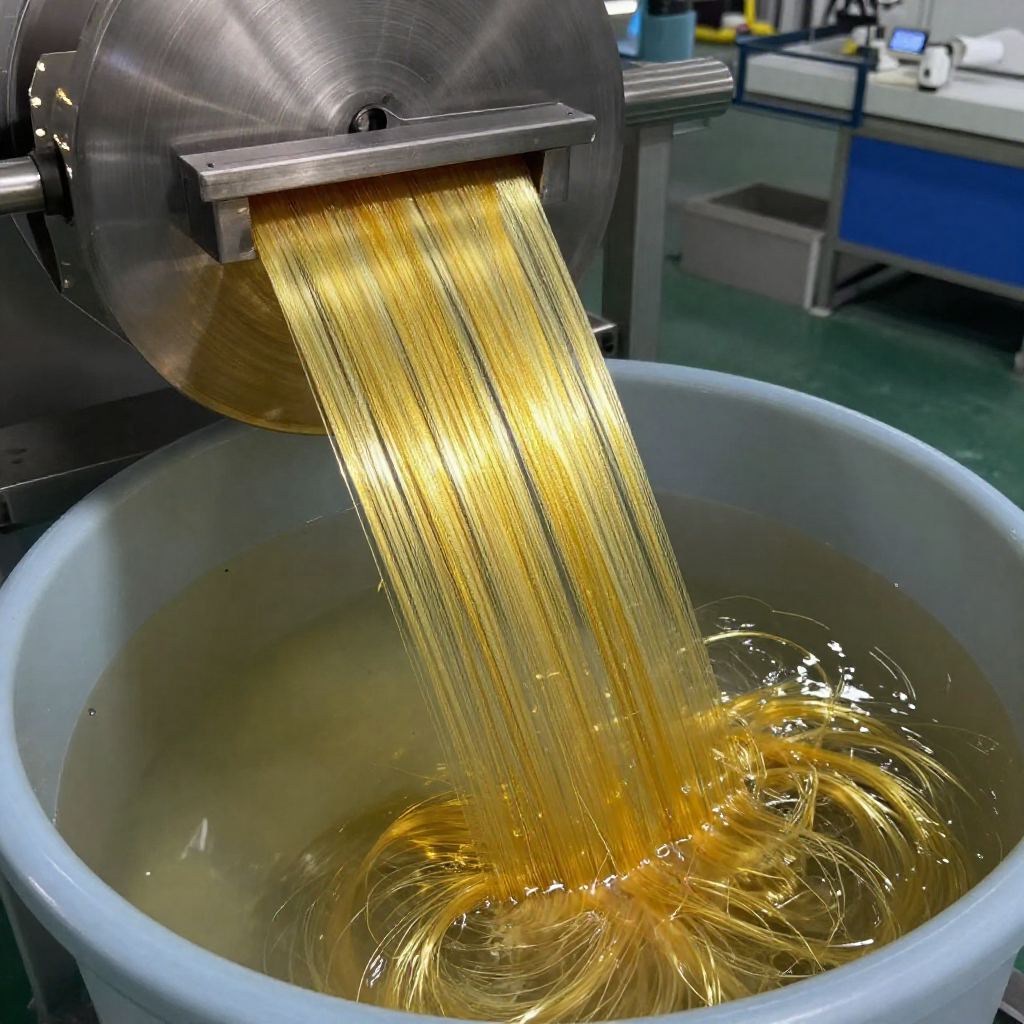
Extrude the liquid crystalline spinning dope through a spinneret at 80°C. The extruded filaments pass through a small air gap (5–10 mm) before entering a cold water coagulation bath. In the air gap, the extensional flow further aligns the already-ordered liquid crystal domains parallel to the fiber axis. When the filaments hit the water bath, the sulfuric acid diffuses out and the polymer precipitates as a highly oriented solid fiber. This 'dry-jet wet spinning' process — air gap followed by coagulation — is unique to Kevlar and is the key to its extreme molecular orientation.
Wash, neutralize, and dry the fiber
Wash, neutralize, and dry the fiber
The coagulated filaments are washed extensively with water and dilute alkali to remove all traces of sulfuric acid — any residual acid would degrade the fiber over time. The washed fiber is dried under tension at moderate temperature (100–150°C). Unlike nylon or polyester, Kevlar requires no post-spinning drawing — the liquid crystalline pre-alignment and the dry-jet wet spinning process produce near-perfect molecular orientation in a single step. The as-spun fiber already has a tensile strength of 2.8–3.6 GPa.
Heat-treat for higher modulus (Kevlar 49)
Heat-treat for higher modulus (Kevlar 49)
The standard fiber (Kevlar 29) has high strength but moderate stiffness (modulus). For applications requiring maximum rigidity — aerospace composites, racing yacht hulls — the fiber is heat-treated at 400–550°C under tension in an inert atmosphere. This thermal treatment increases crystallinity and perfects molecular alignment, raising the modulus from 67 GPa (Kevlar 29) to 112 GPa (Kevlar 49) — approaching the stiffness of aluminum at one-fifth the weight. Strength decreases slightly with heat treatment as crystal defects are annealed out at the cost of some chain breakage.
Weave into protective fabrics
Weave into protective fabrics
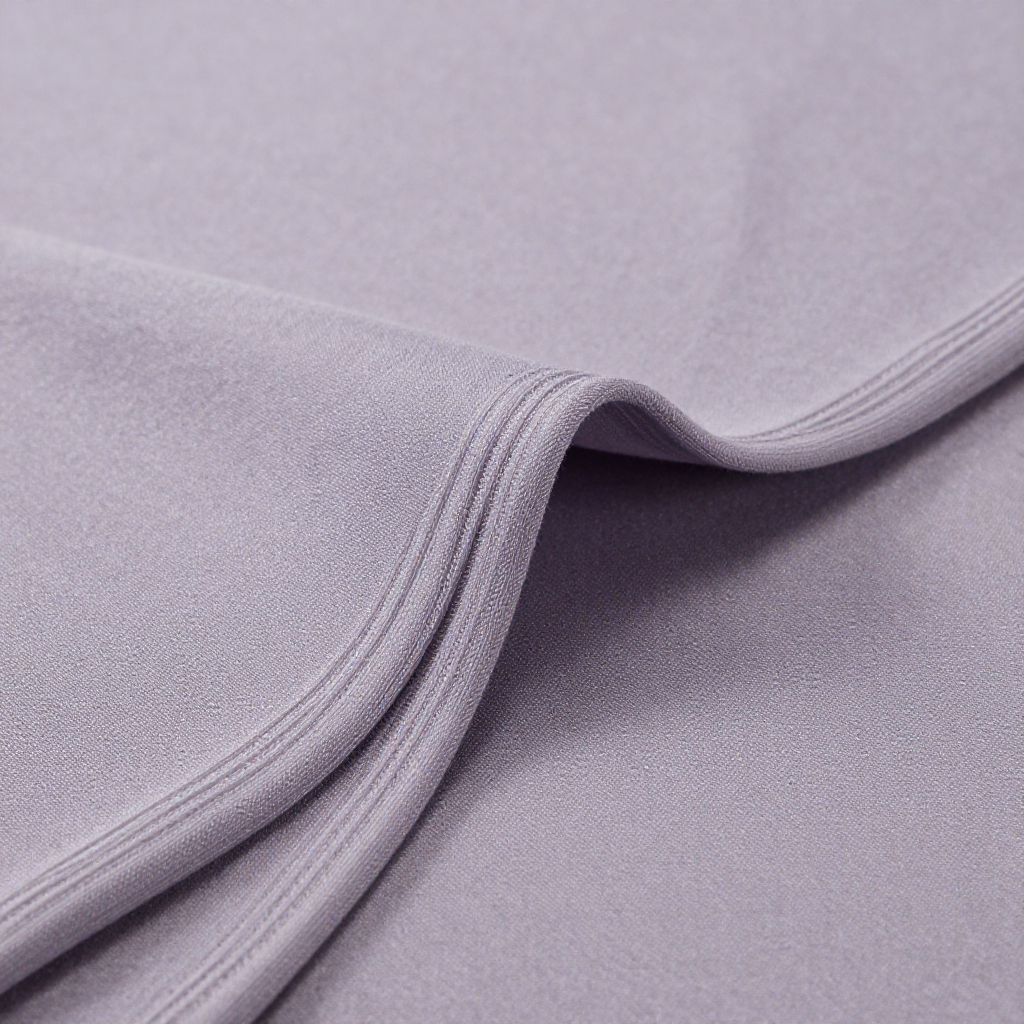
For body armor, Kevlar yarns are woven into tight plain-weave fabrics and layered — a typical soft-armor vest contains 20–40 layers of Kevlar fabric. When a bullet strikes, the fabric distributes the impact energy across a wide area through the tightly interlocked weave. The fiber's high tenacity absorbs energy by stretching elastically (up to 3.6% elongation) before breaking. Each successive layer further decelerates the projectile. A vest weighing 2–3 kg can stop handgun rounds that would penetrate 12 mm of steel.
Recognize the safety and handling requirements
Recognize the safety and handling requirements
Kevlar production involves extremely hazardous chemicals. Concentrated sulfuric acid causes severe burns on contact. Para-phenylenediamine is a potent sensitizer and suspected carcinogen. Terephthaloyl chloride reacts violently with water and releases corrosive HCl fumes. The polymerization is exothermic and fast — loss of temperature control can cause a runaway reaction. Industrial Kevlar production requires full chemical process safety engineering, closed systems, and continuous monitoring. This blueprint describes the chemistry for understanding — not for amateur synthesis.
Understand Kevlar's legacy in materials science
Understand Kevlar's legacy in materials science
Kevlar proved that organic polymer fibers could achieve mechanical properties previously exclusive to metals and ceramics — a paradigm shift in materials science. It opened the field of high-performance fibers: Twaron (a Kevlar equivalent by Akzo Nobel), Technora (a copolyamide), Dyneema/Spectra (ultra-high molecular weight polyethylene), and Zylon (PBO). Stephanie Kwolek received the National Medal of Technology in 1996 and was inducted into the National Inventors Hall of Fame in 1994. Her discovery — the product of curiosity, persistence, and refusal to discard an anomalous result — remains one of the most important achievements in polymer science.
Materials
2- Placeholder
Tools Required
1- Placeholder
Connected Blueprint Materials
Related Blueprints
These blueprints share knowledge with this one — techniques, materials, or principles that connect them in the learning graph.
Related blueprints
Other builds that share materials, tools, or techniques with this one.
CC0 Public Domain
This blueprint is released under CC0. You are free to copy, modify, distribute, and use this work for any purpose, without asking permission.
Support the Maker by purchasing products through their Blueprint where they earn a Maker Commission set by Vendors, or create a new iteration of this Blueprint and include it as a connection in your own Blueprint to share revenue.