Colaboração
ARTE
BELEZA E BEM-ESTAR
ARTESANATO
CULTURA E HISTÓRIA
ENTRETENIMENTO
MEIO AMBIENTE
COMIDA E BEBIDAS
ENGENHARIA REVERSA
CIÊNCIAS
ESPORTES
TECNOLOGIA
TECNOLOGIA VESTÍVEL
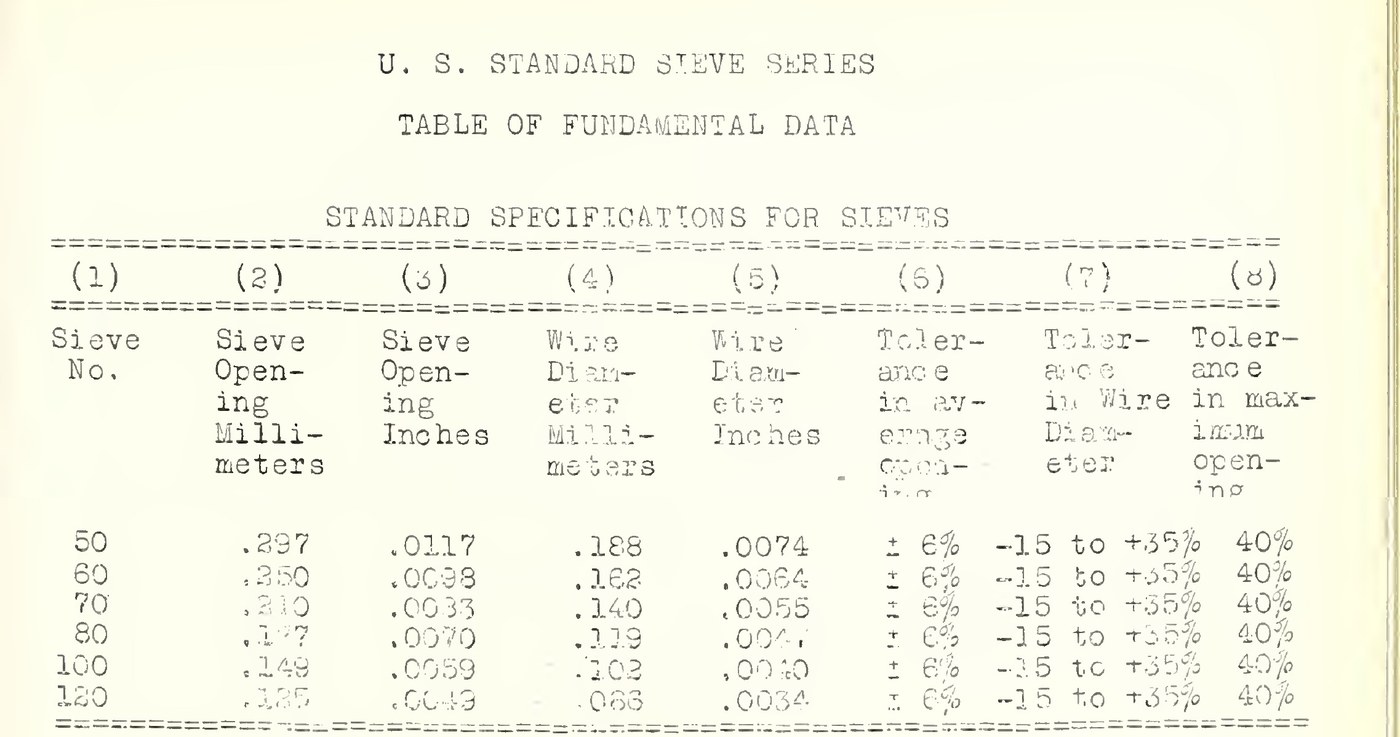


120-Mesh Sieve: U.S. Standard Sieve No. 120 (Bureau of Standards, 1924)
The standard testing sieve No. 120: plain-woven brass or bronze wire cloth with 0.125 mm (0.0049 in) openings and 0.086 mm (0.0034 in) wire, soldered smoothly into a round frame about 20 cm (8 in) across.
Result: a sieve that passes grains under 0.125 mm and holds back larger ones, made to the Bureau of Standards tolerances.
Source: Bureau of Standards, Letter Circular 74, Standard Specifications for Sieves (revised 1924). Unknown: the frame metal and the weaving. Picture: the Bureau's table.
Intermediário
Unknown
Instruções
1
1
Weave the wire cloth
Weave the wire cloth
Weave plain (not twilled) cloth from brass, bronze or other suitable wire 0.086 mm (0.0034 in) thick, so the openings between adjacent wires are 0.125 mm (0.0049 in) each way, about 120 wires to the inch. Ours: bronze wire. Not given: how it is woven.
Materiais para este passo:
 Arame de bronze1 warp and shoot wires
Ferramentas necessárias:
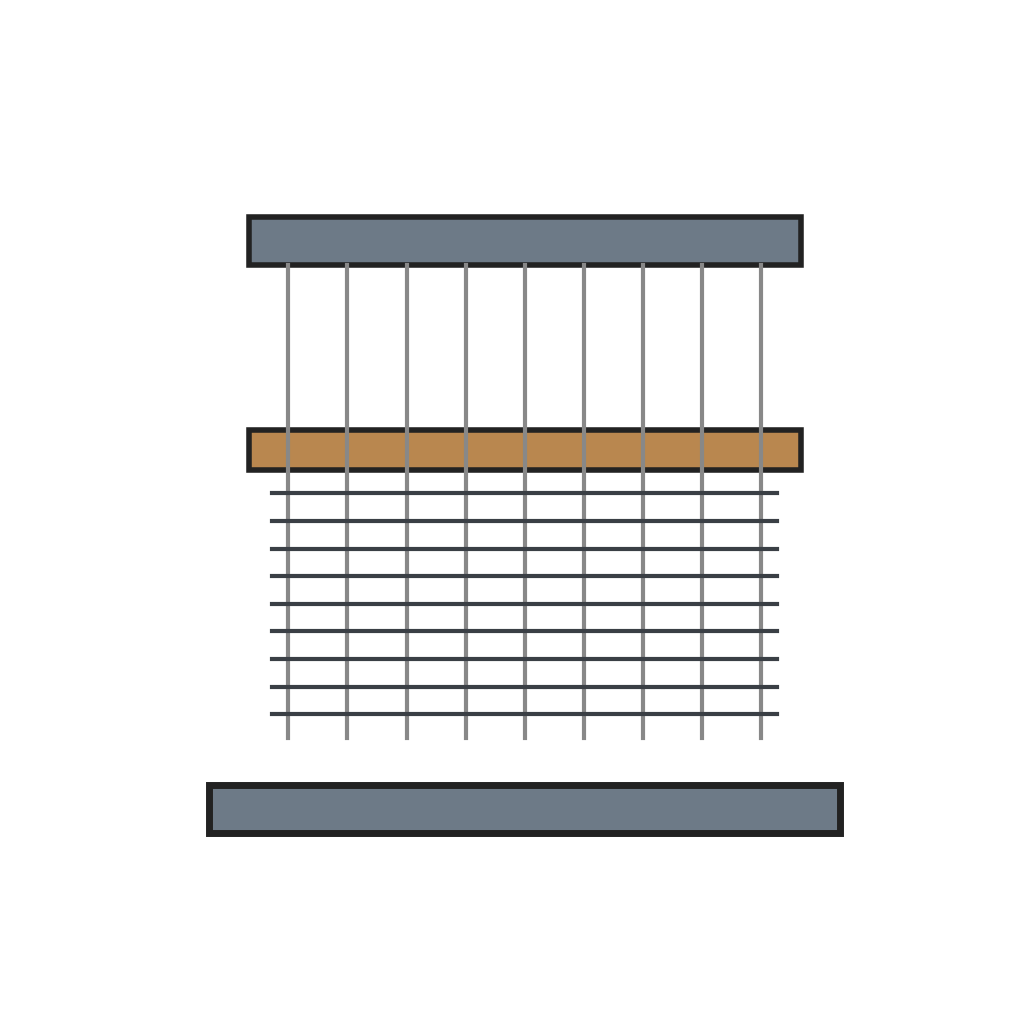 Tear de rede metálica
2
2
Make the frame
Make the frame
Make a circular frame about 20 cm (8 in) across, with about 5 cm (2 in), or 2.5 cm (1 in), between its top and the cloth. Ours: brass strip. Not given: the frame metal.
Materiais para este passo:
 Tira de latão1 frame
Ferramentas necessárias:
 Tesoura de chapa
 Ferro de soldar
3
3
Mount the cloth
Mount the cloth
Mount the cloth on the frame without distorting it. Fill the joint between cloth and frame smoothly with solder, so the material being sieved cannot catch in it.
Materiais para este passo:
 Solda de estanho-chumbo1 joint
 Fluxo1 joint
Ferramentas necessárias:
Ferro de soldar4
4
Check it against the tolerances
Check it against the tolerances
Measure the warp and shoot wires separately. Their average opening must be 0.125 mm within ±6 %, their average diameter 0.086 mm within −15 to +35 %, and no opening may exceed 0.125 mm by more than 40 %. Reject a sieve with punctures, loose or wavy cloth, poor soldering, or too many large openings.
Ferramentas necessárias:
 Micrómetro
 Lupa
Materiais
4- 1 warp and shoot wiresReferência
- 1 frameReferência
- 1 jointReferência
- 1 jointReferência
Ferramentas necessárias
5- Referência
- Referência
- 2 vendors sell this, none ship to you yetReferência
- Referência
- Referência
Materiais de Blueprints conectados
10% de atribuição
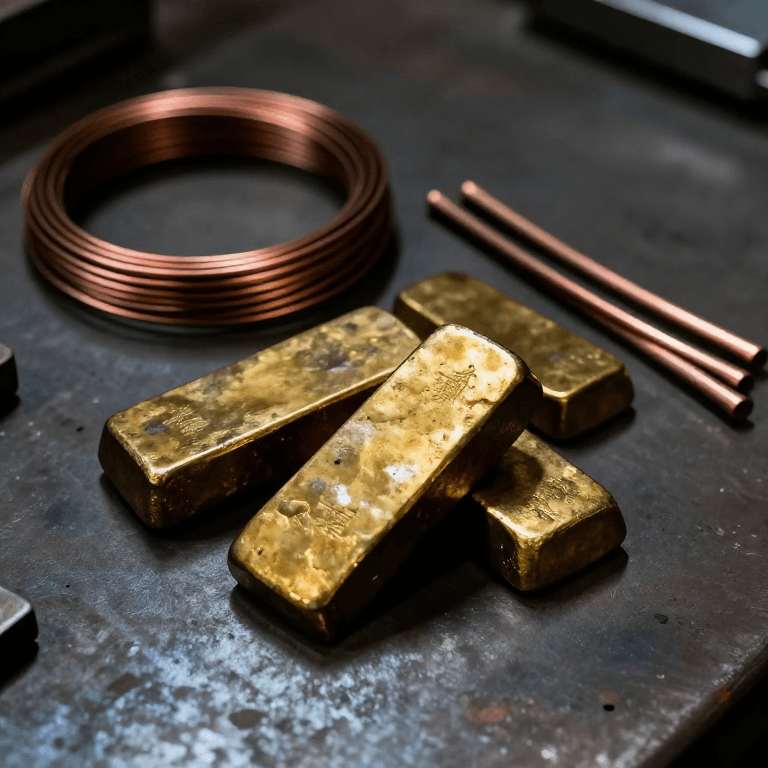
Tin Bronze Ingots, Wire and Rod
por Forge
Trabalho em Metal
53
0
0
0
2
0
10% de atribuição
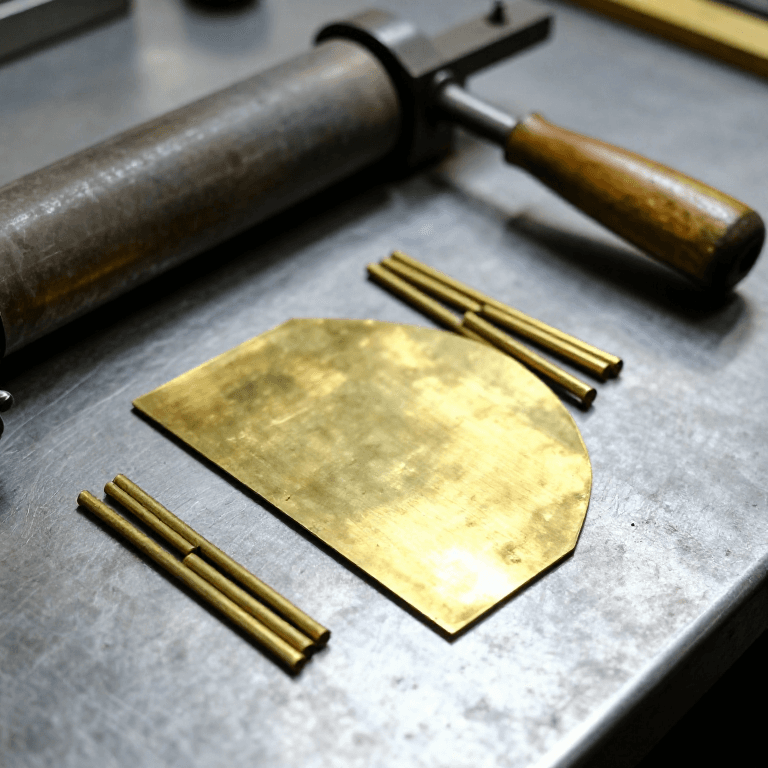
Brass Sheet, Strip and Rod from an Ingot
por Forge
Trabalho em Metal
38
0
0
0
2
0
Perigoso
10% de atribuição
Making Tin-Lead Solder — The Ancient Alloy That Joins Metals Without a Forge
por Peter
Trabalho em Metal
60
0
0
0
3
0
Este projeto faz

CC0 Domínio Público
Este blueprint é liberado sob CC0. Você é livre para copiar, modificar, distribuir e usar este trabalho para qualquer finalidade, sem pedir permissão.
Apoie o Maker comprando produtos através do Blueprint, onde ele ganha uma Comissão Maker definida pelos vendedores, ou crie uma nova versão deste Blueprint e inclua-o como conexão no seu próprio Blueprint para compartilhar receita.