ARTE
BELEZA E BEM-ESTAR
ARTESANATO
CULTURA E HISTÓRIA
ENTRETENIMENTO
MEIO AMBIENTE
COMIDA E BEBIDAS
ENGENHARIA REVERSA
CIÊNCIAS
ESPORTES
TECNOLOGIA
TECNOLOGIA VESTÍVEL
Wikimedia Commons contributor · CC0 1.0 (Public Domain Dedication)


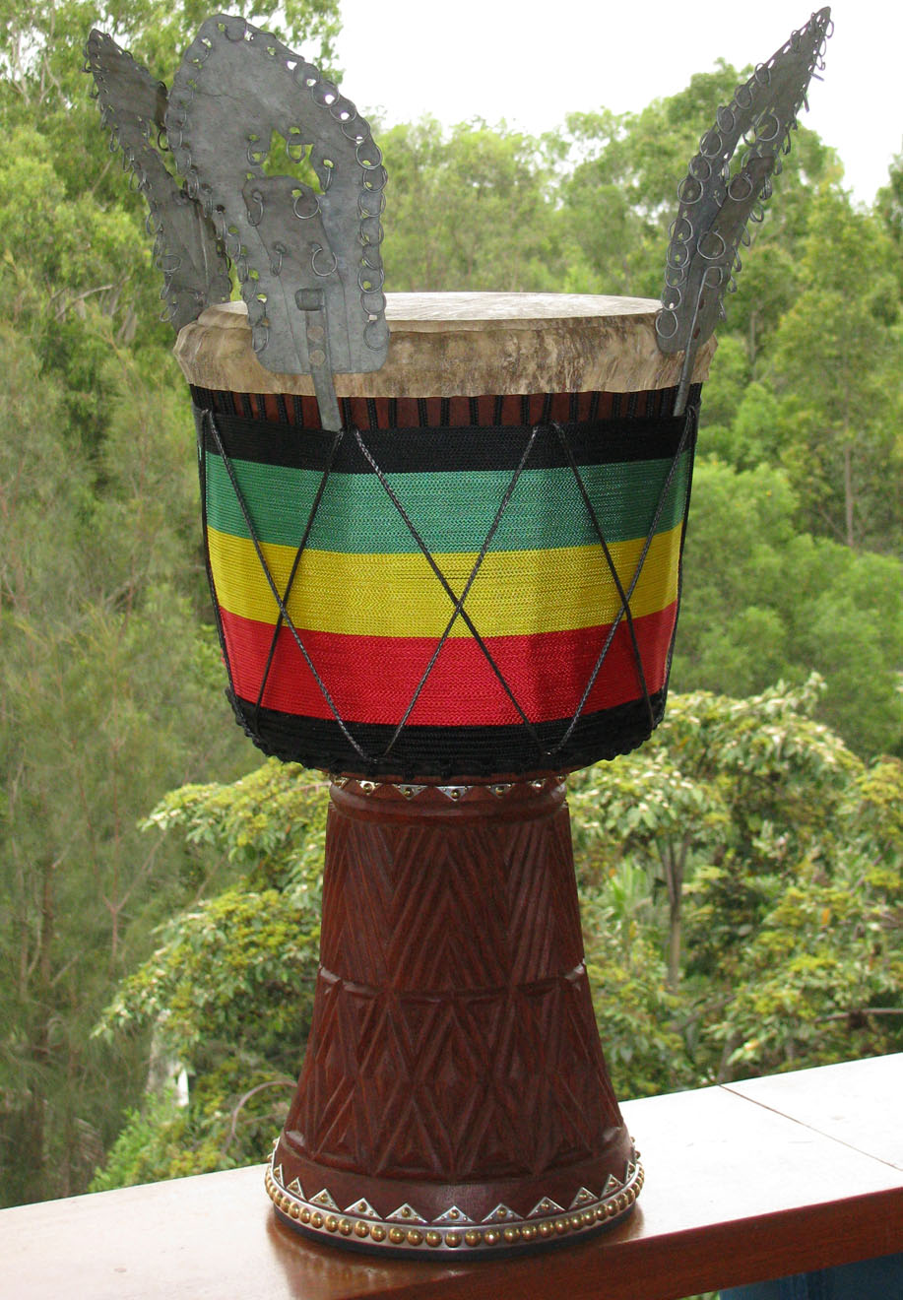
Building a Djembe — The West African Rope-Tuned Goblet Drum
Build a djembe: a goblet-shaped wooden drum with a goat-skin head, tuned not by heat but by PULLING ropes tight in a diamond weave. Carve the body, mount the skin on rings, then rope it up and tune it. A serious maker build in the membrane drum and rope tensioning, giving three voices — bass, tone and slap — from one head.
Intermediário
Several hours over several sessions
Instruções
1
1
A drum you tune with rope
A drum you tune with rope
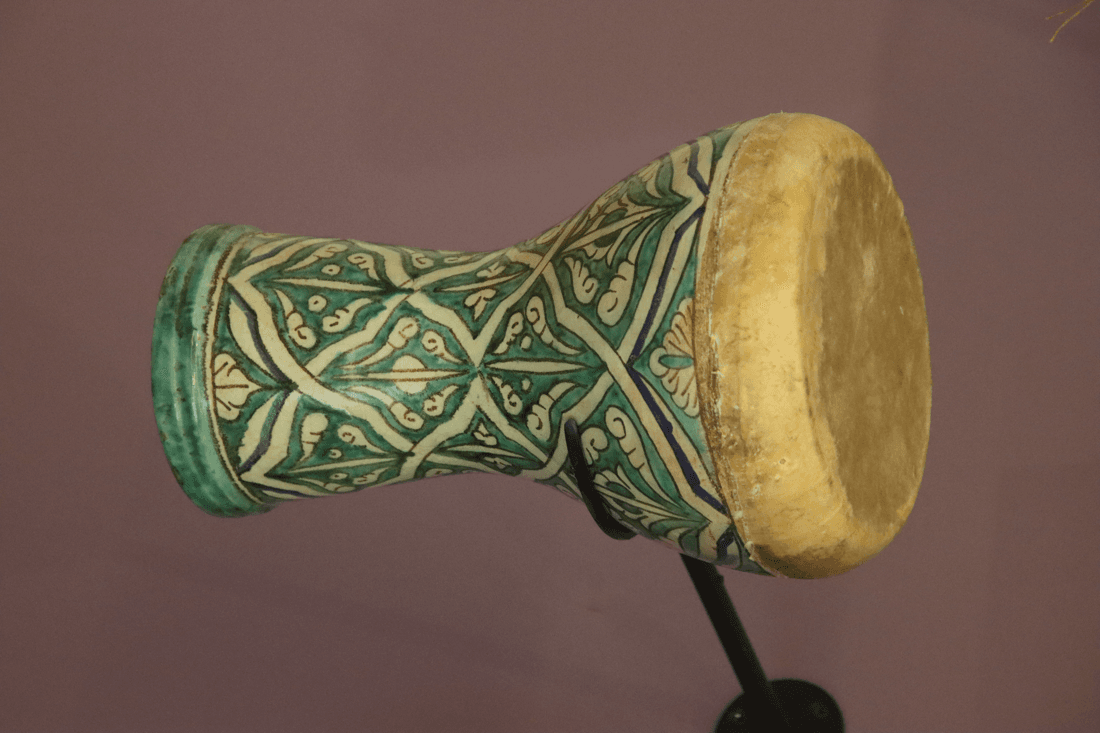
The djembe is a goblet-shaped wooden drum with a goat-skin head. Instead of heating the skin to tune it, you pull ropes tight in a diamond weave — the tighter the rope, the higher and sharper the drum.
2
2
Carve the goblet body
Carve the goblet body
Hollow a goblet-shaped body — a wide bowl at the top narrowing to a stem and opening out at the foot. Traditionally it is carved from a single log; built up from wood, keep the bore smooth and the bottom fully open.
Materiais para este passo:
 Tábua de resinosa seca1 peça
 Cola branca para madeira (PVA)1 peça
Ferramentas necessárias:
 Faca de talha sloyd
 Serra de arco para metais
3
3
Cut the head
Cut the head
Cut a round goat-skin rawhide head a good bit wider than the drum's bowl, with the hair scraped off.
Materiais para este passo:
 Pele crua1 peça
4
4
Make two rings
Make two rings
Bend two metal rings that fit the drum's rim. Wrap one in the skin (the flesh ring) and leave one as a bottom ring; rows of rope loops hang from each.
Materiais para este passo:
 Arame de bronze1 peça
 Cordel de abacá1 peça
5
5
Mount the skin
Mount the skin
Soak the skin, fold it over the top ring, and seat both over the bowl so the wet head lies across the mouth of the drum.
6
6
Rope it up
Rope it up
Lace a long rope up and down between the top ring's loops and the bottom ring, pulling the head down. Let it dry, then weave the verticals together in diamonds to pull them tighter still.
Materiais para este passo:
Cordel de abacá1 peça7
7
Tune and play
Tune and play
Pull more diamonds to tighten the head and raise the pitch. Then play bare-handed: a deep BASS in the centre, a ringing TONE on the edge, and a sharp cracking SLAP with loose fingers on the rim.
8
8
Compendium — three voices and a tuning rope
Compendium — three voices and a tuning rope
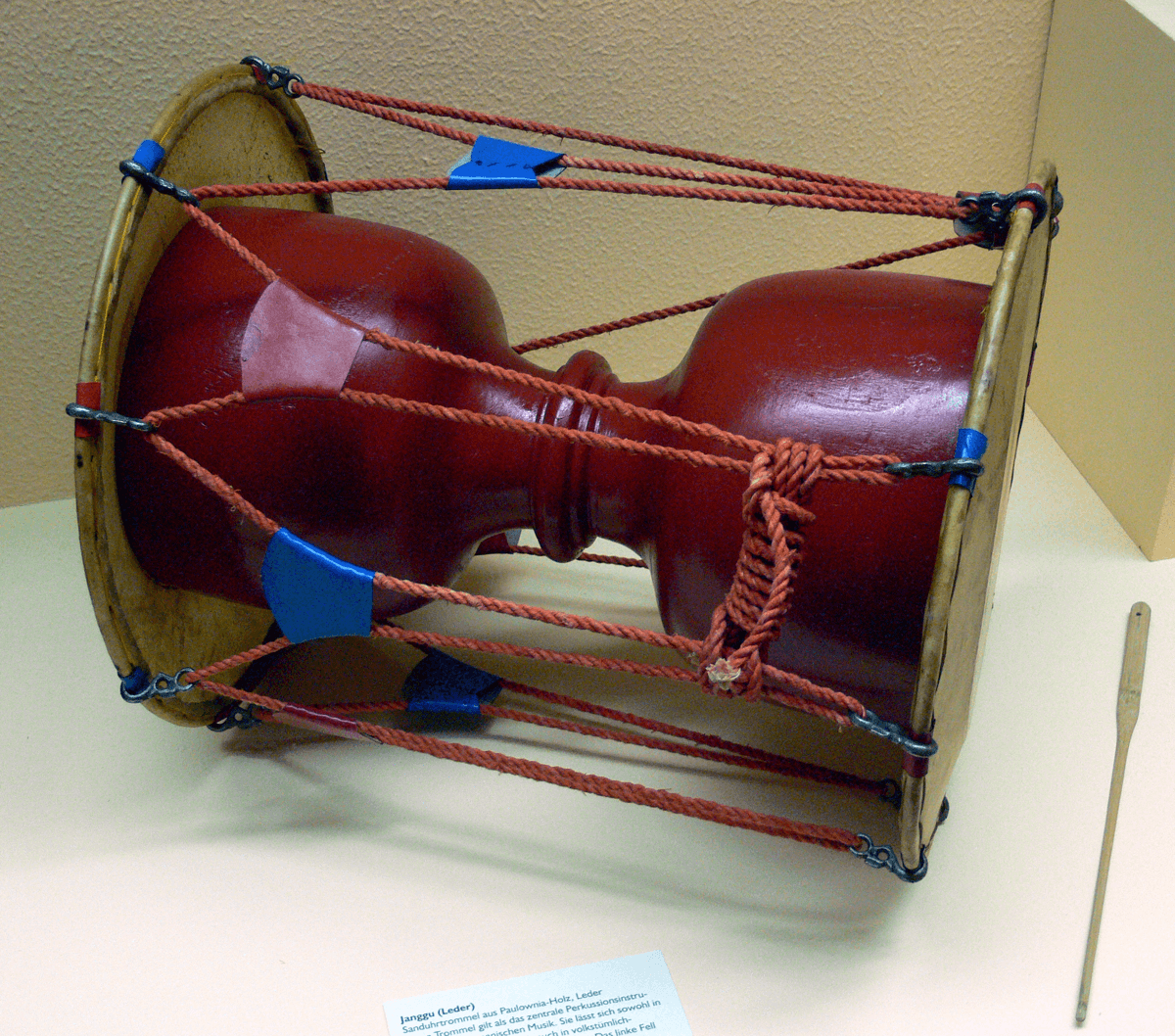
The djembe is a goblet membrane drum, close kin to the darbuka, but two things set it apart. First, its body is a big carved WOODEN goblet, not clay: struck in the centre the head drives a slow pulse of air down the hollow stem and out of the open foot, which acts as a horn to boom the deep BASS; struck near the rim the edge of the skin snaps for a ringing TONE, and a loose, cracking hit gives the bright SLAP — three distinct voices from one head, the palette of West African drumming. Second, and cleverest, is how it is tuned. A drumhead's pitch rises with tension, and where the darbuka's skin is glued or warmed, the djembe's is pulled tight by ROPE: the head is trapped between two metal rings, and a long rope laced between them and then woven into diamonds draws the rings together and stretches the skin — pull more diamonds and the whole head tightens and the drum sings higher, all with no heat and no glue, tunable in a moment and re-tunable forever. This rope-lacing is the same idea that tunes the Korean janggu, and the djembe's goblet shape is the wooden cousin of the clay darbuka. Carved by the blacksmith-craftsmen of the Mande peoples for many centuries, the djembe is said to 'gather everyone in peace'.
Materiais
5- 1 peçaReferência
- Referência
- 1 peçaReferência
- 1 peçaReferência
- 1 peçaReferência
Ferramentas necessárias
2- Referência
- Referência
Blueprints relacionados
Estes blueprints compartilham conhecimento — técnicas, materiais ou princípios

CC0 Domínio Público
Este blueprint é liberado sob CC0. Você é livre para copiar, modificar, distribuir e usar este trabalho para qualquer finalidade, sem pedir permissão.
Apoie o Maker comprando produtos através do Blueprint, onde ele ganha uma Comissão Maker definida pelos vendedores, ou crie uma nova versão deste Blueprint e inclua-o como conexão no seu próprio Blueprint para compartilhar receita.