ARTE
BELEZA E BEM-ESTAR
ARTESANATO
CULTURA E HISTÓRIA
ENTRETENIMENTO
MEIO AMBIENTE
COMIDA E BEBIDAS
ENGENHARIA REVERSA
CIÊNCIAS
ESPORTES
TECNOLOGIA
TECNOLOGIA VESTÍVEL
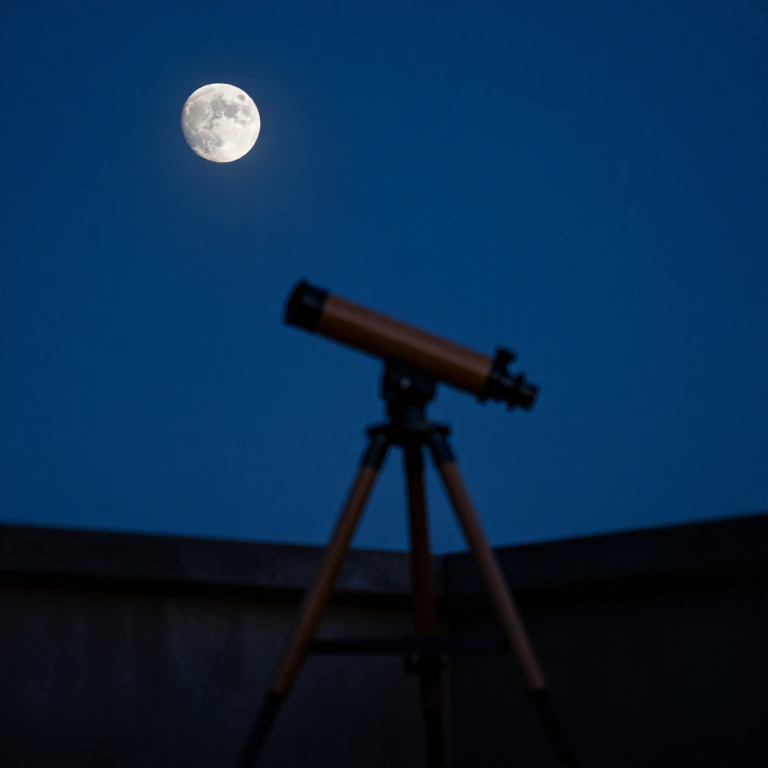
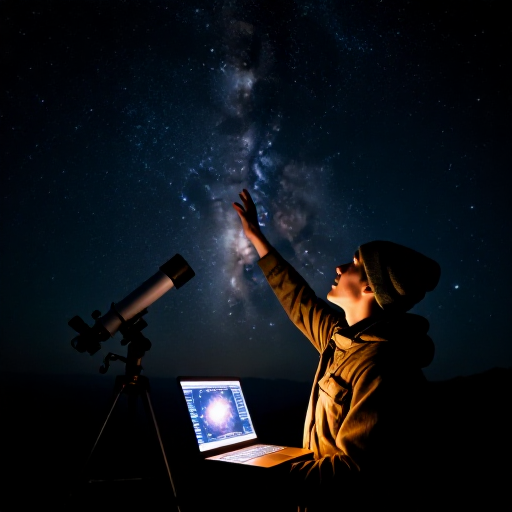

Measuring How Far the Sun Is Compared to the Moon — Aristarchus' Half-Moon Method
Around 270 BC Aristarchus of Samos worked out that the Sun is far more distant than the Moon — and did it with pure geometry. His key idea: when the Moon is exactly half-lit, the Sun, Moon and Earth form a right angle at the Moon. Measure the angle in the sky between the half-Moon and the Sun, and trigonometry gives the ratio of their distances. This blueprint reproduces his method with a simple sighting instrument. It also shows, honestly, why his answer of '19 times' fell short of the true 390 — the geometry is perfect, but the angle is almost impossible to measure by eye. From it Aristarchus argued the Earth goes round the Sun, eighteen centuries before Copernicus.
Intermediário
2
Instruções
1
1
Understand the geometry
Understand the geometry
When the Moon shows exactly half its disc lit, the sunlight is hitting it side-on — which means the angle Sun–Moon–Earth is a perfect right angle. The Earth, Moon and Sun then form a right triangle, with the Earth–Moon line and Earth–Sun line as two sides. The angle between them at the Earth unlocks the distance ratio.
2
2
Catch a precise half-Moon
Catch a precise half-Moon
Watch for the exact moment of first-quarter or last-quarter Moon, when the terminator (the line between light and dark) is dead straight and half the disc is lit. This is when the right angle at the Moon holds — and judging it precisely is the hardest part.
Ferramentas necessárias:
 Vareta de madeira (cavilha)
3
3
Measure the Sun–Moon angle
Measure the Sun–Moon angle
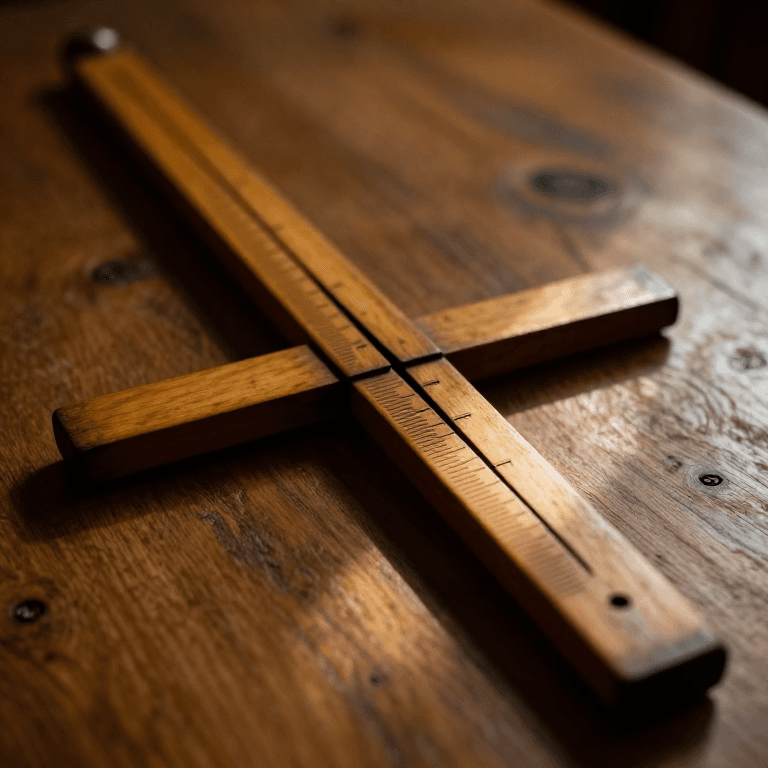
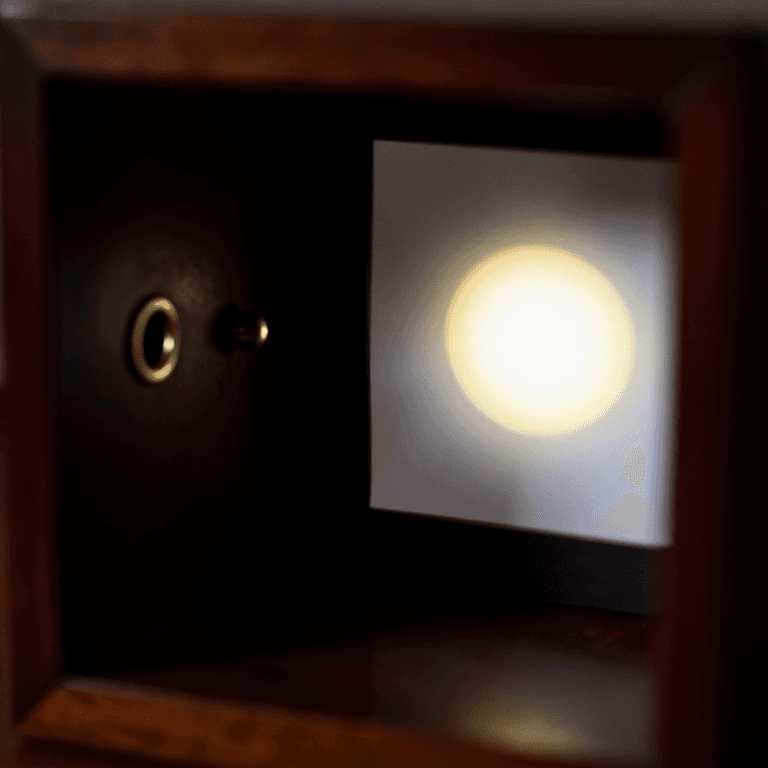
With both the Sun and the half-Moon in the sky, measure the angle between them using a cross-staff or a graduated sighting board. NEVER look at the Sun directly — sight it by the shadow its pinhole or a rod casts on the board while you line the other end up with the Moon.
Ferramentas necessárias:
 Tábua de amieiro vermelho
 Fio de algodão para cozinha
4
4
Note Aristarchus' reading
Note Aristarchus' reading
Aristarchus measured this angle as 87°, just short of a right angle. The true value is about 89.85° — so close to 90° that the naked eye cannot tell the difference. Record your own measured angle for the calculation.
5
5
Do the trigonometry
Do the trigonometry
In the right triangle, the ratio of the Sun's distance to the Moon's distance is 1 ÷ cosine(your angle). For 87°, cos 87° ≈ 0.0523, so the Sun works out about 1 ÷ 0.0523 ≈ 19 times farther than the Moon.
6
6
Compare honestly with the truth
Compare honestly with the truth
The real Sun is about 390 times farther than the Moon, not 19. The gap is not a flaw in the reasoning — it is because the true angle (89.85°) is so near 90° that being off by even 3° throws the answer out enormously. The method is exact; only the instrument's precision limits it.
7
7
See why it changed history
See why it changed history
Even the modest '19 times' meant the Sun must be vastly bigger than the Earth. Aristarchus reasoned that the small Earth would sooner orbit the giant Sun than the reverse — proposing a Sun-centred cosmos around 270 BC, roughly 1,800 years before Copernicus revived the idea.
8
8
Push for better precision
Push for better precision
Repeat on several half-Moons and average your readings, and use the finest angle scale you can build. Every fraction of a degree you gain nearer the true 89.85° pushes your Sun-distance ratio up toward the real value — a direct lesson in how measurement precision drives discovery.
Ferramentas necessárias
3- Referência
- Referência
- Referência
Materiais de Blueprints conectados
Blueprints relacionados
Estes blueprints compartilham conhecimento — técnicas, materiais ou princípios

CC0 Domínio Público
Este blueprint é liberado sob CC0. Você é livre para copiar, modificar, distribuir e usar este trabalho para qualquer finalidade, sem pedir permissão.
Apoie o Maker comprando produtos através do Blueprint, onde ele ganha uma Comissão Maker definida pelos vendedores, ou crie uma nova versão deste Blueprint e inclua-o como conexão no seu próprio Blueprint para compartilhar receita.