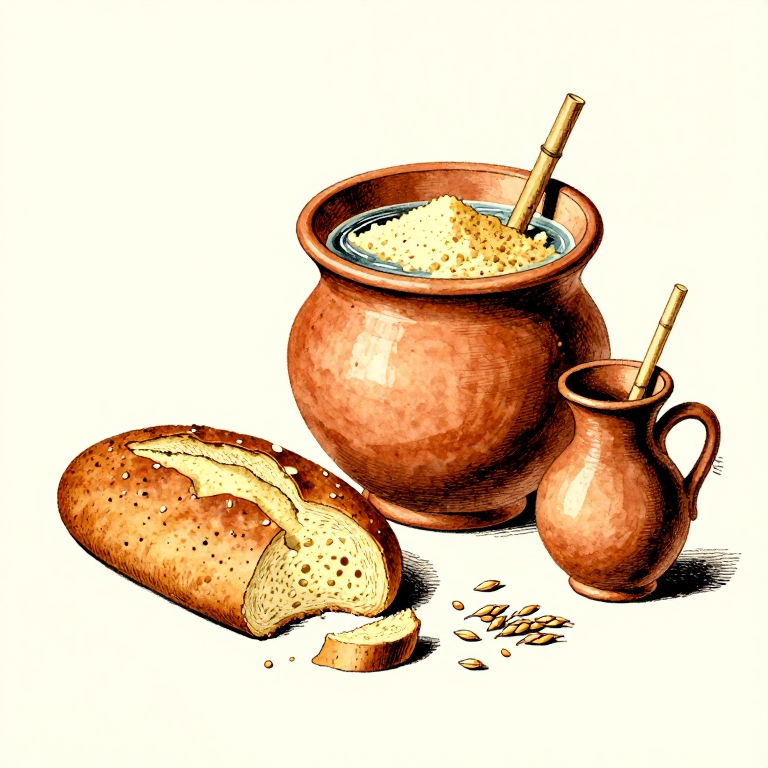


Brewing Beer from Bread (Sumerian Method) — Bappir Beer Bread
Instruções
Malt the Barley
Malt the Barley
Soak whole barley grains in water for 24 hours, then drain and spread them on a flat surface kept moist. Over 3-5 days, the grains sprout — tiny rootlets and a shoot emerge from each kernel. This germination process activates amylase enzymes within the grain that convert starch to fermentable sugars (maltose). Once the shoot is approximately the same length as the grain (about 5 mm), halt the germination by spreading the sprouted grain in the sun to dry completely. This produces malt — the essential ingredient that provides both the enzymes and the fermentable sugars for brewing.
Materiais para este passo:
 Grão de cevada2 kg peça
 Águafor soaking peça
Bake the Beer Bread (Bappir)
Bake the Beer Bread (Bappir)
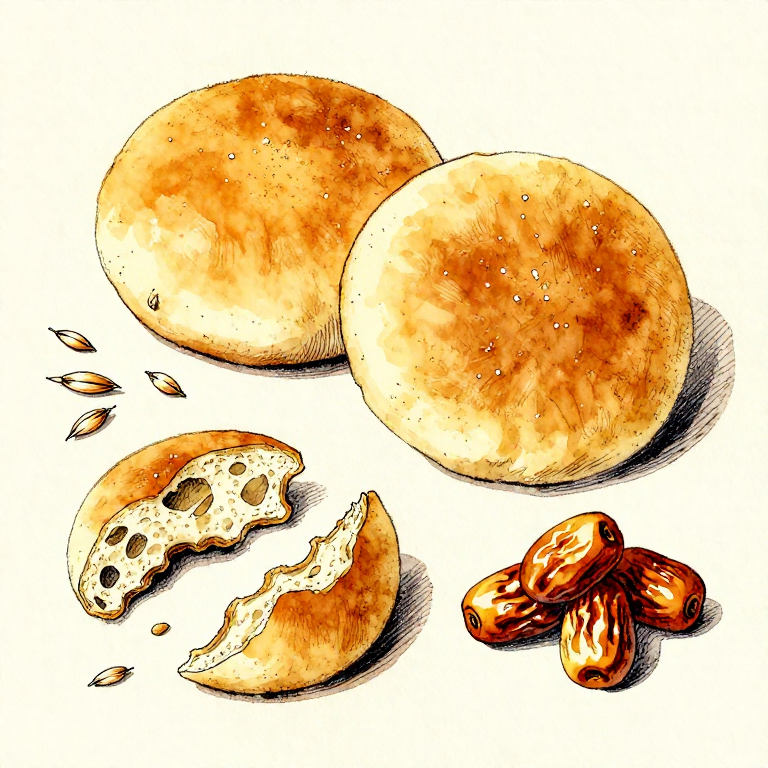
Coarsely grind the dried malt and mix it with wheat flour and a small amount of water to form a stiff dough. The Hymn to Ninkasi describes mixing bappir with honey and dates. Form the dough into thick, flat loaves. Bake the loaves twice — first at moderate heat to cook through, then at lower heat to dry them out. The twice-baking produces a hard, dry bread that stores well and concentrates the enzymatic activity. Bappir was a traded commodity in Mesopotamia; cuneiform ration lists record bappir distributions to workers alongside other staples. The bread does not need to rise — it is essentially a vehicle for delivering malt enzymes and fermentable carbohydrates.
Materiais para este passo:
 Farinha integral de trigo500 g peça
 Melsmall amount peça
 Tâmaras (secas)100 g peçaÁguasmall amount peça
Ferramentas necessárias:
 Fogareiro (fogo de forja)
 Almofariz e pilão
Crumble and Mash
Crumble and Mash
Crumble the bappir loaves into a large clay vat and add warm water (approximately 65-70 degrees C — hot enough to activate the malt enzymes but not so hot as to destroy them). The optimal temperature for the barley amylase enzyme is 62-67 degrees C. Add chopped dates for additional sugars and flavour. Stir the mixture thoroughly and allow it to rest for 1-2 hours, maintaining warmth by insulating the vat with straw or placing it near a fire. During this mashing period, the amylase enzymes convert the remaining starch in the bread into maltose and other fermentable sugars, creating a sweet liquid called wort.
Materiais para este passo:
Tâmaras (secas)100 g peçaÁgua10-15 litres peçaFerramentas necessárias:
 Argila
 Panela grande
Strain and Ferment
Strain and Ferment
Strain the liquid through a woven basket or cloth to remove the spent grain and bread solids. The resulting wort is a sweet, cloudy, brown liquid. Transfer it to a clean vessel and allow it to cool to body temperature (approximately 30-35 degrees C). In ancient brewing, fermentation was initiated by wild yeasts present in the environment and on the grain itself — no commercial yeast was added. Cover the vessel loosely (to allow carbon dioxide to escape but keep insects out) and leave it in a warm place for 3-5 days. Bubbling indicates active fermentation as the yeasts convert sugars to alcohol and carbon dioxide.
Ferramentas necessárias:
 Pano (de coar)
Serve Sumerian Style
Serve Sumerian Style
Sumerian beer was drunk fresh, within days of fermentation — it was not stored long-term. The finished beer is thick, cloudy, slightly sweet, and mildly alcoholic (probably 3-5 percent ABV, depending on the sugar content of the mash). It was consumed through long reed straws to filter out the floating grain particles and sediment — Sumerian art frequently depicts figures drinking from large communal vessels through straws. The flavour is bready, mildly sour (from lactic acid produced by bacteria co-fermenting with the yeast), and date-sweet. This style of beer was so culturally important that the goddess Ninkasi was dedicated to its production, and the Hymn to Ninkasi functions as both a prayer and a brewing recipe.
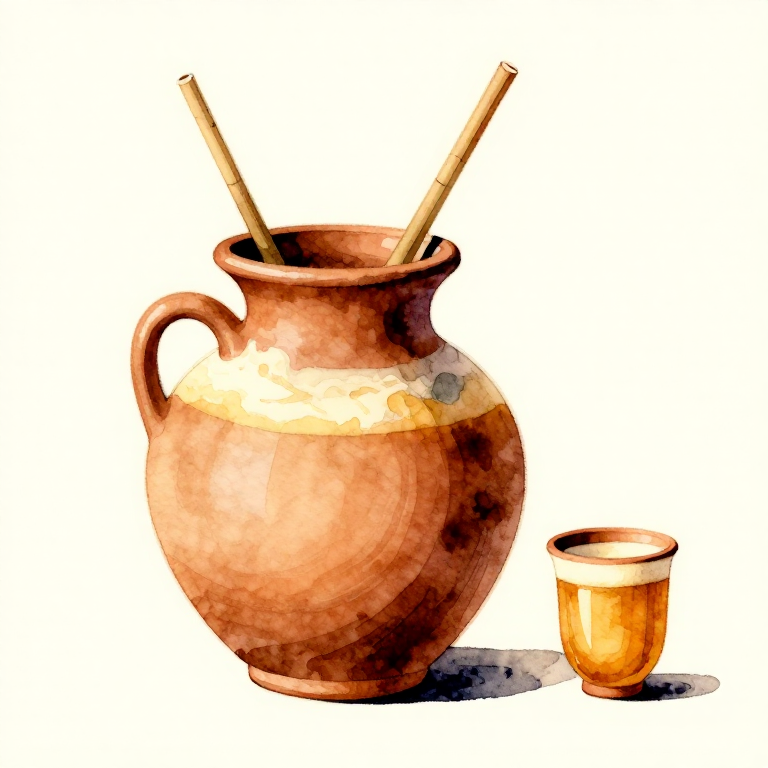
Ferramentas necessárias:
 Taça de beber
 Cana seca
Materiais
6- 2 kg peçaReferência
- for soaking peçaReferência
- 500 g peçaReferência
- small amount peçaReferência
- 100 g peçaReferência
- 500 g peçaReferência
Ferramentas necessárias
9- Referência
- Referência
- Referência
- Referência
- Referência
- Referência
- Referência
- Referência
- Referência
CC0 Domínio Público
Este blueprint é liberado sob CC0. Você é livre para copiar, modificar, distribuir e usar este trabalho para qualquer finalidade, sem pedir permissão.
Apoie o Maker comprando produtos através do Blueprint, onde ele ganha uma Comissão Maker definida pelos vendedores, ou crie uma nova versão deste Blueprint e inclua-o como conexão no seu próprio Blueprint para compartilhar receita.