ARTE
BELEZA E BEM-ESTAR
ARTESANATO
CULTURA E HISTÓRIA
ENTRETENIMENTO
MEIO AMBIENTE
COMIDA E BEBIDAS
ENGENHARIA REVERSA
CIÊNCIAS
ESPORTES
TECNOLOGIA
TECNOLOGIA VESTÍVEL
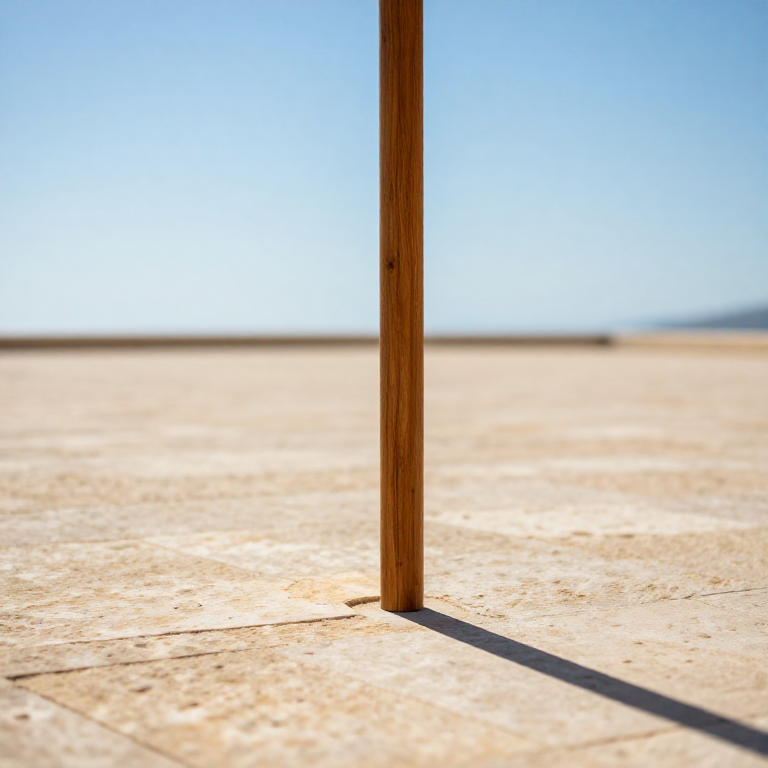
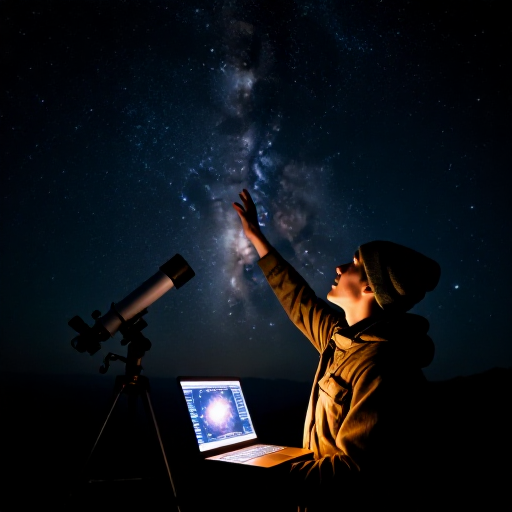

Measuring the Circumference of the Earth — Eratosthenes' Shadow Method
Around 240 BC the Greek scholar Eratosthenes, chief librarian at Alexandria, measured the size of the whole Earth with nothing but a vertical stick, its shadow, and a known distance. He knew that at noon on the summer solstice the Sun stood directly over Syene (modern Aswan) — sunlight reached the bottom of a deep well and cast no shadow. At Alexandria, far to the north, a vertical rod at the same moment cast a shadow of about 7.2°. That angle is one-fiftieth of a full circle, so the Earth's circumference had to be fifty times the distance between the two cities. This blueprint reproduces his measurement with a gnomon and a plumb line — and lands within a few percent of the true value, as he did.
Intermediário
3
Instruções
1
1
Understand the principle
Understand the principle
The Sun is so far away that its rays reach Earth effectively parallel. If a vertical rod casts no shadow at one place and a shadow at another at the very same moment, the shadow angle equals the difference in latitude between the two places. Measure that angle and the ground distance, and simple proportion gives the whole circumference.
2
2
Build a vertical gnomon
Build a vertical gnomon
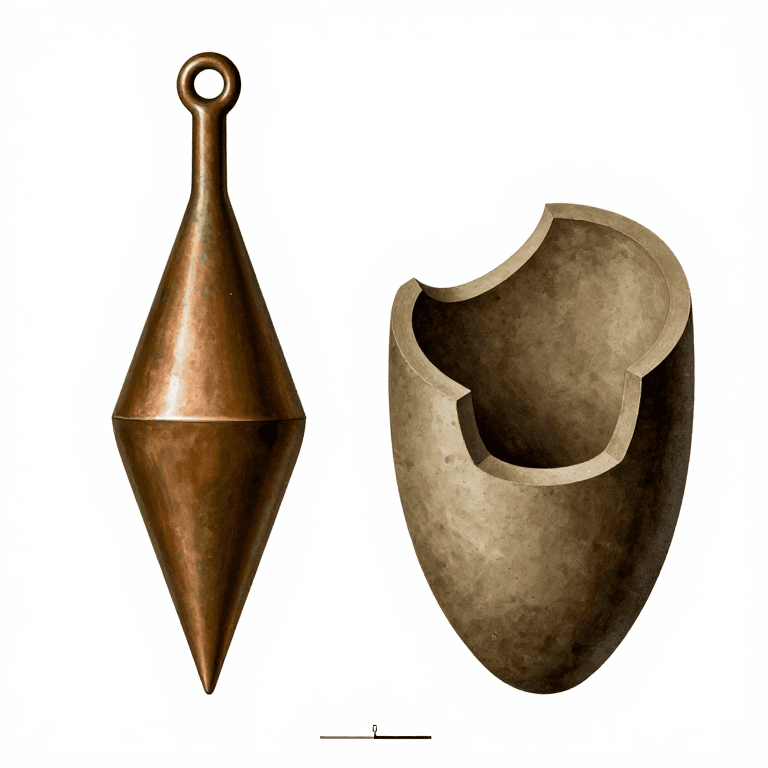
Fix a straight dowel upright at the centre of a flat board — this is the gnomon. Hang a plumb line (a string with a small weight) beside it and adjust until the rod is exactly parallel to the string, so it is truly vertical. Any lean will spoil the angle.
Materiais para este passo:
 Vareta de madeira (cavilha)1 peça
 Tábua de amieiro vermelho1 peça
Ferramentas necessárias:
 Fio de algodão para cozinha
3
3
Find true north and the noon line
Find true north and the noon line
Mark the north-south meridian line across the board so you can recognise local solar noon — the instant the shadow is shortest and points due north. A gnomon's shadow swings shortest exactly at midday.
Ferramentas necessárias:
 Cordão de marcar
4
4
Measure at solar noon
Measure at solar noon
At local solar noon (ideally on the summer solstice, when the effect is largest and matches Eratosthenes' day), the shadow is at its shortest. This is the single moment when you take your reading.
5
5
Mark and measure the shadow
Mark and measure the shadow
Mark the tip of the shadow with chalk. Measure the shadow's length from the base of the rod to that mark, and measure the height of the rod above the board. Record both lengths carefully in the same units.
Ferramentas necessárias:
Cordão de marcarFio de algodão para cozinha6
6
Work out the shadow angle
Work out the shadow angle
The angle of the Sun from vertical equals arctan(shadow length ÷ rod height). Eratosthenes found this angle to be about 7.2°. Because 360° ÷ 7.2° = 50, his shadow angle was exactly one-fiftieth of a full circle.
7
7
Take the north-south distance
Take the north-south distance
You need the distance due north-south to a place where the Sun is overhead (no shadow) at that same moment. Eratosthenes used Syene, about 5,000 stadia — roughly 800 km — south of Alexandria. Use a known map distance between your site and that reference latitude.
Ferramentas necessárias:
Fio de algodão para cozinha8
8
Compute the circumference
Compute the circumference
Since the shadow angle is one-fiftieth of a circle, the full circumference is fifty times the distance: 50 × 800 km = 40,000 km. Eratosthenes' own figures gave 50 × 5,000 = 250,000 stadia. In general, circumference = distance × (360° ÷ shadow angle).
9
9
Check against the true value
Check against the true value
The Earth's real circumference is about 40,075 km around the equator. A careful reading with a stick and its shadow lands within a few percent — the same accuracy Eratosthenes reached around 240 BC, proving the size of the planet can be found from a shadow and a length of string.
Materiais
2- Referência
- Referência
Materiais de Blueprints conectados

Blueprints relacionados
Estes blueprints compartilham conhecimento — técnicas, materiais ou princípios

CC0 Domínio Público
Este blueprint é liberado sob CC0. Você é livre para copiar, modificar, distribuir e usar este trabalho para qualquer finalidade, sem pedir permissão.
Apoie o Maker comprando produtos através do Blueprint, onde ele ganha uma Comissão Maker definida pelos vendedores, ou crie uma nova versão deste Blueprint e inclua-o como conexão no seu próprio Blueprint para compartilhar receita.