ARTE
BELEZA E BEM-ESTAR
ARTESANATO
CULTURA E HISTÓRIA
ENTRETENIMENTO
MEIO AMBIENTE
COMIDA E BEBIDAS
ENGENHARIA REVERSA
CIÊNCIAS
ESPORTES
TECNOLOGIA
TECNOLOGIA VESTÍVEL
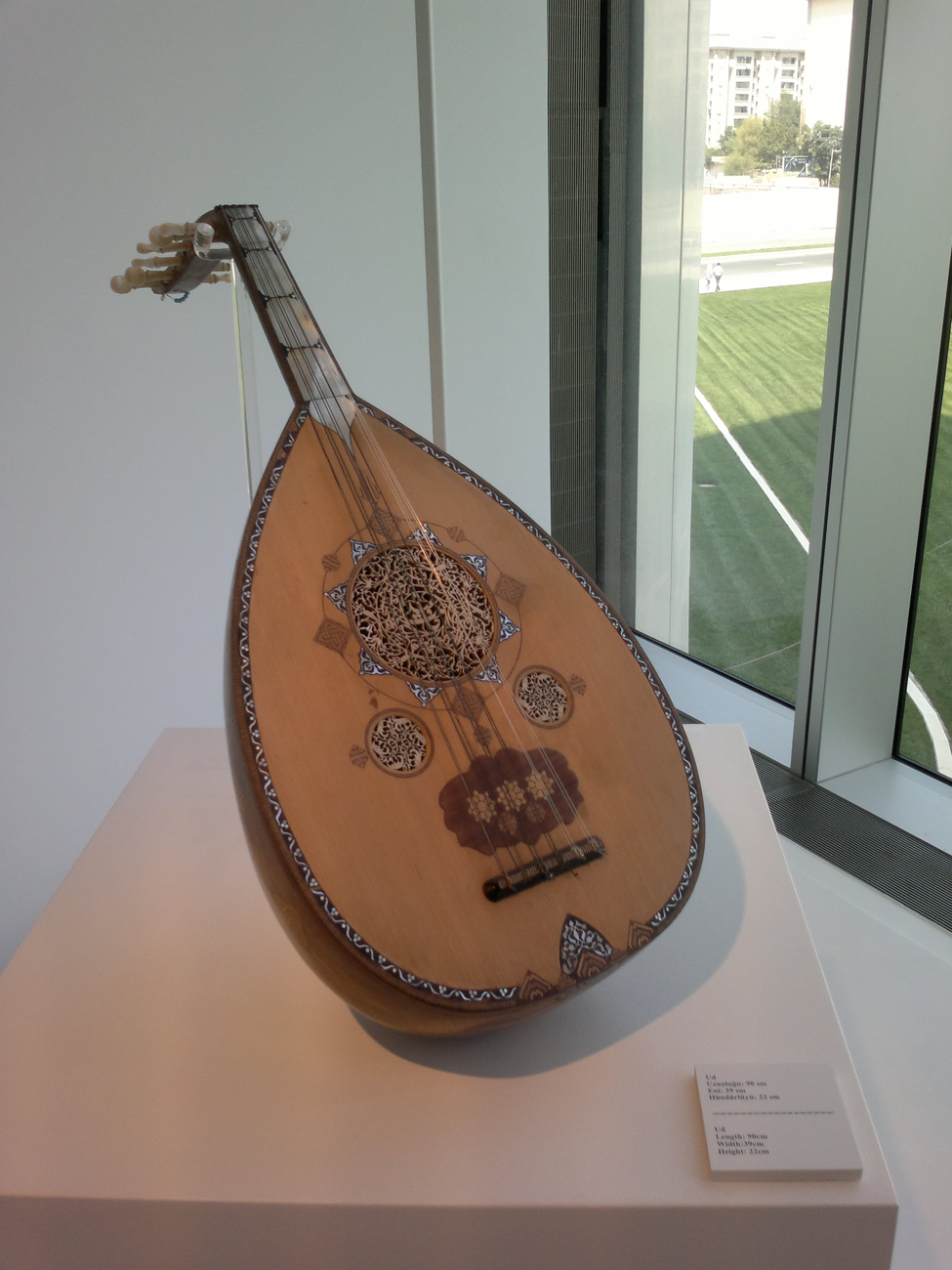


Building an Oud — The Fretless Arabic Lute
Build an oud: the deep-bowled, short-necked lute at the heart of Arabic and Turkish music — and famously FRETLESS, so your fingers can slide to any pitch and play the microtones of maqam. Shape the bowl, fit the bent pegbox, string the courses, and learn why leaving the frets off opens up the notes between the notes. A serious maker build in the fretless plucked string.
Intermediário
Several hours over several sessions
Instruções
1
1
A lute with no frets
A lute with no frets
The oud is the deep-bowled short-necked lute of Arabic and Turkish music. Unlike a guitar or bağlama it has NO frets, so a player can slide the fingers to any pitch — including the microtones between the Western notes.
2
2
Shape the bowl body
Shape the bowl body
Build a deep, rounded bowl body from many thin wooden staves (ribs) glued edge to edge over a mould. The big bowl gives the oud its warm, resonant voice.
Materiais para este passo:
 Contraplacado de bétula báltica1 peça
 Cola branca para madeira (PVA)1 peça
Ferramentas necessárias:
 Serra de arco para metais
3
3
Fit the soundboard
Fit the soundboard
Glue a thin flat soundboard over the bowl and cut one or more decorative sound-holes (rosettes) in it.
Materiais para este passo:
 Tábua de resinosa seca1 peçaCola branca para madeira (PVA)1 peça
Ferramentas necessárias:
 Faca de talha sloyd
4
4
Fit the neck and pegbox
Fit the neck and pegbox
Fit a short, SMOOTH neck — no frets at all — ending in a pegbox that bends sharply back from the neck, the oud's signature shape.
Materiais para este passo:
 Vareta de madeira (cavilha)1 peçaCola branca para madeira (PVA)1 peça
5
5
Fit the pegs and string it
Fit the pegs and string it
Fit the pegs and string it with paired courses — bright strings for the high courses and thicker wound strings for the low ones. An oud usually has eleven strings in six courses.
Materiais para este passo:
 Cravelhas6 peças
 Corda de aço para instrumentos 0,032"1 peça
 Arame de bronze1 peça
Ferramentas necessárias:
 Sovela
6
6
Tune the courses
Tune the courses
Tune the six courses low to high. Doubling most strings in a course makes the sound fuller and richer.
7
7
Play with a risha
Play with a risha
Pluck the strings with a long thin plectrum (the risha), pressing the strings onto the bare, fretless neck with your other hand.
8
8
Slide the microtones
Slide the microtones
Because there are no frets, slide a finger up or down the smooth neck to glide between notes and land exactly on the in-between pitches that make an Arabic maqam.
9
9
Compendium — why leave the frets off
Compendium — why leave the frets off
A plucked string sounds higher the shorter its vibrating length, and pressing it against the neck is how you shorten it. A FRET is a fixed ridge that stops the string at one exact spot every time, which makes it easy to hit set notes accurately but locks you to those notes. The oud does the opposite on purpose: its neck is left perfectly smooth, so the string is stopped only by the soft pad of your finger, wherever you place it. That means you can land on any pitch at all — including the neutral, in-between microtones that Arabic and Turkish maqam music lives on, which fall in the cracks a fretted guitar can never reach — and slide smoothly from one to the next, bending and ornamenting notes like a singing voice. The price is that intonation is all in the player's ear and fingers, with no frets to guide them. The deep staved bowl and thin soundboard amplify the strings as in any lute, and the sharply back-bent pegbox keeps the short neck balanced. The oud is the direct ancestor of the European LUTE (the very word 'lute' comes from the Arabic al-ʿūd), and a cousin of the fretted bağlama and, distantly, the guitar — the whole family of plucked, soundbox strings whose oldest Youblob ancestor is the lyre.
Materiais
7- Referência
- Referência
- 1 peçaReferência
- Referência
- 6 peçasReferência
- Referência
- 1 peçaReferência
Ferramentas necessárias
3- Referência
- Referência
- Referência
Blueprints relacionados
Estes blueprints compartilham conhecimento — técnicas, materiais ou princípios
CC0 Domínio Público
Este blueprint é liberado sob CC0. Você é livre para copiar, modificar, distribuir e usar este trabalho para qualquer finalidade, sem pedir permissão.
Apoie o Maker comprando produtos através do Blueprint, onde ele ganha uma Comissão Maker definida pelos vendedores, ou crie uma nova versão deste Blueprint e inclua-o como conexão no seu próprio Blueprint para compartilhar receita.