Colaboração
ARTE
BELEZA E BEM-ESTAR
ARTESANATO
CULTURA E HISTÓRIA
ENTRETENIMENTO
MEIO AMBIENTE
COMIDA E BEBIDAS
ENGENHARIA REVERSA
CIÊNCIAS
ESPORTES
TECNOLOGIA
TECNOLOGIA VESTÍVEL
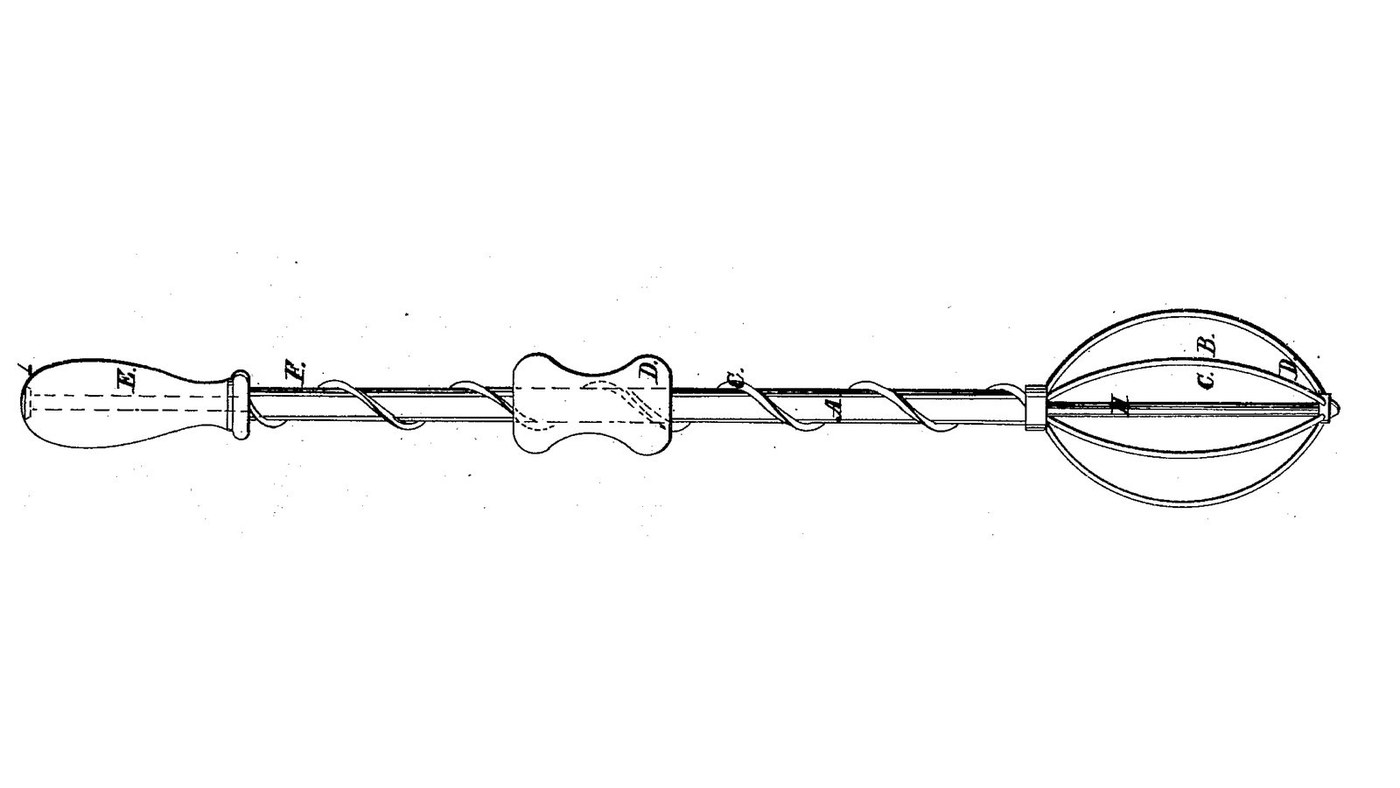


Screw-and-Nut Egg Beater: Slide a Nut Along a Spiral on the Shaft and the Wire Beater Spins Back and Forth
Frederick Ashley of New York received US 28,047, dated 1 May 1860, for an egg beater. A shaft with a spiral thread wound round it ends in a cage of beating wires. Hold the handle in one hand and slide the nut up and down the thread with the other: the shaft spins one way, then the other, and the wires beat the eggs. He adds that it can churn cream to butter or stir ice cream as it freezes.
The patent gives no sizes; every size here is ours.
Iniciante
About 3 hours, plus printing
Instruções
1
1
A push becomes a spin
A push becomes a spin
A carregar o notebook Jupyter…
2
2
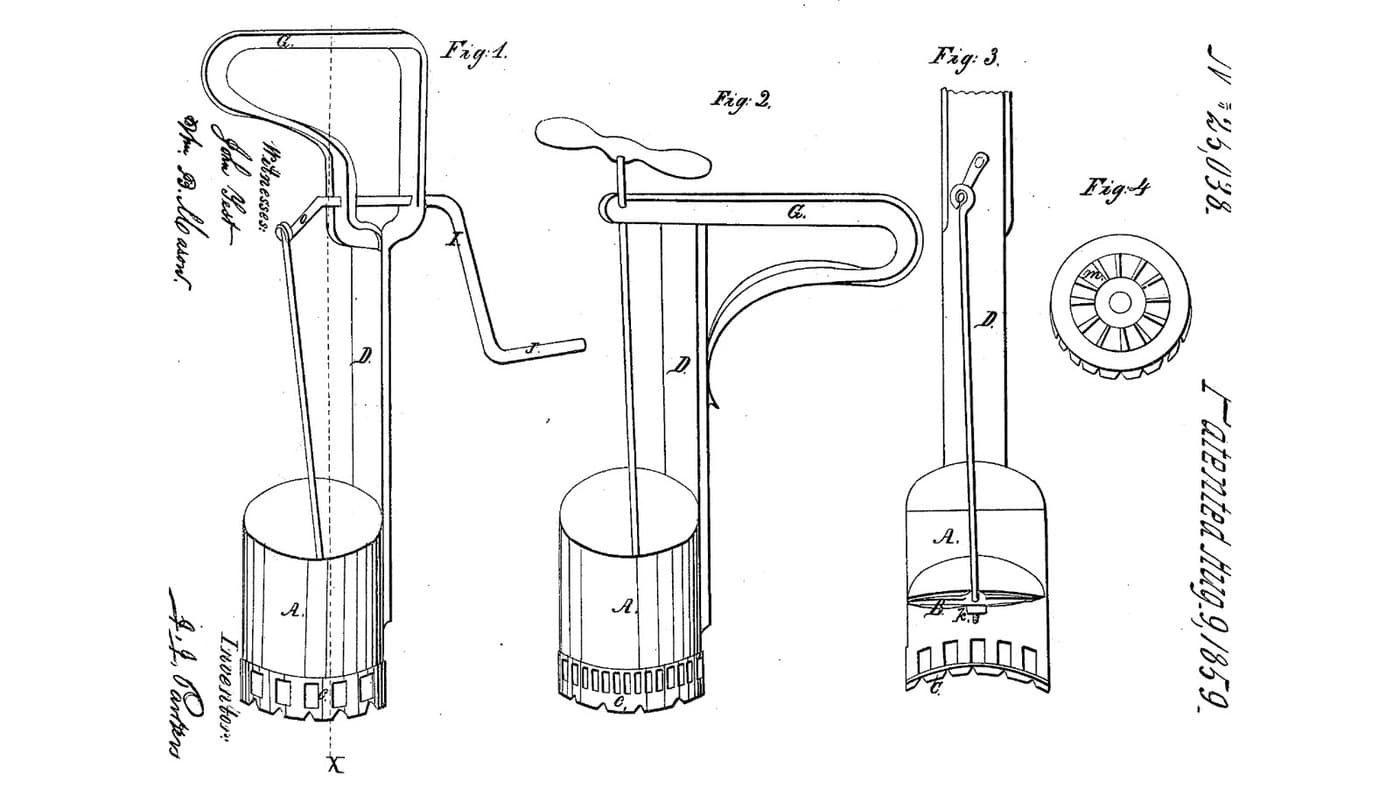
A hand-worked egg beater, the year before
A hand-worked egg beater, the year before
Parker pumps the eggs through a grate. Ashley spins a cage of wires through them.
3
3
Read US 28,047
Read US 28,047
"The lower end of the shaft A is placed in the dish or vessel containing the eggs to be beaten; the handle E is taken hold of by one hand of the operator, and the nut D by the other. The nut D is then moved up and down alternately, giving to the beating wires B a rapid motion forward and back, until the eggs are thoroughly “beat” or broken and mixed."
4
4
Print the nut D
Print the nut D
Nut 32 mm across and 40 long, bored 8.8 mm, with a helical slot at 80 mm pitch for the 3 mm thread. PETG, 0.2 mm layers, 100 % infill.
5
5
Print the wire hub
Print the wire hub
Hub 20 mm across and 15 long, bored 8.4 mm, with six holes for the wire bows. PETG, 0.2 mm layers, 100 % infill.
6
6
Print the foot cap
Print the foot cap
Cap 16 mm across and 10 tall, bored 8.4 mm, 4 deep, with six holes for the wire bows' lower ends. PETG, 0.2 mm layers, 100 % infill.
7
7
Shaft A and thread C
Shaft A and thread C
Cut 330 mm of 8 mm stainless rod and round its ends with the file. Wind 3 mm stainless wire tightly round it, two full turns spread evenly from 120 to 280 mm above its foot (80 mm a turn), and bend each end of the wire into a small hole drilled in the rod so it cannot slip.
Materiais para este passo:
 Varão de aço inoxidável1 peça
 Arame de aço inoxidável1 peça
Ferramentas necessárias:
 Serra de arco para metais
 Limas (lima de mão)
 Torno de bancada
 Alicate de bicos redondos
 Berbequim sem fios
 Jogo de brocas
8
8
Beating wires B
Beating wires B
Bend six bows of 1.6 mm stainless wire, each reaching 35 mm out from the shaft and 80 mm long. Push the hub onto the shaft 80 mm above its foot and the cap onto its foot, and set each bow's ends in the hub's and cap's holes, 60 degrees apart; pin the hub and cap to the rod each with a short piece of wire through a drilled hole.
Materiais para este passo:
Arame de aço inoxidável1 peça Filamento PETG1 peça
Ferramentas necessárias:
 Impressora 3D de filamento (FDM)Alicate de bicos redondosBerbequim sem fiosJogo de brocas
9
9
Nut D, collar and handle E
Nut D, collar and handle E
Thread the nut onto the shaft from the top, turning it to follow the wire. Fit a shaft collar 300 mm above the foot, and a hardwood handle 30 mm across and 95 long bored 8.6 mm on the top above it, so the shaft turns freely in the handle.
Materiais para este passo:
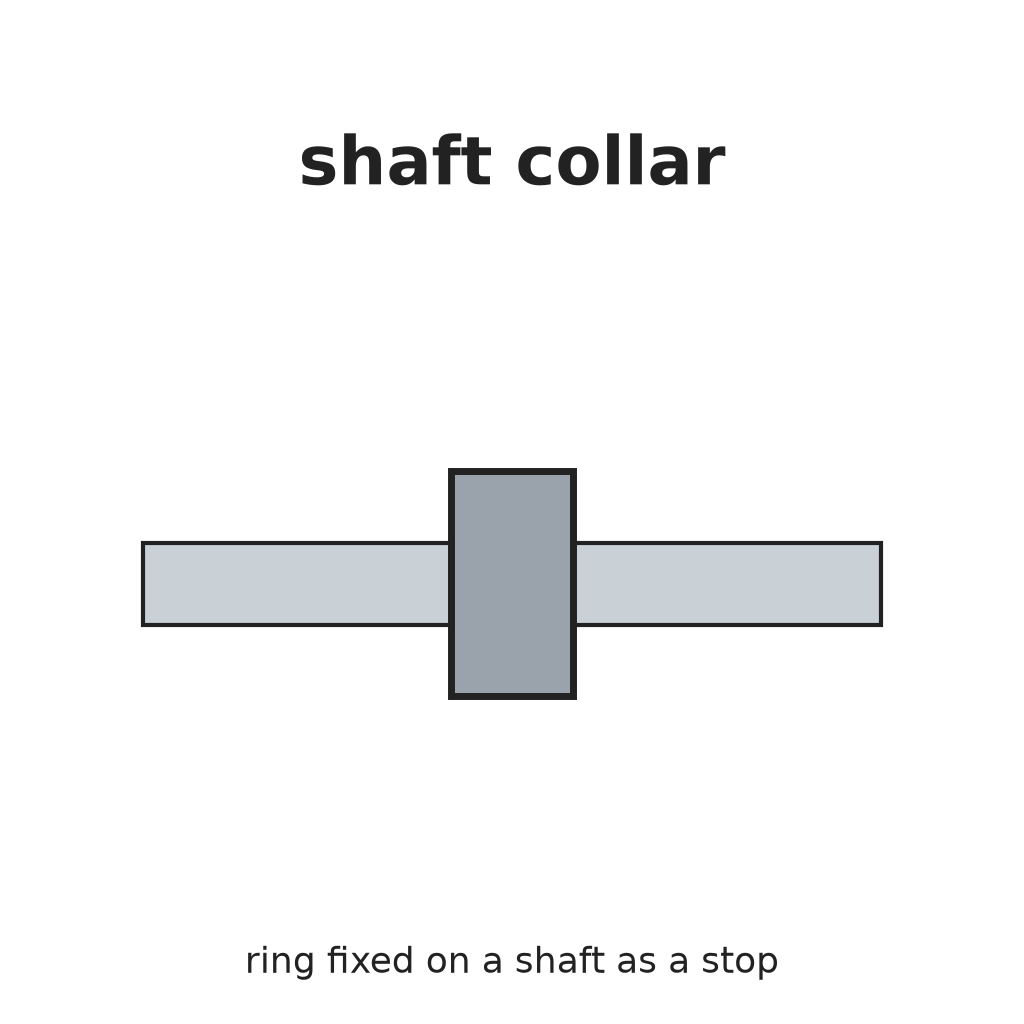 Shaft Collar1 peça
 Cavilhas de madeira dura1 peça
Ferramentas necessárias:
Berbequim sem fiosJogo de brocas Lixa
10
10
The build in 3D
The build in 3D
FreeCAD model of this build: the shaft A with the wire thread C, the nut D on it, the collar and handle E, and the six bows of the beating wires B between the hub and the foot cap.
11
11
Beat eggs
Beat eggs
Break four eggs into a bowl. Stand the beater's foot in them, hold the handle in one hand and slide the nut up and down the thread with the other, timing it, until the yolks and whites are evenly mixed.
Materiais para este passo:
 Ovo4 peças
Ferramentas necessárias:
 Taça de vidro
 Cronómetro
12
12
Troubleshooting
Troubleshooting
Screw egg beater troubleshooting.
Flow
Loading...
13
13
History and honest limits
History and honest limits
**Frederick Ashley** of New York, US 28,047, 1 May 1860, "Egg-Beater". He claimed the beating wires with the screw-threaded shaft and nut, and noted it could be applied to churning cream or freezing ice cream, or fixed to a churn with its beaters in two sections turning contrary ways. Every size here is ours, and our nut and hub are printed.
Materiais
6- 1 peçaReferência
- 2 peçasReferência
- 1 peçaReferência
- 1 peçaReferência
- 1 peçaReferência
- 4 peçasReferência
Ferramentas necessárias
10- Referência
- Referência
- Referência
- Referência
- 1 vendor sell this, none ship to you yetReferência
- Referência
- Referência
- Referência
- Referência
- Referência
Ficheiros de design
4Este projeto faz

Blueprints relacionados
Estes blueprints compartilham conhecimento — técnicas, materiais ou princípios

CC0 Domínio Público
Este blueprint é liberado sob CC0. Você é livre para copiar, modificar, distribuir e usar este trabalho para qualquer finalidade, sem pedir permissão.
Apoie o Maker comprando produtos através do Blueprint, onde ele ganha uma Comissão Maker definida pelos vendedores, ou crie uma nova versão deste Blueprint e inclua-o como conexão no seu próprio Blueprint para compartilhar receita.