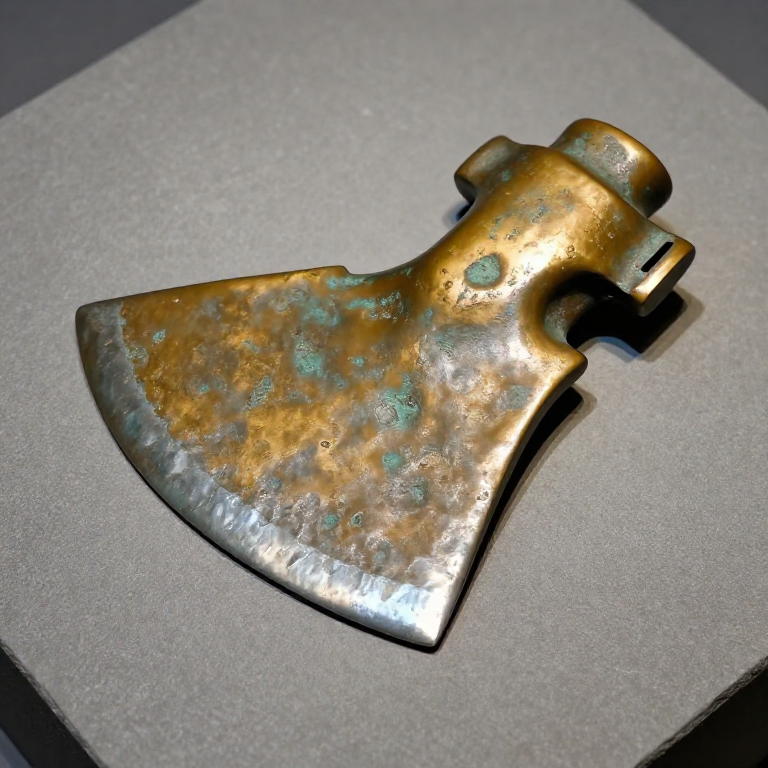


Casting a Bronze Flat Axe — The First Metal Cutting Tool
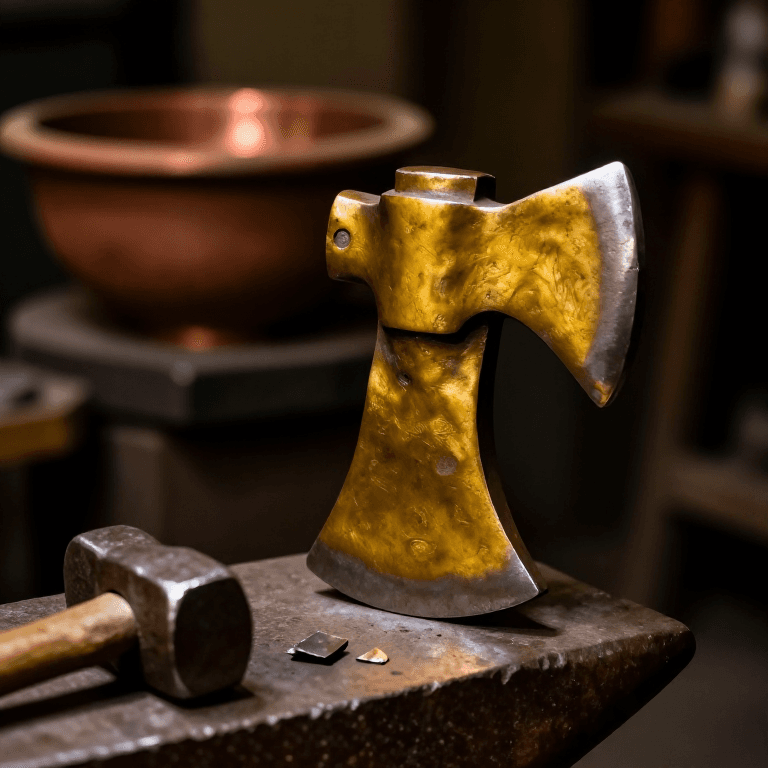
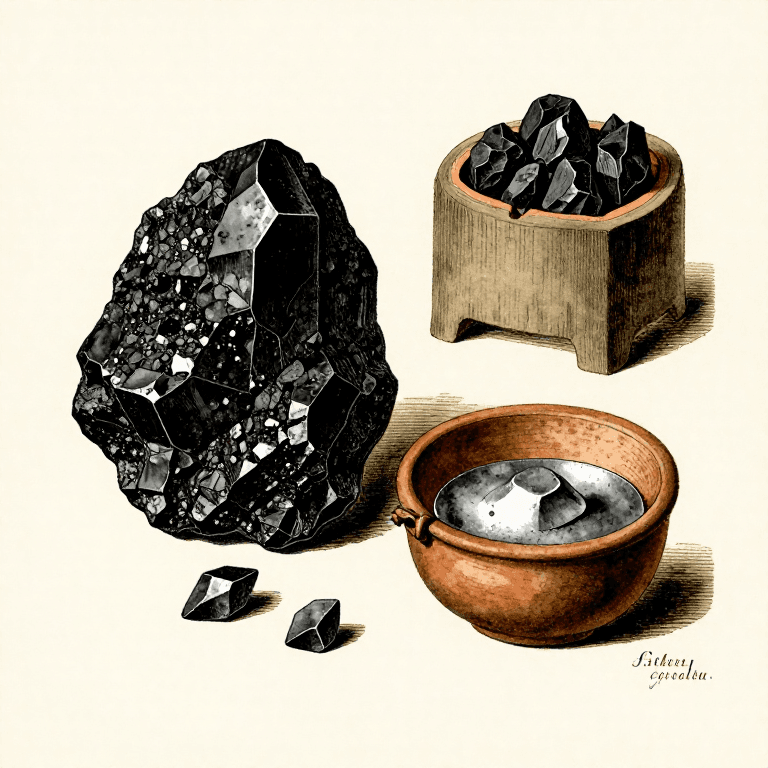
The flat axe was the first metal tool to surpass its stone predecessor in every way — sharper, more durable, and resharpened by simple hammering rather than knapping a new edge. Cast from bronze (roughly 90% copper, 10% tin), these axes appeared across Europe, the Near East, and East Asia from around 3300 BCE.
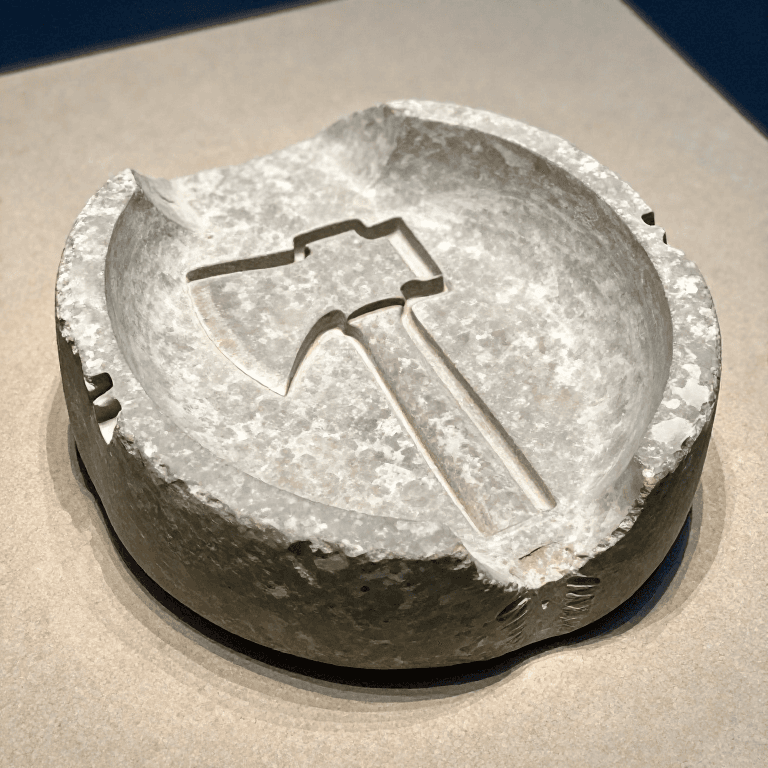
This blueprint uses an open-face stone mould — the simplest casting method. Molten bronze is poured into a carved soapstone cavity and allowed to cool. The resulting casting has one flat face (from the mould floor) and one slightly convex face (from the open top where the metal surface tensions). After demoulding, the axe is cold-hammered to harden the cutting edge, ground to shape, and hafted onto a wooden handle with rawhide lashing.
A single flat axe required the combined knowledge of mining, smelting, alloying, crucible-making, mould-carving, and woodworking — making it one of the most knowledge-intensive objects of its era.
Instruções
Prepare the mould
Prepare the mould
Materiais para este passo:
 Gordura animal (sebo)30 g
Charge the crucible with bronze
Charge the crucible with bronze
Materiais para este passo:
 Chapa de cobre270 g
Melt and alloy the bronze
Melt and alloy the bronze
Materiais para este passo:
 Carvão vegetal em pedaços3 kg
Pour the bronze into the mould
Pour the bronze into the mould
Ferramentas necessárias:
 Tenaz para cadinho
Cool and demould
Cool and demould
Remove the pour channel and flash
Remove the pour channel and flash
Ferramentas necessárias:
 Percutor de pedra
Cold-hammer the cutting edge
Cold-hammer the cutting edge
Ferramentas necessárias:
 Laje de pedra plana
Grind and sharpen
Grind and sharpen
Materiais para este passo:
 Arenito (abrasivo)1 peça
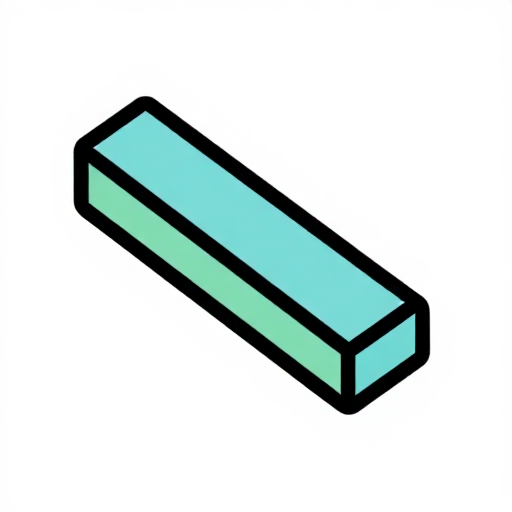 Pedra de amolar1 peça
Shape the haft
Shape the haft
Bind the axe head to the haft
Bind the axe head to the haft
Materiais para este passo:
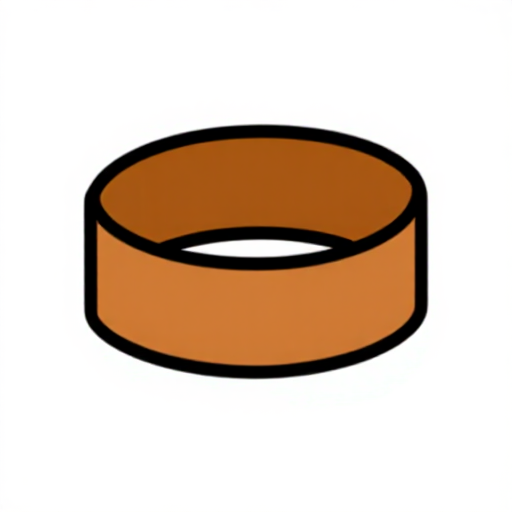 Tiras de couro cru2 m
Materiais
7- Referência
- 270 gReferência
- Referência
- 1 peçaReferência
- 1 peçaReferência
- Referência
- 1 peçaReferência
Ferramentas necessárias
4- Referência
- Referência
- Referência
- Referência
Materiais de Blueprints conectados
Blueprints relacionados
Estes blueprints compartilham conhecimento — técnicas, materiais ou princípios
CC0 Domínio Público
Este blueprint é liberado sob CC0. Você é livre para copiar, modificar, distribuir e usar este trabalho para qualquer finalidade, sem pedir permissão.
Apoie o Maker comprando produtos através do Blueprint, onde ele ganha uma Comissão Maker definida pelos vendedores, ou crie uma nova versão deste Blueprint e inclua-o como conexão no seu próprio Blueprint para compartilhar receita.