
ARTE
BELEZA E BEM-ESTAR
ARTESANATO
CULTURA E HISTÓRIA
ENTRETENIMENTO
MEIO AMBIENTE
COMIDA E BEBIDAS
ENGENHARIA REVERSA
CIÊNCIAS
ESPORTES
TECNOLOGIA
TECNOLOGIA VESTÍVEL
Bunraku Rod Puppet
English
HanaChan

Criado por

HanaChan

27. julho 2026JP
0
0
0
0
0

Bunraku Rod Puppet

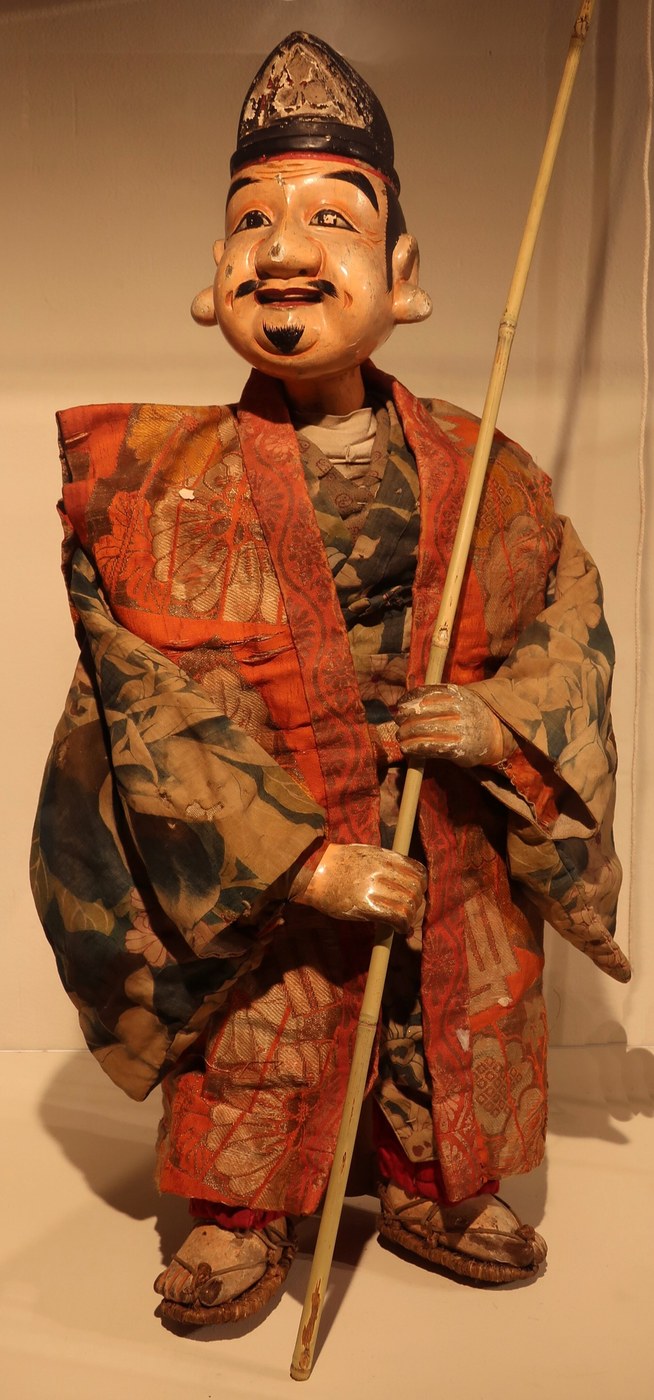
A bunraku puppet is worked by three people. The principal operator takes the head and the right hand, the left operator takes the left hand, the foot operator takes the feet. It is said to take thirty years before the three become one body.

Why three? Because one operator can only make a puppet move. With three, the head can lower while the hand hesitates and the foot delays half a step — the movements of a mind appear as small differences in timing between parts of a body. That is what bunraku means by realism.

Here we build a small puppet with that mechanism in it: a grip rod through the head, strings that work the eyes and eyebrows, a control rod on the arm. By the end it is clear why a bunraku puppet is shaped the way it is.

Avançado
25 hours

Instruções

1

Choose the head type

Decide which head you are making. Bunraku heads are divided into fixed types by gender, social class and character, and each role uses a set head. You choose a type rather than inventing a face.

2

Rough out the cypress

Rough out a well-dried block of cypress about 80 mm tall, roughly a third of full size. A head carved from unstable wood will split once the mechanism is fitted.

Materiais para este passo:

Basswood Carving BlockBasswood Carving Block1 peça

Ferramentas necessárias:

Wood Carving Gouge Set (12-Piece)Wood Carving Gouge Set (12-Piece)
3

Carve the face

Work in order: forehead, bridge of the nose, cheeks, jaw. The puppet is seen from below on stage, so cut a little deeper under the jaw and under the nose.

4

Split the head front to back

Saw the finished head in two along the line of the ears. This is to fit the mechanism inside, and the halves go back together afterwards. Hesitate here and they will never close straight again.

Ferramentas necessárias:

Hand SawHand Saw
5

Hollow the inside

Hollow both halves, leaving walls about 5 mm thick. It is partly to lighten the head and partly to make room for the strings and mechanism to run.

6

Fit the eye mechanism

Make eyelids from thin board, pivot them inside the head, and run strings down from them. Pull the string and the eyes lower; release and they open.

Materiais para este passo:

Cotton ThreadCotton Thread1 metro
7

Fit the eyebrow mechanism

Run separate strings to the eyebrows so they move independently. Eyes and brows moving separately is the whole of the expression — put them on one string and the face has only one expression.

8

Fit the grip rod

Fit a thick rod — the dogushi — up into the head and bring the strings down alongside it. The principal operator holds this rod in the left hand and works the strings with the fingers. The whole weight of the head hangs on this one rod.

Materiais para este passo:

Dowel RodDowel Rod1 peça
9

Glue the halves together

Check the mechanism works properly, then glue the halves with hide glue and fill the seam with gofun.

Materiais para este passo:

Hide GlueHide Glue20 g
10

Build up the gofun

Brush on thin coats of gofun — chalk white bound in hide glue — drying and polishing between each. Laid on thickly in one go it always cracks. The depth of the white comes from the number of layers.

Materiais para este passo:

Natural Chalk (Raw Lumps)Natural Chalk (Raw Lumps)100 g
11

Make the shoulder board and body

Make a shoulder board with a hole for the grip rod through it. Build the body light, like a basket. Three people hold this puppet up for hours, so its weight is part of the quality of the performance.

12

Make the arms and the control rod

Make arms with working elbows and wrists, and fit a slim control rod running backward from behind the left elbow. The left operator works that rod with their own right hand.

13

Make the legs

Make legs with bending knees and a grip for the foot operator. Female puppets have no legs at all — the feet are suggested entirely through the movement of the kimono hem. That is a convention, not a shortcut.

14

Work it with three people

Take it in three pairs of hands and simply try to make it walk. It will not work. You learn that matching breath means matching the small differences in timing between head, left hand and feet. Why bunraku training takes so long stops being an abstract fact.

15

History & Context

Born in Osaka. Bunraku is Japan's professional puppet theatre, generally dated to its founding in Osaka in 1684. It is a stage shared by three arts — the gidayu chanter, the shamisen and the puppets — and not a puppet art alone.

Three-man operation came later. Throughout the seventeenth century, small puppets of 60-70 cm were worked by one person on outstretched arms. The three-man system was adopted around 1730, and it was that change which allowed the puppets to grow larger and move in detail. They became big because there were three operators — not the other way round.

The three roles. The omozukai holds the grip rod in the left hand to work the head and takes the puppet's right hand with their own right. The hidarizukai works the left hand by its control rod. The ashizukai takes the lower body. Training begins at the feet, and it is said to take thirty years to reach principal operator. The weight of that number is not the hours of practice but how long it takes for three people to look like one.

Visible, and yet not seen. The operators stand on stage in black. They are not hidden. The audience watches three human beings and sees only the puppet. It is the opposite solution to Western puppetry's concealed operator: do not hide them, make them drop out of attention.

A head is equipment and inheritance at once. Heads are made to role types, repaired, and used across generations. Unlike an actor, the same face keeps appearing on stage for a century or two. That physical continuity is part of why this is called an art of fixed forms.

Materiais

5

Ferramentas necessárias

2

CC0 Domínio Público

Este blueprint é liberado sob CC0. Você é livre para copiar, modificar, distribuir e usar este trabalho para qualquer finalidade, sem pedir permissão.

Apoie o Maker comprando produtos através do Blueprint, onde ele ganha uma Comissão Maker definida pelos vendedores, ou crie uma nova versão deste Blueprint e inclua-o como conexão no seu próprio Blueprint para compartilhar receita.

Discussão

(0)

Entrar para participar da discussão

Carregando comentários...