Colaboração
ARTE
BELEZA E BEM-ESTAR
ARTESANATO
CULTURA E HISTÓRIA
ENTRETENIMENTO
MEIO AMBIENTE
COMIDA E BEBIDAS
ENGENHARIA REVERSA
CIÊNCIAS
ESPORTES
TECNOLOGIA
TECNOLOGIA VESTÍVEL
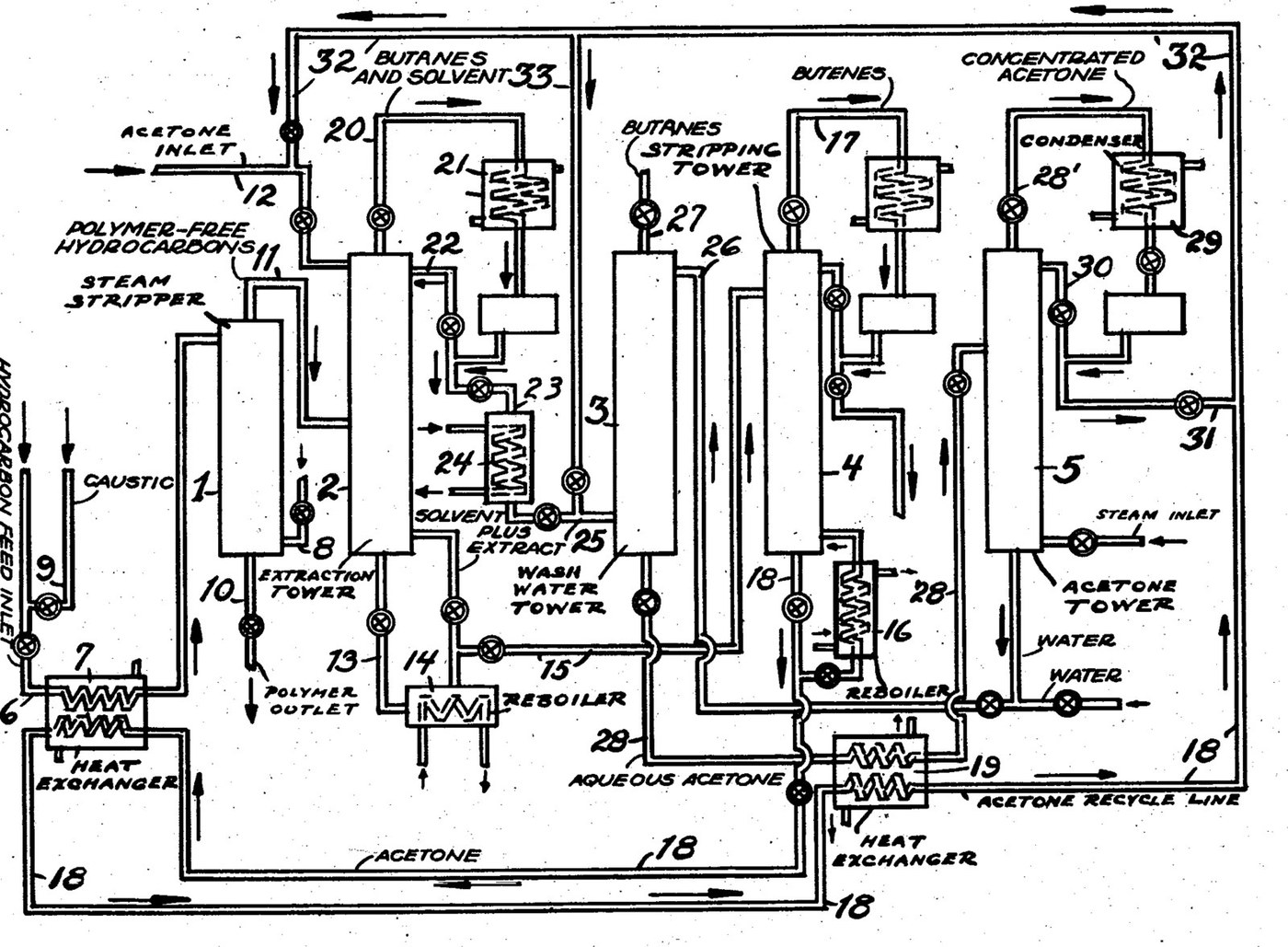


Normal Butylene Fraction: Cracked-Gas C4 Cut Extractively Distilled with Aqueous Acetone (Long, Standard Oil Development, US 2,449,610)
Butanes and butylenes boil too close together to part by plain distillation. Distil them through a stream of watery acetone, which holds back the butylenes, and the butanes go overhead while the butylenes come out at the bottom.
Result: a butylene fraction of 26.7 % butene-1 and 63.5 % butenes-2 (90.2 % normal butylenes), with 3.6 % isobutylene, 4.4 % normal butane and 1.8 % isobutane.
Source: Long, US 2,449,610 (1948). Not given: tower sizes and plates, water amounts, caustic strength. Long does not say how the acid-treated C4 cut is made; it is matched by kind to the Packie & Rupp blueprint. Extremely flammable gases under pressure. Picture: the patent drawing.
Especialista
1 day
Instruções
1
1
Start from the acid-treated C4 cut of cracked gas oil
Start from the acid-treated C4 cut of cracked gas oil
Use the four-carbon fraction from cracking a gas oil, with the bulk of its isobutylene removed by sulphuric acid. Long's, by volume: isobutane 42.4 %, normal butane 9.4, isobutylene 2.0, butene-1 15.0, butenes-2 30.2, high-boiling material 1.0.
Materiais para este passo:
 Fração butano-butileno, sem isobutileno1 as required
Ferramentas necessárias:
 Garrafa de gás sob pressão
2
2
Steam-strip out the heavy material
Steam-strip out the heavy material
Strip the feed with steam in the first tower, adding caustic to neutralise any sulphuric acid esters left from the acid treatment. The heavy material leaves at the bottom; the hydrocarbons go overhead as vapour.
Ferramentas necessárias:
 Alambique de fracionamento
 Caldeira a vapor
 Água
 Solução de hidróxido de sódio
3
3
Distil through aqueous acetone
Distil through aqueous acetone
Feed the vapour into the second tower and pass it up through aqueous acetone (14-17 % water) flowing down, at 120-200 °F and 50-150 lbs pressure. With 85 % solvent on the top plate and a cold reflux ratio of 6.5 to 1, the butanes go overhead and the butylenes leave in the acetone at the bottom.
Ferramentas necessárias:
Alambique de fracionamento Acetona
 Manómetro
 Serpentina do condensador
4
4
Strip the butylenes from the acetone
Strip the butylenes from the acetone
In a third tower, reboiled at the bottom and refluxed at the top with product butylenes, distil the butylenes off the acetone. They come over as 26.7 % butene-1 and 63.5 % butenes-2, with 3.6 % isobutylene and 6.2 % butanes.
Ferramentas necessárias:
Alambique de fracionamentoSerpentina do condensadorGarrafa de gás sob pressão5
5
Recover the acetone and keep it clean
Recover the acetone and keep it clean
Wash the acetone out of the overhead butanes with water, keeping it below 15 % in the water or the layers emulsify badly. Reconcentrate the dilute acetone to about 83 % acetone, 17 % water, and recycle it. Bleed part of the recycled acetone into the butanes before washing, so the heavy material building up in it leaves with them.
Ferramentas necessárias:
Alambique de fracionamentoÁguaAcetonaMateriais
1- 1 as requiredReferência
Blueprints relacionados
Estes blueprints compartilham conhecimento — técnicas, materiais ou princípios
CC0 Domínio Público
Este blueprint é liberado sob CC0. Você é livre para copiar, modificar, distribuir e usar este trabalho para qualquer finalidade, sem pedir permissão.
Apoie o Maker comprando produtos através do Blueprint, onde ele ganha uma Comissão Maker definida pelos vendedores, ou crie uma nova versão deste Blueprint e inclua-o como conexão no seu próprio Blueprint para compartilhar receita.