Colaboração
ARTE
BELEZA E BEM-ESTAR
ARTESANATO
CULTURA E HISTÓRIA
ENTRETENIMENTO
MEIO AMBIENTE
COMIDA E BEBIDAS
ENGENHARIA REVERSA
CIÊNCIAS
ESPORTES
TECNOLOGIA
TECNOLOGIA VESTÍVEL
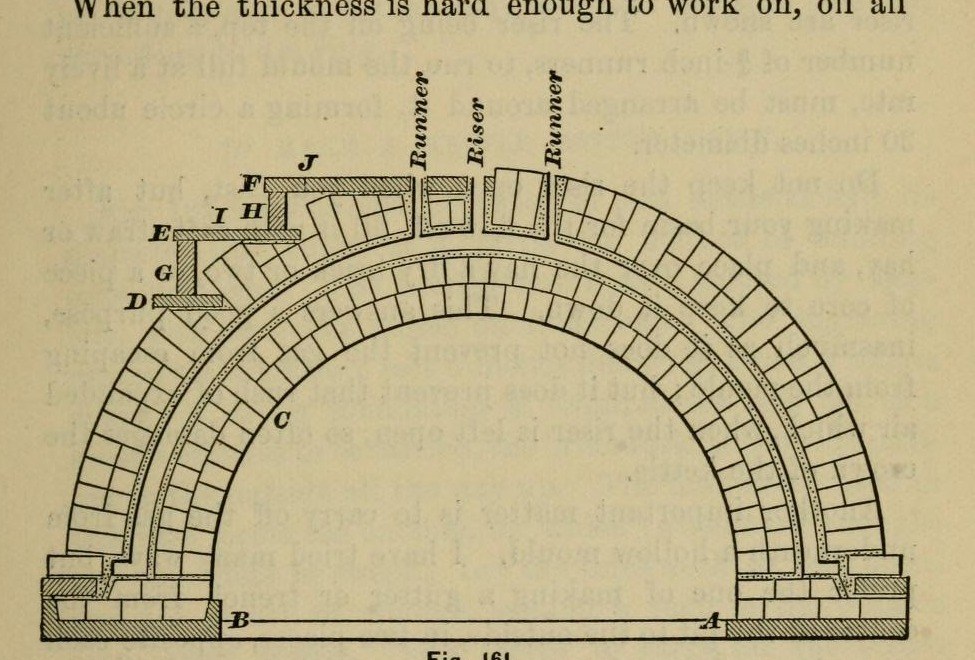

Cast Iron Pot: a Kettle Moulded in Loam, Bottom Up (Bolland, The Iron-Founder, 1892)
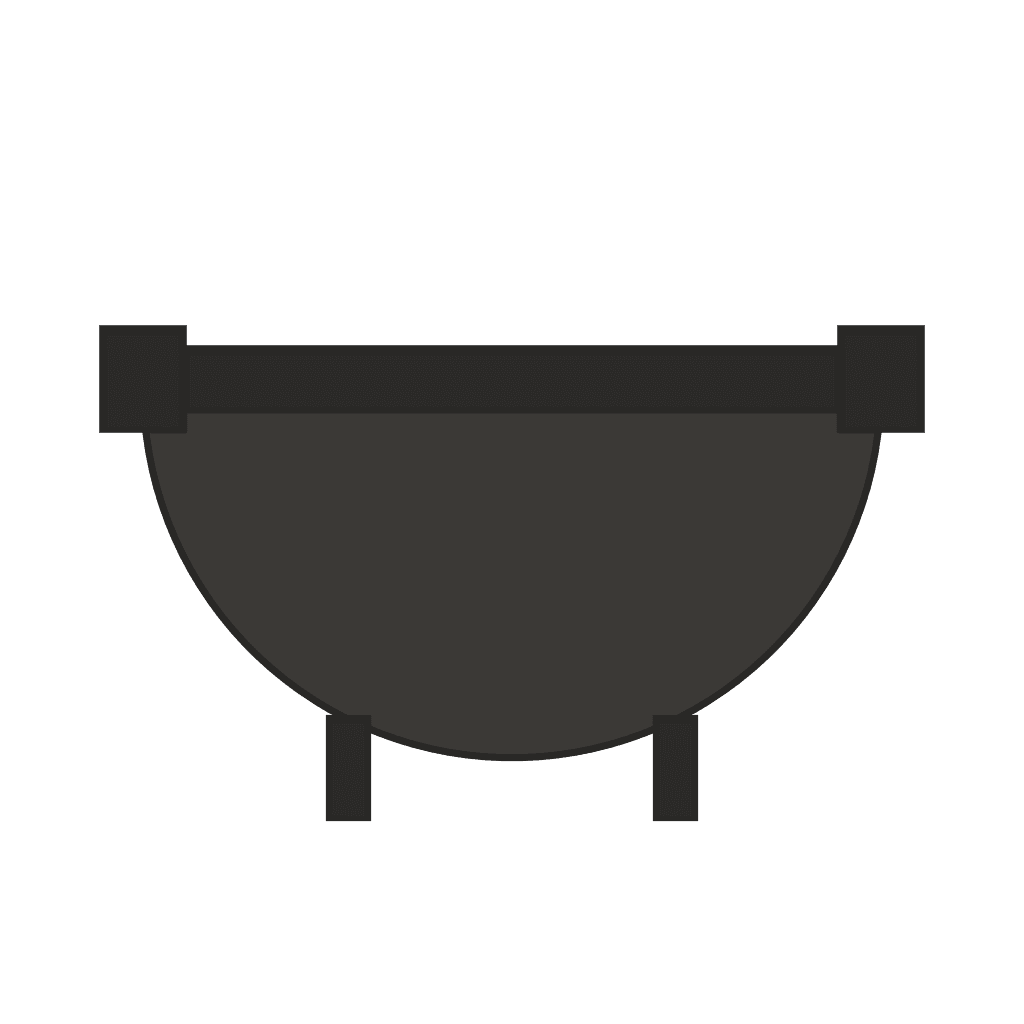
How a founder moulds an iron kettle or pot without a pattern: a brick core is built and coated with loam, swept to the inside shape with a turning board; a layer of sand swept on top stands for the metal's thickness; the cope is built over it, and the space the sand stood for is filled with iron. Bolland's example is an 8 ft kettle 1 3/4 in thick; the same steps serve any size.
Variable: the size and wall thickness, set by the sweeps.
Source: S. Bolland, The Iron-Founder (1892), pp. 180-183. Unknown: the loam mix and drying. Picture: Fig. 161 of the book.
Especialista
Unknown
Instruções
1
1
Build and sweep the core
Build and sweep the core
Set the core on a foundation plate strong enough to lift it without springing: a plain plate at least 3 in thick, or a ribbed one 2 in thick. Build the core of bricks in open, coarse mud, bricks well apart so air passes, with half-bricks crossing the joints on the top course and a tie-course here and there. Scrape the joints, rub on soft loam and sweep it to shape as you go round; the first sweep also strikes the flange, the guide and the seat for the cope ring. Finish with a skimming coat of the same loam sifted fine. Ours: sand and clay for the loam. Not given: the loam mix, the size.
Ferramentas necessárias:
 Peças fundidas de ferro
 Tijolos de barro cozido
 Areia
 Barro cru de jazida
 Prancha de madeira
 Colher de pedreiro
 Dimensões desconhecidas
2
2
Strike on the thickness
Strike on the thickness
When the loam is hard enough, change to the thickness sweep. Ram fine-sifted old sand at green-sand temper on by hand from the bottom up, sweeping carefully, dampen and slick it, leaving it about 1/16 in clear of the sweep, and press the flange corner sharp with the trowel. Have all the skinning loam ready first; it must be done in one pass. When it is hard, oil it all over and throw on parting sand. Ours: linseed oil.
Ferramentas necessárias:
Areia Óleo de linhaça
 Pó de separaçãoColher de pedreiro
3
3
Build the cope and gates
Build the cope and gates
Set on the cope ring and build the cope over the thickness, best with building rings and packing so it can be bound down under a cross at once. Bed plates on the sand and bind them down with the cross or binders. Put the riser at the top and enough 3/4 in runners round it, in a circle about 30 in across, to fill the mould quickly. The sand thickness stands for the metal. Not given in these pages: lifting the cope to take the thickness off before closing.
Ferramentas necessárias:
Tijolos de barro cozidoPeças fundidas de ferroAreiaColher de pedreiro4
4
Vent and pour
Vent and pour
Cut two gutters from the centre of the pit to the outside, sloping gently to the centre, and just before casting pour a little iron down to warm the air so the core gas draws off. Do not fill the trench with shavings and wood, which flash and crack the core. Fill the riser basin with soft straw or hay held down by a dry brick, so gas escapes but no rush of air damages the crown. Pour the iron through the runners. Ours: pig iron melted in a cupola.
Materiais para este passo:
 Lingotes de ferro-gusa1 the kettle
Ferramentas necessárias:
 Palha
 Forno de cuba
 Colher de fundição
Materiais
1- 1 the kettleReferência
Ferramentas necessárias
12- Referência
- Referência
- Referência
- Referência
- Referência
- Referência
- Referência
- Referência
- Referência
- Referência
- Referência
- Referência
Materiais de Blueprints conectados

10% de atribuição
Smelting Pig Iron in a Coke Blast Furnace — Molten Iron at Industrial Scale
por Elrond
Trabalho em Metal
64
0
0
0
5
0

10% de atribuição
Casting Iron in a Cupola Furnace — Re-Melting Pig Iron into Finished Castings
por Piett
Trabalho em Metal
53
0
0
0
6
0
10% de atribuição
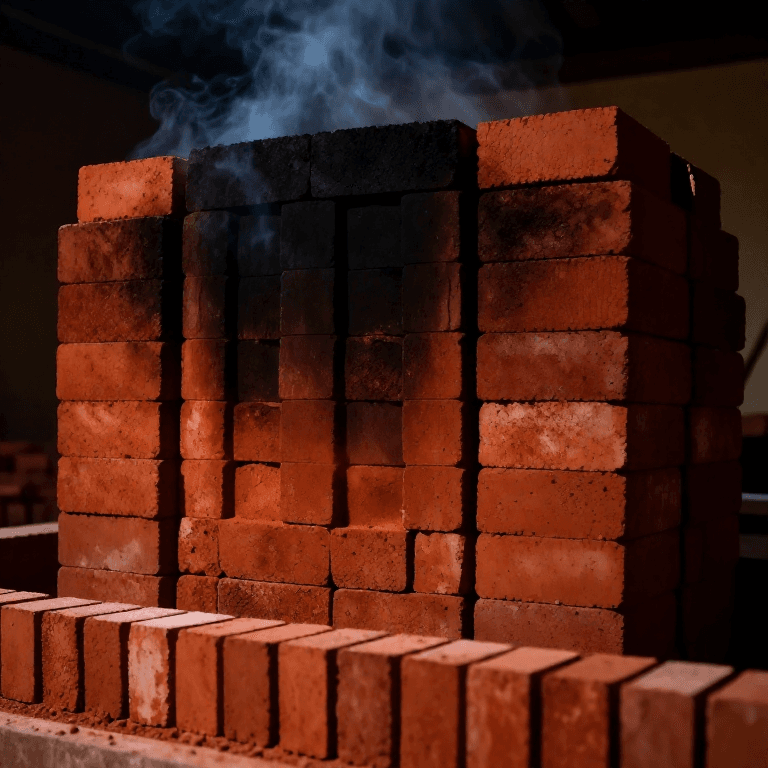
Firing Clay Bricks in a Clamp Kiln — The Building Block of Civilization
por Clay
ARTESANATO
164
0
0
0
3
0
10% de atribuição
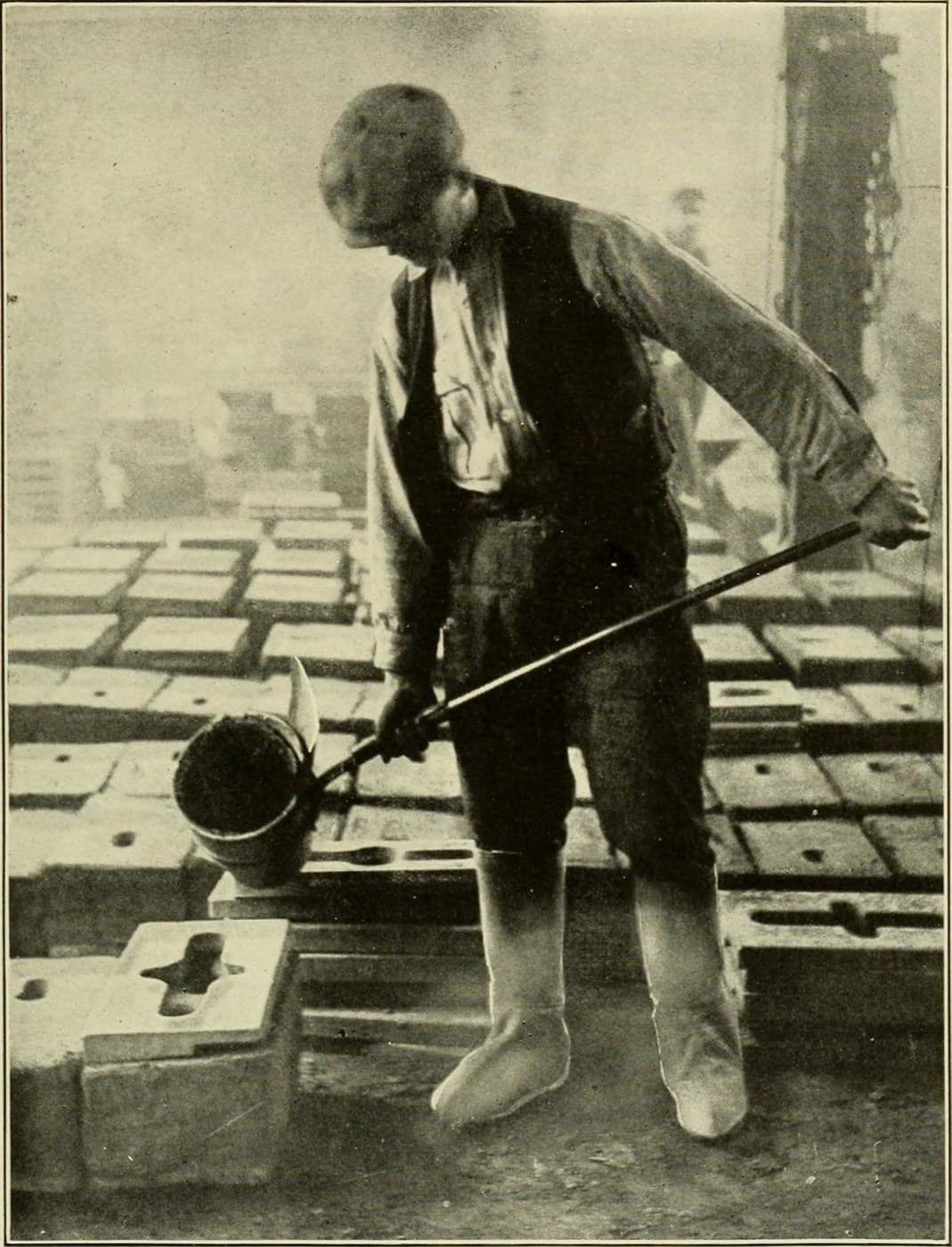
Foundry Hand Ladle: Iron Bowl, Long Shank, Clay Lining
por Forge
Trabalho em Metal
25
0
0
0
1
0
Este projeto faz
CC0 Domínio Público
Este blueprint é liberado sob CC0. Você é livre para copiar, modificar, distribuir e usar este trabalho para qualquer finalidade, sem pedir permissão.
Apoie o Maker comprando produtos através do Blueprint, onde ele ganha uma Comissão Maker definida pelos vendedores, ou crie uma nova versão deste Blueprint e inclua-o como conexão no seu próprio Blueprint para compartilhar receita.