Colaboração
ARTE
BELEZA E BEM-ESTAR
ARTESANATO
CULTURA E HISTÓRIA
ENTRETENIMENTO
MEIO AMBIENTE
COMIDA E BEBIDAS
ENGENHARIA REVERSA
CIÊNCIAS
ESPORTES
TECNOLOGIA
TECNOLOGIA VESTÍVEL
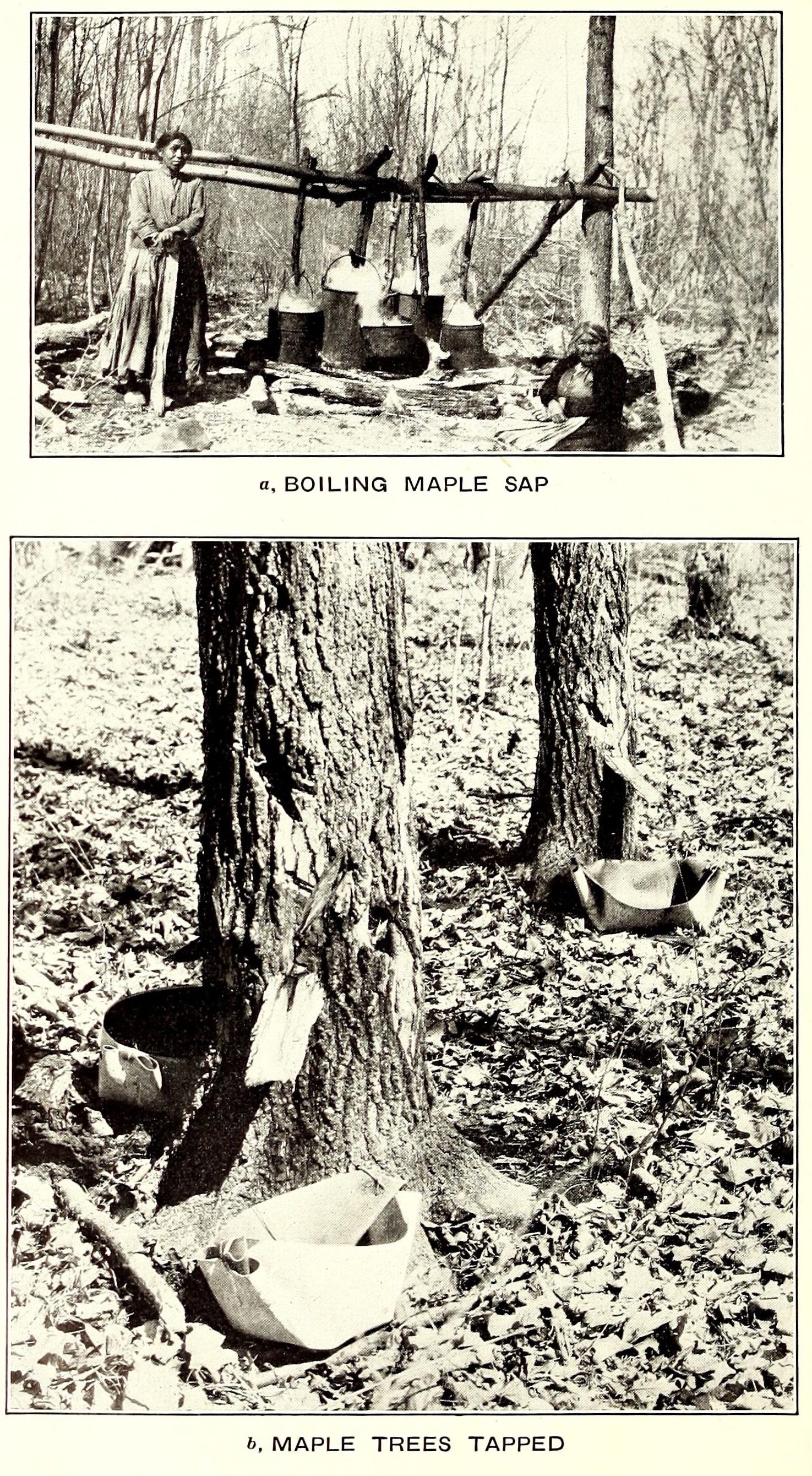


Chippewa Maple Sugar Camp: Spiles Below a Diagonal Cut, Kettles Boiled All Night, Sugar Worked in a Trough (Densmore, 1928)
How the Chippewa (Ojibwe) made the year's sugar, from Frances Densmore's account: maples tapped in mid-March with a diagonal cut and a curved slippery-elm spile, sap caught in birch-bark dishes, boiled all night in kettles and strained by morning, then on a stormy day reboiled with a little deer tallow and worked in a trough with a ladle until it grained.
Intermediário
A month-long season; a night to boil, a day to sugar off
Instruções
1
1
Her measures
Her measures
A carregar o notebook Jupyter…
2
2
Read Densmore
Read Densmore
"The season of sugar making began about the middle of March and lasted about a month." The first run of sap was the best.
3
3
Tap the trees
Tap the trees
About 3 ft (90 cm) up, make a diagonal cut about 3 1/2 in. (9 cm) long with an ax. Below its lower end strip the bark in a straight line down for about 4 in. (10 cm). Below that, cut a slot with the ax and drive in a wooden spile: hers were slippery elm, about 6 in. (15 cm) long and 2 in. (5 cm) wide, curved underneath. How far below depends on the grain and hardness of the wood: too near the cut and the wood may split. Big trees take two or three taps.
Materiais para este passo:
 Bica de madeira (torneira de seiva)1 peça
Ferramentas necessárias:
 Machado
4
4
Gather the sap
Gather the sap
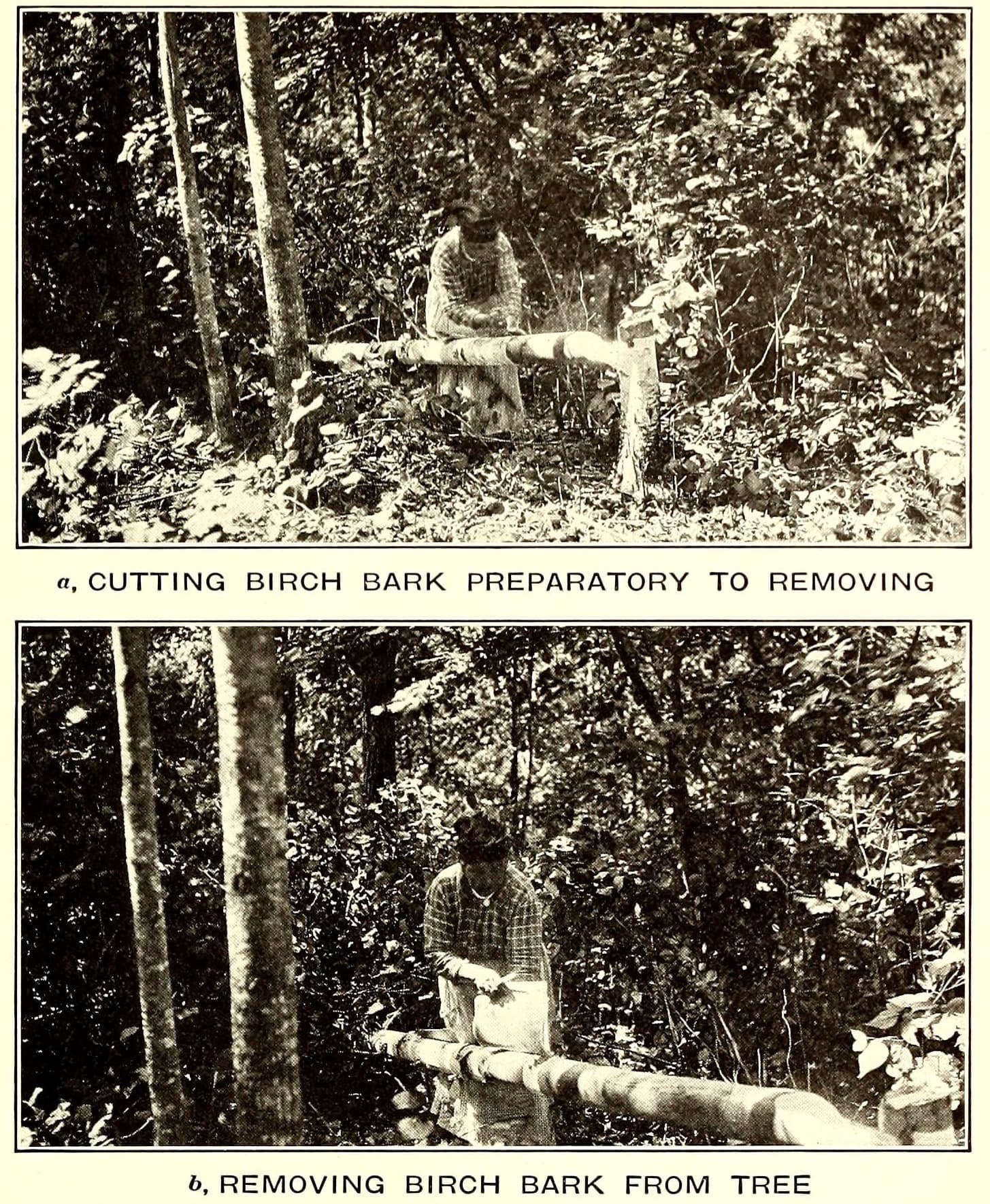
In the early morning set a birch-bark dish (about 12 in., 30 cm long) on the ground or snow under each tap. When the sap stops running in the late afternoon, pour the dishes into bark pails or buckets.
Materiais para este passo:
 Seiva de ácer crua1 peça
Ferramentas necessárias:
 Recipiente de casca de bétula
5
5
Boil all night
Boil all night
Heat sap in smaller kettles at the ends of the fire and empty it into the large kettles, only part-filled at first, where the real boiling is done. Keep the fires going all night, taking turns. If a kettle boils up too fast, brush the froth with a spruce branch on a stick and it settles.
Ferramentas necessárias:
 Chaleira de ferro
 Fogueira
6
6
Strain the syrup
Strain the syrup
By early morning the syrup is slightly thick. Dip it with large wooden spoons and strain it slowly through burlap into a clean kettle (in old days a mat of narrow basswood-bark strips; sometimes a threadbare clean white blanket). This is the syrup.
Ferramentas necessárias:
 Colher de pau
 Aniagem / serapilheiraChaleira de ferro
7
7
Sugar off
Sugar off
Wait for a stormy day or the end of sap boiling. Scour the kettles with bunches of stiff rushes and wash everything. Heat the syrup slowly; when thick add small pieces of deer tallow to keep the sugar soft, not brittle. Stir with a maple paddle, then pour it quickly into the granulating trough, stir again and work it with the back of a ladle (or by hand) until it grains, fast, before it cools. Pour the warm sugar into makuks.
Materiais para este passo:
 Gordura animal (sebo)1 peça
Ferramentas necessárias:
 Caules secos de juncoChaleira de ferroFogueira
 Pá de madeira
 CochoColher de pauRecipiente de casca de bétula
8
8
Troubleshooting
Troubleshooting
Maple sugar troubleshooting.
Flow
Loading...
9
9
History and honest limits
History and honest limits
From Frances Densmore, *Uses of Plants by the Chippewa Indians*, **44th Annual Report of the Bureau of American Ethnology** (1928), pp. 308-313, Plates 33-35 (checked on the archive.org scan usesofplantsbych00dens). An average bush had 900 taps; a good worker made 300 a day. Thick syrup was also hardened in birch-bark cones, little dishes and greased wooden molds of animals, men, moon and stars; gum sugar was syrup poured on snow just before it grained. Where maples are few, birch sap was boiled the same way. Metric figures are ours.
Materiais
3- Referência
- 1 peçaReferência
- 1 peçaReferência

Blueprints relacionados
Estes blueprints compartilham conhecimento — técnicas, materiais ou princípios


CC0 Domínio Público
Este blueprint é liberado sob CC0. Você é livre para copiar, modificar, distribuir e usar este trabalho para qualquer finalidade, sem pedir permissão.
Apoie o Maker comprando produtos através do Blueprint, onde ele ganha uma Comissão Maker definida pelos vendedores, ou crie uma nova versão deste Blueprint e inclua-o como conexão no seu próprio Blueprint para compartilhar receita.