ARTE
BELEZA E BEM-ESTAR
ARTESANATO
CULTURA E HISTÓRIA
ENTRETENIMENTO
MEIO AMBIENTE
COMIDA E BEBIDAS
ENGENHARIA REVERSA
CIÊNCIAS
ESPORTES
TECNOLOGIA
TECNOLOGIA VESTÍVEL
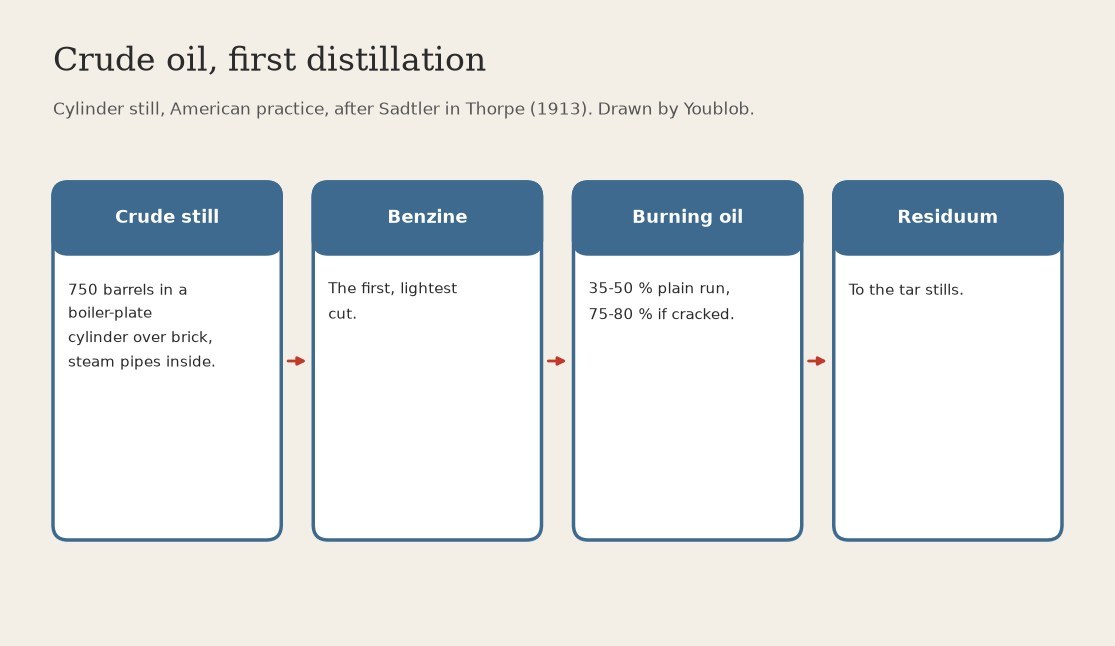


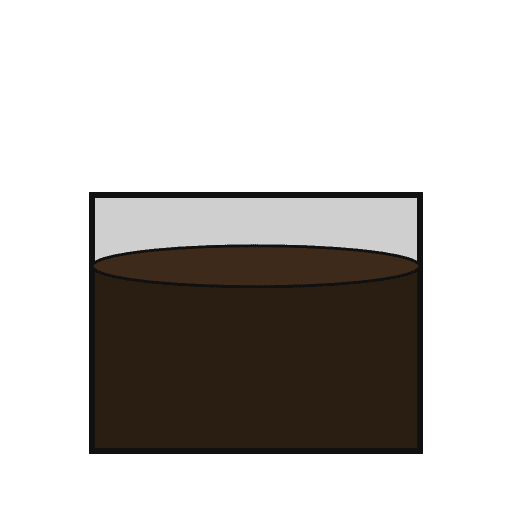
Crude Oil Distilled in a Cylinder Still: Benzine, Burning Oil and Residuum (Sadtler, in Thorpe 1913)
The first step of an American refinery around 1910: crude oil is boiled in a huge horizontal still and split into a light benzine cut, the burning oil that becomes kerosene, and a heavy residuum for the tar stills.
Variable: how hard you run the end of the distillation. Run as a plain fractional distillation, Pennsylvania crude gives 35 to 50 % burning oil and 20 to 30 % lubricating oils. Let the heavy vapours fall back on the hot oil and they crack: burning oil rises to 75 to 80 % and the residuum drops to 6 %.
Source: Sadtler, American Petroleum, in Thorpe's Dictionary of Applied Chemistry, vol. 4 (1913). Not given: the temperature or gravity at which each cut is switched. Crude oil vapour is highly flammable. Picture drawn by Youblob.
Avançado
2 days
Instruções
1
1
Charge 750 barrels into the cylinder still
Charge 750 barrels into the cylinder still
The still is a boiler-plate cylinder, its lower half usually steel, 30 ft long and 12 ft 6 in across, lying in a brick furnace with its upper half open to the air. Charge it with crude oil: usually 750 barrels, often 1000. It carries closed and perforated steam pipes.
Materiais para este passo:
 Petróleo bruto750 barrel
Ferramentas necessárias:
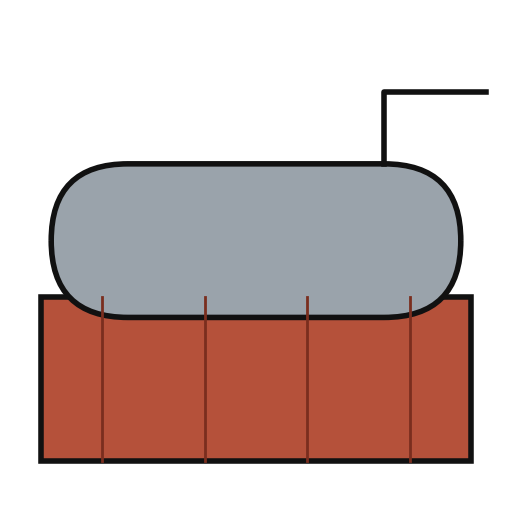 Alambique cilíndrico horizontal
 Tanque de petróleo
2
2
Fire it, blow steam, condense in water-cooled coils
Fire it, blow steam, condense in water-cooled coils
Fire the furnace. Steam jetting from the perforated pipe helps carry the oil vapours over. The vapours condense in long pipe coils standing in tanks of flowing water, and run to the receiving house. A trap near each pipe end carries off the gas that will not condense; it can be burned under the boilers or stills to save fuel.
Ferramentas necessárias:
Alambique cilíndrico horizontal Caldeira a vapor
 Serpentina do condensador
 Água
3
3
Watch the run and switch receivers
Watch the run and switch receivers
The condenser pipes end in boxes with plate-glass sides, so you can see each run and take test portions to control the process. First comes the benzine distillate, then the burning oil distillate. Sadtler gives no temperatures or gravities for the switch. Ours: check test portions with a hydrometer.
Ferramentas necessárias:
 DensímetroTanque de petróleo
4
4
Choose: plain run or cracking run
Choose: plain run or cracking run
Plain fractional distillation: 35 to 50 % burning oil and 20 to 30 % lubricating oils from Pennsylvania crude. Cracking: let the heavy vapours drop back on the hot oil, which the open upper half of the still helps late in the run; burning oil rises to 75 to 80 % and the residuum falls to 6 %.
Ferramentas necessárias:
Alambique cilíndrico horizontal5
5
Send the residuum to the tar stills
Send the residuum to the tar stills
When the burning oil is off, run the fluid residuum out to the tar stills, of about 260 barrels, for the paraffin and lubricating oils. Benzine and burning oil go to their own tanks for refining.
Ferramentas necessárias:
Tanque de petróleoMateriais
1- 750 barrelReferência
Este projeto faz
Blueprints relacionados
Estes blueprints compartilham conhecimento — técnicas, materiais ou princípios

CC0 Domínio Público
Este blueprint é liberado sob CC0. Você é livre para copiar, modificar, distribuir e usar este trabalho para qualquer finalidade, sem pedir permissão.
Apoie o Maker comprando produtos através do Blueprint, onde ele ganha uma Comissão Maker definida pelos vendedores, ou crie uma nova versão deste Blueprint e inclua-o como conexão no seu próprio Blueprint para compartilhar receita.