ARTE
BELEZA E BEM-ESTAR
ARTESANATO
CULTURA E HISTÓRIA
ENTRETENIMENTO
MEIO AMBIENTE
COMIDA E BEBIDAS
ENGENHARIA REVERSA
CIÊNCIAS
ESPORTES
TECNOLOGIA
TECNOLOGIA VESTÍVEL
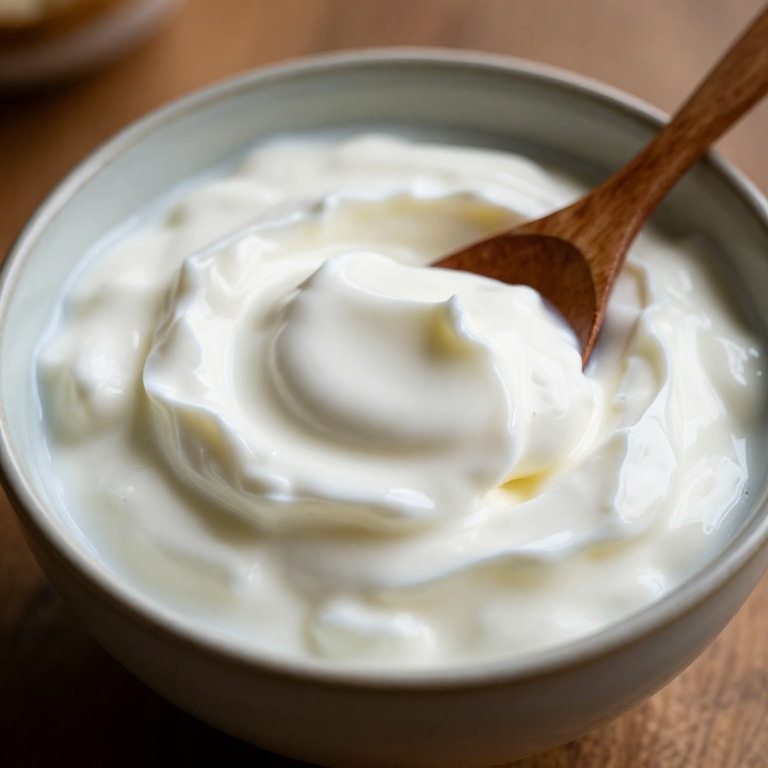


Culturing Yogurt from Bacterial Fermentation — The Oldest Probiotic Food
Intermediário
Instruções
1
1
Understand Yogurt's Microbiology
Understand Yogurt's Microbiology
Yogurt is defined by two specific bacteria working in protocooperation: Lactobacillus delbrueckii subsp. bulgaricus and Streptococcus thermophilus. S. thermophilus initiates fermentation by consuming lactose and producing lactic acid, formic acid, and CO₂. L. bulgaricus then takes over, using its strong proteolytic enzymes to break down casein into free amino acids (especially valine) that stimulate S. thermophilus growth. In return, the formic acid and CO₂ from S. thermophilus stimulate L. bulgaricus. This synergistic relationship produces acid faster than either species alone — a textbook example of protocooperation.
2
2
Trace Yogurt's Origins
Trace Yogurt's Origins
Yogurt likely originated 5,000-8,000 years ago among Central Asian pastoralists who stored milk in animal-skin bags at ambient temperature. Naturally present lactobacilli in the skin and environment fermented the milk, preserving it and creating a tangy, thickened product. The word 'yogurt' derives from Turkish 'yoğurt' (to thicken). Ilya Metchnikoff at the Pasteur Institute in 1905 proposed that Bulgarian peasants' longevity was linked to their yogurt consumption — he isolated L. bulgaricus and championed fermented milk as life-extending, earning the Nobel Prize in 1908 for related immune research.
3
3
Prepare Milk for Inoculation
Prepare Milk for Inoculation
Heat milk to 82-85°C and hold for 15-30 minutes. This critical step denatures whey proteins (beta-lactoglobulin and alpha-lactalbumin), which then coat casein micelles during acidification, creating a smoother, firmer gel with less syneresis (whey separation). Unheated milk produces thin, grainy yogurt. After heating, cool the milk to 42-45°C — the optimal temperature for the thermophilic starter bacteria. Use whole milk for rich, creamy yogurt; the fat globules incorporate into the protein gel. Skim milk produces tangier, thinner yogurt. Ultra-pasteurized milk works well because it is already thoroughly denatured.
Materiais para este passo:
 Leite gordo
Ferramentas necessárias:
 Termómetro de cozinha
 Balança de precisão
4
4
Inoculate and Incubate
Inoculate and Incubate
Add starter culture at 1-3% by weight (2 tablespoons of existing yogurt per liter of milk, or freeze-dried direct-set culture following manufacturer dosage). Stir gently to distribute evenly without incorporating air. Incubate at 42-45°C for 4-8 hours — the culture converts lactose to lactic acid, dropping the pH from 6.5 to 4.5-4.0. At pH 4.6 (the isoelectric point of casein), the protein micelles lose their surface charge, aggregate, and form a continuous gel. Longer incubation produces more acid (tangier flavor) and a firmer set. Stop fermentation by refrigerating to 4°C when desired tartness is reached.
Materiais para este passo:
 Cultura de arranque para iogurte
Ferramentas necessárias:
 Frascos de vidro com tampa
5
5
Understand the Gel Formation Process
Understand the Gel Formation Process
Yogurt's semi-solid texture is a protein gel. Casein micelles (80% of milk protein) are normally suspended in milk by a surface layer of kappa-casein carrying a negative charge. As LAB produce lactic acid and pH drops below 5.0, the charge is neutralized and kappa-casein destabilizes. Casein micelles aggregate into chains and clusters, trapping fat globules, whey, and bacteria in a three-dimensional network. The denatured whey proteins from the heating step cross-link with casein through disulfide bonds, reinforcing the gel. Stirring the set yogurt breaks the gel into a smooth, spoonable consistency (stirred yogurt) while leaving it undisturbed produces set yogurt.
6
6
Examine Flavor Compound Production
Examine Flavor Compound Production
Yogurt's characteristic flavor comes from over 90 volatile compounds. Acetaldehyde (produced by L. bulgaricus from threonine) provides the distinctive 'yogurt' aroma at optimal concentrations of 23-41 ppm. Diacetyl contributes buttery notes. Lactic acid provides clean sourness. Acetic acid adds sharpness at higher concentrations. L. bulgaricus also produces exopolysaccharides that contribute to viscosity and ropiness. Fat-derived flavor compounds add richness in full-fat yogurt. The balance of these compounds distinguishes artisanal yogurt cultures, with different strain combinations producing markedly different flavor profiles.
7
7
Explore Greek and Strained Yogurt
Explore Greek and Strained Yogurt
Greek yogurt (straggisto) is produced by straining regular yogurt through cheesecloth or fine mesh for 4-12 hours, removing 50-67% of the volume as acid whey. This concentrates the protein from 3.5% to 8-11%, doubles the fat content, and removes much of the lactose with the whey. The result is a thick, creamy product with milder acidity. Industrially, centrifugal separators or membrane ultrafiltration achieve the same result at scale. Skyr (Icelandic strained yogurt) uses a different culture including rennet and is technically a fresh acid-set cheese. Labneh (Middle Eastern) is strained overnight until spreadable.
Ferramentas necessárias:
 Musselina fina
8
8
Investigate Probiotic Health Claims
Investigate Probiotic Health Claims
Live yogurt bacteria survive stomach acid in sufficient numbers to transiently colonize the intestine. S. thermophilus produces beta-galactosidase in the gut, assisting lactose digestion in lactose-intolerant individuals — clinically validated in multiple trials. The probiotic benefits of standard yogurt cultures are modest compared to dedicated probiotic strains (L. rhamnosus GG, B. animalis). Many commercial yogurts add supplementary probiotic strains specifically for health claims. Yogurt consumption is consistently associated with reduced risk of type 2 diabetes in epidemiological studies, though the mechanism is debated.
9
9
Survey Global Fermented Milk Traditions
Survey Global Fermented Milk Traditions
Fermented milk traditions span every pastoral culture. Kefir (Caucasus) uses kefir grains — a SCOBY of bacteria and yeast producing a mildly alcoholic, effervescent drink. Kumiss (Central Asia) ferments mare's milk with combined yeast and LAB fermentation. Dahi (Indian subcontinent) uses mesophilic and thermophilic LAB, set in clay pots that absorb whey. Amasi (Southern Africa) ferments raw milk in calabash gourds. Filmjölk (Scandinavia) uses mesophilic cultures at room temperature. Matsoni (Georgia) uses a thermophilic culture that is a close relative of yogurt. Each tradition reflects local climate, available milk, and centuries of empirical microbiology.
10
10
Document Findings and Culture Maintenance
Document Findings and Culture Maintenance
Record yogurt key data: fermentation temperature 42-45°C, duration 4-8 hours, final pH 4.0-4.5, protein 3.5% (regular) or 8-11% (strained). A yogurt culture can be perpetuated indefinitely by reserving a portion of each batch as starter for the next — a practice that links every bowl to the original culture, potentially across generations. Yogurt is humanity's oldest biotechnology for milk preservation, a living demonstration of bacterial symbiosis, and proof that some of the most important science happens not in laboratories but in kitchens.
Materiais
2- 1 peçaReferência
- Referência
Ferramentas necessárias
4- Referência
- Referência
- Referência
- Referência
Materiais de Blueprints conectados
Este projeto faz

CC0 Domínio Público
Este blueprint é liberado sob CC0. Você é livre para copiar, modificar, distribuir e usar este trabalho para qualquer finalidade, sem pedir permissão.
Apoie o Maker comprando produtos através do Blueprint, onde ele ganha uma Comissão Maker definida pelos vendedores, ou crie uma nova versão deste Blueprint e inclua-o como conexão no seu próprio Blueprint para compartilhar receita.