ARTE
BELEZA E BEM-ESTAR
ARTESANATO
CULTURA E HISTÓRIA
ENTRETENIMENTO
MEIO AMBIENTE
COMIDA E BEBIDAS
ENGENHARIA REVERSA
CIÊNCIAS
ESPORTES
TECNOLOGIA
TECNOLOGIA VESTÍVEL
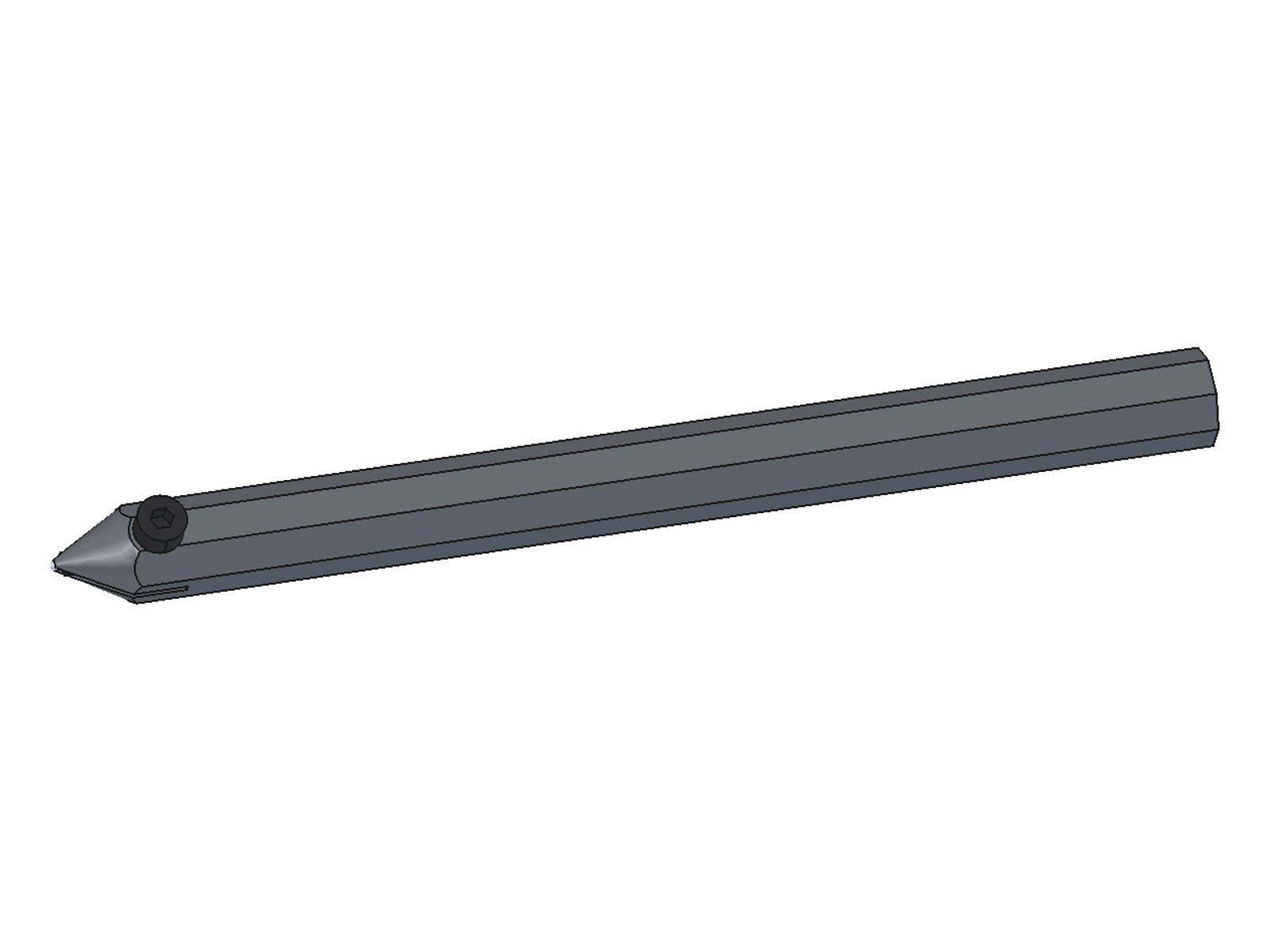


Diamond Scriber: a Diamond Clamped in a Slotted Steel Shank (after Poulain, 1920)
A scriber that marks glass, ceramic, hardened steel and stone: a small diamond held in the slotted tip of a tool steel bar and clamped by one screw. Paul Poulain patented this way of holding a diamond in 1920: the shank split into two jaws, a bolt through one jaw into the other, and a plate behind the stone.
Intermediário
About 2 hours
Instruções
1
1
How a scriber is used
How a scriber is used
Marking lines with a scribe (JewelrySupply). A diamond point does the same on glass and hardened steel.
2
2
Poulain's diamond holder, 1920
Poulain's diamond holder, 1920
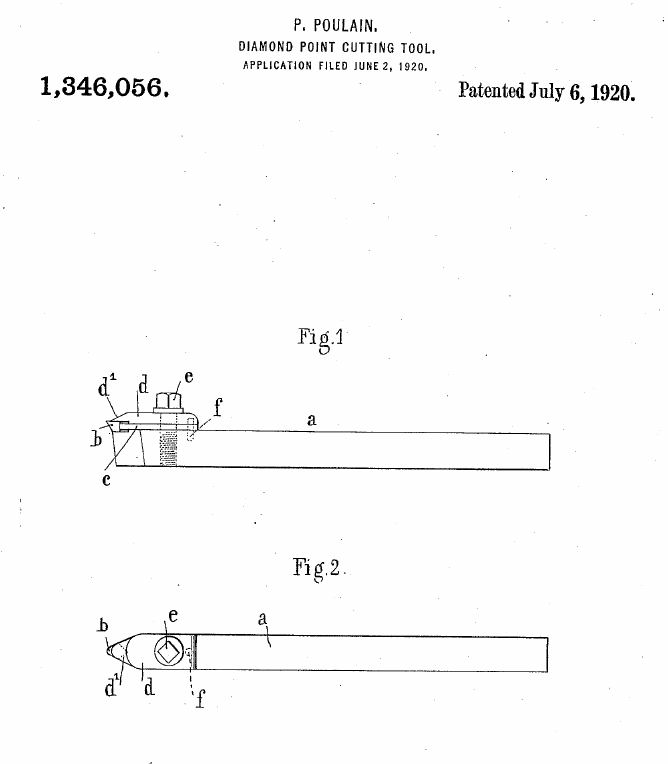
US 1,346,056: the diamond b sits at the bevelled end of a steel shank a, a plate c behind it as an abutment, an upper jaw d pressing on both, clamped by a bolt e. He adds that the shank may instead be slotted, gripping the stone between the two jaws with a bolt through one jaw into the other: that is how this scriber is made.
3
3
Print the drawing
Print the drawing
The scriber at 1:1, side and top views. Print at 100 % and check the 50 x 10 mm box.
4
4
Shape the shank
Shape the shank
Cut 130 mm of 10 mm octagonal tool steel and file one end to a 60 degree point, 8.7 mm long. Leave the steel soft, as supplied.
Materiais para este passo:
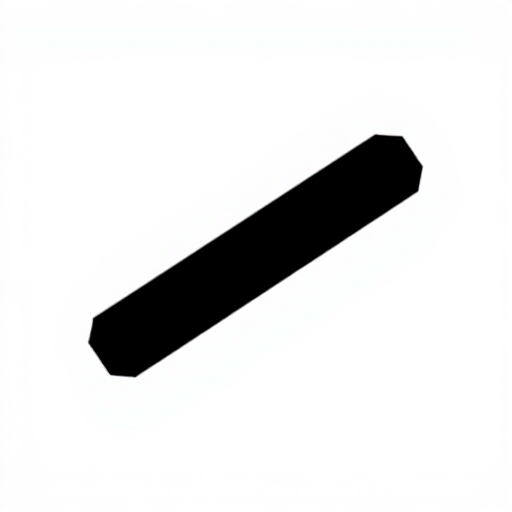 Barra octogonal de aço para ferramentas1 piece (10 mm octagonal, 130 mm)
Ferramentas necessárias:
 Serra de arco para metais
 Lima para metal
 Torno de bancada
 Paquímetro digital de 6 polegadas
5
5
Slot the tip
Slot the tip
Saw a slot 14 mm deep straight down the axis through the point, about 0.8 mm wide (one hacksaw cut). File the slot faces clean; the two halves are the jaws.
Ferramentas necessárias:
Serra de arco para metaisLima para metalTorno de bancada6
6
Drill and tap the jaws
Drill and tap the jaws
Punch a mark on a flat, 11 mm from the tip, across the slot. Drill 2.5 mm through both jaws; open the near jaw to 3.2 mm and tap the far jaw M3.
Ferramentas necessárias:
 Punção de centro
 Jogo de brocas
 Jogo de machos e cossinetesTorno de bancada
7
7
Set the diamond
Set the diamond
Cut a strip of brass sheet to fill the slot behind the stone (the abutment). Under a lens, seat the stone at the apex of the slot with its sharpest corner out by about half a millimetre, slide the brass in behind it and tighten the M3 x 10 screw.
Materiais para este passo:
 Diamante industrial1 piece (about 1 mm)
 Chapa de latão1 piece (strip, 0.5 mm x 3 x 12 mm)
 Parafuso de cabeça cilíndrica com sextavado interior1 piece (M3 x 10)
Ferramentas necessárias:
 Lupa de mão 10x
 Tesoura de chapa
 Jogo de chaves Allen
8
8
Troubleshooting
Troubleshooting
Scriber problems and fixes.
Flow
Loading...
9
9
History and honest limits
History and honest limits
Paul Poulain, Paris: US 1,346,056, "Diamond-Point Cutting-Tool", filed 2 June 1920, granted 6 July 1920, a lathe tool for cutting steel, bronze, fibre, ebonite, paper and rubber. Ours: the hand scriber made from his slotted-shank variant, and every size. Not made by us yet.
Materiais
4- 1 piece (10 mm octagonal, 130 mm)Referência
- 1 piece (about 1 mm)Referência
- 1 piece (strip, 0.5 mm x 3 x 12 mm)Referência
- 1 piece (M3 x 10)Referência
Ferramentas necessárias
10- Referência
- Referência
- Referência
- Referência
- Referência
- Referência
- Referência
- Referência
- Referência
- Referência
Ficheiros de design
1Materiais de Blueprints conectados
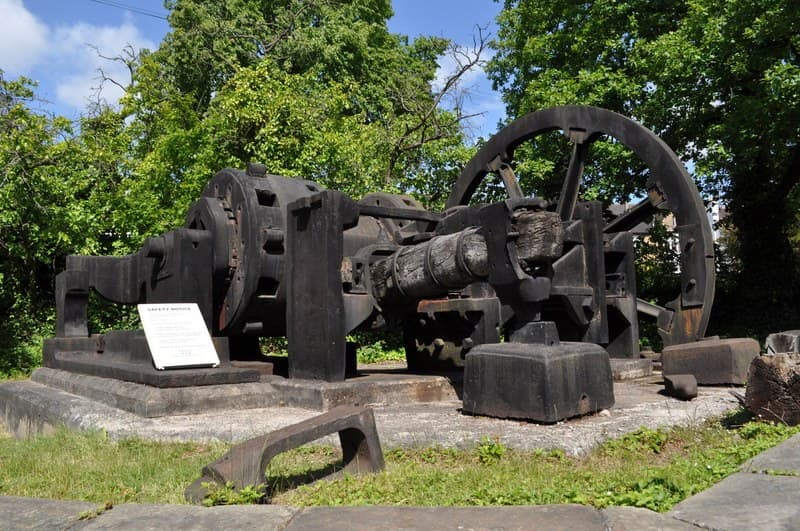
Este projeto faz

CC0 Domínio Público
Este blueprint é liberado sob CC0. Você é livre para copiar, modificar, distribuir e usar este trabalho para qualquer finalidade, sem pedir permissão.
Apoie o Maker comprando produtos através do Blueprint, onde ele ganha uma Comissão Maker definida pelos vendedores, ou crie uma nova versão deste Blueprint e inclua-o como conexão no seu próprio Blueprint para compartilhar receita.