ARTE
BELEZA E BEM-ESTAR
ARTESANATO
CULTURA E HISTÓRIA
ENTRETENIMENTO
MEIO AMBIENTE
COMIDA E BEBIDAS
ENGENHARIA REVERSA
CIÊNCIAS
ESPORTES
TECNOLOGIA
TECNOLOGIA VESTÍVEL
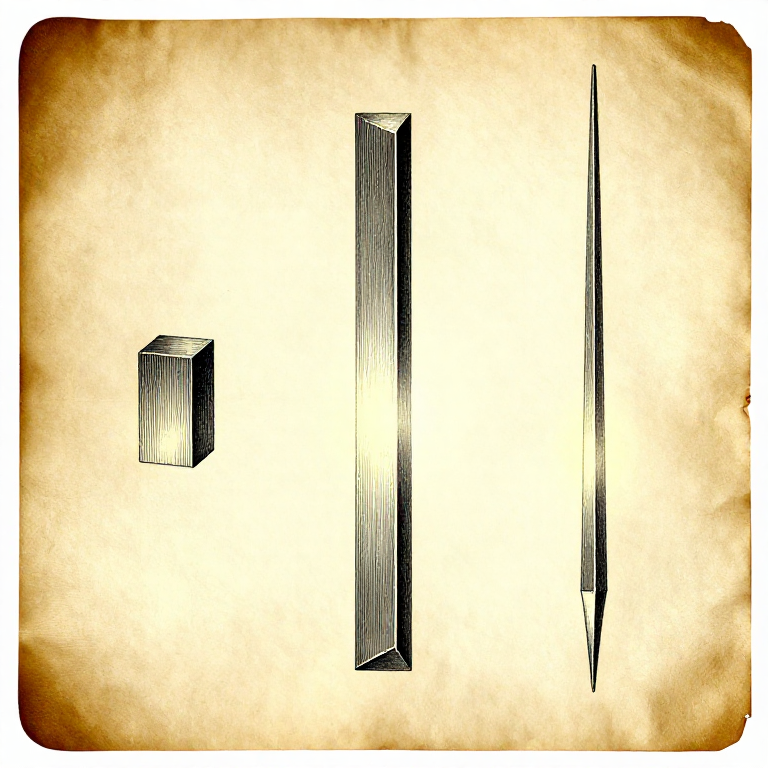

Drawing Out: Making It Longer by Making It Thinner
Drawing out is the commonest forging operation: making a bar longer and thinner. A taper, a blade, a spike, a leaf — all of them are drawn out.
The metal is not compressed; it is MOVED. Volume is conserved, so everything that leaves the thickness has to appear somewhere in the length and the width. Controlling which of those two it goes into is the whole skill.
The trick that makes it fast is counter-intuitive: hitting a smaller area moves metal quicker than hitting a large one, because the pressure is higher. That is why a smith reaches for the horn or a fuller rather than flattening away on the face.
Intermediário
3 hours
Instruções
1
1
Volume is conserved — so plan the stock first
Volume is conserved — so plan the stock first
A carregar o notebook Jupyter…
Materiais para este passo:
 Barra de aço macio1 peça
Ferramentas necessárias:
 Calculadora
 Régua
Régua2
2
Work over the horn or the edge, not the flat
Work over the horn or the edge, not the flat
Hammering a bar on the flat face squashes it wider as much as longer. Lay it across the horn or over the radiused edge of the anvil and the contact patch shrinks, the pressure rises, and the metal is forced to flow along the bar.
A FULLER does the same thing deliberately: a rounded tool, top or bottom, that concentrates the blow into a narrow band. Fullering a series of grooves and then flattening them out draws metal far faster than direct hammering.
This is the single biggest difference between a beginner who is exhausted after twenty minutes and a smith who is still going. It is not strength — it is choosing a smaller contact patch.
Materiais para este passo:
Barra de aço macio1 peça Carvão vegetal em pedaços1 peça
Ferramentas necessárias:
 Bigorna
 Fuller (ferramenta de acanalar)
 Ferramenta fuller
 Martelo de ferreiro
3
3
Turn it 90 degrees every few blows
Turn it 90 degrees every few blows
Draw a square bar by hammering one face, turning a quarter turn, hammering again, and repeating. Keep it square as it gets smaller, then round it at the end if you want round.
Hammering only one face makes a flat strip, and once it has spread sideways it is very hard to get back. The quarter-turn habit is what keeps a taper square and even, and it is worth counting blows out loud while you learn it.
To go from square to octagonal to round: knock the four corners off the square to make an octagon, then roll it under light blows to round it. Trying to go straight from square to round leaves flats that never quite disappear.
Materiais para este passo:
Barra de aço macio1 peçaFerramentas necessárias:
Martelo de ferreiroBigorna Tenazes de ferreiro
 Martelo de arredondar
4
4
Work the hot part, and stop when it dulls
Work the hot part, and stop when it dulls
Metal only moves where it is hot. As a heat fades, the thin end cools first and stops moving while the thick part is still workable, which is exactly the surface-to-volume effect the heating rung describes.
So work the hottest region and go back to the fire before the colour drops out of the forging range. Hammering steel that has gone below red achieves almost nothing, work-hardens it, and can crack it.
Plan what you will do with each heat before it comes out of the fire. Three deliberate operations per heat is a good working rhythm; one operation and back in the fire wastes fuel and costs scale on every trip.
Materiais para este passo:
Barra de aço macio1 peçaCarvão vegetal em pedaços2 peçasFerramentas necessárias:
 Forja de ferreiroTenazes de ferreiroMartelo de ferreiro
 Óculos escuros de forja
Ferramentas necessárias
10- Referência
- Referência
- Referência
- Referência
- Referência
- Referência
- Referência
- Referência
- Referência
- Referência
Blueprints relacionados
Estes blueprints compartilham conhecimento — técnicas, materiais ou princípios
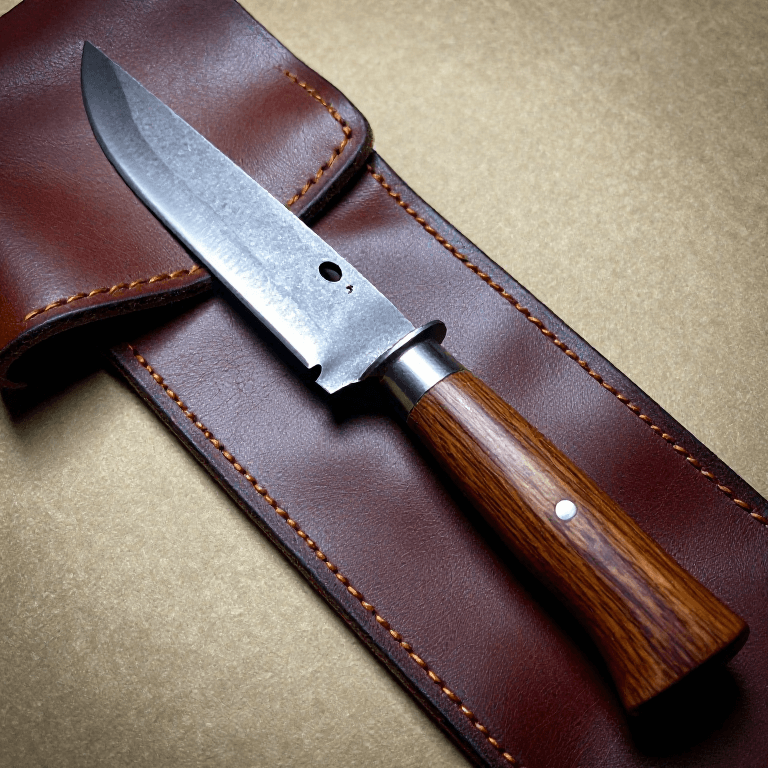
Forging an Iron Knife from a Wrought Iron Bar — The Smith's First Project
por Forge
Trabalho em Metal
50
0
0
0
0
0
Heating Evenly: Why Thin Bits Burn While Thick Bits Are Still Cold
por Forge
Trabalho em Metal
22
0
0
0
0
0
Reading Heat by Colour: The Oldest Thermometer, and Its Two Conditions
por Forge
Trabalho em Metal
20
0
0
0
0
0
CC0 Domínio Público
Este blueprint é liberado sob CC0. Você é livre para copiar, modificar, distribuir e usar este trabalho para qualquer finalidade, sem pedir permissão.
Apoie o Maker comprando produtos através do Blueprint, onde ele ganha uma Comissão Maker definida pelos vendedores, ou crie uma nova versão deste Blueprint e inclua-o como conexão no seu próprio Blueprint para compartilhar receita.