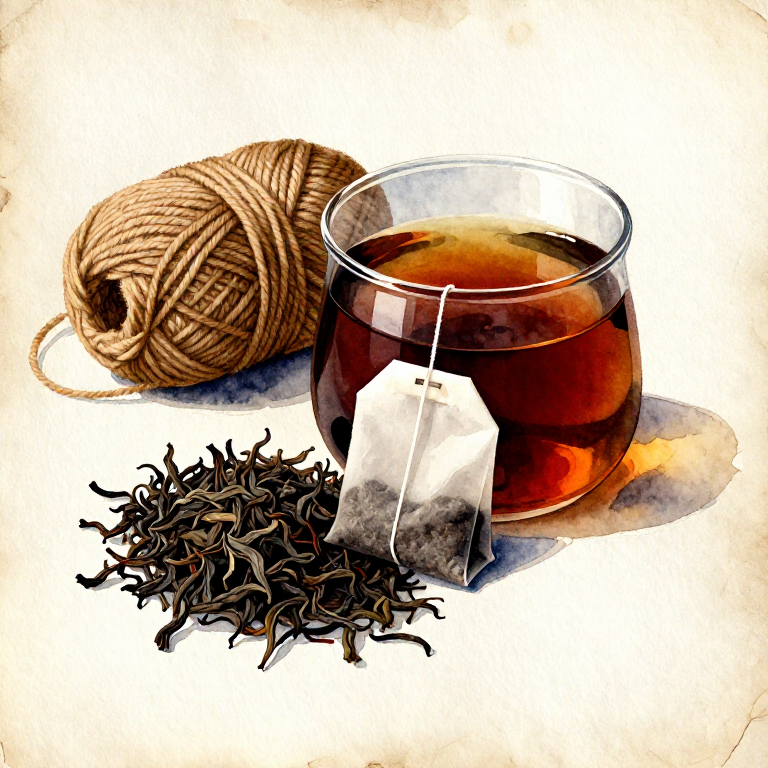


Dyeing Warm Tan with Tea — The Gentlest Tannin Dye in Every Household
Tea (Camellia sinensis) is the most widely consumed beverage in the world after water, and its ubiquity makes it one of the most accessible natural dye materials available. Black tea contains 10-20% tannins by dry weight — the same class of compounds that make oak bark, cutch, and sumac effective dyes. These tannins produce a warm tan to light brown on wool and cotton, with excellent substantive bonding that requires no mordant.
Tea has been cultivated in China for at least 5,000 years, spreading to Japan, India, and eventually worldwide. While tea was primarily valued as a beverage and medicine, its tannin content was exploited for dyeing and staining in East Asian and South Asian traditions. In China, tea-dyeing (known as 'cha ran') was used to produce warm, muted earth tones on silk. In India, strong black tea was used to dye cotton for everyday garments.
For the modern natural dyer, tea is the ultimate beginner material. It is in every kitchen, the process requires nothing beyond a pot and water, the colour — a warm, gentle tan — is universally appealing, and the tannin content provides better washfastness than most kitchen-cupboard dyes. Tea dyeing is also used to 'age' paper and fabric for crafts, theatre props, and historical re-enactment costumes — strong tea gives new fabric a convincing aged appearance.
Instruções
Prepare a strong tea bath
Prepare a strong tea bath
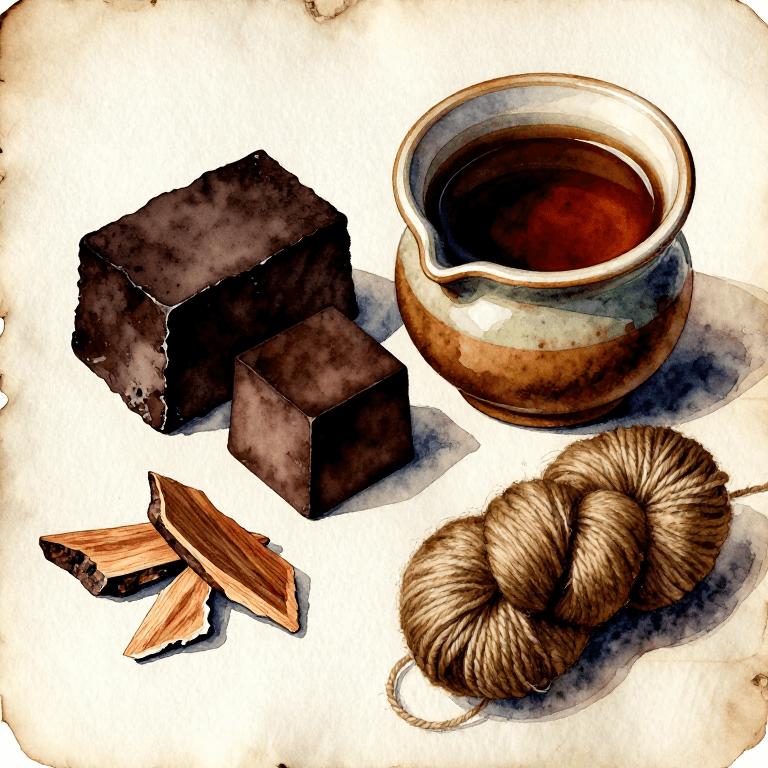
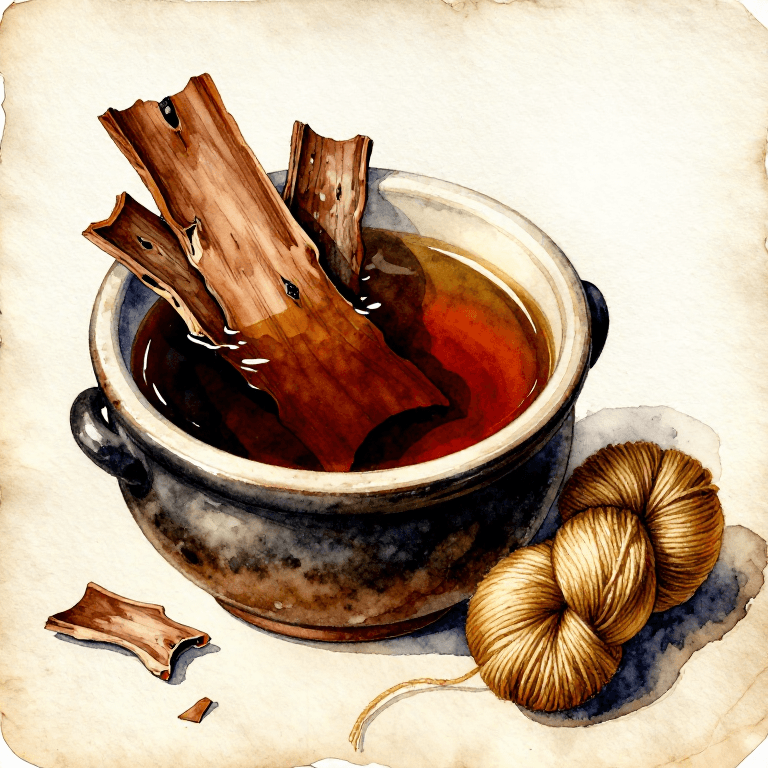
Use 20-30 tea bags (standard black tea) or 50-80 g of loose-leaf black tea for 100 g of wool. Place the tea bags or loose tea in a dye pot with 4 litres of boiling water and steep for 30 minutes. For the strongest colour, use a robust black tea like English Breakfast, Assam, or Ceylon — these have the highest tannin content. Green tea and herbal teas give much weaker colour and are not recommended.
Materiais para este passo:
 Chá preto60 g
Ferramentas necessárias:
 Balança digital de cozinha
 Panela alta
Remove the tea and adjust temperature
Remove the tea and adjust temperature
Remove the tea bags or strain out loose tea through a fine mesh strainer. The liquid should be a very dark, opaque brown — much stronger than drinking tea. Press the tea bags or leaves to extract maximum tannin. Let the bath cool slightly to 80°C. The tea tannins are fully extracted during the steep — no further simmering is needed.
Ferramentas necessárias:
 Peneira de malha fina
Dye wool at 80°C for 45 minutes
Dye wool at 80°C for 45 minutes
Pre-wet wool in lukewarm water for 15 minutes, squeeze gently, and lower into the tea dye bath. Maintain at 80°C for 45 minutes. Turn gently every 10 minutes. No mordant is needed — tea tannins are substantive and bond directly to protein fibres. The wool will develop a warm, gentle tan — darker with more tea bags, lighter with fewer. For a deeper, richer brown, use double the tea quantity or dip into a second fresh tea bath after the first.
Materiais para este passo:
 Meada de lã100 g
Ferramentas necessárias:
 Termómetro de cozinha
Cool overnight, rinse, and dry
Cool overnight, rinse, and dry
Turn off the heat and let the wool cool in the dye bath overnight — the colour deepens during cooling. Remove, squeeze gently, and rinse in lukewarm water until the runoff is mostly clear. The final colour is a warm, gentle tan to light brown — the colour of milky tea, parchment, or aged linen. Washfastness is good thanks to the tannin-fibre bond — better than most kitchen-cupboard dyes. Lightfastness is moderate. Tea-dyed wool makes an excellent warm neutral for blending with more vivid plant-dyed yarns. Dry in shade.
Ferramentas necessárias
4- Referência
- Referência
- Referência
- Referência
Materiais de Blueprints conectados
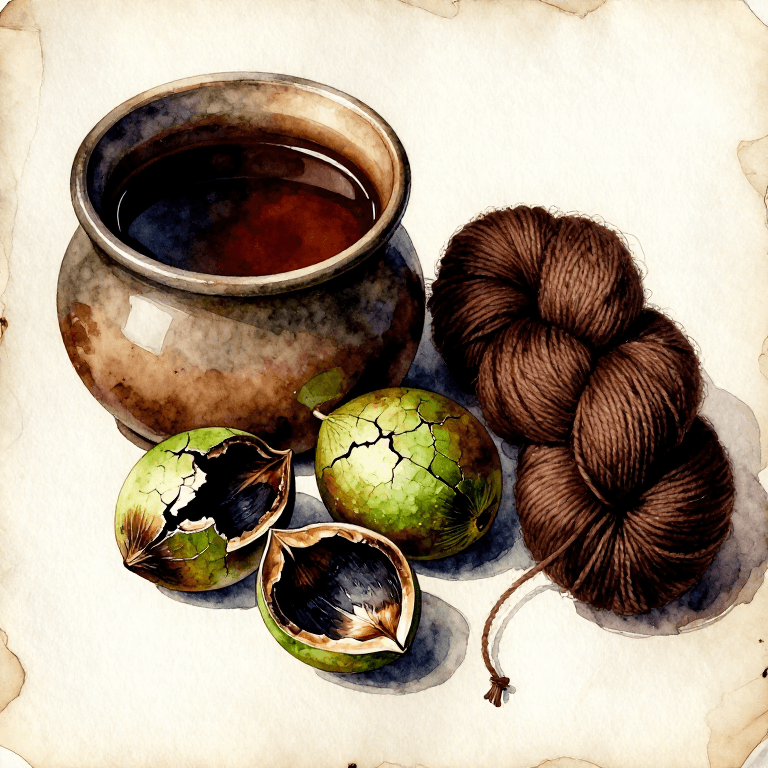
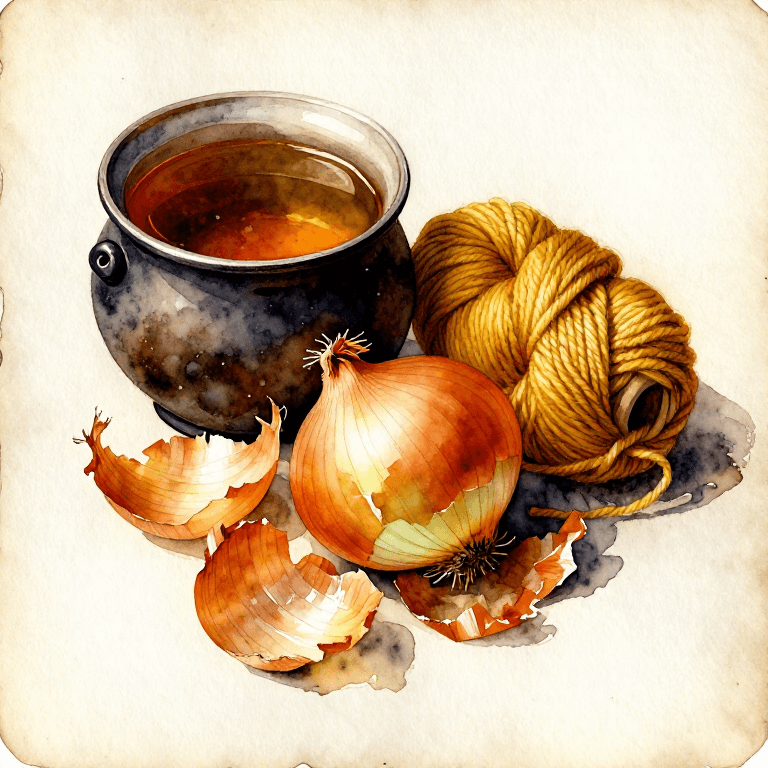
Este projeto faz

Blueprints relacionados
Estes blueprints compartilham conhecimento — técnicas, materiais ou princípios
CC0 Domínio Público
Este blueprint é liberado sob CC0. Você é livre para copiar, modificar, distribuir e usar este trabalho para qualquer finalidade, sem pedir permissão.
Apoie o Maker comprando produtos através do Blueprint, onde ele ganha uma Comissão Maker definida pelos vendedores, ou crie uma nova versão deste Blueprint e inclua-o como conexão no seu próprio Blueprint para compartilhar receita.