ARTE
BELEZA E BEM-ESTAR
ARTESANATO
CULTURA E HISTÓRIA
ENTRETENIMENTO
MEIO AMBIENTE
COMIDA E BEBIDAS
ENGENHARIA REVERSA
CIÊNCIAS
ESPORTES
TECNOLOGIA
TECNOLOGIA VESTÍVEL
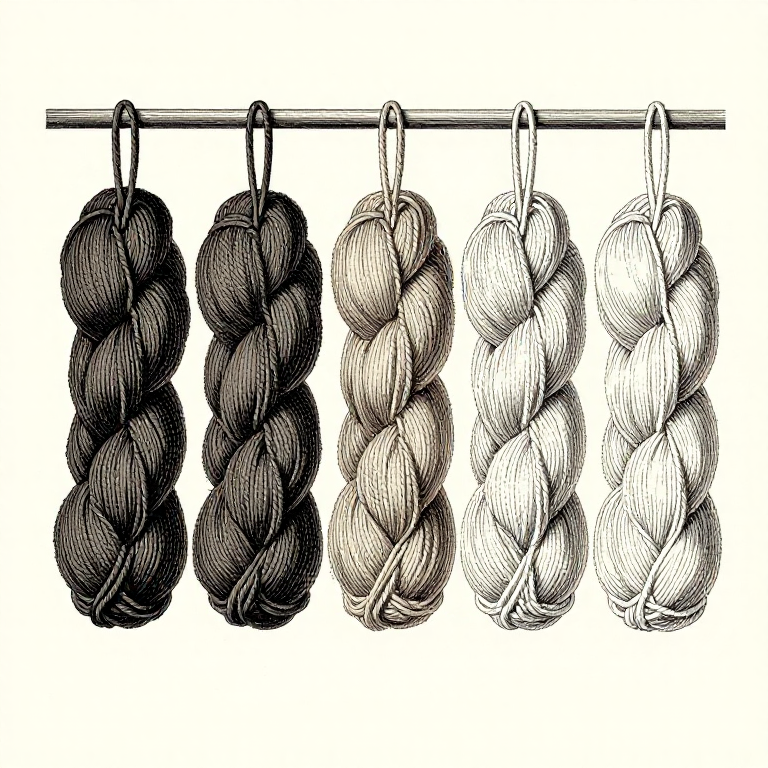


Exhaust Baths: The Shade Ladder Is Free, the Matched Set Is Not
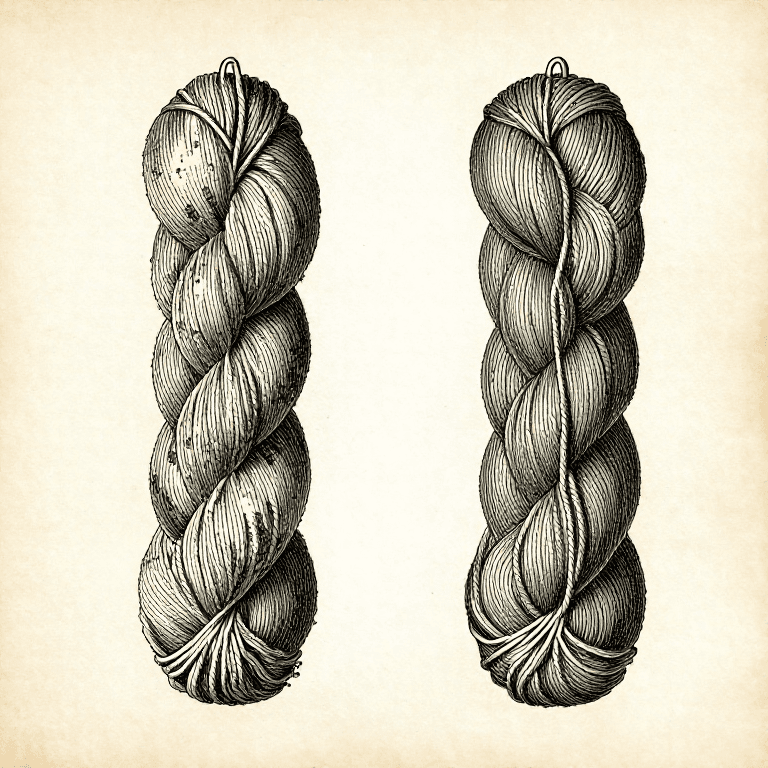
A dyebath is rarely used up by one skein. Put a second skein in and it comes out paler; a third paler still. Worked deliberately, that gives a ladder of related shades from one pot of dyestuff, and it is one of the real pleasures of natural dye — the shades are all the same colour, so they always go together.
Worked accidentally, it is the reason a dyer cannot match the skein they made last month.
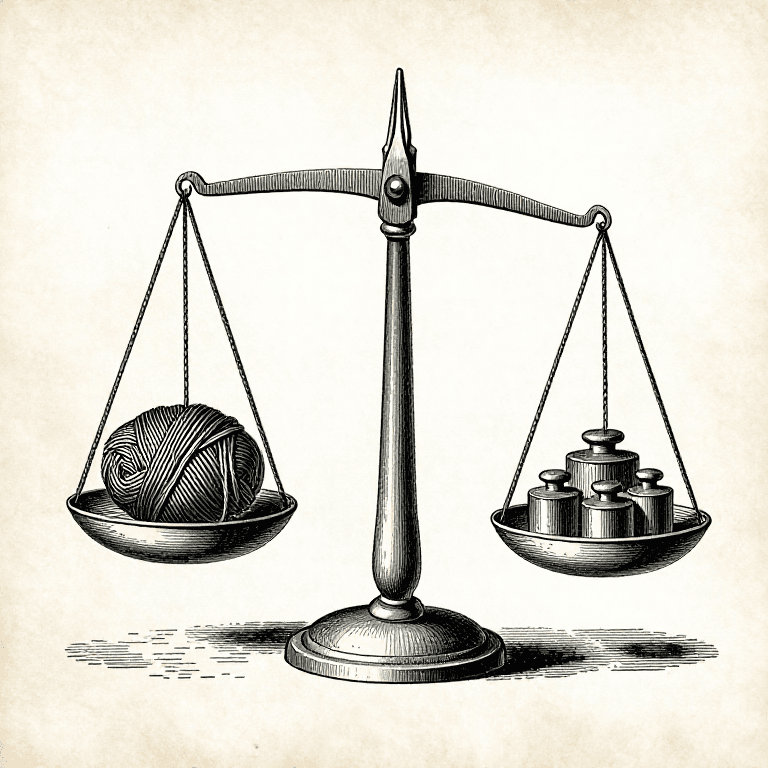
This rung works out how the ladder falls, why it is geometric rather than linear, and what it actually costs to hold several skeins at the same depth instead.
Intermediário
5 hours
Instruções
1
1
Running the ladder
Running the ladder
Dye the first skein as the recipe says. Lift it, rinse it, and put the next one into the same bath while it is still hot.
Two things change down the ladder, and only one of them is depth:
**The shade gets paler**, obviously, because there is less dye.
**The hue can shift as well.** A dyestuff is a mixture of compounds with different affinities for the fibre, and the ones that strike hardest go first. Madder's later baths are pinker and less orange, because the stronger orange components have already gone. Cochineal's later baths go towards rose. This is not a fault and it cannot be avoided by technique.
Label each skein with its bath number as it comes out. By the fourth they are hard to tell apart wet, and impossible to reconstruct dry.
Materiais para este passo:
 Fio de lã por tingir4 meadas
Ferramentas necessárias:
 Panela alta
 Tenazes
 Fichas de cartolina
 Secador
2
2
How the ladder falls
How the ladder falls
A carregar o notebook Jupyter…
Ferramentas necessárias:
 Computador de secretária
3
3
Making the bath in the first place
Making the bath in the first place
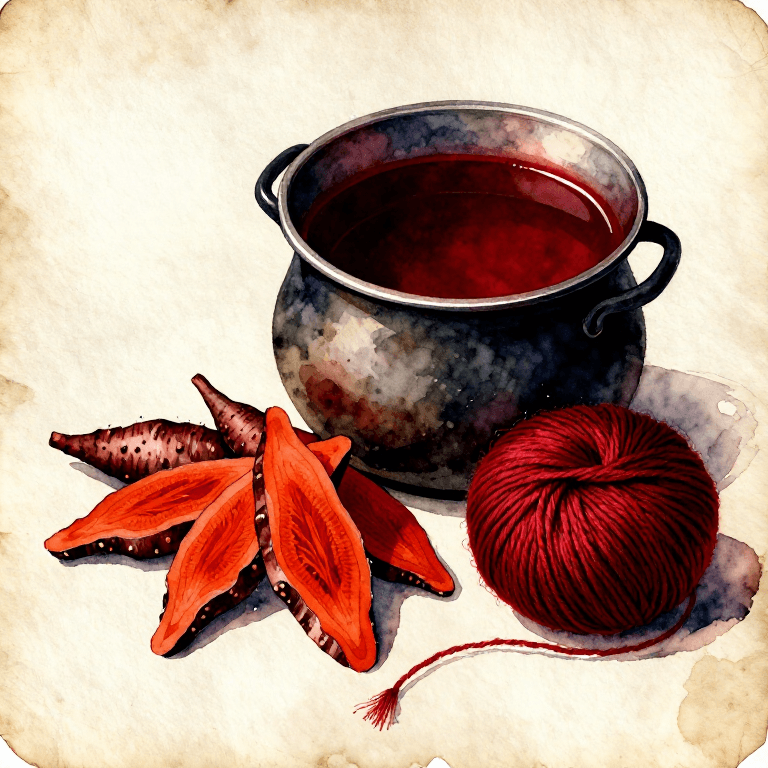
Most dyestuffs are extracted before the fibre goes anywhere near them, and the extraction is a separate operation from the dyeing.
**Soak, then simmer, then strain.** Chopped or ground material soaked overnight gives up far more than the same material simmered straight away. Simmer at 80 to 90 C rather than boiling — the same limit as the dyebath, and for the same reason.
**Strain the plant material out**, or dye it as well. Loose bark, root and petals pressed against a skein leave darker marks exactly where they sat. If it cannot be strained cleanly, tie it in a cloth bag.
**Extract more than once.** The plant material has its own ladder: a second and third extraction of the same madder root give further usable dye, and combining them gives a stronger bath than one long boil would.
The whole extraction keeps in a lidded jar in a cool place for a few days. Longer than that and it ferments, which for some dyes is ruin and for others — indigo, woad — is the actual process.
Materiais para este passo:
Fio de lã por tingir1 meadaFerramentas necessárias:
Panela alta Peneira de malha fina
 Frascos de vidro com tampa
 Termómetro
 Vareta de agitação
4
4
When a bath really is finished
When a bath really is finished
A bath that still looks strongly coloured can be finished, and a bath that looks weak can still have plenty in it. Colour in the water is not the test, because what is left may be the fraction with no affinity for the fibre.
**The test is a sample.** Put a small piece of mordanted fibre in for ten minutes and look at it. If it takes visible colour, the bath is worth another skein.
Three ways to get more out of a tired bath, in order of how much they change the colour:
**Longer and cooler.** An overnight soak in a cooling bath takes up dye that a one-hour hold left behind, and changes nothing else.
**Shift the pH.** Many dyes take up differently in acid or alkali. This changes the hue as well, which may or may not be wanted.
**Add a modifier.** An iron dip after a weak bath gives a useful grey or olive out of a colour that was too pale to keep. That is the iron-saddening blueprint and it rescues a great many disappointing baths.
When it is genuinely done, a spent alum or plant bath can go on the compost or the garden. An iron bath should be diluted well first.
Materiais para este passo:
Fio de lã por tingir1 meada Sulfato de ferro1 peça
Ferramentas necessárias:
Frascos de vidro com tampa Tiras de pHTenazesFichas de cartolina
Materiais
2- 6 meadasReferência
- 1 peçaReferência
Ferramentas necessárias
10- Referência
- Referência
- Referência
- Referência
- Referência
- Referência
- Referência
- Referência
- Referência
- Referência
Blueprints relacionados
Estes blueprints compartilham conhecimento — técnicas, materiais ou princípios
CC0 Domínio Público
Este blueprint é liberado sob CC0. Você é livre para copiar, modificar, distribuir e usar este trabalho para qualquer finalidade, sem pedir permissão.
Apoie o Maker comprando produtos através do Blueprint, onde ele ganha uma Comissão Maker definida pelos vendedores, ou crie uma nova versão deste Blueprint e inclua-o como conexão no seu próprio Blueprint para compartilhar receita.