
Extração de Estanho de Cassiterita — Peneiramento e Fusão de Minério de Estanho
Instruções
Compreender a cassiterita
Compreender a cassiterita
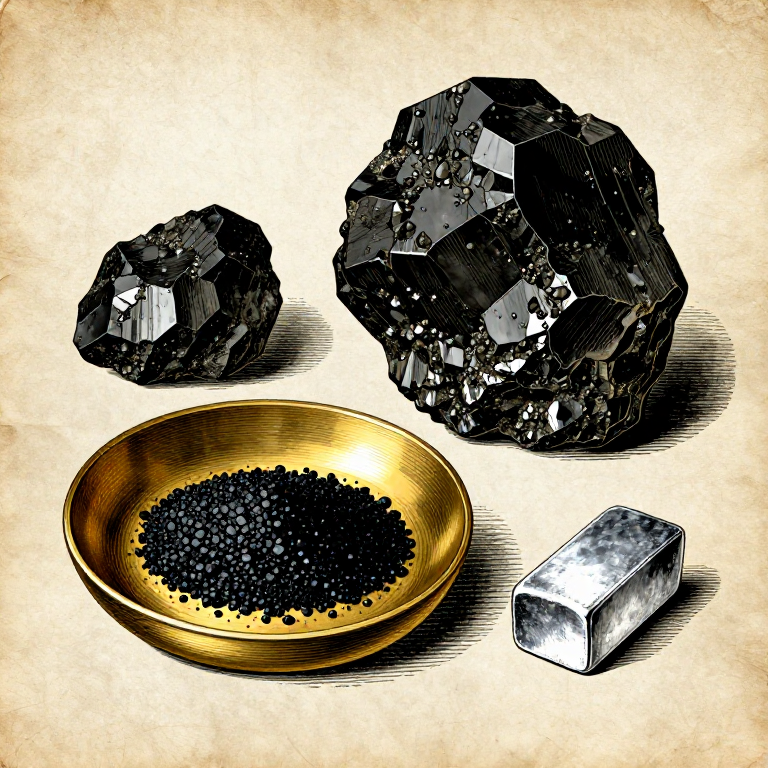
A cassiterita (SnO₂) é o dióxido de estanho, o principal minério de estanho. Tem uma dureza de Mohs de 6-7, uma gravidade específica muito alta de 6,8-7,1 (muito mais pesada que a areia comum em 2,6), e varia do preto ao castanho-avermelhado. A alta densidade torna fácil a separação por gravidade (bateamento), semelhante à bateação de ouro.
Encontrar cassiterita aluvial
Encontrar cassiterita aluvial
A cassiterita é encontrada como grãos pesados pretos ou castanho-escuros em depósitos aluviais (fluviais) a jusante de granitos contendo estanho. Procure nos cascalhos de riachos, nos meandros dos rios onde os minerais pesados se concentram e atrás de grandes rochas. As regiões históricas de estanho incluem a Cornualha (Reino Unido), o Sudeste Asiático, a Bolívia e a África Central.
Collect stream gravel
Collect stream gravel
Shovel gravel and sand from locations where heavy minerals accumulate: bedrock crevices, behind boulders, and the inside of river bends. Fill a bucket with raw gravel. The cassiterite grains are small (1-5 mm) and mixed with ordinary sand, quartz, and other minerals.
Materiais para este passo:
 Cascalho de ribeiro20 kilogram
Ferramentas necessárias:
 Pá de cavar
 Balde de 20 litros
Pan for cassiterite
Pan for cassiterite
Use a gold pan or wide shallow bowl. Add a scoop of gravel and fill halfway with water. Swirl and tilt to wash away light material. Heavy cassiterite grains sink to the bottom center. Continue washing until only black heavy grains remain. This is identical to gold panning technique.
Ferramentas necessárias:
 Bateia
Identify cassiterite grains
Identify cassiterite grains
Cassiterite grains are: black to dark reddish-brown, very heavy (noticeably heavier than quartz), have a brilliant adamantine (diamond-like) luster when scratched, and a white to pale brown streak. Magnetite (another heavy black mineral) is magnetic — test with a magnet to separate it from cassiterite.
Ferramentas necessárias:
 Íman
Íman Lupa de mão 10x
Concentrate the ore
Concentrate the ore
Repeat panning until you have a concentrate of mostly cassiterite. Use the magnet to remove any magnetite grains. You need at least 500 g of clean cassiterite concentrate for a worthwhile smelt. From 20 kg of gravel in a good tin-bearing stream, expect 100-500 g of concentrate.
Dry the concentrate
Dry the concentrate
Spread the cassiterite concentrate on a flat surface in the sun to dry completely. Wet ore in a hot crucible causes dangerous steam explosions. Drying takes 2-4 hours in direct sunlight. The dry concentrate should feel gritty and pour freely.
Prepare the crucible and charcoal
Prepare the crucible and charcoal
Use a clay or graphite crucible that can withstand 1200°C. Mix the dry cassiterite with an equal volume of powdered charcoal. The charcoal provides carbon for reduction: SnO₂ + 2C → Sn + 2CO₂. Tin melts at only 232°C, far below the smelting temperature, so it collects as liquid at the bottom.
Materiais para este passo:
 Carvão vegetal500 gram
 Cadinho de argila refratária1 peça
Set up the forge
Set up the forge
Place the loaded crucible in a charcoal forge with bellows. Tin smelting requires lower temperature than copper or iron — about 1000-1200°C is sufficient for reduction. Pack charcoal around and above the crucible. Put on safety equipment: leather apron, face shield, leather gloves.
Materiais para este passo:
 Disco de carvão vegetal10 kilogram
Ferramentas necessárias:
 Fole
Fole Avental de couro
 Protetor facial
Smelt for 1-2 hours
Smelt for 1-2 hours
Pump the bellows to bring the forge to operating temperature. Maintain heat for 1-2 hours. The cassiterite reduces to metallic tin which, being liquid above 232°C, pools at the bottom of the crucible below a layer of slag and ash. Tin smelting is one of the easiest metal reductions.
Pour the molten tin
Pour the molten tin
Using crucible tongs, lift the crucible from the forge. Carefully pour the contents into a preheated sand or stone mold. The heavy molten tin pours first (bottom of crucible), followed by lighter slag. Tin is silvery-white when molten and solidifies quickly due to its low melting point.
Ferramentas necessárias:
 Tenaz para cadinho
 Molde de lingote em arenito
Cool and extract the ingot
Cool and extract the ingot
Tin solidifies within minutes. Once cool, remove the ingot from the mold. The tin ingot will be covered with a thin layer of slag — break this off by tapping. Clean tin is silvery-white and very soft — you can scratch it with a fingernail (Mohs hardness 1.5).
Verify it is tin
Verify it is tin
Tin has distinctive properties: bending a tin bar produces an audible crackling sound called 'tin cry' caused by crystal twinning. It is very soft (scratched by a coin), silvery-white, and does not rust. When heated, it melts easily at 232°C — far below a candle flame temperature.
Weigh and record yield
Weigh and record yield
Weigh the clean tin ingot. From 500 g of good cassiterite concentrate, expect 300-350 g of metallic tin (60-70% yield). Record the source location, concentrate weight, smelt time, and tin yield. This tin is ready for alloying with copper to make bronze, or for tinplating, soldering, and pewterwork.
Ferramentas necessárias:
 Balança digital de cozinha
Materiais
4- 20 kilogramReferência
- 500 gramReferência
- Referência
- 10 kilogramReferência
Ferramentas necessárias
11- Referência
- Referência
- Referência
- Referência
- Referência
- Referência
- Referência
- Referência
- Referência
- Referência
- Referência
Materiais de Blueprints conectados

Este projeto faz
CC0 Domínio Público
Este blueprint é liberado sob CC0. Você é livre para copiar, modificar, distribuir e usar este trabalho para qualquer finalidade, sem pedir permissão.
Apoie o Maker comprando produtos através do Blueprint, onde ele ganha uma Comissão Maker definida pelos vendedores, ou crie uma nova versão deste Blueprint e inclua-o como conexão no seu próprio Blueprint para compartilhar receita.