ARTE
BELEZA E BEM-ESTAR
ARTESANATO
CULTURA E HISTÓRIA
ENTRETENIMENTO
MEIO AMBIENTE
COMIDA E BEBIDAS
ENGENHARIA REVERSA
CIÊNCIAS
ESPORTES
TECNOLOGIA
TECNOLOGIA VESTÍVEL


Extruded Polystyrene Foam
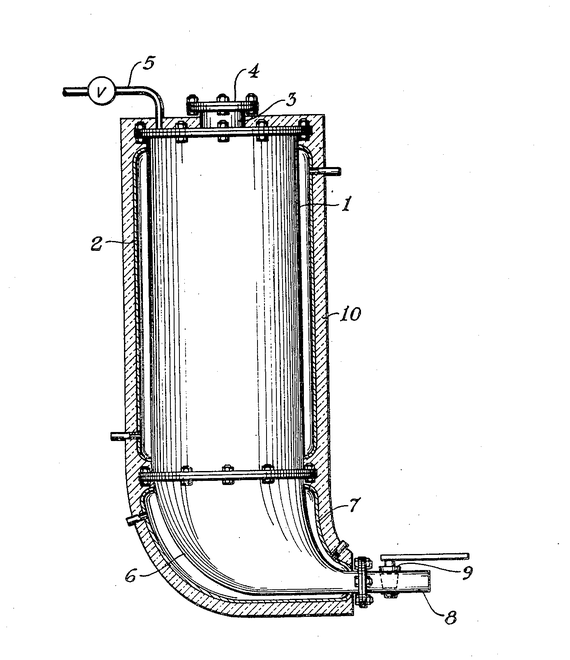
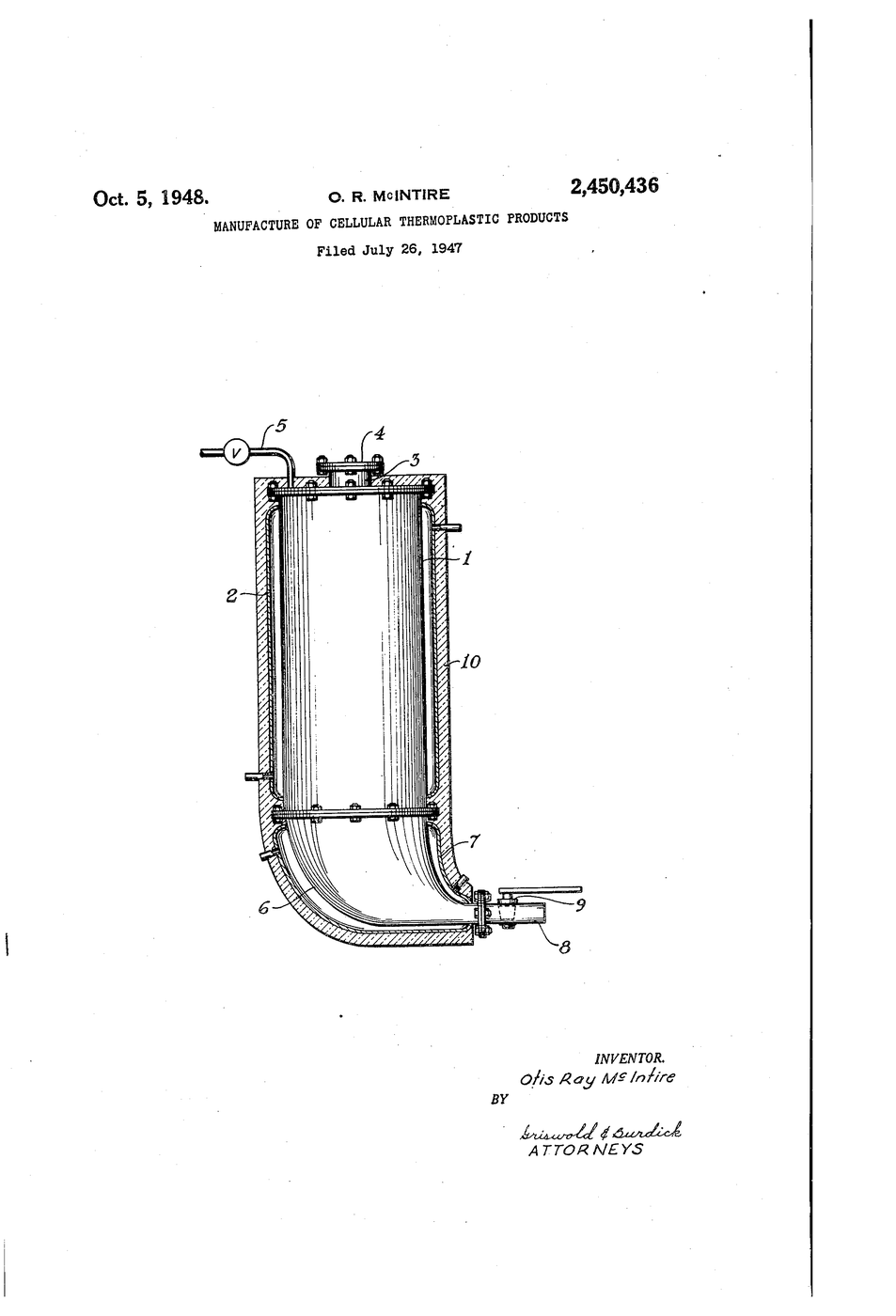
Carl Munters had shown that polystyrene heated with methyl chloride under pressure puffs into a closed-cell foam when let out of the vessel (US 2,023,204) - but only in small pieces; with larger outlets the mass collapsed into brittle, irregular lumps. Otis Ray McIntire at Dow found the fix: keep the mass BELOW the critical temperature of methyl chloride, about 143 °C, so the gas stays dissolved, and let its own evaporation cool the foam fast enough to freeze the cells.
**US 2,450,436**, "Manufacture of cellular thermoplastic products", McIntire, assigned to Dow Chemical, filed 26. July 1947, granted 5. October 1948. Its drawing is the pressure vessel with the bottom valve the foam flows out of. Dow sold the result as blue insulation board; the white bead foam of packaging is a later process.
**Methyl chloride is toxic; you start from foam board.** You build a hot-wire cutter, cut an insulated box, and measure how long it keeps ice.
Iniciante
3 hours plus an ice test
Instruções
1
1
The cutter
The cutter
Base on two feet, a post and an arm; the wire runs from the arm tip down through the base to a spring underneath.
2
2
Build the frame
Build the frame
From 18 mm plywood cut a 300 x 300 mm base, two 300 x 40 mm feet, a 280 x 50 mm post and a 200 x 50 mm arm. Glue and screw the post to the back edge and the arm square on top.
Materiais para este passo:
 Placa de contraplacado1 peça
 Parafusos para madeira10 peças
 Cola de madeira20 ml
Ferramentas necessárias:
 Serrote
 Berbequim sem fios
 Conjunto de chaves de fendas
 Régua de aço
3
3
String the wire
String the wire
Drill 2 mm through the arm tip and the base directly below. Fix the wire to an eye bolt on top of the arm, run it down through the base, and tie it to a spring under the base so it stays taut when it expands hot. Check it is square to the table.
Materiais para este passo:
 Fio de níquel-crómio 80/20 de 0,64 mm1 metro
 Olhal roscado1 peça
 Sortido de molas de compressão1 conjunto
Ferramentas necessárias:
Berbequim sem fios Conjunto de brocas em estojo
4
4
Power it
Power it
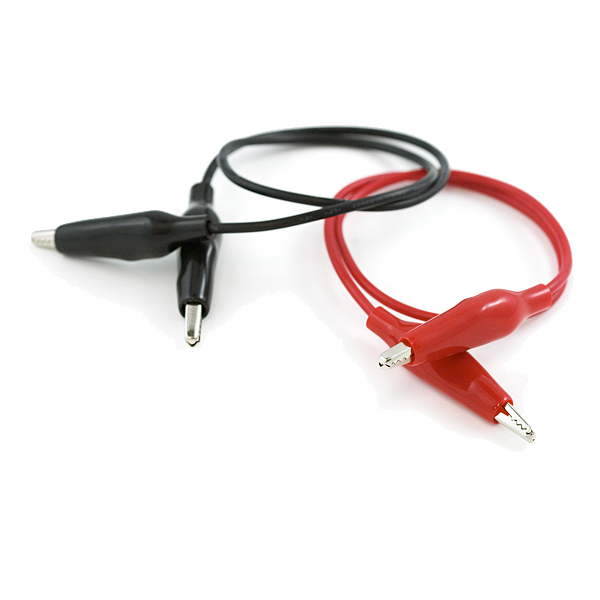
Clip leads to the wire at the arm and below the base. Set the bench supply to 1.5 V with a 4 A limit and raise it slowly (notebook) until the wire slides through a scrap cleanly. Ventilate.
Ferramentas necessárias:
 Fonte de bancada ajustável
 Alligator to Alligator Cables
 Máscara respiratória N95
 Óculos de segurança transparentes
5
5
Cut the box
Cut the box
From 25 mm foam board cut a base and lid 200 x 200 mm, two sides 200 x 150 mm and two 150 x 150 mm. Feed slowly - let the wire do the work. Tape the box together.
Materiais para este passo:
 Placa de espuma de poliestireno extrudido1 folha
 Fita de máscara1 rolo
Ferramentas necessárias:
Régua de aço6
6
Weigh a cube
Weigh a cube
Cut a 50 mm cube from an offcut and weigh it for the notebook.
Ferramentas necessárias:
 Balança digital de cozinha
7
7
The ice test
The ice test
Put 500 g of ice in a bag in the foam box and another 500 g in a cardboard box of the same size, side by side in the same room. Note the room temperature and check both every hour until the ice is gone.
Materiais para este passo:
 Cubos de gelo1000 g
 Caixa de cartão canelado1 peça
Ferramentas necessárias:
Balança digital de cozinha Termómetro de ambiente
8
8
Wire, density, heat leak
Wire, density, heat leak
A carregar o notebook Jupyter…
9
9
History & Context
History & Context
**What the patent specifies:** polystyrene with methyl chloride dissolved under pressure below the gas's critical temperature, released through an outlet so evaporation expands and cools it into uniform closed cells, in blocks 2 inches thick or more. **Modern build (derived):** commercial extruded foam board, today made with other blowing agents.
The patent names its target plainly: blocks big enough to cut into insulating panels for refrigerators. Its limits: it melts at low heat, burns unless treated, dissolves in many solvents (and in some glues and paints), and breaks down in sunlight.
Materiais
10- 1 peçaReferência
- 10 peçasReferência
- 20 mlReferência
- Referência
- 1 peçaReferência
- 1 conjuntoReferência
- Referência
- 1 roloReferência
- 1000 gReferência
- 1 peçaReferência
Ferramentas necessárias
11- Referência
- 1 vendor sell this, none ship to you yetReferência
- Referência
- Referência
- Referência
- Referência
- Alligator to Alligator Cables10% de comissãoR$18.31
- Referência
- Referência
- Referência
- Referência
Ficheiros de design
1Blueprints relacionados
Estes blueprints compartilham conhecimento — técnicas, materiais ou princípios

CC0 Domínio Público
Este blueprint é liberado sob CC0. Você é livre para copiar, modificar, distribuir e usar este trabalho para qualquer finalidade, sem pedir permissão.
Apoie o Maker comprando produtos através do Blueprint, onde ele ganha uma Comissão Maker definida pelos vendedores, ou crie uma nova versão deste Blueprint e inclua-o como conexão no seu próprio Blueprint para compartilhar receita.