ARTE
BELEZA E BEM-ESTAR
ARTESANATO
CULTURA E HISTÓRIA
ENTRETENIMENTO
MEIO AMBIENTE
COMIDA E BEBIDAS
ENGENHARIA REVERSA
CIÊNCIAS
ESPORTES
TECNOLOGIA
TECNOLOGIA VESTÍVEL



Fillet and Butt: Sizing the Weld the Joint Actually Needs
Welds come in two structural families. A **butt** weld replaces the parent section, so a full-penetration butt weld in sound metal is as strong as the plate and needs no sizing at all — it is either full penetration or it is not.
A **fillet** weld adds a triangle of metal in a corner, and it does need sizing, because its strength depends on how big that triangle is.
Almost every beginner sizes fillets by eye and almost every beginner makes them too big. That is worth a number, because a fillet's strength goes with its leg while the metal, the arc time and the distortion go with the leg squared.
Intermediário
3 hours
Instruções
1
1
Leg, throat, and which one carries the load
Leg, throat, and which one carries the load
A fillet weld is quoted by its **leg length** — the distance it runs up each of the two members from the root. That is what you can measure with a gauge on a finished weld, which is why the trade quotes it.
What carries the load is the **throat**: the shortest distance from the root of the joint through the weld to its face. For a normal mitre fillet with equal legs and a flat or slightly concave face, the throat is the leg divided by the square root of two — about 0.707 of it.
A **convex** fillet, piled up proud, has the same throat as a flat one of the same legs. The extra metal on the face adds nothing to the strength and does add a sharp angle at the toes where fatigue cracks start.
A **concave** fillet, hollowed out, has a smaller throat than its legs suggest — so it is weaker than it is measured to be.
Materiais para este passo:
 Chapa grossa de aço macio1 peça
 Cantoneira de aço macio1 peça
Ferramentas necessárias:
 Régua
Régua Lupa de joalheiro
2
2
Sizing it
Sizing it
A carregar o notebook Jupyter…
Ferramentas necessárias:
 Computador de secretária
3
3
Multi-pass: root, fill, cap
Multi-pass: root, fill, cap
A joint too big for one pass is built up in runs, and the runs have different jobs.
**The root run** has one job: fuse the bottom of the joint. It is run with a smaller electrode at a lower current than the rest, because the root is the hardest place to reach and the easiest to blow through.
**The fill runs** put in volume. Bigger rod, more current, and each run must be chipped and wire-brushed before the next goes on top of it — every scrap of slag left behind becomes an inclusion buried in the finished weld.
**The cap** is the last run and the visible one. It should sit slightly proud and blend into the plate at both toes without a step.
Let each run cool to below about 250 C before the next. Piling runs on while the joint is still glowing puts far more total heat into the work than the same welds laid with a pause, and that is distortion you never have to take out.
Materiais para este passo:
Chapa grossa de aço macio2 peças Eletrodo de solda2 pacotes
Ferramentas necessárias:
 Máquina de solda a arco
 Máscara de soldar de escurecimento automático
 Luvas de soldador
 Martelo
 Conjunto de escovas de arame
 Vara de atiçar escória
4
4
Intermittent welding, and when it is not allowed
Intermittent welding, and when it is not allowed
A long fillet often does not need to be continuous. Short lengths of weld with gaps between them carry the same load if the total welded length is right, and they put in far less heat, so a long light frame stays much straighter.
The gaps are not free, though, and there are three cases where intermittent welding is wrong:
**Anything that must be sealed.** Tanks, pressure parts, anything holding liquid or gas. A gap is a leak.
**Anything outdoors or wet.** The unwelded crevice between the parts holds water by capillary action and rusts from the inside out. This is why intermittent welds on exposed steelwork are often specifically banned.
**Anything cycling under load.** Every weld end is a stress raiser, and intermittent welding multiplies the number of ends. In fatigue, a continuous fillet outlasts an intermittent one of the same total length.
Materiais para este passo:
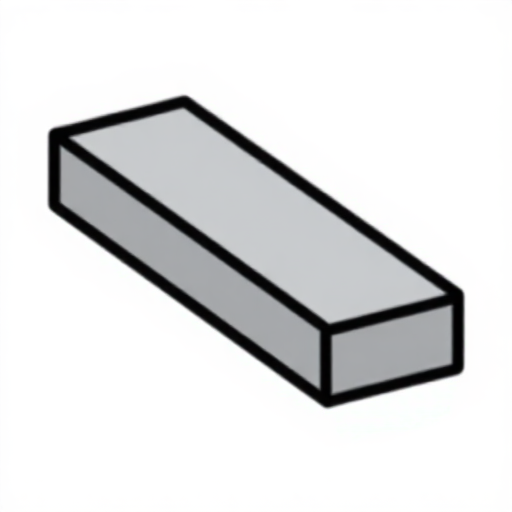 Barra chata de aço macio2 peçasCantoneira de aço macio1 peçaEletrodo de solda1 pacote
Ferramentas necessárias:
Máquina de solda a arcoMáscara de soldar de escurecimento automáticoLuvas de soldadorRégua Bloco de esteatite
Materiais
4- 2 peçasReferência
- 1 peçaReferência
- 2 pacotesReferência
- 2 peçasReferência
Ferramentas necessárias
10- Referência
- Referência
- Referência
- Referência
- Referência
- Referência
- Referência
- Referência
- Referência
Blueprints relacionados
Estes blueprints compartilham conhecimento — técnicas, materiais ou princípios
CC0 Domínio Público
Este blueprint é liberado sob CC0. Você é livre para copiar, modificar, distribuir e usar este trabalho para qualquer finalidade, sem pedir permissão.
Apoie o Maker comprando produtos através do Blueprint, onde ele ganha uma Comissão Maker definida pelos vendedores, ou crie uma nova versão deste Blueprint e inclua-o como conexão no seu próprio Blueprint para compartilhar receita.