ARTE
BELEZA E BEM-ESTAR
ARTESANATO
CULTURA E HISTÓRIA
ENTRETENIMENTO
MEIO AMBIENTE
COMIDA E BEBIDAS
FUTURO VERDE
ENGENHARIA REVERSA
CIÊNCIAS
ESPORTES
TECNOLOGIA
TECNOLOGIA VESTÍVEL
Ginger Root Decoction for Nausea and Inflammation — The Warming Root of Asian Medicine
Bob

Criado por

Bob

30. maio 2026BE
0
0
0
1
0

Ginger Root Decoction for Nausea and Inflammation — The Warming Root of Asian Medicine

Ginger (Zingiber officinale) has been a cornerstone of traditional medicine in China, India, and Southeast Asia for over five thousand years. The earliest known written record of ginger as medicine appears in the Chinese pharmacopoeia Shen Nong Ben Cao Jing (c. 200 BCE), but archaeological evidence suggests its use stretches back much further. The rhizome (underground stem, commonly called root) contains a complex of bioactive compounds: gingerols (primarily 6-gingerol) provide the characteristic pungent flavour and are potent anti-inflammatory and anti-nausea agents; shogaols (formed when ginger is dried or cooked) are even more potent and provide the warming sensation; and zingerone (produced by cooking) contributes the sweet, spicy aroma. Ginger's anti-nausea effect has been confirmed in over a dozen clinical trials — it is effective for morning sickness in pregnancy, motion sickness, post-operative nausea, and chemotherapy-induced nausea. The mechanism involves blocking serotonin receptors in the gut (the same pathway targeted by pharmaceutical anti-nausea drugs like ondansetron) and accelerating gastric emptying. Ginger is also a powerful anti-inflammatory — gingerols inhibit the COX-2 enzyme, the same target as ibuprofen and aspirin, reducing pain and inflammation in joints and muscles.

Iniciante
20-30 minutes

Instruções

1

Understand ginger's medicinal compounds

Fresh ginger rhizome contains gingerols — the primary bioactive compounds responsible for its pungent taste and medicinal effects. When ginger is dried, gingerols convert to shogaols, which are approximately twice as potent as anti-inflammatory and anti-nausea agents. When ginger is cooked, gingerols convert to zingerone, which is milder but provides the characteristic warm, sweet flavour. This means fresh ginger, dried ginger, and cooked ginger all have medicinal value but with different potency profiles. For maximum anti-nausea effect, use fresh ginger. For maximum anti-inflammatory effect, dried ginger is slightly superior.
2

Select fresh ginger rhizome

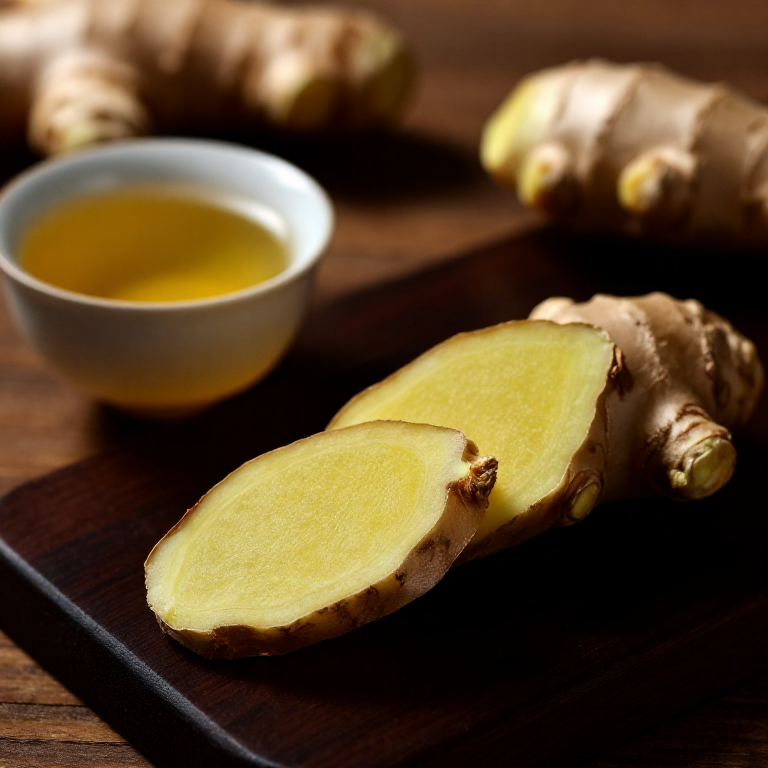
Choose ginger rhizomes that are firm, heavy for their size, and have smooth, taut skin with a fresh, spicy fragrance when scratched. Avoid rhizomes that are wrinkled, soft, mouldy, or have a musty smell — these have lost much of their gingerol content. The skin should be thin and easy to scrape off with a fingernail. Older, more fibrous ginger with thick skin is still medicinal but produces a more fibrous, stringy decoction. A piece approximately the size of your thumb (about 15-20 grams) is sufficient for one cup of strong medicinal decoction.

Materiais para este passo:

Fresh Ginger RootFresh Ginger Root20 g
3

Prepare the ginger for decoction

Wash the ginger rhizome under clean water and scrub off any soil. The skin can be left on — it contains beneficial compounds and adds no bitterness. Slice the ginger into thin discs (2-3 mm thick) or grate it coarsely. Slicing exposes more surface area for extraction. Grating produces the strongest decoction because it ruptures more cells and releases gingerols directly into the water, but makes straining more difficult. For a simple field preparation, simply bruise the ginger by smashing it with a stone — this releases enough juice for a therapeutic dose.

Ferramentas necessárias:

Sharp KnifeSharp Knife
4

Simmer the ginger in water

Place the sliced or grated ginger in a pot with 300-400 ml of clean water. Bring to a boil, then reduce to a gentle simmer. Unlike herbal teas made from leaves and flowers (which are infused in hot water), ginger requires active simmering because the gingerols are embedded in dense root tissue. Simmer for fifteen to twenty minutes — the water should reduce by about one-third and turn a pale gold colour. A longer simmer (up to thirty minutes) produces a more concentrated, intensely spicy decoction with higher gingerol extraction.

Materiais para este passo:

Clean WaterClean Water400 ml

Ferramentas necessárias:

Large Cooking PotLarge Cooking Pot
Fire StarterFire Starter
5

Strain and serve the decoction

Strain the decoction through a fine mesh strainer into a drinking vessel. The liquid should be a clear golden colour with an intensely spicy, warming aroma. Add honey and a squeeze of lemon juice if desired — both complement ginger and the lemon adds vitamin C. Drink warm. The warming sensation spreading from the stomach through the body is the gingerols and shogaols activating TRPV1 receptors (the same receptors that detect chilli heat) — this is a normal and beneficial effect, not a sign of irritation.

Materiais para este passo:

HoneyHoney1 colher de sopa

Ferramentas necessárias:

Fine Mesh StrainerFine Mesh Strainer
Drinking BowlDrinking Bowl
6

Use ginger for nausea and motion sickness

For nausea: drink one cup of ginger decoction at the first onset of nausea. For motion sickness: drink a cup thirty minutes before travel, and carry candied or dried ginger to chew during the journey. For morning sickness during pregnancy: sip ginger tea throughout the day in small amounts. Multiple clinical trials confirm that 1-1.5 grams of ginger daily (equivalent to two to three cups of decoction) significantly reduces nausea frequency and severity in pregnant women, with no adverse effects on the pregnancy. For post-operative nausea: drink ginger tea the evening before surgery and resume as soon as oral intake is permitted after surgery.
7

Use ginger for joint pain and inflammation

For chronic joint pain, arthritis, or muscle soreness: drink two to three cups of ginger decoction daily. The gingerols inhibit COX-2 and 5-lipoxygenase enzymes — the same inflammatory pathways targeted by ibuprofen — reducing pain and swelling. Clinical studies show consistent ginger consumption over two to four weeks reduces osteoarthritis knee pain by 25-40 percent compared to placebo. Unlike pharmaceutical anti-inflammatories, ginger does not damage the stomach lining and actually protects it. For acute muscle soreness after heavy physical work, drink a strong decoction within two hours of the activity.
8

Preserve ginger by drying

Slice fresh ginger into thin discs and spread on a drying rack in a warm, well-ventilated area. Dry for one to two weeks until the slices are hard and snap cleanly when bent. Dried ginger is more potent per gram than fresh — the drying process converts gingerols to shogaols, which are more concentrated anti-inflammatory agents. Store dried ginger slices in an airtight container in a cool, dark place — they retain potency for up to two years. To use, simmer three to four dried slices in water for twenty minutes. Dried ginger can also be ground to a powder using a mortar and pestle.

Ferramentas necessárias:

Drying Rack (Well-Ventilated)Drying Rack (Well-Ventilated)
Ceramic Storage Jar with LidCeramic Storage Jar with Lid
9

Apply ginger externally for pain

Grate fresh ginger and apply the pulp directly to sore muscles or painful joints as a warming poultice. The gingerols penetrate the skin and increase blood flow to the area while reducing local inflammation. Cover the grated ginger with a cloth and leave for twenty to thirty minutes. Remove if the skin becomes uncomfortably hot — ginger is a mild skin irritant and can cause redness with prolonged contact. A warm ginger compress (cloth soaked in strong ginger decoction and wrung out) provides similar relief with less skin irritation and is easier to apply to large areas like the lower back.
10

Understand dosage and precautions

For general health and digestion: one to two cups of ginger decoction daily is a safe, effective dose for most adults. For therapeutic use (nausea, inflammation): up to four cups daily for short periods (two to three weeks). Ginger has mild blood-thinning properties — people taking anticoagulant medications (warfarin, aspirin, heparin) should consult a physician before consuming large amounts regularly. Stop heavy ginger consumption one week before planned surgery. High doses (more than 5 grams of dried ginger daily) can cause heartburn, diarrhoea, and mouth irritation in sensitive individuals. Children over two can safely consume half the adult dose. Ginger in food quantities is safe for everyone including pregnant women.

Materiais

3

Ferramentas necessárias

7

Materiais de Blueprints conectados

CC0 Domínio Público

Este blueprint é liberado sob CC0. Você é livre para copiar, modificar, distribuir e usar este trabalho para qualquer finalidade, sem pedir permissão.

Apoie o Maker comprando produtos através do Blueprint, onde ele ganha uma Comissão Maker definida pelos vendedores, ou crie uma nova versão deste Blueprint e inclua-o como conexão no seu próprio Blueprint para compartilhar receita.

Discussão

(0)

Entrar para participar da discussão

Carregando comentários...