Colaboração
ARTE
BELEZA E BEM-ESTAR
ARTESANATO
CULTURA E HISTÓRIA
ENTRETENIMENTO
MEIO AMBIENTE
COMIDA E BEBIDAS
ENGENHARIA REVERSA
CIÊNCIAS
ESPORTES
TECNOLOGIA
TECNOLOGIA VESTÍVEL
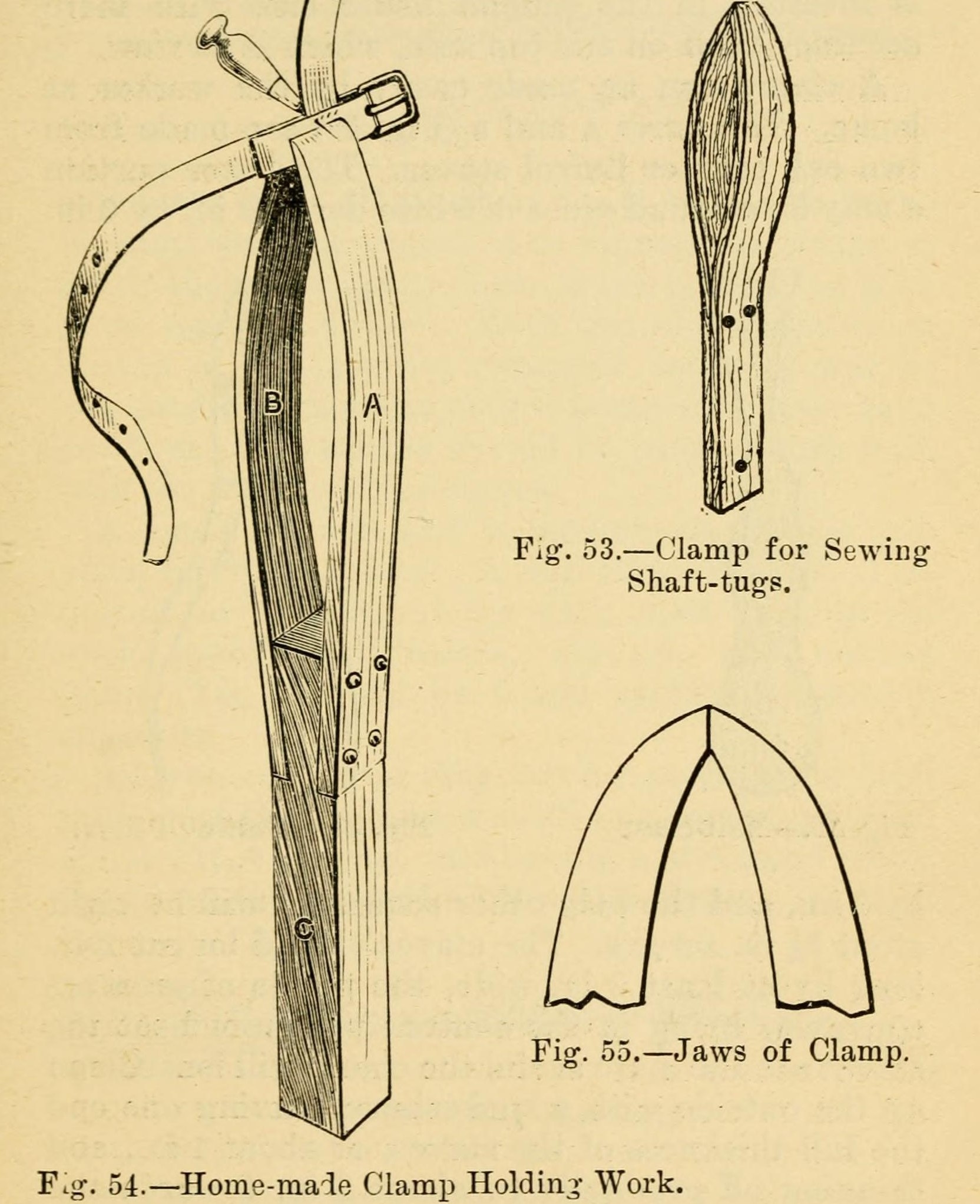


Saddler's Stitching Clamp from Two Oak Barrel Staves Screwed to a Deal Tenon (Hasluck, Harness Making, 1904)
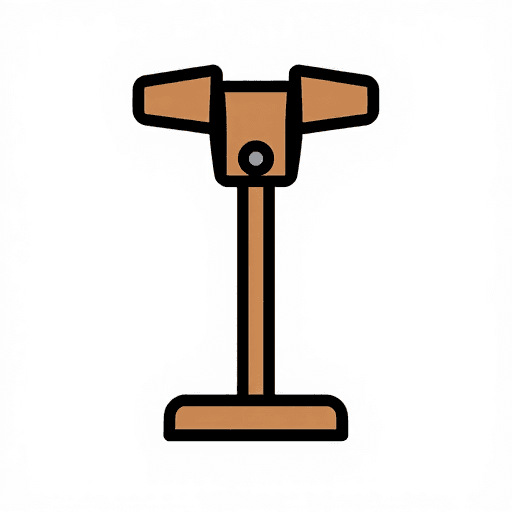
The home-made saddler's clamp, or pair of clams, from Hasluck's Harness Making (1904): two curved oak barrel staves, thinned to springy jaws, screwed hard onto a dovetail-shaped tenon on a 20 x 3 x 3 in. deal post so the jaw tips grip the leather while both hands sew.
Iniciante
An afternoon
Instruções
1
1
His sizes
His sizes
A carregar o notebook Jupyter…
2
2
Read Hasluck
Read Hasluck
"A clamp can be made easily by the worker at home."
3
3
Cut the staves
Cut the staves
Cut two oak cask or barrel staves 2 ft (610 mm) long and at least 3 in. (76 mm) wide, with the greatest bend in the middle. The more bent the staves, the more useful the clamp.
Materiais para este passo:
 Aduela de barril2 peças
Ferramentas necessárias:
 Serrote
4
4
Shape the jaws
Shape the jaws
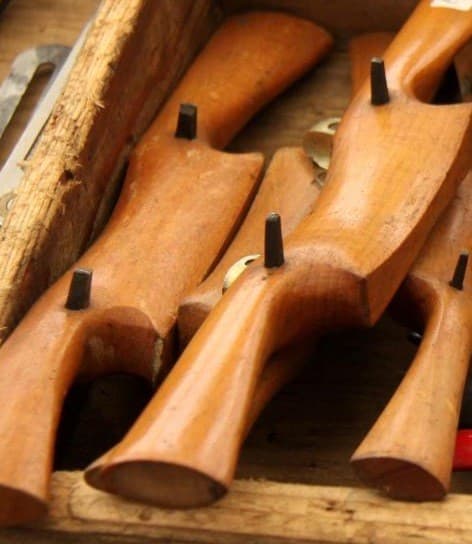
Clean up the outside with a spokeshave. Leave one end the full stave thickness (about 1 in., 25 mm) and thin gradually to about 3/4 in. (19 mm) toward the other end, which forms the jaw (his fig. 55). Round the outer corners, plane the inside flat and smooth both sides with glass-paper.
Materiais para este passo:
 Lixa1 peça
Ferramentas necessárias:
 Plaina de raspar curvas
5
5
Cut the tenon
Cut the tenon
Take a sound piece of white deal 20 x 3 x 3 in. (510 x 76 x 76 mm) for the post C. Cut a dovetail-shaped tenon at least 6 in. (150 mm) long on its upper end. Fit the depth of the shoulders and the width at the top to the curve of your staves: the aim is for the jaw tips to press tightly together once the staves are home.
Materiais para este passo:
 Ripa de madeira macia1 peça
Ferramentas necessárias:
 Serrote de costas
 Conjunto de formões para madeira
6
6
Screw the staves on
Screw the staves on
Lay the thick ends of the staves against the two sides of the tenon and fix them with eight stout 2 1/4 in. (57 mm) screws (ours: four through each stave, as his fig. 54 shows). The tenon should be cut so that hard screwing is needed to bring the staves home. Countersink the screws flush with the stave faces.
Materiais para este passo:
 Parafusos para madeira8 peças
Ferramentas necessárias:
 Arco de pua e broca
 Conjunto de brocas de escarear
 Chave de fendas
7
7
Troubleshooting
Troubleshooting
Clamp troubleshooting.
Flow
Loading...
8
8
History and honest limits
History and honest limits
From Paul N. Hasluck (ed.), **Harness Making** (Cassell, 1904), pp. 24-27 and figs. 52-55 (checked on the archive.org scan harnessmaking00hasl). The saddler sits with it between the knees, slanting against the left knee, the right leg thrown over it, so it does not yield under the awl. He gives no screw spacing; the four-per-stave layout, metric figures and tools are ours.
Materiais
4- 2 peçasReferência
- 1 peçaReferência
- 1 peçaReferência
- 8 peçasReferência
Ferramentas necessárias
7- Referência
- Referência
- Referência
- Referência
- Referência
- Referência
- Referência
Este projeto faz
Blueprints relacionados
Estes blueprints compartilham conhecimento — técnicas, materiais ou princípios

CC0 Domínio Público
Este blueprint é liberado sob CC0. Você é livre para copiar, modificar, distribuir e usar este trabalho para qualquer finalidade, sem pedir permissão.
Apoie o Maker comprando produtos através do Blueprint, onde ele ganha uma Comissão Maker definida pelos vendedores, ou crie uma nova versão deste Blueprint e inclua-o como conexão no seu próprio Blueprint para compartilhar receita.