Colaboração
ARTE
BELEZA E BEM-ESTAR
ARTESANATO
CULTURA E HISTÓRIA
ENTRETENIMENTO
MEIO AMBIENTE
COMIDA E BEBIDAS
ENGENHARIA REVERSA
CIÊNCIAS
ESPORTES
TECNOLOGIA
TECNOLOGIA VESTÍVEL
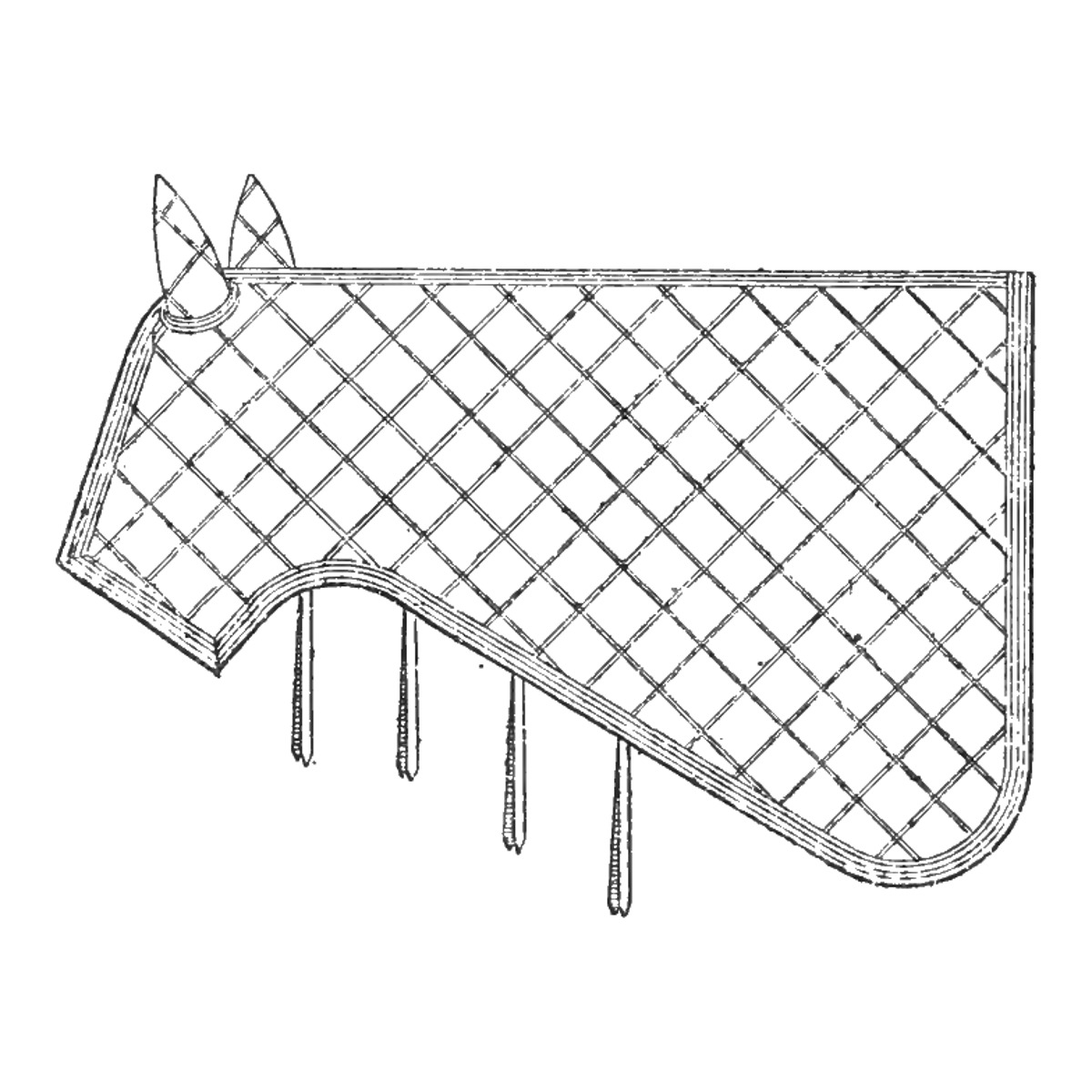


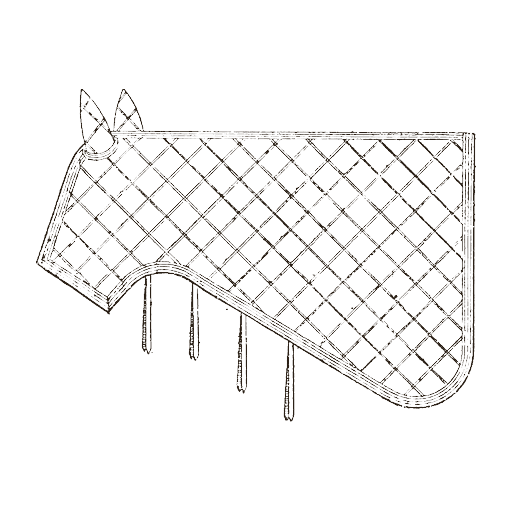
Horse Hood: Two-Piece Cloth Hood With Ear Covers, Bound Edges and Jaw Strap (Hasluck, Saddlery, 1904)
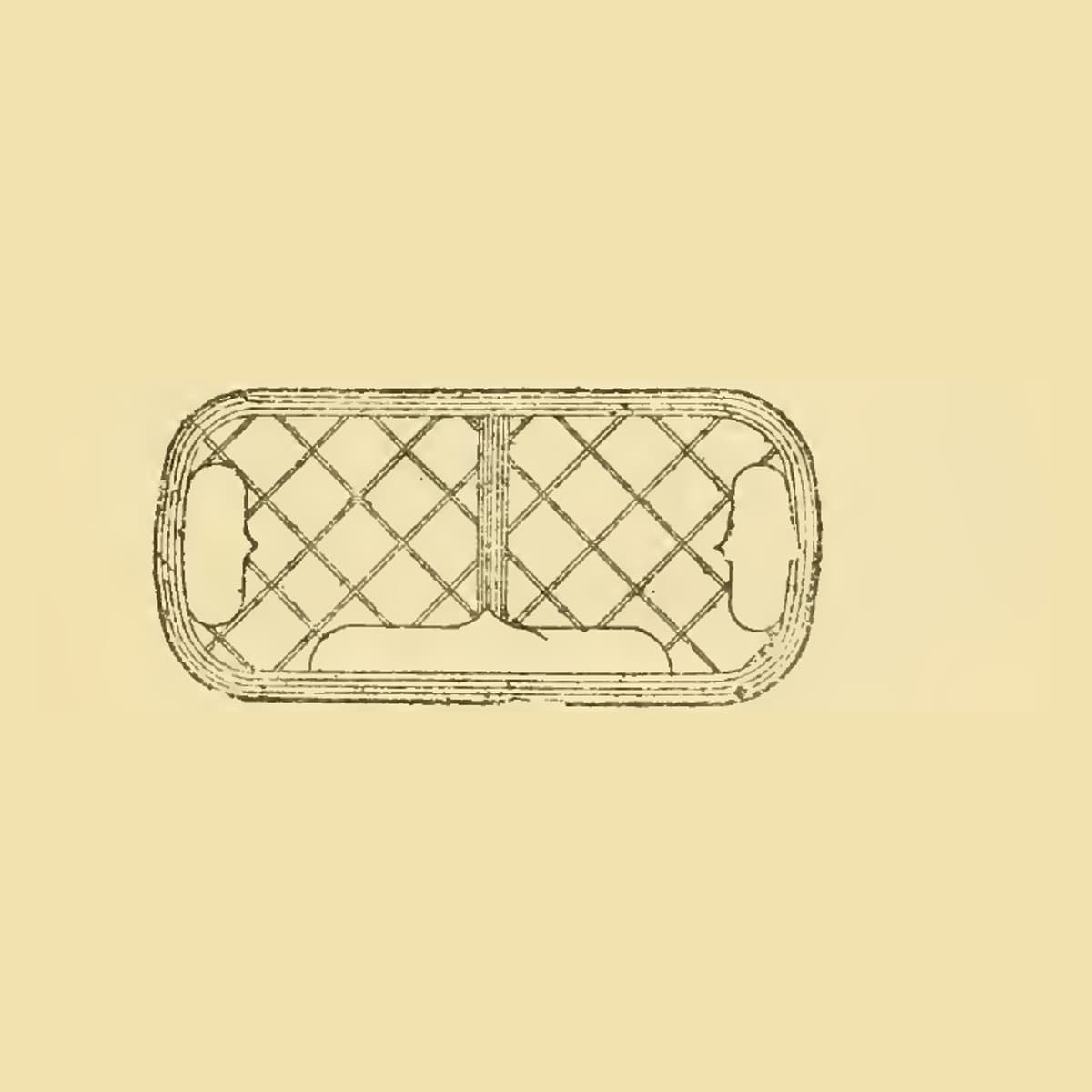
The hood completes a horse's stable suit of sheet, breast cloth and pad cloth, covering the head and neck. This is the hood from Paul N. Hasluck's Saddlery (1904): two pieces of cloth cut to the horse from about 5-1/4 in below the eye back to the shoulder, with ear covers and eye holes, bound all round and fastened under the jaw. It is cut to fit each horse, so he gives few sizes.
Intermediário
About 1 day
Instruções
1
1
His sizes in centimetres
His sizes in centimetres
A carregar o notebook Jupyter…
2
2
Read Saddlery, ch. IX
Read Saddlery, ch. IX
"A hood is needed to complete the suit. A suitable shape is shown by Fig. 29. The hood must be cut to the shape of the horse's neck and head, from a point about 5-1/4 in. below the eye on the nose, then along the ridge of the head and neck to the shoulder, where it should cover the front of the sheet well."
3
3
Cut the two sides
Cut the two sides
Cut the hood in two pieces, one for each side (he says sometimes four, with pieces added to the side flaps for size), shaped to the horse from about 5-1/4 in below the eye on the nose, along the ridge of the head and neck to the shoulder, covering the front of the sheet well. Under the neck, cut all round the throat and down under the head so the two sides meet exactly in the centre. Making a paper pattern on the horse first is our suggestion.
Materiais para este passo:
 Pano de lã acabado de tecer1 peça
Ferramentas necessárias:
 Papel pardo
 Lápis
 Tesoura
 Fita métrica
4
4
Cut the ear and eye holes
Cut the ear and eye holes
Cut the holes for the ears, and two holes right opposite the eyes. Put the front cut of the cloth opposite the front of the ear.
Ferramentas necessárias:
TesouraLápis5
5
Make the ear covers
Make the ear covers
Make a cover for each ear: the front part about 1 in larger than the face of the ear all round, the back part large enough to pass round the back of the ear and let it go in easily. Whip the edges together and stitch round the hole at the bottom, all the stitches on the outside.
Materiais para este passo:
Pano de lã acabado de tecer1 peça Fio de linho1 peça
 Cera de abelha1 peça
Ferramentas necessárias:
Tesoura Duas agulhas de correeiro
6
6
Join the sides
Join the sides
Whip the edges together level along the top of the neck and over the head, down the front of the face. Join any other piece the same way, and always bind the joint, stitching on both sides.
Materiais para este passo:
Fio de linho1 peçaCera de abelha1 peçaFerramentas necessárias:
Duas agulhas de correeiro7
7
Bind the edges
Bind the edges
Cut the binding cloth 1-1/4 in wide (cloth, patent or Newmarket binding) and turn it round the edges just enough to catch the first row of stitching, about 1/4 in from the edge. Draw it as flat as possible and stitch another row along the inner edge. Where it puckers too much at a sharp turn, as at the throat, cut the puckers out and stitch edge to edge. Put a strip along the joint on the top of the neck, its ends under the binding, then flat strips 1/2 in wide along the side joints and the points of the ear pieces, and round the bottom to cover the ends and the joint. He notes this work can be done by machine.
Materiais para este passo:
Pano de lã acabado de tecer1 peçaFio de linho1 peçaCera de abelha1 peçaFerramentas necessárias:
TesouraDuas agulhas de correeiroFita métrica8
8
Fit the jaw strap and strings
Fit the jaw strap and strings
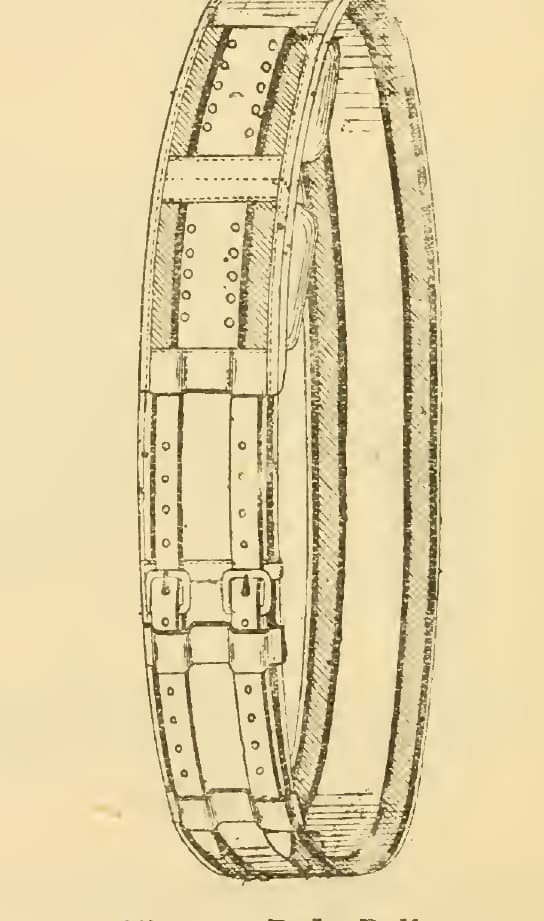
Fasten the hood under the jaw with a small strap and buckle. Run cadez strings (ties) from this point to about half-way down the neck on each side, to tie together.
Materiais para este passo:
 Couro para arreios1 peça
 Fivela de ferro com fuzilhão1 peça
 Fio de algodão para cozinha1 peçaFio de linho1 peçaCera de abelha1 peça
Ferramentas necessárias:
 Faca para couro
 SovelaDuas agulhas de correeiro
9
9
Troubleshooting
Troubleshooting
Horse hood troubleshooting.
Flow
Loading...
10
10
History and honest limits
History and honest limits
From **Saddlery**, edited by Paul N. Hasluck, David McKay, 1904 (archive.org saddlery00hasl), chapter IX, "Horse Clothing", hood, pp. 70-74, Fig. 29; every fraction was read on the scan. He gives no overall sizes: the hood is cut to the horse. He does not say what cadez strings are made of; cotton string is our choice. The sheets and breast cloth of the suit are not made here. Kersey, the paper pattern, tools and metric figures are ours.
Materiais
6- 3 peçasReferência
- 4 peçasReferência
- 4 peçasReferência
- 1 peçaReferência
- Referência
- Referência
Este projeto faz
Blueprints relacionados
Estes blueprints compartilham conhecimento — técnicas, materiais ou princípios
CC0 Domínio Público
Este blueprint é liberado sob CC0. Você é livre para copiar, modificar, distribuir e usar este trabalho para qualquer finalidade, sem pedir permissão.
Apoie o Maker comprando produtos através do Blueprint, onde ele ganha uma Comissão Maker definida pelos vendedores, ou crie uma nova versão deste Blueprint e inclua-o como conexão no seu próprio Blueprint para compartilhar receita.