Colaboração
ARTE
BELEZA E BEM-ESTAR
ARTESANATO
CULTURA E HISTÓRIA
ENTRETENIMENTO
MEIO AMBIENTE
COMIDA E BEBIDAS
ENGENHARIA REVERSA
CIÊNCIAS
ESPORTES
TECNOLOGIA
TECNOLOGIA VESTÍVEL
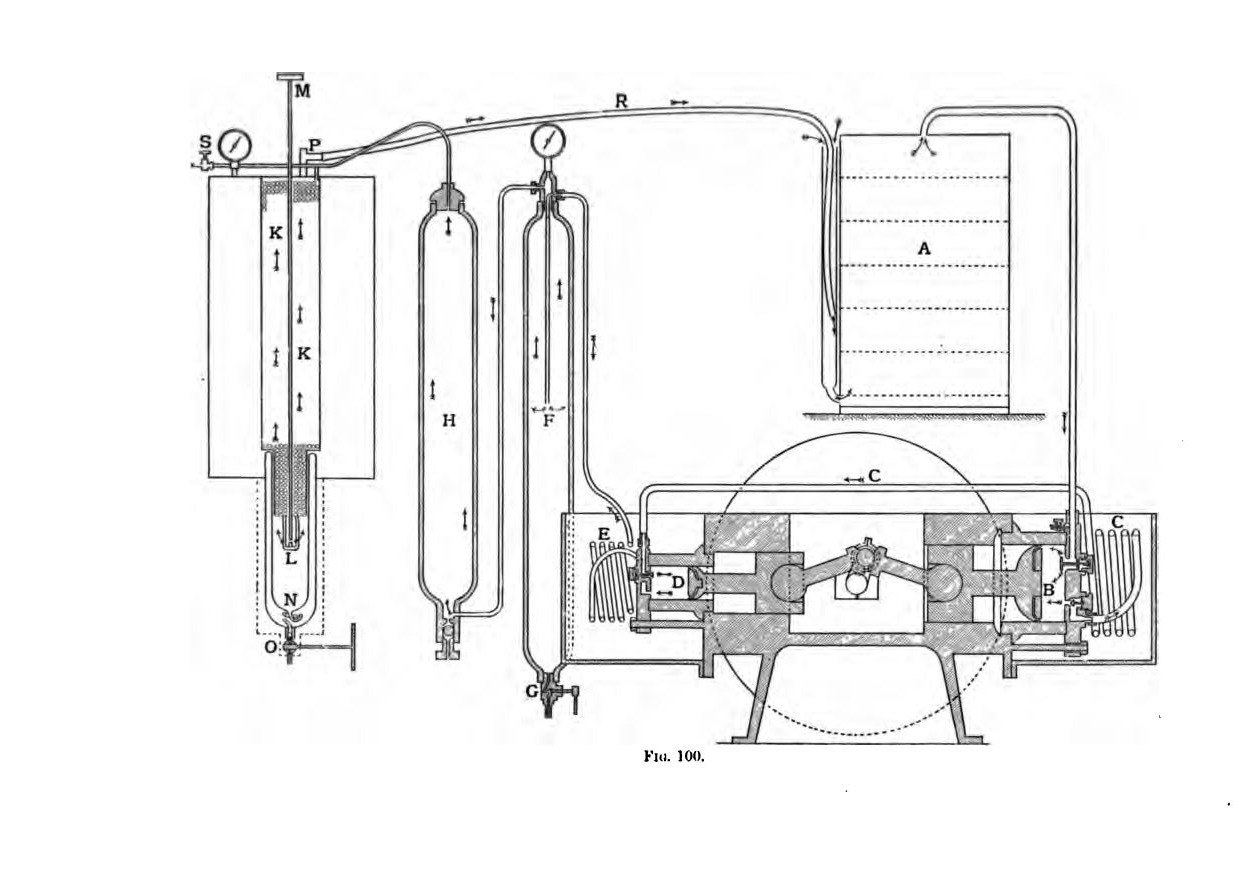


Liquid Air: Air Compressed to 170 Atmospheres and Expanded through the Hampson Liquefier (Travers 1901)
Air freed of carbon dioxide and water is pumped to about 170 atmospheres and let out through a fine valve at the foot of long copper coils. The expanding air cools a little and flows back over the coils, cooling the air coming down, until some of it turns liquid and drips into a vacuum vessel.
Result: liquid air, about 1-1.5 litres an hour, the first after about four minutes.
Source: M. W. Travers, The Experimental Study of Gases (1901), pp. 190-194, Fig. 100 (shown above). High pressure and liquid air: Travers warns that a sudden fault can cause a serious accident.
Avançado
1 day
Instruções
1
1
Draw air through slaked lime
Draw air through slaked lime
Draw the air into the compressor through a cylinder of moist slaked lime spread on trays.
Materiais para este passo:
 Ar atmosférico - Terra1 as required
Ferramentas necessárias:
 Hidróxido de cálcio (cal apagada)
2
2
Compress in two stages
Compress in two stages
Compress in two stages to 160-180 atmospheres (the first to about 16), each stage followed by a copper coil in running water and then a water separator. A little water goes in with the air to lubricate; blow it off from the separator now and then. Travers' compressor was driven by a 5 horse-power electric motor.
Ferramentas necessárias:
 Compressor de gás
 Motor elétrico
 Água
 Manómetro
3
3
Dry over caustic potash
Dry over caustic potash
Pass the air through a cylinder of lumps of caustic potash to take out the water vapour and the last carbon dioxide. Run off the little water that collects after some weeks.
Ferramentas necessárias:
 Hidróxido de potássio
4
4
Liquefy
Liquefy
Lead the dry air into the Hampson liquefier, its lower end and valve inside a vacuum vessel. Start the motor, blow a little air through, close the valve and let the pressure rise to 170 atmospheres. Open the valve and keep the flow steady by the glycerol gauge on the exit (about 10 cm of glycerol with an exit rubber tube 80 cm long and 2 cm across). Liquid air appears in about four minutes; about 5 % of the air liquefies.
Ferramentas necessárias:
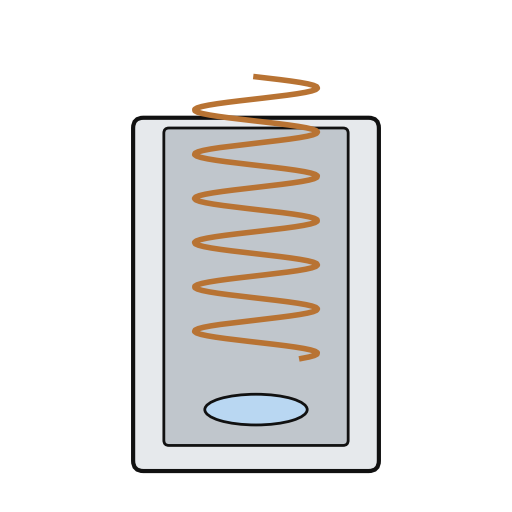 Liquefator de ar Hampson
 Vaso de vácuo (Dewar)
 Tubo de borracha
 GlicerolManómetro
5
5
Draw it off, watch the machine
Draw it off, watch the machine
Run off the liquid air through the tap from time to time, about 1-1.5 litres an hour. Watch the machinery the whole time.
Ferramentas necessárias:
Vaso de vácuo (Dewar)Materiais
1- 1 as requiredReferência
Ferramentas necessárias
10- Referência
- Referência
- Referência
- Referência
- Referência
- Referência
- Referência
- Referência
- Referência
- Referência
Este projeto faz
CC0 Domínio Público
Este blueprint é liberado sob CC0. Você é livre para copiar, modificar, distribuir e usar este trabalho para qualquer finalidade, sem pedir permissão.
Apoie o Maker comprando produtos através do Blueprint, onde ele ganha uma Comissão Maker definida pelos vendedores, ou crie uma nova versão deste Blueprint e inclua-o como conexão no seu próprio Blueprint para compartilhar receita.