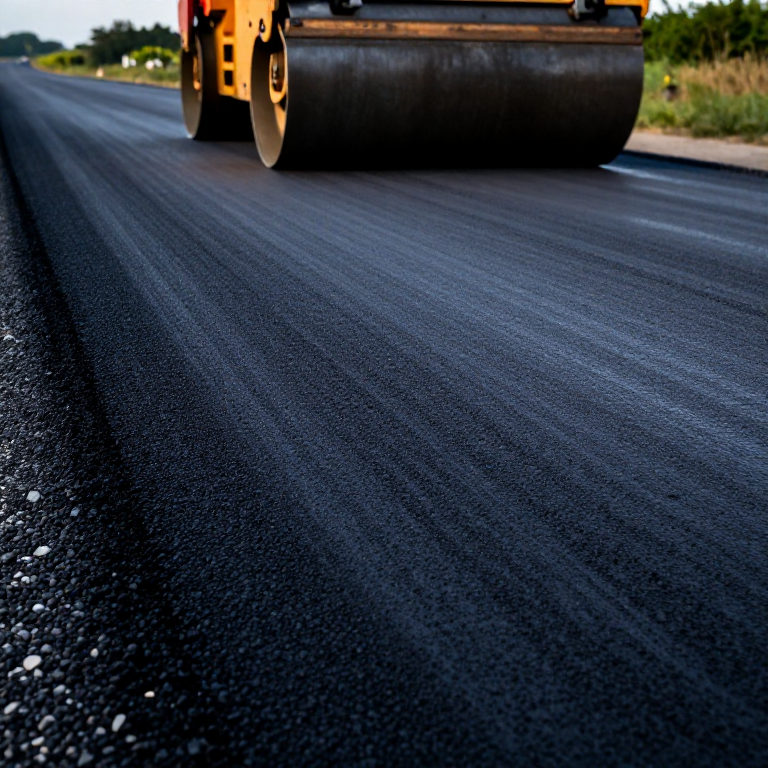


Building a Macadam Road — Cheap, Dry Highways from Small Broken Stone
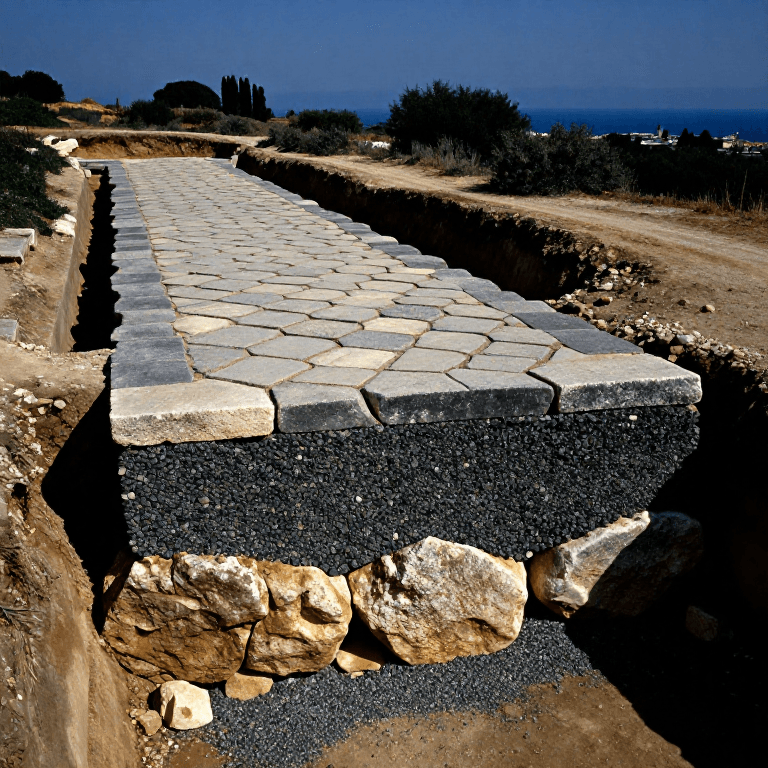
The Romans built superb roads by piling up massive stone foundations, but their method was slow and ruinously expensive. In the 1820s the Scottish surveyor John McAdam threw the foundation away. He realised that a road does not need a heavy base if the soil beneath it is kept dry — and that a surface of small, angular broken stones will lock together under traffic into a hard, smooth crust.
His rules were simple and strict: break every stone small and to a uniform size, raise the road in the middle so water runs off, and keep the subsoil drained. Done right, the stones knit together, the rain sheds away, and the dry ground carries the load. Macadam roads were a fraction of the cost of the old highways and could be built almost anywhere, and they spread across the world.
The method still underlies modern roads. When stone dust alone no longer stood up to fast rubber tyres and their dust, engineers bound the broken stone with tar — tarmacadam, soon shortened to tarmac — and from there to the asphalt that paves the planet. It all begins with small stones and good drainage.
Instruções
Understand the McAdam idea
Understand the McAdam idea
Set out and drain the bed
Set out and drain the bed
Ferramentas necessárias:
 Pá
PáBreak the stone small
Break the stone small
Materiais para este passo:
 Pedra britada500 kg
Ferramentas necessárias:
 Martelo de pedra (britagem de minério)
Gauge the stone size
Gauge the stone size
Ferramentas necessárias:
 Anel calibrador
Lay the first layer
Lay the first layer
Ferramentas necessárias:
 Ancinho de ferro
Compact the layer
Compact the layer
Ferramentas necessárias:
 Cilindro compressor
Build up in thin layers
Build up in thin layers
Materiais para este passo:
Pedra britada500 kgHold the camber
Hold the camber
Bind with stone dust
Bind with stone dust
Materiais para este passo:
 Pó de pedra80 kg
Open to traffic
Open to traffic
Maintain with small stone
Maintain with small stone
Toward tarmacadam
Toward tarmacadam
Materiais
2- 500 kgReferência
- 80 kgReferência
Ferramentas necessárias
5- Referência
- Referência
- Referência
- Referência
- Referência
Blueprints relacionados
Estes blueprints compartilham conhecimento — técnicas, materiais ou princípios

CC0 Domínio Público
Este blueprint é liberado sob CC0. Você é livre para copiar, modificar, distribuir e usar este trabalho para qualquer finalidade, sem pedir permissão.
Apoie o Maker comprando produtos através do Blueprint, onde ele ganha uma Comissão Maker definida pelos vendedores, ou crie uma nova versão deste Blueprint e inclua-o como conexão no seu próprio Blueprint para compartilhar receita.