
Making Tallow Dipped Candles — The Poor Man's Light for Two Thousand Years
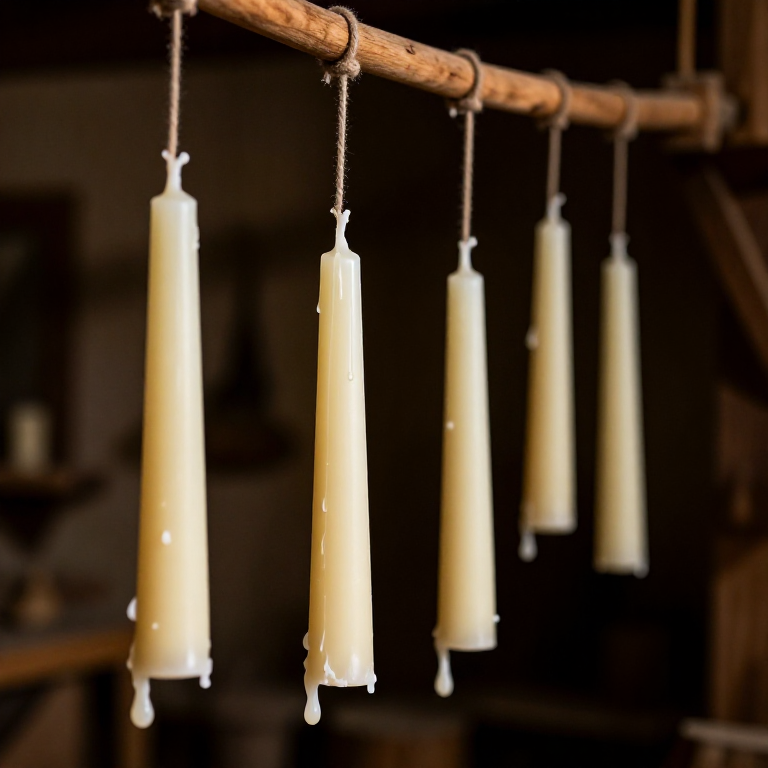
For most of human history, artificial light meant burning animal fat. Beeswax candles existed but were expensive — reserved for churches and the wealthy. The vast majority of people lit their homes with tallow candles: rendered beef or mutton fat moulded or dipped around a wick. Tallow candles smoke, smell of burning fat, and burn half as long as beeswax — but they cost almost nothing to make from kitchen waste.
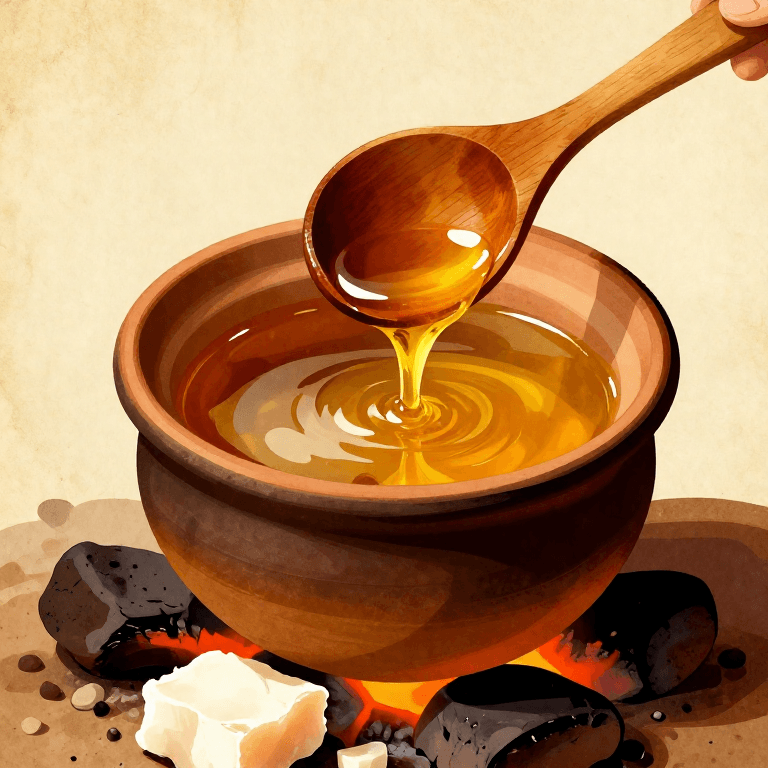
The dipping method is the oldest candle-making technique. A wick is repeatedly lowered into a pot of melted tallow and lifted out to cool, building up layers of fat around the wick with each dip. Twenty to thirty dips produce a candle thick enough to burn for several hours. A chandler (professional candle maker) would dip dozens of wicks on a frame simultaneously, producing hundreds of candles per day.
Tallow dipping requires no special equipment — only rendered fat, twisted fibre for wicks, and a pot deep enough to submerge the candle length. This is one of the most accessible crafts in human history.
Instruções
Render the tallow
Render the tallow
Materiais para este passo:
 Gordura animal (sebo)1 kg
Strain and clarify
Strain and clarify
Prepare the wicks
Prepare the wicks
Materiais para este passo:
 Cordel de algodão2 m
Set up the dipping station
Set up the dipping station
Dip the candles
Dip the candles
Build up to full thickness
Build up to full thickness
Trim and finish
Trim and finish
Materiais
2- Referência
- Referência
Materiais de Blueprints conectados

Blueprints relacionados
Estes blueprints compartilham conhecimento — técnicas, materiais ou princípios


CC0 Domínio Público
Este blueprint é liberado sob CC0. Você é livre para copiar, modificar, distribuir e usar este trabalho para qualquer finalidade, sem pedir permissão.
Apoie o Maker comprando produtos através do Blueprint, onde ele ganha uma Comissão Maker definida pelos vendedores, ou crie uma nova versão deste Blueprint e inclua-o como conexão no seu próprio Blueprint para compartilhar receita.