Colaboração
ARTE
BELEZA E BEM-ESTAR
ARTESANATO
CULTURA E HISTÓRIA
ENTRETENIMENTO
MEIO AMBIENTE
COMIDA E BEBIDAS
ENGENHARIA REVERSA
CIÊNCIAS
ESPORTES
TECNOLOGIA
TECNOLOGIA VESTÍVEL

Wound Remedies of the Missouri River Tribes: Puffball Styptic, Chewed Hop Root and Four-o'clock, Butterfly Weed, Prickly Pear Dressing, Aniseroot Poultice (Gilmore, 1919)
Wound remedies Melvin Gilmore recorded on the Missouri: puffballs kept to stop bleeding (Dakota, Pawnee, Ponca, Omaha), the chewed deep root of wild hops, four-o'clock root chewed and blown into wounds (Ponca), red false mallow salve (Dakota), peeled prickly pear stems bound on as a dressing, an aniseroot poultice (Winnebago) and the Omaha Shell Society's butterfly weed root. Recorded use, not medical advice.
Iniciante
An hour
Instruções
1
1
Read Gilmore
Read Gilmore
Wound remedies from Gilmore's list of plants, credited to the tribes he names. Recorded use, not medical advice: deep, dirty or bleeding wounds need a doctor and a tetanus check (ours).
2
2
Puffball to stop bleeding
Puffball to stop bleeding
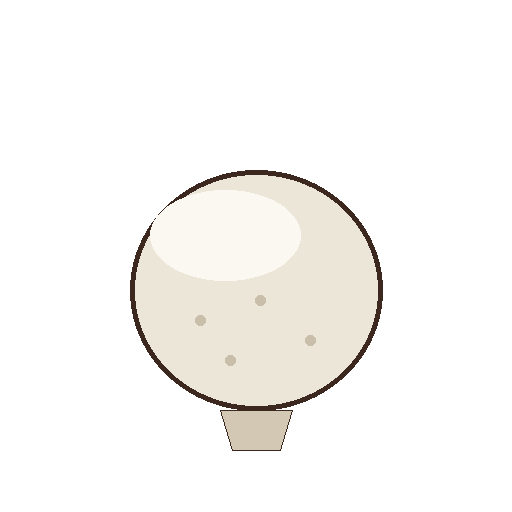
Gather prairie puffballs and keep them dry; they were used "as a styptic for any wounds" by the Dakota, Ponca and Omaha. The Pawnee name, "old", is for the ripe stage used as a styptic. They were also put on the navel of newborn babies (history only, ours: never on a baby's navel).
Materiais para este passo:
 Bufa-de-lobo1 peça
Ferramentas necessárias:
 Bolsa de couro
3
3
Chewed roots
Chewed roots
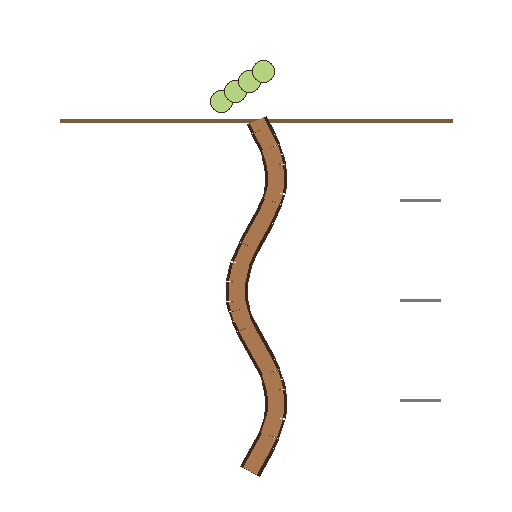
Wild hops: the part of the root 3 or 4 feet (0.9-1.2 m) down, called "sweet medicine", "was chewed and applied to wounds". Ponca: four-o'clock root was "chewed and blown into" wounds. Dakota: red false mallow was chewed and put on inflamed sores and wounds "as a cooling and healing salve."
Materiais para este passo:
 Raiz de lúpulo-silvestre1 peça
 Raiz de bonina-silvestre1 peça
 Planta de malva-globo-escarlate1 peça
Ferramentas necessárias:
 Pau de cavar
 Faca
4
4
Prickly pear dressing
Prickly pear dressing
Peel the stems; because of their slimy juice "the peeled stems were bound on wounds as a dressing."
Materiais para este passo:
 Raquetes de figueira-da-índia1 peça
Ferramentas necessárias:
Faca Cordame
5
5
Aniseroot poultice
Aniseroot poultice
Winnebago: pound the roots to make a poultice for wounds (the Omaha put it on boils).
Materiais para este passo:
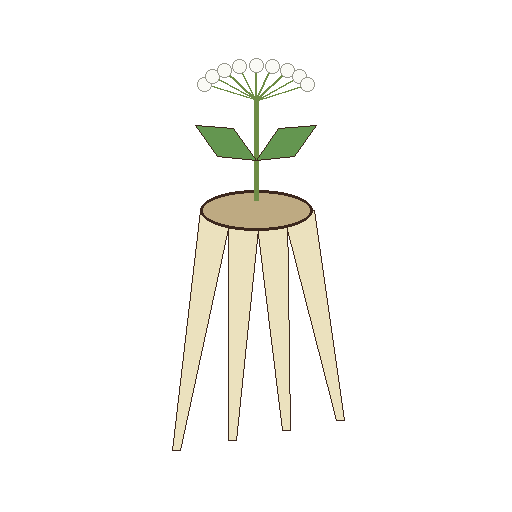 Raiz de cerefólio-anisado1 peça
 Água1 peça
Ferramentas necessárias:
Pau de cavar Almofariz e pilão de pedra
6
6
Butterfly weed: wound medicine
Butterfly weed: wound medicine
Omaha-Ponca "raw medicine" or "wound medicine": the root "was also chewed and put into wounds, or pulverized when dry and blown into wounds", and used for old, obstinate sores. Among the Omaha it belonged to the Shell Society, whose keeper dug and gave it out with four days of ceremony.
Materiais para este passo:
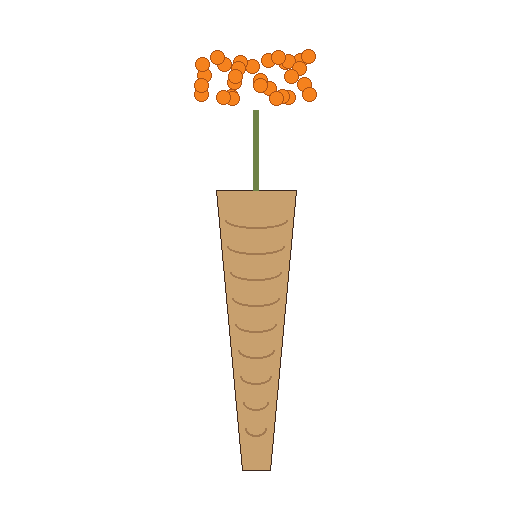 Raiz de asclépia-tuberosa1 peça
Ferramentas necessárias:
Pau de cavarAlmofariz e pilão de pedraBolsa de couro7
7
Troubleshooting
Troubleshooting
Wound safety.
Flow
Loading...
8
8
History and honest limits
History and honest limits
From Melvin R. Gilmore, *Uses of Plants by the Indians of the Missouri River Region*, **33rd Annual Report of the Bureau of American Ethnology** (1919), pp. 62, 77, 78, 82, 103, 104, 107, 109 and 113 (checked on the archive.org scan usesofplantsbyin00gilm). Gilmore wrote down what Omaha, Ponca, Pawnee, Dakota, Winnebago and Oto people told him; each remedy is credited to the tribe he names. Gilmore also names anemone root ("little buffalo medicine", used for wounds by those of the Omaha Te-sinde gens who had the right) and prairie ground cherry root as wound dressings, but gives no preparation; anemone is an irritant. Left out: eating butterfly weed root raw for the lungs (milkweeds hold heart poisons). Safety lines are ours. Recorded use, not medical advice.
Materiais
8- 1 peçaReferência
- 1 peçaReferência
- 1 peçaReferência
- Referência
- Referência
- Referência
- 1 peçaReferência
- Referência
Este projeto faz
Blueprints relacionados
Estes blueprints compartilham conhecimento — técnicas, materiais ou princípios
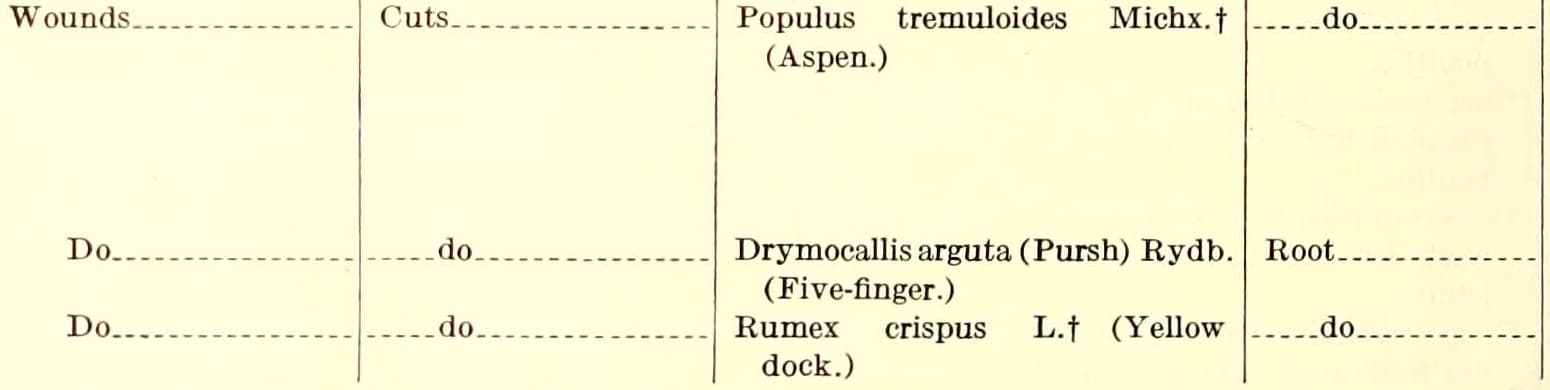
Chippewa Remedies for Cuts: Chewed Aspen Bark on a Closed Cut, Five-Finger and Yellow Dock Root (Densmore, 1928)
por Bob
Medicina
2
0
0
0
0
0
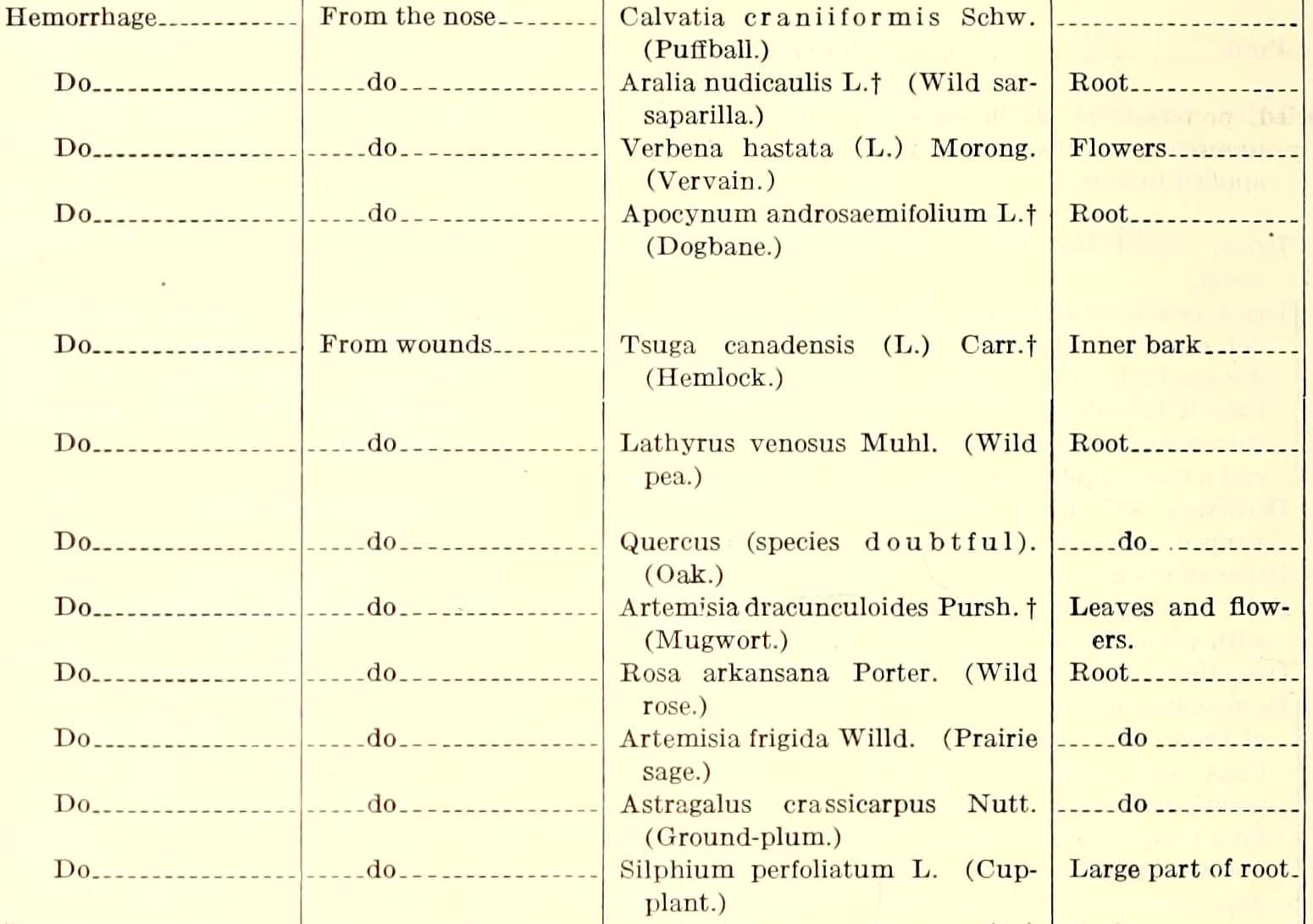
Chippewa Remedies to Stop Bleeding from the Nose and from Wounds: Puffball, Sarsaparilla, Vervain, Hemlock Bark, Wild Pea, Oak, Mugwort, Cup Plant (Densmore, 1928)
por Bob
Medicina
6
0
0
0
0
0
CC0 Domínio Público
Este blueprint é liberado sob CC0. Você é livre para copiar, modificar, distribuir e usar este trabalho para qualquer finalidade, sem pedir permissão.
Apoie o Maker comprando produtos através do Blueprint, onde ele ganha uma Comissão Maker definida pelos vendedores, ou crie uma nova versão deste Blueprint e inclua-o como conexão no seu próprio Blueprint para compartilhar receita.